








Sem Resultado
Ver Todos Os Resultados
Newsletters
Agroportal
  • Login
  • Registar
  • Sugeridas
  • Notícias
    • Notícias
    • Nacional
    • Internacional
    • Comunicados
    Copa Cogeca

    A partir de Estocolmo, as principais organizações agrícolas da Europa soam o alarme numa declaração histórica para defender a PAC e o seu orçamento

    Barragem da Foupana vai hipotecar o último grande corredor ecológico livre do Sotavento Algarvio para servir o regadio intensivo

    Mercadona logo

    Mercadona chega ao algarve com loja em Portimão

    vaca

    Agricultores de Serpa refutam ministro sobre rendimentos triplicados no setor

    Onde estão as reportagens de Arcos de Valdevez? Estamos perante censura mediática?

    aproserpa

    Agricultores de Serpa respondem ao Ministro da Agricultura: «Venha a Serpa, olhos nos olhos»

    universidade coimbra

    Universidade de Coimbra e Câmara Municipal promovem ateliês para crianças sobre escolhas alimentares no Mercado Municipal

    ONG timorense pede mais aposta na agricultura e maior diversificação económica

    Pode a agricultura na Lua e em Marte começar com fungos?

  • Opinião

    Registo Internacional de Marcas no Setor Agroalimentar

    Estamos a exportar Portugal ou a desvalorizar o azeite português?

    AIGP: fracasso ou sucesso?

    Microrganismos ao serviço de uma agricultura mais sustentável

    O problema da floresta não é apenas florestal

    Solo: A Infraestrutura Invisível da Adaptação Climática

    Ibéria: a terra prometida a quem?

    O Impacto da agricultura regenerativa sobre os resultados económicos das explorações agrícolas

    Ibéria – a terra prometida

  • Eventos
  • Dossiers

    Dossiers I

    • Agricultura Biológica
    • Apoios
    • Artigos Técnicos
    • Biossoluções
    • Cadeia Alimentar
    • Fertilizantes
    • Financiamento
    • Fitofarmacêuticos

    Dossiers II

    • Florestas
    • Futuro da PAC
    • Inovação
    • Mercados
    • Newsletters e Revistas
    • Recomendações Agroflorestais
    • Seguros

    Últimas

    dinheiro notas

    Presidente da CCDR-N defende em Bruxelas manutenção dos fundos de coesão

    14/10/2026

    La cebada sube 4 euros en Binéfar mientras el girasol baja en Salamanca

    14/10/2026

    Estudo mostra que certificação florestal pode favorecer a biodiversidade

    14/10/2026

    Biotecnologia | Inteligência artificial, vacinas de mRNA e CRISPR-Cas entre as tecnologias que poderão marcar o setor até 2030

    14/10/2026

    Cabaz alimentar volta a subir e ultrapassa 256 euros na última semana – Deco Proteste

    14/10/2026

    Vinhos Verdes esperam ter IA a ajudar com rotulagem até final de 2027

    14/10/2026
  • Serviços
    • Diretório
    • Emprego
    • Máquinas Agrícolas
    • Meteorologia
    • Terrenos Agrícolas
    • Arquivo Agroportal
Agroportal
  • Sugeridas
  • Notícias
    • Notícias
    • Nacional
    • Internacional
    • Comunicados
    Copa Cogeca

    A partir de Estocolmo, as principais organizações agrícolas da Europa soam o alarme numa declaração histórica para defender a PAC e o seu orçamento

    Barragem da Foupana vai hipotecar o último grande corredor ecológico livre do Sotavento Algarvio para servir o regadio intensivo

    Mercadona logo

    Mercadona chega ao algarve com loja em Portimão

    vaca

    Agricultores de Serpa refutam ministro sobre rendimentos triplicados no setor

    Onde estão as reportagens de Arcos de Valdevez? Estamos perante censura mediática?

    aproserpa

    Agricultores de Serpa respondem ao Ministro da Agricultura: «Venha a Serpa, olhos nos olhos»

    universidade coimbra

    Universidade de Coimbra e Câmara Municipal promovem ateliês para crianças sobre escolhas alimentares no Mercado Municipal

    ONG timorense pede mais aposta na agricultura e maior diversificação económica

    Pode a agricultura na Lua e em Marte começar com fungos?

  • Opinião

    Registo Internacional de Marcas no Setor Agroalimentar

    Estamos a exportar Portugal ou a desvalorizar o azeite português?

    AIGP: fracasso ou sucesso?

    Microrganismos ao serviço de uma agricultura mais sustentável

    O problema da floresta não é apenas florestal

    Solo: A Infraestrutura Invisível da Adaptação Climática

    Ibéria: a terra prometida a quem?

    O Impacto da agricultura regenerativa sobre os resultados económicos das explorações agrícolas

    Ibéria – a terra prometida

  • Eventos
  • Dossiers

    Dossiers I

    • Agricultura Biológica
    • Apoios
    • Artigos Técnicos
    • Biossoluções
    • Cadeia Alimentar
    • Fertilizantes
    • Financiamento
    • Fitofarmacêuticos

    Dossiers II

    • Florestas
    • Futuro da PAC
    • Inovação
    • Mercados
    • Newsletters e Revistas
    • Recomendações Agroflorestais
    • Seguros

    Últimas

    dinheiro notas

    Presidente da CCDR-N defende em Bruxelas manutenção dos fundos de coesão

    14/10/2026

    La cebada sube 4 euros en Binéfar mientras el girasol baja en Salamanca

    14/10/2026

    Estudo mostra que certificação florestal pode favorecer a biodiversidade

    14/10/2026

    Biotecnologia | Inteligência artificial, vacinas de mRNA e CRISPR-Cas entre as tecnologias que poderão marcar o setor até 2030

    14/10/2026

    Cabaz alimentar volta a subir e ultrapassa 256 euros na última semana – Deco Proteste

    14/10/2026

    Vinhos Verdes esperam ter IA a ajudar com rotulagem até final de 2027

    14/10/2026
  • Serviços
    • Diretório
    • Emprego
    • Máquinas Agrícolas
    • Meteorologia
    • Terrenos Agrícolas
    • Arquivo Agroportal
Sem Resultado
Ver Todos Os Resultados
Agroportal

From plants and waste to everyday products: boosting Europe’s bioeconomy

por Horizon - EU
15-10-2026 | 09:39
em Internacional, Últimas
Tempo De Leitura: 7 mins
A A
Partilhe no FacebookPartilhe no TwitterEnviar para o WhatsappEnviar para o TelegramEnviar para o LinkedIn

A biorefinery in Spain is turning household organic waste and sewage sludge into coatings, fertilisers and biodegradable bags. In the Netherlands, a company is producing a plant-based chemical building block for new bottles, films and fibres. Together, they show how Europe is exploring ways to rely less on fossil raw materials, an approach that could also offer lessons to partners outside Europe.

The idea is simple. Use renewable materials from land and sea, along with residues and by-products, to produce goods that now come from oil and gas. For Europe, this could reduce dependence on imported fossil resources while creating new industries and markets. EU research and innovation funding is helping some of these ideas move from the laboratory to the marketplace.

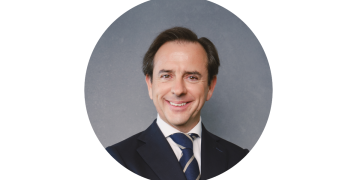
“We know that we must move away from using fossil resources,” said Professor Kevin O’Connor, an industrial microbiologist at University College Dublin. “I’d like to see more products in everyday life coming from bio-based resources rather than fossil resources.”

The bioeconomy in everyday life

Visitors to the Global Bioeconomy Summit 2026 in Dublin will be able to see bio-based products, from a sports T-shirt made from plant-sugar plastic to a hemp-framed scooter and asphalt made with wood lignin.

Some food products can be tasted at the stand of the Circular Bio-based Europe Joint Undertaking (CBE JU). This €2 billion public-private partnership supports Europe’s circular bioeconomy.

The October summit aims to advance the global bioeconomy by showcasing knowledge, promoting collaboration and building alliances. It is also an event of the Irish Presidency of the EU Council and supported through Horizon Europe, the EU’s research and innovation funding programme.

“Europe could use its food processing side streams, unavoidable food wastes and side streams from agriculture to help transition away from the fossil economy.

Professor Kevin O’Connor, Circular Bio-based Europe Joint Undertaking

Alongside it, the International Bioeconomy Forum, which brings together government research and innovation experts from around the world, will hold its plenary meeting.

The two events will showcase bioeconomy innovations and launch two new initiatives: the Bio-based Europe Alliance, which aims to boost demand for bio-based products, and the International Bioeconomy Solutions Library, an online platform for sharing proven bioeconomy solutions.

For Europe, the appeal is not only environmental. Using more renewable and waste-based resources could reduce dependence on imported fossil raw materials while creating new green industries and jobs. In 2023, biomass production and conversion employed about 17 million people in the EU and generated €863 billion in added value.

The EU’s new Bioeconomy Strategy aims to build on this potential by encouraging investment, stronger markets for bio-based products and technologies, more sustainable supplies of biomass and international cooperation.

“Europe could use its food processing side streams, unavoidable food wastes and side streams from agriculture to help transition away from the fossil economy,” said O’Connor, who chairs the scientific committee of the CBE JU.

But developing alternatives to fossil-based materials is only part of the challenge. Getting promising technologies from the laboratory to commercial scale can be difficult.

“Universities are creating solutions, but we need to scale up technologies to bring the research out into industry,” said O’Connor.

Plant-based plastic at scale

One of the exhibits at the summit is a sports T-shirt made from fibre developed by Avantium, a Dutch company specialising in renewable materials. The fibre is made from PEF, or polyethylene furanoate, a bio-based plastic for bottles, films and fibres. It starts with FDCA, or 2,5-furandicarboxylic acid, produced from plant sugars.

The EU-funded PEFerence project supported Avantium’s construction of the world’s first commercial-scale plant for producing FDCA. The plant’s first batch of FDCA was announced on 28 September, a step towards commercial sales expected by the end of the year.

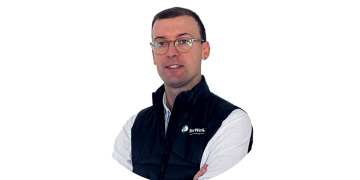
“What we need is high-fructose syrup, and this can come from different feedstocks, but for our flagship plant we use the starch that is left over from wheat used for protein in foods,” said Ingrid Goumans, a chemical engineer in charge of public affairs at Avantium.

The EU grant also helped the company attract a further €20 million in private investment to build the biorefinery in Delfzijl, the Netherlands, designed to produce 5 kilotonnes a year (KTA).

“In the chemical industry, 5 KTA is really small. As the next step, we foresee 100 KTA,” said Goumans.

Avantium says it has agreements with more than 20 companies planning to use PEF from the flagship plant, including adhesive manufacturer Henkel, Albert Heijn, a large Dutch supermarket chain, and cosmetics manufacturers replacing fossil-based polymers.

“You get a 100% bio-based material,” said Goumans, explaining that PEF is stronger than the somewhat similar PET and better at keeping carbon dioxide in and oxygen out, which helps drinks and food stay fresh.

Competing on price

But producing a material for commercial production is not enough. It also needs to compete on price with established fossil-based alternatives.

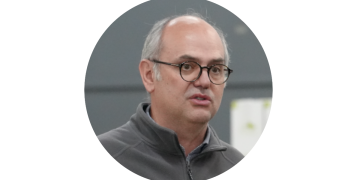
“An important barrier is often the cost of bio-based materials and products, which can be more expensive than fossil-based products,” said Dr Sven Wydra of Germany’s Fraunhofer Institute for Systems and Innovation Research.

Wydra leads the EU-funded ShapingBio project, which examines how policy, finance and cross-sector cooperation can help bioeconomy innovations reach the market.

“You need to scale up to optimise your processes and have higher efficiency,” he said. But regulations can also create barriers, he added. Often designed for traditional fossil fuel industries, they need updating to level the playing field for bio-based products.

Turning waste into products

The same challenge applies to technologies that use waste as a raw material.

In Zaragoza, Spain, environmental and waste management company Urbaser has built a first-of-a-kind biorefinery that turns household organic waste and sewage sludge into new products. The work was supported through the EU-funded CIRCULAR BIOCARBON project.

These include biopolymers for compostable bags and agricultural films, fertilisers and soil improvers, coating materials and green graphene made from carbon recovered from urban waste rather than fossil sources.

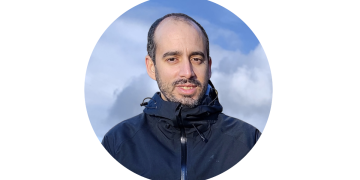
“We can reduce the amount of organic material ending up in landfill or directed to lower-value treatment,” said Dr Eduardo Fernández Giménez, innovation director at Urbaser.

Recovering carbon and nutrients turns waste into new materials and products.

“The first necessary change is to stop viewing organic waste simply as something that needs to be disposed of.

Dr Eduardo Fernández Giménez, CIRCULAR BIOCARBON

“The first necessary change is to stop viewing organic waste simply as something that needs to be disposed of and start seeing it as a renewable urban feedstock,” said Fernández Giménez.

The CBE JU, established in 2021, supports this kind of scale-up. Its predecessor, the Bio-based Industries Joint Undertaking, began in 2014 as a partnership between the European Commission and the Bio-based Industries Consortium. Together, the two programmes had supported over 240 projects by the end of 2025, while the Consortium has grown from 30 members to hundreds.

Building the partnerships

The new EU Bioeconomy Strategy calls for investment, stronger markets for bio-based products, sustainable supply of biomass and international engagement. But how this translates into practice will vary across Europe, because regions have different resources.

In Scandinavia, for example, forestry residues such as bark, sawdust and branches could be broken down into their basic components and used to make chemicals, materials or food ingredients, supplying local value chains. Building those value chains requires new partnerships.

“Often we need new collaborations with those who have not worked together before,” said Wydra. Farmers or forestry firms, for example, may need to work with downstream chemical or plastics industries.

“There is a need for hubs to bring different actors together from sectors that have quite different backgrounds, regulations, technical competences and business interests,” he said.

Attendees at the Dublin summit can also visit a local pilot biorefinery in Tipperary to see efforts to scale up biotechnology and biomanufacturing using Irish resources.

Some raw materials for bioeconomy plants across Europe will be waste, while others will come from newly grown agricultural crops, said O’Connor, who also chairs the Irish Bioeconomy Foundation.

“Climate change and the switch away from fossil resources is not a uniquely European problem. It’s a global issue.”

“We may have the technology that is technically viable, but we still need investment, appropriate regulation, industrial partners and markets in order to scale it commercially,” said Fernández Giménez.

International forums help public authorities, companies, researchers and investors share experience and build partnerships. The real test is whether everyday products, from packaging to fertilisers, can increasingly be made from biological resources and waste rather than fossil raw materials.

Research in this article was funded by the EU’s Horizon Programme. The views of the interviewees don’t necessarily reflect those of the European Commission. If you liked this article, please consider sharing it on social media.

O artigo foi publicado originalmente em Horizon, the EU Research and Innovation Magazine.
Imprimir Artigo
Publicação Anterior

Governo lança apoios de 500 mil euros para controlo de javalis em 65 concelhos

Próxima Publicação

Lobos alimentam-se junto de bovinos – Até quando terão os criadores de suportar esta realidade?

Artigos Relacionados

Nacional

UE/Cimeira: Países da coesão garantem que vão manter-se unidos contra cortes no orçamento

15/10/2026
Copa Cogeca
Últimas

A partir de Estocolmo, as principais organizações agrícolas da Europa soam o alarme numa declaração histórica para defender a PAC e o seu orçamento

15/10/2026
Nacional

Navigator lança programa para mobilizar até 84 ME para investimento florestal

15/10/2026
Próxima Publicação

Lobos alimentam-se junto de bovinos - Até quando terão os criadores de suportar esta realidade?

Opinião

Últimas

Registo Internacional de Marcas no Setor Agroalimentar

por Luís Caixinhas
11/10/2026

Ler maisDetails
Últimas

Estamos a exportar Portugal ou a desvalorizar o azeite português?

por Francisco António Vilela Ribeiro
04/10/2026

Ler maisDetails

Subscrever as nossas newsletteres

Subscrever as nossas Newsletters Agroportal

Verifique na sua caixa de correio ou na pasta de spam para confirmar a sua subscrição.

Comunicados

Copa Cogeca

A partir de Estocolmo, as principais organizações agrícolas da Europa soam o alarme numa declaração histórica para defender a PAC e o seu orçamento

15/10/2026

Barragem da Foupana vai hipotecar o último grande corredor ecológico livre do Sotavento Algarvio para servir o regadio intensivo

15/10/2026
Advertisement

Temas em destaque

Candidaturas PU Global Agri Forum 2026 Guerra Médio Oriente Mercosul Omnibus PAC pós 2027 Simplificação PAC Temporais vinho Água que Une

Eventos

Outubro 2026
STQQSSD
    1 2 3 4
5 6 7 8 9 10 11
12 13 14 15 16 17 18
19 20 21 22 23 24 25
26 27 28 29 30 31  
« Set   Nov »

Sobre Nós

O Agroportal.pt é uma plataforma de informação digital que reúne a informação relevante sobre agricultura. Tem um foco na Política Agrícola Comum e a sua aplicação em Portugal.

Menu

  • Quem somos
  • Relatórios anuais
  • Envie-nos informação
  • Publicidade
  • Newsletters
  • Estatuto Editorial
  • Ficha técnica
  • Proteção de Dados Pessoais
  • Disclaimer
Facebook twitter Circle Instagram Rss Feed

© Agroportal. All Rights reserved.

Bem-Vindo De Volta!

Sign In with Facebook
Sign In with Google
OR

Faça login na sua conta abaixo

Esqueceu-se da senha? Registar

Criar Uma Nova Conta!

Sign Up with Facebook
Sign Up with Google
OR

Preencha os campos abaixo para se registar

* Ao se registar-se no nosso site, você concorda com os Termos e Condições e a Política de Privacidade .
Todos os campos são necessários. Entrar

Obter a sua senha

Indique por favor o seu nome de utilizador ou endereço de E-mail para repor a sua senha.

Entrar
  • Login
  • Registar
Sem Resultado
Ver Todos Os Resultados
  • Sugeridas
  • Notícias
    • Nacional
    • Internacional
    • Comunicados
  • Opinião
  • Eventos
  • Dossiers
    • Agricultura Biológica
    • Apoios
    • Artigos Técnicos
    • Biossoluções
    • Cadeia Alimentar
    • Fertilizantes
    • Financiamento
    • Fitofarmacêuticos
    • Florestas
    • Futuro da PAC
    • Inovação
    • Mercados e Cotações agrícolas
    • Newsletters e Revistas
    • Recomendações Agroflorestais
    • Seguros agrícolas
  • Serviços
    • Diretório
    • Emprego
    • Máquinas Agrícolas
    • Meteorologia
    • Terrenos Agrícolas
    • Arquivo Agroportal

© Agroportal. All Rights reserved.

Este site usa cookies. Ao continuar a utilizar este site, está a dar consentimento à utilização de cookies. Visite a nossa Política de Protecção de dados e Cookies.