
















In this latest episode of Eurostat’s podcast Stats in a Wrap, we talk about the challenges in collecting quality data on Europe’s farms and the drivers of their changes.
European Statistics Day has been celebrated since 2016 on 20 October, highlighting the work that goes into producing and publishing high-quality official statistics. To mark the occasion this year, our guests discuss the farm structure survey, which has been conducted for the past 60 years, and the many changes European farms have seen in that time.
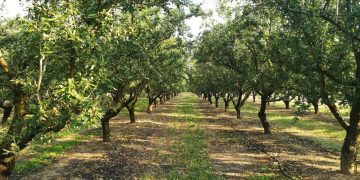
They look at this issue from different angles, exploring the changes of farms over the past decades such as increased digitalisation, farm size and machinery, as well as changing demography and landscapes. They also discuss challenges for data collection, what defines a farm and how data from outside agriculture can impact farm forecasts.
Our host Jonathan Elliott is joined by 3 experts in the field: Helena Ramos, team leader at the Statistics on Farms, in the Agriculture and Fisheries Unit at Eurostat; Jairo Castano, senior statistician and team leader at the Food and Agriculture Organization (FAO), where he works at the Statistics Division in the Agricultural Censuses Team in Rome; and Vincent Marcus, director of Agricultural Statistics at the French Ministry of Agriculture and Food Sovereignty. Hervé Le Grand, head of the Department of Statistical Methodology and Information Systems at the French Ministry of Agriculture and Food Sovereignty, is interviewed separately in the podcast.
Tune in to learn about the trends shaping Europe’s farms.
If you are enjoying our podcasts and have a particular topic you would like us to cover, make your voice heard by sharing your suggestions with our user support team.
Listen to the episodes on the Eurostat website and the European Commission Audiovisual Service. You can also subscribe and listen to our podcast on YouTube, Apple Podcasts, Spotify, or via our RSS feed.
The opinions expressed in the podcasts reflect solely the point of view of the speakers and can in no way be taken to reflect the position of Eurostat, the European Commission, or the European Union.
O artigo foi publicado originalmente em Eurostat.