
















Strategic priorities: organic farming and livestock
The Plan recognizes the importance of organic farming to contribute to the achievement of all environmental objectives; indeed, the sector is allocated about 2.5 billion euro in the five-year period within the rural development. The allocation already foreseen by rural development (1.5 billion euros) is in fact integrated with an additional endowment of about 1 billion euros, partly transferred from the first pillar (90 million euros/year) and partly coming from the increase in national co-financing.
The relaunch of Italian livestock farming and its competitiveness goes through a great attention to sustainability. With this objective, a significant share of the resources for eco-schemes is dedicated to animal welfare and the reduction of the use of antimicrobial in animal husbandry (about 1.8 billion euros). This initiative is accompanied by other important interventions in rural development for the adoption of good zootechnical practices for animal welfare (330 million euros), for commitments aimed at improving the management of livestock effluents (70 million euros).
The green architecture
In total, around 10 billion euros, between Pillar I and II, are allocated to interventions with clear environmental aims.
In this context, great importance will be given to the 5 national eco-schemes, to which 25% of direct aid resources will be allocated (around 4.4 billion euros) to support farms in adopting agro-ecological practices for climate and environmental sustainability. The eco-schemes will operate in synergy with the 26 agro-environment-climate measures (AECM) (1.5 billion euros), measures in favor of sustainable forestry (500 million euros), productive, non-productive and infrastructural investments for environmental purposes (650 million euros), with the environmental actions foreseen within the sectoral interventions and the environmental investments of the NRRP, an integral part of this strategy.
ECO-SCHEME 1 – Payment for the reduction of antimicrobial resistance and animal welfare
A specific eco-scheme has been foreseen to pursue the goal of reducing the use of drugs in animal husbandry, to counter the antimicrobial resistance, a real global health emergency. A significant part of the resources for eco-schemes, i.e. around 1.8 billion euros for the entire programming period, has been allocated to this intervention. In particular, payment for animal welfare and antibiotic reduction is foreseen, with two levels of commitment, the first relating to compliance with thresholds for the use of veterinary drugs (antibiotics), the second for farms that commit to specific obligations in the field of animal welfare and practice grazing or semi-wild farming. This initiative is accompanied by a specific intervention in rural development aimed at supporting the adoption of good zootechnical practices for animal welfare (330 million euros).
Approximately 360 million euros per year, around 41% of the resources foreseen for the adoption of eco-schemes go to the eco-scheme 1.
ECO-SCHEME 2 Weeding of tree crops, for which all areas occupied by permanent crops and other permanent tree species in quick rotation are eligible.
The total cost of this intervention is estimated at 161 million euros / year, about 17.8% of the resources provided for the adoption of eco-schemes.
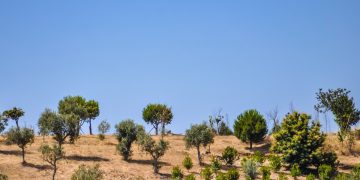
ECO-SCHEME 3 – Safeguarding olive trees of particular landscape value, on which the following specific commitments are met:
-annual pruning of the foliage according to established criteria; -prohibition of burning on site of pruning residues, unless otherwise specified as a result of adherence to certified quality systems or by the competent phytosanitary authorities.
To access the support of ECO-3 it is necessary to adhere also to the commitments provided by ECO-2, with the possibility of combined payments.
The total cost of this intervention is estimated at 156 million euros/year, about 17% of the resources provided for the adoption of eco-schemes.
ECO-SCHEME 4 – Extensive fodder systems, aimed at encouraging the introduction in rotation of leguminous and fodder crops, as well as renovation crops with a commitment to residue management in a carbon sink perspective, in order to support production guidelines less impactful in terms of use of productive inputs.
The total cost of this intervention is estimated at 169 million euros/year, around 19% of the resources foreseen for the adoption of eco-schemes.
ECO-SCHEME 5 – Specific measures for pollinators (both on herbaceous and tree crops), arable land and land occupied by permanent crops are eligible on which the following commitments are met:
-cultivation of crops of melliferous interest in arable land, including a commitment not to use herbicides and other plant protection products in the field and borders in the year of commitment; -cultivation of crops of melliferous interest in the inter-row of permanent crops, including a commitment not to use herbicides and other phytosanitary products in the field and in the borders in the year of commitment.
The total cost of this intervention is estimated at 45 million euros/year, about 5% of the resources provided for the adoption of eco-schemes.
In addition to the eco-schemes in the first pillar, the green architecture is supported by the agro-environment-climate measures (AECM) and forestry interventions in the second pillar. A total of 26 AECM interventions are foreseen with a planned expenditure of around 1.5 billion euros, 5 forestry interventions with clearly environmental objectives with around 250 million euros.
Essential elements of green architecture are also all the measures of the innovation system that can be envisaged both in rural development and in sectoral interventions. Training and advice are fundamental to ensure that in their path towards ecological transition, each beneficiary is accompanied by adequate support action aimed at strengthening their skills and/or offering dedicated advisory services.
Internal Convergence
The process of progressive equalization of the level of income support continues, taking the entire national territory as a reference. The reference to Italy as a single region puts into effect – through internal convergence to 85% of the national average by 2026– a considerable rebalancing in the allocation of direct payment resources, to the advantage of intermediate rural areas and rural areas with development problems, as well as to the advantage of mountainous areas and some inland hill areas. At the same time, 10% of the national envelope is allocated to redistributive support, focusing attention on small and medium-sized farms; also in this case there are no territorial or regional differentiations.
Coupled payment
In order to take into account the challenges and difficulties faced by sectors and products that are important for social, economic or environmental reasons, and with the aim of improving their competitiveness, sustainability and quality, the Strategy allocates 13% of the direct payment budget to coupled support.
To this is added a further 2% of resources to be allocated to the support of protein crops, in order to reduce the relative deficit of Italy and the Union, supporting crops that also allow to achieve an improvement of organic matter in the soil.
Coupled payments for: durum wheat; rice; sugar beet; tomatoes-processing; oilseeds; citrus fruits; olives; protein crops; cow’s milk; mountain milk, buffalo milk, suckler cows, ewe lambs for replacement; slaughtered sheep and goats.
Risk management
Almost 3 billion euros allocated to subsidized insurance and the new national mutual fund, to which farmers also contribute through a 3% deduction from direct payments.
In order to increase the participation of farmers, the activation of a basic mutual coverage against catastrophic weather and climate events has been foreseen for all farms receiving direct payments, through the establishment of a national mutual fund. This intervention is integrated with support for the subscription of subsidized insurance policies, which cover losses caused by adverse weather, animal and plant diseases or parasite infestations.
Young farmers
The Plan foresees the strengthening of policies in favor of young people, integrating the instruments of the first and second pillar, so as to mobilize a total of 1,250 million Euros. In fact, young farmers are more receptive to innovation and digitization, thus more ready to face the new challenges of competitiveness and resilience of the agricultural sector. With these objectives, 2% of the direct payments ceiling (350 million euros) will be used as complementary income support for young farmers and 1% will be transferred to the second pillar. In this way, the allocation already provided for in rural development (540 million euros) is supplemented by an additional endowment of around 360 million euros, partly transferred from the first pillar, partly from the increase in national co-financing.
O artigo foi publicado originalmente em Farm Europe.



















Discussão sobre este post