


















Sem Resultado
Ver Todos Os Resultados
Newsletters
Agroportal
  • Login
  • Registar
  • Sugeridas
  • Notícias
    • Notícias
    • Nacional
    • Internacional
    • Comunicados

    Designação, em regime de substituição, o mestre Luís Bruno Dimas Fernandes para o cargo de diretor-geral do Gabinete de Planeamento, Políticas e Administração Geral

    Nem aviões nem helicópteros: pastor diz que a solução para os incêndios está nos montes e “limpa mais do que 100 pessoas”

    Mais de 3 milhões de euros levam novos projetos às áreas protegidas em todo o país

    Viticultores do Douro exigem concretização imediata de medidas para escoamento das uvas a preços justos

    ACAP

    Mercado de máquinas e reboques agrícolas em Portugal – Julho de 2026

    cabaz

    Cabaz alimentar volta a subir na última semana para 253,60 euros – Deco Proteste

    Açores criam Circuito das Camélias e investem na valorização das 27 Reservas Florestais

    Faia Brava lança campanha de crowdfunding para reforçar a prevenção dos incêndios florestais

    rio com videiras e vinha no douro

    Vindima antecipada no Douro em ano que se prevê aumento de produção

  • Opinião
    António Covas

    O mundo paradoxal do nosso rural tardio e remoto

    Azeites de Portugal: tratar diferente o que é diferente

    Manuel Chaveiro Soares

    Sobre a excelência da alimentação em Portugal

    Produzir bem já não chega: eficiência, estratégia e os desafios da engorda de bovinos

    Segurança Alimentar Europeia Como Ativo Estratégico

    Sabemos distinguir um frango do campo. Porque não conseguimos distinguir um Azeite de Olival Tradicional?

    Carlos Neves

    Promoções que despromovem a produção de leite de Portugal

    Georgete Felix

    O balanço invisível da agricultura

    Acordo UE-Mercosul

  • Eventos
  • Dossiers

    Dossiers I

    • Agricultura Biológica
    • Apoios
    • Artigos Técnicos
    • Biossoluções
    • Cadeia Alimentar
    • Fertilizantes
    • Financiamento
    • Fitofarmacêuticos

    Dossiers II

    • Florestas
    • Futuro da PAC
    • Inovação
    • Mercados
    • Newsletters e Revistas
    • Recomendações Agroflorestais
    • Seguros

    Últimas

    ACAP

    Mercado de máquinas e reboques agrícolas em Portugal – Julho de 2026

    05/08/2026

    Cotações – Cortiça – 27 de julho a 02 de agosto de 2026

    05/08/2026

    Cotações – Cereais – 27 de julho a 02 de agosto de 2026

    05/08/2026

    INIAV Lança Nova Edição da Newsletter | #8

    05/08/2026

    Drones autónomos e IA reforçam prevenção de incêndios rurais

    05/08/2026

    Calendário indicativo de pagamentos do Pedido Único 2026 (PU 2026)

    05/08/2026
  • Serviços
    • Diretório
    • Emprego
    • Máquinas Agrícolas
    • Meteorologia
    • Terrenos Agrícolas
    • Arquivo Agroportal
Agroportal
  • Sugeridas
  • Notícias
    • Notícias
    • Nacional
    • Internacional
    • Comunicados

    Designação, em regime de substituição, o mestre Luís Bruno Dimas Fernandes para o cargo de diretor-geral do Gabinete de Planeamento, Políticas e Administração Geral

    Nem aviões nem helicópteros: pastor diz que a solução para os incêndios está nos montes e “limpa mais do que 100 pessoas”

    Mais de 3 milhões de euros levam novos projetos às áreas protegidas em todo o país

    Viticultores do Douro exigem concretização imediata de medidas para escoamento das uvas a preços justos

    ACAP

    Mercado de máquinas e reboques agrícolas em Portugal – Julho de 2026

    cabaz

    Cabaz alimentar volta a subir na última semana para 253,60 euros – Deco Proteste

    Açores criam Circuito das Camélias e investem na valorização das 27 Reservas Florestais

    Faia Brava lança campanha de crowdfunding para reforçar a prevenção dos incêndios florestais

    rio com videiras e vinha no douro

    Vindima antecipada no Douro em ano que se prevê aumento de produção

  • Opinião
    António Covas

    O mundo paradoxal do nosso rural tardio e remoto

    Azeites de Portugal: tratar diferente o que é diferente

    Manuel Chaveiro Soares

    Sobre a excelência da alimentação em Portugal

    Produzir bem já não chega: eficiência, estratégia e os desafios da engorda de bovinos

    Segurança Alimentar Europeia Como Ativo Estratégico

    Sabemos distinguir um frango do campo. Porque não conseguimos distinguir um Azeite de Olival Tradicional?

    Carlos Neves

    Promoções que despromovem a produção de leite de Portugal

    Georgete Felix

    O balanço invisível da agricultura

    Acordo UE-Mercosul

  • Eventos
  • Dossiers

    Dossiers I

    • Agricultura Biológica
    • Apoios
    • Artigos Técnicos
    • Biossoluções
    • Cadeia Alimentar
    • Fertilizantes
    • Financiamento
    • Fitofarmacêuticos

    Dossiers II

    • Florestas
    • Futuro da PAC
    • Inovação
    • Mercados
    • Newsletters e Revistas
    • Recomendações Agroflorestais
    • Seguros

    Últimas

    ACAP

    Mercado de máquinas e reboques agrícolas em Portugal – Julho de 2026

    05/08/2026

    Cotações – Cortiça – 27 de julho a 02 de agosto de 2026

    05/08/2026

    Cotações – Cereais – 27 de julho a 02 de agosto de 2026

    05/08/2026

    INIAV Lança Nova Edição da Newsletter | #8

    05/08/2026

    Drones autónomos e IA reforçam prevenção de incêndios rurais

    05/08/2026

    Calendário indicativo de pagamentos do Pedido Único 2026 (PU 2026)

    05/08/2026
  • Serviços
    • Diretório
    • Emprego
    • Máquinas Agrícolas
    • Meteorologia
    • Terrenos Agrícolas
    • Arquivo Agroportal
Sem Resultado
Ver Todos Os Resultados
Agroportal
credit the images to "MIT."

credit the images to "MIT."

Coated seeds may enable agriculture on marginal lands

por Agroportal
27-11-2019 | 12:53
em Últimas, Internacional, Notícias inovação, Inovação, Dossiers
Tempo De Leitura: 5 mins
A A
Partilhe no FacebookPartilhe no TwitterEnviar para o WhatsappEnviar para o TelegramEnviar para o LinkedIn

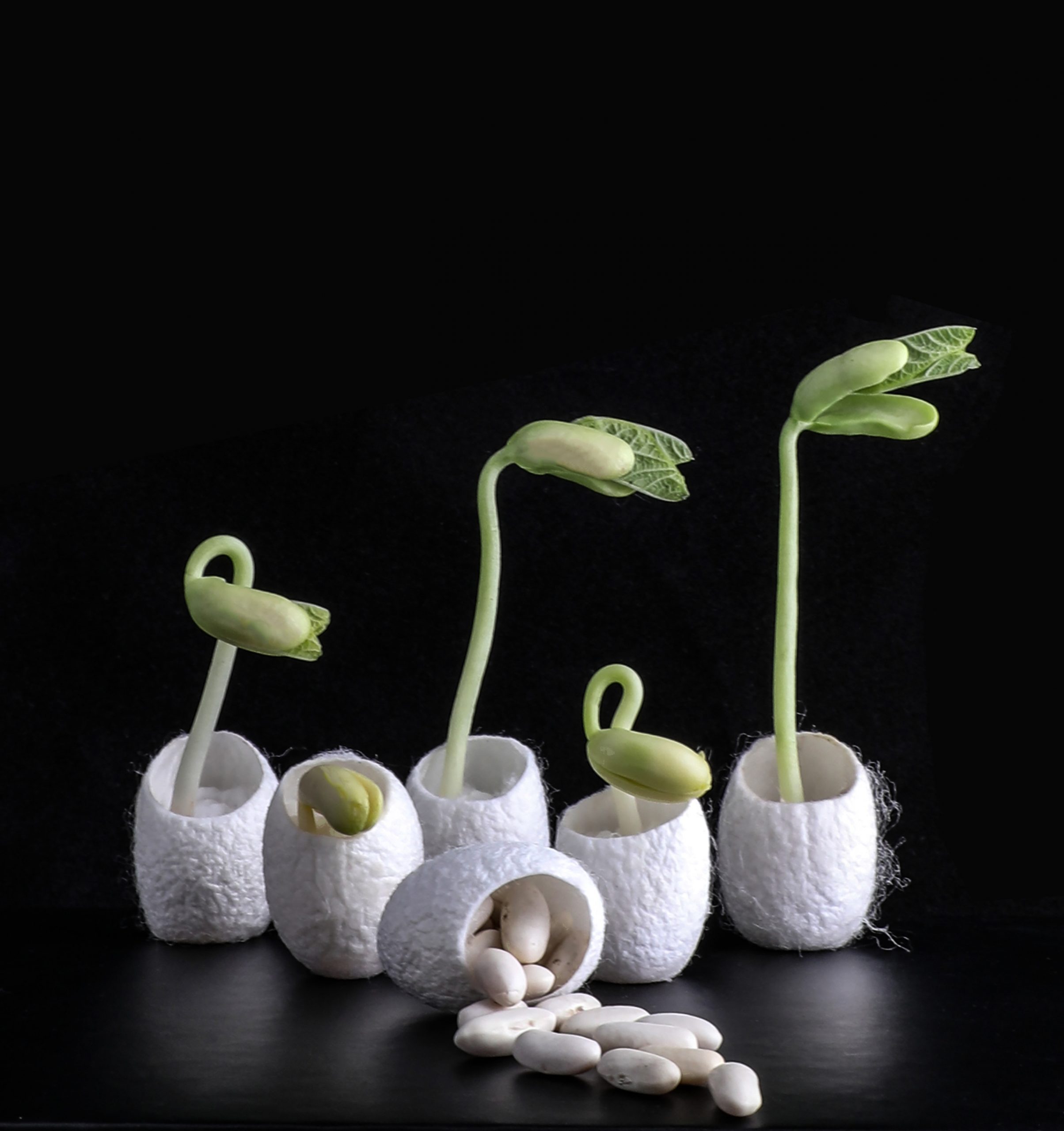
[Fonte: MIT] A specialized silk covering could protect seeds from salinity while also providing fertilizer-generating microbes.

Providing seeds with a protective coating that also supplies essential nutrients to the germinating plant could make it possible to grow crops in otherwise unproductive soils, according to new research at MIT.

A team of engineers has coated seeds with silk that has been treated with a kind of bacteria that naturally produce a nitrogen fertilizer, to help the germinating plants develop. Tests have shown that these seeds can grow successfully in soils that are too salty to allow untreated seeds to develop normally. The researchers hope this process, which can be applied inexpensively and without the need for specialized equipment, could open up areas of land to farming that are now considered unsuitable for agriculture.

The findings are being published this week in the journal PNAS, in a paper by graduate students Augustine Zvinavashe ’16 and Hui Sun, postdoc Eugen Lim, and professor of civil and environmental engineering Benedetto Marelli.

The work grew out of Marelli’s previous research on using silk coatings as a way to extend the shelf life of seeds used as food crops. “When I was doing some research on that, I stumbled on biofertilizers that can be used to increase the amount of nutrients in the soil,” he says. These fertilizers use microbes that live symbiotically with certain plants and convert nitrogen from the air into a form that can be readily taken up by the plants.

Not only does this provide a natural fertilizer to the plant crops, but it avoids problems associated with other fertilizing approaches, he says: “One of the big problems with nitrogen fertilizers is they have a big environmental impact, because they are very energetically demanding to produce.” These artificial fertilizers may also have a negative impact on soil quality, according to Marelli.

Although these nitrogen-fixing bacteria occur naturally in soils around the world, with different local varieties found in different regions, they are very hard to preserve outside of their natural soil environment. But silk can preserve biological material, so Marelli and his team decided to try it out on these nitrogen-fixing bacteria, known as rhizobacteria.

“We came up with the idea to use them in our seed coating, and once the seed was in the soil, they would resuscitate,” he says. Preliminary tests did not turn out well, however; the bacteria weren’t preserved as well as expected.

That’s when Zvinavashe came up with the idea of adding a particular nutrient to the mix, a kind of sugar known as trehalose, which some organisms use to survive under low-water conditions. The silk, bacteria, and trehalose were all suspended in water, and the researchers simply soaked the seeds in the solution for a few seconds to produce an even coating. Then the seeds were tested at both MIT and a research facility operated by the Mohammed VI Polytechnic University in Ben Guerir, Morocco. “It showed the technique works very well,” Zvinavashe says.

The resulting plants, helped by ongoing fertilizer production by the bacteria, developed in better health than those from untreated seeds and grew successfully in soil from fields that are presently not productive for agriculture, Marelli says.

In practice, such coatings could be applied to the seeds by either dipping or spray coating, the researchers say. Either process can be done at ordinary ambient temperature and pressure. “The process is fast, easy, and it might be scalable” to allow for larger farms and unskilled growers to make use of it, Zvinavashe says. “The seeds can be simply dip-coated for a few seconds,” producing a coating that is just a few micrometers thick.

The ordinary silk they use “is water soluble, so as soon as it’s exposed to the soil, the bacteria are released,” Marelli says. But the coating nevertheless provides enough protection and nutrients to allow the seeds to germinate in soil with a salinity level that would ordinarily prevent their normal growth. “We do see plants that grow in soil where otherwise nothing grows,” he says.

These rhizobacteria normally provide fertilizer to legume crops such as common beans and chickpeas, and those have been the focus of the research so far, but it may be possible to adapt them to work with other kinds of crops as well, and that is part of the team’s ongoing research. “There is a big push to extend the use of rhizobacteria to nonlegume crops,” he says. One way to accomplish that might be to modify the DNA of the bacteria, plants, or both, he says, but that may not be necessary.

“Our approach is almost agnostic to the kind of plant and bacteria,” he says, and it may be feasible “to stabilize, encapsulate and deliver [the bacteria] to the soil, so it becomes more benign for germination” of other kinds of plants as well.

Even if limited to legume crops, the method could still make a significant difference to regions with large areas of saline soil. “Based on the excitement we saw with our collaboration in Morocco,” Marelli says, “this could be very impactful.”

As a next step, the researchers are working on developing new coatings that could not only protect seeds from saline soil, but also make them more resistant to drought, using coatings that absorb water from the soil. Meanwhile, next year they will begin test plantings out in open experimental fields in Morocco; their previous plantings have been done indoors under more controlled conditions.

The research was partly supported by the Université Mohammed VI Polytechnique-MIT Research Program, the Office of Naval Research, and the Office of the Dean for Graduate Fellowship and Research.

Imprimir Artigo
Publicação Anterior

Grupo Luís Vicente com 15 mil toneladas de fruta vendidas este ano

Próxima Publicação

Sessão de debate sobre o ENSINO AGRÍCOLA | 6 dezembro

Artigos Relacionados

Últimas

Designação, em regime de substituição, o mestre Luís Bruno Dimas Fernandes para o cargo de diretor-geral do Gabinete de Planeamento, Políticas e Administração Geral

05/08/2026
Últimas

Crise nos rios da Europa já é visível do Espaço. Há centrais nucleares em risco e navios encalhados

05/08/2026
Internacional

Nem aviões nem helicópteros: pastor diz que a solução para os incêndios está nos montes e “limpa mais do que 100 pessoas”

05/08/2026
Próxima Publicação
GPP

Sessão de debate sobre o ENSINO AGRÍCOLA | 6 dezembro

Discussão sobre este post

Opinião

António Covas
Últimas

O mundo paradoxal do nosso rural tardio e remoto

por António Covas
02/08/2026

Ler maisDetails
Últimas

Azeites de Portugal: tratar diferente o que é diferente

por José Martino
26/07/2026

Ler maisDetails

Subscrever as nossas newsletteres

Subscrever as nossas Newsletters Agroportal

Verifique na sua caixa de correio ou na pasta de spam para confirmar a sua subscrição.

Comunicados

Designação, em regime de substituição, o mestre Luís Bruno Dimas Fernandes para o cargo de diretor-geral do Gabinete de Planeamento, Políticas e Administração Geral

05/08/2026

Mais de 3 milhões de euros levam novos projetos às áreas protegidas em todo o país

05/08/2026
Advertisement

Temas em destaque

Candidaturas PU Guerra Médio Oriente Mercosul ovibeja PAC pós 2027 Simplificação PAC Temporais vinho Água que Une

Eventos

Agosto 2026
STQQSSD
      1 2
3 4 5 6 7 8 9
10 11 12 13 14 15 16
17 18 19 20 21 22 23
24 25 26 27 28 29 30
31       
« Jul   Set »

Sobre Nós

O Agroportal.pt é uma plataforma de informação digital que reúne a informação relevante sobre agricultura. Tem um foco na Política Agrícola Comum e a sua aplicação em Portugal.

Menu

  • Quem somos
  • Relatórios anuais
  • Envie-nos informação
  • Publicidade
  • Newsletters
  • Estatuto Editorial
  • Ficha técnica
  • Proteção de Dados Pessoais
  • Disclaimer
Facebook twitter Circle Instagram Rss Feed

© Agroportal. All Rights reserved.

Bem-Vindo De Volta!

Sign In with Facebook
Sign In with Google
OR

Faça login na sua conta abaixo

Esqueceu-se da senha? Registar

Criar Uma Nova Conta!

Sign Up with Facebook
Sign Up with Google
OR

Preencha os campos abaixo para se registar

* Ao se registar-se no nosso site, você concorda com os Termos e Condições e a Política de Privacidade .
Todos os campos são necessários. Entrar

Obter a sua senha

Indique por favor o seu nome de utilizador ou endereço de E-mail para repor a sua senha.

Entrar
  • Login
  • Registar
Sem Resultado
Ver Todos Os Resultados
  • Sugeridas
  • Notícias
    • Nacional
    • Internacional
    • Comunicados
  • Opinião
  • Eventos
  • Dossiers
    • Agricultura Biológica
    • Apoios
    • Artigos Técnicos
    • Biossoluções
    • Cadeia Alimentar
    • Fertilizantes
    • Financiamento
    • Fitofarmacêuticos
    • Florestas
    • Futuro da PAC
    • Inovação
    • Mercados e Cotações agrícolas
    • Newsletters e Revistas
    • Recomendações Agroflorestais
    • Seguros agrícolas
  • Serviços
    • Diretório
    • Emprego
    • Máquinas Agrícolas
    • Meteorologia
    • Terrenos Agrícolas
    • Arquivo Agroportal

© Agroportal. All Rights reserved.

Este site usa cookies. Ao continuar a utilizar este site, está a dar consentimento à utilização de cookies. Visite a nossa Política de Protecção de dados e Cookies.