












Sem Resultado
Ver Todos Os Resultados
Newsletters
Agroportal
  • Login
  • Registar
  • Sugeridas
  • Notícias
    • Notícias
    • Nacional
    • Internacional
    • Comunicados
    pig

    Trabalhadores do matadouro do Cachão em greve por salários e subsídios em atraso

    EDIA

    EDIA disponibiliza para arrendamento 9 parcelas rústicas na Aldeia da Luz

    Moçambique e Bielorrússia aceleram cooperação na mecanização agrícola

    vaca castanha

    Politécnico de Castelo Branco dá bolsas a novos melhores alunos de agronomia e veterinária

    Douro aumenta produção de vinho do Porto para as 76 mil pipas

    EDIA

    EDIA disponibiliza para arrendamento 83 parcelas de terreno

    IFAP

    Destilação de subprodutos da vinificação – Reforço da dotação orçamental – Campanha 2025/2026

    Impacto da agricultura intensiva na biodiversidade: “A continuar assim, atingiremos um ponto de não retorno” – Biólogo Miguel Porto

    Góis com 464 mil euros para reabilitar áreas florestais fustigadas pela Kristin

  • Opinião

    Produzir bem já não chega: eficiência, estratégia e os desafios da engorda de bovinos

    Segurança Alimentar Europeia Como Ativo Estratégico

    Sabemos distinguir um frango do campo. Porque não conseguimos distinguir um Azeite de Olival Tradicional?

    Carlos Neves

    Promoções que despromovem a produção de leite de Portugal

    Georgete Felix

    O balanço invisível da agricultura

    Acordo UE-Mercosul

    Manuel Chaveiro Soares

    Melhoramento genético dos frangos de carne: importância para os consumidores e o ambiente

    A escolha certa!

    O azeite vale mais do que o preço que aparece na prateleira

  • Eventos
  • Dossiers

    Dossiers I

    • Agricultura Biológica
    • Apoios
    • Artigos Técnicos
    • Biossoluções
    • Cadeia Alimentar
    • Fertilizantes
    • Financiamento
    • Fitofarmacêuticos

    Dossiers II

    • Florestas
    • Futuro da PAC
    • Inovação
    • Mercados
    • Newsletters e Revistas
    • Recomendações Agroflorestais
    • Seguros

    Últimas

    IFAP

    Destilação de subprodutos da vinificação – Reforço da dotação orçamental – Campanha 2025/2026

    17/07/2026

    Góis com 464 mil euros para reabilitar áreas florestais fustigadas pela Kristin

    17/07/2026

    Mais tempo para submeter a sua candidatura | Apoio ao investimento na floresta

    17/07/2026

    “Kristin? Agricultores ficaram desiludidos e nalguns casos, apoios foram insuficientes”, alerta presidente da Lusomorango

    17/07/2026

    Alto Alentejo: CIM reforça vínculo com sapadores florestais

    17/07/2026

    BPI, Fundação la Caixa e Técnico lançam cátedra sobre “Florestas e Gestão do Fogo” liderada por Tiago Oliveira

    17/07/2026
  • Serviços
    • Diretório
    • Emprego
    • Máquinas Agrícolas
    • Meteorologia
    • Terrenos Agrícolas
    • Arquivo Agroportal
Agroportal
  • Sugeridas
  • Notícias
    • Notícias
    • Nacional
    • Internacional
    • Comunicados
    pig

    Trabalhadores do matadouro do Cachão em greve por salários e subsídios em atraso

    EDIA

    EDIA disponibiliza para arrendamento 9 parcelas rústicas na Aldeia da Luz

    Moçambique e Bielorrússia aceleram cooperação na mecanização agrícola

    vaca castanha

    Politécnico de Castelo Branco dá bolsas a novos melhores alunos de agronomia e veterinária

    Douro aumenta produção de vinho do Porto para as 76 mil pipas

    EDIA

    EDIA disponibiliza para arrendamento 83 parcelas de terreno

    IFAP

    Destilação de subprodutos da vinificação – Reforço da dotação orçamental – Campanha 2025/2026

    Impacto da agricultura intensiva na biodiversidade: “A continuar assim, atingiremos um ponto de não retorno” – Biólogo Miguel Porto

    Góis com 464 mil euros para reabilitar áreas florestais fustigadas pela Kristin

  • Opinião

    Produzir bem já não chega: eficiência, estratégia e os desafios da engorda de bovinos

    Segurança Alimentar Europeia Como Ativo Estratégico

    Sabemos distinguir um frango do campo. Porque não conseguimos distinguir um Azeite de Olival Tradicional?

    Carlos Neves

    Promoções que despromovem a produção de leite de Portugal

    Georgete Felix

    O balanço invisível da agricultura

    Acordo UE-Mercosul

    Manuel Chaveiro Soares

    Melhoramento genético dos frangos de carne: importância para os consumidores e o ambiente

    A escolha certa!

    O azeite vale mais do que o preço que aparece na prateleira

  • Eventos
  • Dossiers

    Dossiers I

    • Agricultura Biológica
    • Apoios
    • Artigos Técnicos
    • Biossoluções
    • Cadeia Alimentar
    • Fertilizantes
    • Financiamento
    • Fitofarmacêuticos

    Dossiers II

    • Florestas
    • Futuro da PAC
    • Inovação
    • Mercados
    • Newsletters e Revistas
    • Recomendações Agroflorestais
    • Seguros

    Últimas

    IFAP

    Destilação de subprodutos da vinificação – Reforço da dotação orçamental – Campanha 2025/2026

    17/07/2026

    Góis com 464 mil euros para reabilitar áreas florestais fustigadas pela Kristin

    17/07/2026

    Mais tempo para submeter a sua candidatura | Apoio ao investimento na floresta

    17/07/2026

    “Kristin? Agricultores ficaram desiludidos e nalguns casos, apoios foram insuficientes”, alerta presidente da Lusomorango

    17/07/2026

    Alto Alentejo: CIM reforça vínculo com sapadores florestais

    17/07/2026

    BPI, Fundação la Caixa e Técnico lançam cátedra sobre “Florestas e Gestão do Fogo” liderada por Tiago Oliveira

    17/07/2026
  • Serviços
    • Diretório
    • Emprego
    • Máquinas Agrícolas
    • Meteorologia
    • Terrenos Agrícolas
    • Arquivo Agroportal
Sem Resultado
Ver Todos Os Resultados
Agroportal
microbe

Microbial revolution promises to upend agriculture and future of food

por Cornell Alliance for Science
05-10-2021 | 13:51
em Últimas, Internacional, Notícias inovação, Inovação, Dossiers
Tempo De Leitura: 5 mins
A A
Partilhe no FacebookPartilhe no TwitterEnviar para o WhatsappEnviar para o TelegramEnviar para o LinkedIn
For decades, new technologies in agriculture have assisted farmers by making food production more efficient. Artificial fertilizers have raised productivity, while genetics tools have enabled better varieties of crops to be produced.

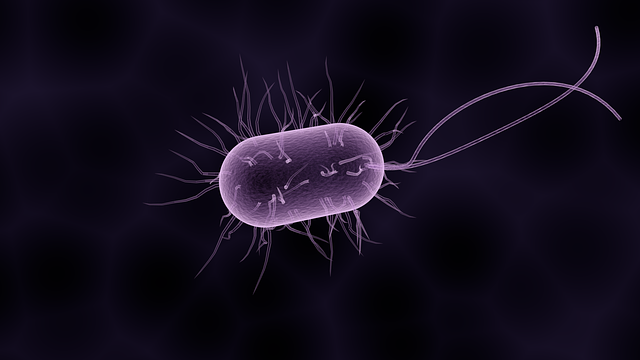
But what if even newer technologies threaten to make farmers themselves redundant? That is the prospect raised by the coming microbial revolution, which will potentially see micro-organisms in industrial vats used to produce most of the food humans need with vastly greater efficiency than conventional agriculture.

Some experts believe that this could be the biggest shift in the human economy since the invention of agriculture 10,000 years ago, freeing people from being tied to the land and reducing or even eliminating our reliance on producing food from soil, sunshine and other environmental resources.

Proponents include the United Kingdom-based environmental campaigner and Guardian columnist George Monbiot, who has coined the term “farmfree foods” to describe the heralded new products. Monbiot insists that farmfree foods “create astonishing possibilities to save both people and the planet.”

In particular, farmfree food will “allow us to hand back vast areas of land and sea to nature, permitting rewilding and carbon drawdown on a massive scale,” he said. It will also mean an “end to the exploitation of animals, an end to most deforestation” and a “massive reduction in the use of pesticides and fertilizer.”

Monbiot is not the only enthusiast. A report from the think tank RethinkX, which focuses on disruptive technologies, asserts that “the current industrialized, animal-agriculture system will be replaced by a Food-as-Software model, where foods are engineered by scientists at a molecular level and uploaded to databases that can be accessed by food designers anywhere in the world.”

This is not a revolution driven by governments but by scientists and innovators working in the field of “precision biology.”  This encompasses a whole suite of technologies needed to design and reprogram cells and organisms, such as genetic engineering, synthetic biology, metabolic engineering and computational biology.

According to RethinkX, “synthetic biology has undergone a conceptual shift by becoming an engineering discipline. Just like software developers, synthetic biologists can engineer biology and improve quality, scalability, nutrition, taste, structure and cost.”

The potential of this technology is nearly limitless. Microbes can have their genomes programed to produce virtually any desirable molecule, from omega 3 fatty acids to specific proteins, carbohydrates or sugars. Inputs can be produced using little more than air and water.

One much-cited example of the new wave is the Finnish firm Solar Foods, which produces microbial protein and carbohydrate using just hydrogen, oxygen and carbon dioxide as the main feedstocks. Hydrogen is derived from water via electrolysis using renewable electricity, making this a low-carbon foodstuff too.

Solar Foods claims its experimental powdered product Solein is 10 times more land-efficient than photosynthetic plants, if the electricity consumed comes from solar panels. Although the company does not say so, clearly this ratio could be dramatically improved however if the electricity were derived from a more land-efficient source, such as nuclear (which can also produce hydrogen directly).

Microbes can also be used to substitute for proteins produced by cows in milk and in their meat, while cell-based meats will likely become cost-competitive — initially for the ground beef market — within just a few years. One company, Finless Foods, is now aiming to use cell technology to replace seafoods, thereby hopefully taking the pressure off the world’s oceans.

The impact on animal agriculture could be dramatic. RethinkX forecasts that by 2030 demand for cow products will have fallen by 70 percent, and that even before this point “the U.S. cattle industry will be effectively bankrupt.” Demand for crops to feed cattle will fall by 50 percent, affecting in particular grain-exporting countries like Brazil, and farmland values “will collapse by 40 percent-80 percent.”

As Monbiot points out, this is potentially great news for nature. Land spared from agriculture could be rewilded to help halt the dramatic declines in biodiversity and wildlife abundance that are largely driven by land conversion for farming and grazing.

Spared land could also allow the sequestration of billions of tonnes of carbon in regrowing forests, reducing atmospheric concentrations of CO2 and helping the planet avoid the most catastrophic impacts of climate heating.

Cheaper food produced on only a tiny fraction of today’s land could also improve food security worldwide, not least by disconnecting food production from the vagaries of increasingly erratic weather as climate impacts accelerate.

It is not just farmers who will see their economic profitability and lifestyles disrupted in such a scenario. Fertilizer and pesticides manufacturers, as well as seed companies and farm machinery makers, would all find their business models undermined and their margins eroded.

Many environmentalists are not keen either. Monbiot admits he was “booed to the rafters” when presenting his vision to the Oxford Real Farming Conference recently. This meeting tends to attract proponents of “regnerative” and organic agriculture, whose return-to-nature approach unfortunately leads to much higher land take and greenhouse gas emissions than even conventional agriculture.

As with earlier genetic engineering, it is clear that next-generation precision biology will be disruptive to ideologies as well as economies. Greens, who tend to imagine a return to a bucolic rural idyll, will take some persuading that vat-based microbial foods produced on a mega-industrial scale are a step in the right direction.

But there is little sign that existing environmentalist approaches are working as deforestation increases, human population growth heads towards 9.5-10 billion and economic growth continues globally. Unless all these new people can be fed in a way that does not mean cultivating yet more land, the remaining tropical forests will surely fall too.

The hope with precision biology is that this revolution will be driven by innovation and economics. As RethinkX points out, once the new technologies begin to eat away at the markets for existing animal products, the livestock industries will enter a “death spiral” as they try to stay afloat by raising the prices on their remaining products.

The new era of precision biology and farmfree foods will upend our existing approaches and belief systems about food and farming. We simply cannot know how new technologies will change the lives of people across the world.

But at a conceptual level at least it is now possible to envisage how a larger human population can potentially survive the coming climate emergency without destroying much of the planet’s remaining biodiversity. And that surely has to be a good thing.


By Mark Lynas

Imprimir Artigo
Publicação Anterior

ANPOC e ANPROMIS debateram durante a AGROGLOBAL 2021 o “Mercado Mundial de Matérias-Primas”

Próxima Publicação

Revista Frutas, Legumes e Flores de outubro de 2021: Pêra e Maçã

Artigos Relacionados

pig
Nacional

Trabalhadores do matadouro do Cachão em greve por salários e subsídios em atraso

17/07/2026
EDIA
Últimas

EDIA disponibiliza para arrendamento 9 parcelas rústicas na Aldeia da Luz

17/07/2026
Internacional

Moçambique e Bielorrússia aceleram cooperação na mecanização agrícola

17/07/2026
Próxima Publicação

Revista Frutas, Legumes e Flores de outubro de 2021: Pêra e Maçã

Discussão sobre este post

Opinião

Últimas

Produzir bem já não chega: eficiência, estratégia e os desafios da engorda de bovinos

por Vítor Santos
12/07/2026

Ler maisDetails
Últimas

Segurança Alimentar Europeia Como Ativo Estratégico

por Pedro Santos
08/07/2026

Ler maisDetails

Subscrever as nossas newsletteres

Subscrever as nossas Newsletters Agroportal

Verifique na sua caixa de correio ou na pasta de spam para confirmar a sua subscrição.

Comunicados

EDIA

EDIA disponibiliza para arrendamento 9 parcelas rústicas na Aldeia da Luz

17/07/2026
EDIA

EDIA disponibiliza para arrendamento 83 parcelas de terreno

17/07/2026
Advertisement

Temas em destaque

Candidaturas PU Guerra Médio Oriente Mercosul ovibeja PAC pós 2027 Simplificação PAC Temporais vinho Água que Une

Eventos

Julho 2026
STQQSSD
   1 2 3 4 5
6 7 8 9 10 11 12
13 14 15 16 17 18 19
20 21 22 23 24 25 26
27 28 29 30 31   
« Jun   Ago »

Sobre Nós

O Agroportal.pt é uma plataforma de informação digital que reúne a informação relevante sobre agricultura. Tem um foco na Política Agrícola Comum e a sua aplicação em Portugal.

Menu

  • Quem somos
  • Relatórios anuais
  • Envie-nos informação
  • Publicidade
  • Newsletters
  • Estatuto Editorial
  • Ficha técnica
  • Proteção de Dados Pessoais
  • Disclaimer
Facebook twitter Circle Instagram Rss Feed

© Agroportal. All Rights reserved.

Bem-Vindo De Volta!

Sign In with Facebook
Sign In with Google
OR

Faça login na sua conta abaixo

Esqueceu-se da senha? Registar

Criar Uma Nova Conta!

Sign Up with Facebook
Sign Up with Google
OR

Preencha os campos abaixo para se registar

* Ao se registar-se no nosso site, você concorda com os Termos e Condições e a Política de Privacidade .
Todos os campos são necessários. Entrar

Obter a sua senha

Indique por favor o seu nome de utilizador ou endereço de E-mail para repor a sua senha.

Entrar
  • Login
  • Registar
Sem Resultado
Ver Todos Os Resultados
  • Sugeridas
  • Notícias
    • Nacional
    • Internacional
    • Comunicados
  • Opinião
  • Eventos
  • Dossiers
    • Agricultura Biológica
    • Apoios
    • Artigos Técnicos
    • Biossoluções
    • Cadeia Alimentar
    • Fertilizantes
    • Financiamento
    • Fitofarmacêuticos
    • Florestas
    • Futuro da PAC
    • Inovação
    • Mercados e Cotações agrícolas
    • Newsletters e Revistas
    • Recomendações Agroflorestais
    • Seguros agrícolas
  • Serviços
    • Diretório
    • Emprego
    • Máquinas Agrícolas
    • Meteorologia
    • Terrenos Agrícolas
    • Arquivo Agroportal

© Agroportal. All Rights reserved.

Este site usa cookies. Ao continuar a utilizar este site, está a dar consentimento à utilização de cookies. Visite a nossa Política de Protecção de dados e Cookies.