

















Sem Resultado
Ver Todos Os Resultados
Newsletters
Agroportal
  • Login
  • Registar
  • Sugeridas
  • Notícias
    • Notícias
    • Nacional
    • Internacional
    • Comunicados

    Guerra no Irão: Preço dos principais produtos agrícolas poderá subir 8,5% este ano

    Setor agrícola enfrenta desafios após chuvas excessivas e subida dos combustíveis

    Governo realiza estudo nacional sobre soluções europeias para reciclagem de plásticos agrícolas

    Governo lança estudo nacional sobre soluções europeias para reciclagem e valorização de plásticos agrícolas

    Ribatejo não pode continuar a ser esquecido: Portugal Fresh, COTHN e FNOP exigem igualdade no acesso à água

    Três entidades contestam manutenção de restrições a captações de água subterrânea no Ribatejo

    Governo aprovou 20 Programas de Reordenamento e Gestão da Paisagem

    Incêndios: Proprietários florestais querem prorrogação de prazo para limpeza até final de junho

    Incêndios: GNR sinalizou mais de 8.500 terrenos por limpar e mais ocorrências e detidos

  • Opinião
    António Covas

    O mundo agro rural, entre o bio produtivismo e o pós-produtivismo

    Valorizar o azeite português: um desígnio coletivo para o futuro

    Apoios ao Investimento Agrícola: Permanentes, Estruturados e sem Ilusões

    A Falácia das Taxas: Quem paga aos agricultores pelo carbono que sequestram?

    PARCA: da coragem inicial à impotência institucional

    João Dinis

    Pastores e queijo da serra

    Sofia Almeida

    O lobo-ibérico é um teste à seriedade das políticas de conservação

    Jovem Empresário Rural Não Agrícola, Precisam-se!

    Resultados económicos do sector agrícola em 2025: apesar de menos favoráveis do que os dos últimos anos não põem em causa a evolução bastante positiva da última década

  • Eventos
  • Dossiers

    Dossiers I

    • Agricultura Biológica
    • Apoios
    • Artigos Técnicos
    • Biossoluções
    • Cadeia Alimentar
    • Fertilizantes
    • Financiamento
    • Fitofarmacêuticos

    Dossiers II

    • Florestas
    • Futuro da PAC
    • Inovação
    • Mercados
    • Newsletters e Revistas
    • Recomendações Agroflorestais
    • Seguros

    Últimas

    Guerra no Irão: Preço dos principais produtos agrícolas poderá subir 8,5% este ano

    10/05/2026

    Corderos: tendencias opuestas, según el peso

    10/05/2026

    Vacuno: se intensifican los descensos en las cotizaciones

    10/05/2026

    Sexta semana consecutiva sin cambios en el porcino de capa blanca

    10/05/2026

    La almendra ecológica sigue sumando subidas en sus precios

    09/05/2026

    Aceite de oliva: gran volatilidad en los precios en origen

    09/05/2026
  • Serviços
    • Diretório
    • Emprego
    • Máquinas Agrícolas
    • Meteorologia
    • Terrenos Agrícolas
    • Arquivo Agroportal
Agroportal
  • Sugeridas
  • Notícias
    • Notícias
    • Nacional
    • Internacional
    • Comunicados

    Guerra no Irão: Preço dos principais produtos agrícolas poderá subir 8,5% este ano

    Setor agrícola enfrenta desafios após chuvas excessivas e subida dos combustíveis

    Governo realiza estudo nacional sobre soluções europeias para reciclagem de plásticos agrícolas

    Governo lança estudo nacional sobre soluções europeias para reciclagem e valorização de plásticos agrícolas

    Ribatejo não pode continuar a ser esquecido: Portugal Fresh, COTHN e FNOP exigem igualdade no acesso à água

    Três entidades contestam manutenção de restrições a captações de água subterrânea no Ribatejo

    Governo aprovou 20 Programas de Reordenamento e Gestão da Paisagem

    Incêndios: Proprietários florestais querem prorrogação de prazo para limpeza até final de junho

    Incêndios: GNR sinalizou mais de 8.500 terrenos por limpar e mais ocorrências e detidos

  • Opinião
    António Covas

    O mundo agro rural, entre o bio produtivismo e o pós-produtivismo

    Valorizar o azeite português: um desígnio coletivo para o futuro

    Apoios ao Investimento Agrícola: Permanentes, Estruturados e sem Ilusões

    A Falácia das Taxas: Quem paga aos agricultores pelo carbono que sequestram?

    PARCA: da coragem inicial à impotência institucional

    João Dinis

    Pastores e queijo da serra

    Sofia Almeida

    O lobo-ibérico é um teste à seriedade das políticas de conservação

    Jovem Empresário Rural Não Agrícola, Precisam-se!

    Resultados económicos do sector agrícola em 2025: apesar de menos favoráveis do que os dos últimos anos não põem em causa a evolução bastante positiva da última década

  • Eventos
  • Dossiers

    Dossiers I

    • Agricultura Biológica
    • Apoios
    • Artigos Técnicos
    • Biossoluções
    • Cadeia Alimentar
    • Fertilizantes
    • Financiamento
    • Fitofarmacêuticos

    Dossiers II

    • Florestas
    • Futuro da PAC
    • Inovação
    • Mercados
    • Newsletters e Revistas
    • Recomendações Agroflorestais
    • Seguros

    Últimas

    Guerra no Irão: Preço dos principais produtos agrícolas poderá subir 8,5% este ano

    10/05/2026

    Corderos: tendencias opuestas, según el peso

    10/05/2026

    Vacuno: se intensifican los descensos en las cotizaciones

    10/05/2026

    Sexta semana consecutiva sin cambios en el porcino de capa blanca

    10/05/2026

    La almendra ecológica sigue sumando subidas en sus precios

    09/05/2026

    Aceite de oliva: gran volatilidad en los precios en origen

    09/05/2026
  • Serviços
    • Diretório
    • Emprego
    • Máquinas Agrícolas
    • Meteorologia
    • Terrenos Agrícolas
    • Arquivo Agroportal
Sem Resultado
Ver Todos Os Resultados
Agroportal
Africa

Gene editing key to improving Africa’s staple crops

por Cornell Alliance for Science
12-08-2021 | 13:49
em Últimas, Internacional, Notícias inovação, Inovação, Dossiers
Tempo De Leitura: 4 mins
A A
Partilhe no FacebookPartilhe no TwitterEnviar para o WhatsappEnviar para o TelegramEnviar para o LinkedIn

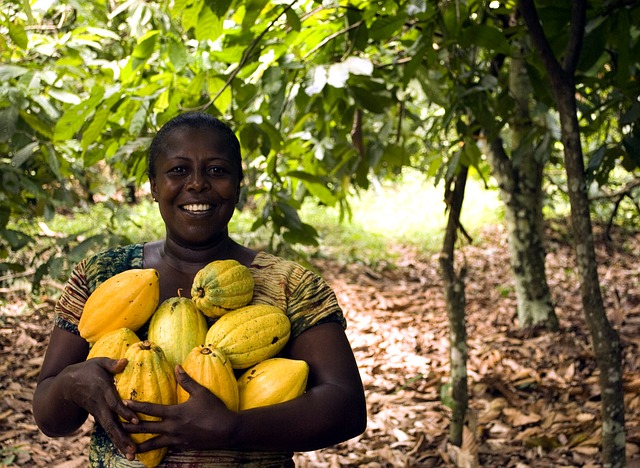
African scientists are using gene editing to improve major staple crops for increased productivity, enhanced nutrition and climate resilience.

Among them are John Odipo, a scientist at Uganda’s National Crops Resources Rsearch Institute (NaCRRI), who is using gene editing to develop cassava that can help resist pests and diseases affecting the plant.

Cassava feeds more than 80 million people in the world and more than 50 percent of that crop is produced in Africa, Odipio said.

“My first research using gene editing was to understand why some of the cassava varieties would not flower at the same time as others,” he said in a recent Alliance for Science Live webinar. “I developed a proof that gene editing can be used to effectively rewrite or modify genes of cassava in two varieties.  I transferred the acquired knowledge to address real breeding challenges, like why some cassava varieties flower early and frequently and others do not. After returning to Uganda from the USA, I am now in the process of transferring this knowledge to address challenges affecting other crops, including developing virus resistance in cassava, rice and maize.”

Odipio said that gene editing allows him to “make exact and predetermined changes within the genome within a shorter duration and get results that are similar to those achieved using conventional approaches. With gene editing, new, more tasty, nutritious varieties resistant to changing climatic conditions, pests and diseases can be created within shorter periods to feed the growing industries and human population in Africa. To achieve these, increased partnerships, funding opportunities, capacity building and science-based regulation are essential.”

James Karanja, a senior research scientist at the Kenya Agricultural and Livestock Research Organization (KALRO) in Nairobi, noted that it’s important for the public to understand that gene editing is a science with potential to feed the future.

“Agriculture drives the economy of Kenya and maize is a staple crop in the country,” he said. “Due to climate change, we observed a disease infestation called maize lethal necrosis (MLN) that came as a marriage between two viruses. This disease caused a severe loss of maize in Kenya, leading to a great deficit and increased demand for maize. When there is no maize, there is no food.”

In a bid to control this infestation, Karanja and other Kenyan scientists searched for solutions and found that there was no existing disease-resistant variety on the market or in Kenya’s national gene bank. Since conventional breeding can take seven to eight years, they chose to use gene editing technology as a quicker tool to improve resistance to MLN in maize.

“This is not to give a new product but to improve the products farmers already have in existence,” Karanja explained. “That is the good and powerful thing about this technology.”

Karanja hopes to potentially increase maize availability in East Africa by introducing resistance against MLN directly into parent inbred lines of popular commercial maize varieties that are currently susceptible to the disease and reintroducing them into the farmers’ fields.

As a young scientist, Rose-Harriet Okech shared her perspective on how gene editing will benefit upcoming scientists. As a graduate fellow at the International Institute of Tropical Agriculture (IITA), Okech works to improve flowering in tropical crops through a project led by Flair Fellow Dr. Samwel Muiruri Kariuki and funded by the Royal Society and the African Academy of Sciences.

“I am Africa and Africa is me,” she said. “I am currently working on an African tropical crop and the fact that my work will generally impact the African community is inspiration enough. My grandmother back in the village being able to enjoy the products of my research makes me willing to go to the lab every day.”

Gene editing can be used to advance crop research, Okech said.  “Since crop pathogens are evolving at a faster rate than how our crops are improving through conventional breeding, it becomes a challenge to stick to the conventional way of breeding,” she said. “With the rapidly changing climate, gene editing has become an indispensable tool in addressing agricultural challenges because of the specificity in how it solves the problem.”

Webinar moderator Andrew Kiggundu, project manager of the Virus Resistant Cassava for Africa (VIRCA) project at the Donald Danforth Plant Science Center, said that in order to improve Africa’s food systems, gene editing research should be promoted  within the public sector.

The panelists agreed that favorable biosafety regulatory policies are very useful for farmers, scientists and consumers to provide proper channels to deliver the gene editing technologies. While some African countries, like Kenya and Nigeria, are already making favorable policies, they called upon the policy makers in other countries to act as good examples to put in place policies that allow for commercialization of these products.

With gene editing, there are great opportunities to improve the quality of African staple crops, they said. Supportive policies will ensure that their work is not left on the shelves, but gets into the hands of the farmers and consumers who benefit the most.


Imprimir Artigo
Publicação Anterior

Exportações de vinho sobem 14,5% em volume e atingem quase 436 ME até junho

Próxima Publicação

PINUSPRESS 50

Artigos Relacionados

faça chuva faça sol
Últimas

Faça Chuva Faça Sol – T10 Ep.18

10/05/2026
Internacional

Guerra no Irão: Preço dos principais produtos agrícolas poderá subir 8,5% este ano

10/05/2026
Nacional

Setor agrícola enfrenta desafios após chuvas excessivas e subida dos combustíveis

10/05/2026
Próxima Publicação
centro pinus

PINUSPRESS 50

Discussão sobre este post

Opinião

António Covas
Últimas

O mundo agro rural, entre o bio produtivismo e o pós-produtivismo

por António Covas
10/05/2026

Ler mais
Últimas

Valorizar o azeite português: um desígnio coletivo para o futuro

por Manuel Norte Santo
08/05/2026

Ler mais

Subscrever as nossas newsletteres

Subscrever as nossas Newsletters Agroportal

Verifique na sua caixa de correio ou na pasta de spam para confirmar a sua subscrição.

Comunicados

Governo lança estudo nacional sobre soluções europeias para reciclagem e valorização de plásticos agrícolas

10/05/2026

Ribatejo não pode continuar a ser esquecido: Portugal Fresh, COTHN e FNOP exigem igualdade no acesso à água

09/05/2026
Advertisement

Temas em destaque

Candidaturas PU Guerra Médio Oriente Mercosul ovibeja PAC pós 2027 Simplificação PAC Temporais vinho Água que Une

Eventos

Maio 2026
STQQSSD
     1 2 3
4 5 6 7 8 9 10
11 12 13 14 15 16 17
18 19 20 21 22 23 24
25 26 27 28 29 30 31
« Abr   Jun »

Sobre Nós

O Agroportal.pt é uma plataforma de informação digital que reúne a informação relevante sobre agricultura. Tem um foco na Política Agrícola Comum e a sua aplicação em Portugal.

Menu

  • Quem somos
  • Relatórios anuais
  • Envie-nos informação
  • Publicidade
  • Newsletters
  • Estatuto Editorial
  • Ficha técnica
  • Proteção de Dados Pessoais
  • Disclaimer
Facebook twitter Circle Instagram Rss Feed

© Agroportal. All Rights reserved.

  • Login
  • Registar
Sem Resultado
Ver Todos Os Resultados
  • Sugeridas
  • Notícias
    • Nacional
    • Internacional
    • Comunicados
  • Opinião
  • Eventos
  • Dossiers
    • Agricultura Biológica
    • Apoios
    • Artigos Técnicos
    • Biossoluções
    • Cadeia Alimentar
    • Fertilizantes
    • Financiamento
    • Fitofarmacêuticos
    • Florestas
    • Futuro da PAC
    • Inovação
    • Mercados e Cotações agrícolas
    • Newsletters e Revistas
    • Recomendações Agroflorestais
    • Seguros agrícolas
  • Serviços
    • Diretório
    • Emprego
    • Máquinas Agrícolas
    • Meteorologia
    • Terrenos Agrícolas
    • Arquivo Agroportal

© Agroportal. All Rights reserved.

Bem-Vindo De Volta!

Sign In with Facebook
Sign In with Google
OU

Faça login na sua conta abaixo

Esqueceu-se da senha? Registar

Criar Uma Nova Conta!

Sign Up with Facebook
Sign Up with Google
OU

Preencha os campos abaixo para se registar

* Ao se registar-se no nosso site, você concorda com os Termos e Condições e a Política de Privacidade .
Todos os campos são necessários. Entrar

Obter a sua senha

Indique por favor o seu nome de utilizador ou endereço de E-mail para repor a sua senha.

Entrar
Este site usa cookies. Ao continuar a utilizar este site, está a dar consentimento à utilização de cookies. Visite a nossa Política de Protecção de dados e Cookies.