
















Sem Resultado
Ver Todos Os Resultados
Newsletters
Agroportal
  • Login
  • Registar
  • Sugeridas
  • Notícias
    • Notícias
    • Nacional
    • Internacional
    • Comunicados
    pig

    Trabalhadores do matadouro do Cachão em greve por salários e subsídios em atraso

    EDIA

    EDIA disponibiliza para arrendamento 9 parcelas rústicas na Aldeia da Luz

    Moçambique e Bielorrússia aceleram cooperação na mecanização agrícola

    vaca castanha

    Politécnico de Castelo Branco dá bolsas a novos melhores alunos de agronomia e veterinária

    Douro aumenta produção de vinho do Porto para as 76 mil pipas

    EDIA

    EDIA disponibiliza para arrendamento 83 parcelas de terreno

    IFAP

    Destilação de subprodutos da vinificação – Reforço da dotação orçamental – Campanha 2025/2026

    Impacto da agricultura intensiva na biodiversidade: “A continuar assim, atingiremos um ponto de não retorno” – Biólogo Miguel Porto

    Góis com 464 mil euros para reabilitar áreas florestais fustigadas pela Kristin

  • Opinião

    Produzir bem já não chega: eficiência, estratégia e os desafios da engorda de bovinos

    Segurança Alimentar Europeia Como Ativo Estratégico

    Sabemos distinguir um frango do campo. Porque não conseguimos distinguir um Azeite de Olival Tradicional?

    Carlos Neves

    Promoções que despromovem a produção de leite de Portugal

    Georgete Felix

    O balanço invisível da agricultura

    Acordo UE-Mercosul

    Manuel Chaveiro Soares

    Melhoramento genético dos frangos de carne: importância para os consumidores e o ambiente

    A escolha certa!

    O azeite vale mais do que o preço que aparece na prateleira

  • Eventos
  • Dossiers

    Dossiers I

    • Agricultura Biológica
    • Apoios
    • Artigos Técnicos
    • Biossoluções
    • Cadeia Alimentar
    • Fertilizantes
    • Financiamento
    • Fitofarmacêuticos

    Dossiers II

    • Florestas
    • Futuro da PAC
    • Inovação
    • Mercados
    • Newsletters e Revistas
    • Recomendações Agroflorestais
    • Seguros

    Últimas

    IFAP

    Destilação de subprodutos da vinificação – Reforço da dotação orçamental – Campanha 2025/2026

    17/07/2026

    Góis com 464 mil euros para reabilitar áreas florestais fustigadas pela Kristin

    17/07/2026

    Mais tempo para submeter a sua candidatura | Apoio ao investimento na floresta

    17/07/2026

    “Kristin? Agricultores ficaram desiludidos e nalguns casos, apoios foram insuficientes”, alerta presidente da Lusomorango

    17/07/2026

    Alto Alentejo: CIM reforça vínculo com sapadores florestais

    17/07/2026

    BPI, Fundação la Caixa e Técnico lançam cátedra sobre “Florestas e Gestão do Fogo” liderada por Tiago Oliveira

    17/07/2026
  • Serviços
    • Diretório
    • Emprego
    • Máquinas Agrícolas
    • Meteorologia
    • Terrenos Agrícolas
    • Arquivo Agroportal
Agroportal
  • Sugeridas
  • Notícias
    • Notícias
    • Nacional
    • Internacional
    • Comunicados
    pig

    Trabalhadores do matadouro do Cachão em greve por salários e subsídios em atraso

    EDIA

    EDIA disponibiliza para arrendamento 9 parcelas rústicas na Aldeia da Luz

    Moçambique e Bielorrússia aceleram cooperação na mecanização agrícola

    vaca castanha

    Politécnico de Castelo Branco dá bolsas a novos melhores alunos de agronomia e veterinária

    Douro aumenta produção de vinho do Porto para as 76 mil pipas

    EDIA

    EDIA disponibiliza para arrendamento 83 parcelas de terreno

    IFAP

    Destilação de subprodutos da vinificação – Reforço da dotação orçamental – Campanha 2025/2026

    Impacto da agricultura intensiva na biodiversidade: “A continuar assim, atingiremos um ponto de não retorno” – Biólogo Miguel Porto

    Góis com 464 mil euros para reabilitar áreas florestais fustigadas pela Kristin

  • Opinião

    Produzir bem já não chega: eficiência, estratégia e os desafios da engorda de bovinos

    Segurança Alimentar Europeia Como Ativo Estratégico

    Sabemos distinguir um frango do campo. Porque não conseguimos distinguir um Azeite de Olival Tradicional?

    Carlos Neves

    Promoções que despromovem a produção de leite de Portugal

    Georgete Felix

    O balanço invisível da agricultura

    Acordo UE-Mercosul

    Manuel Chaveiro Soares

    Melhoramento genético dos frangos de carne: importância para os consumidores e o ambiente

    A escolha certa!

    O azeite vale mais do que o preço que aparece na prateleira

  • Eventos
  • Dossiers

    Dossiers I

    • Agricultura Biológica
    • Apoios
    • Artigos Técnicos
    • Biossoluções
    • Cadeia Alimentar
    • Fertilizantes
    • Financiamento
    • Fitofarmacêuticos

    Dossiers II

    • Florestas
    • Futuro da PAC
    • Inovação
    • Mercados
    • Newsletters e Revistas
    • Recomendações Agroflorestais
    • Seguros

    Últimas

    IFAP

    Destilação de subprodutos da vinificação – Reforço da dotação orçamental – Campanha 2025/2026

    17/07/2026

    Góis com 464 mil euros para reabilitar áreas florestais fustigadas pela Kristin

    17/07/2026

    Mais tempo para submeter a sua candidatura | Apoio ao investimento na floresta

    17/07/2026

    “Kristin? Agricultores ficaram desiludidos e nalguns casos, apoios foram insuficientes”, alerta presidente da Lusomorango

    17/07/2026

    Alto Alentejo: CIM reforça vínculo com sapadores florestais

    17/07/2026

    BPI, Fundação la Caixa e Técnico lançam cátedra sobre “Florestas e Gestão do Fogo” liderada por Tiago Oliveira

    17/07/2026
  • Serviços
    • Diretório
    • Emprego
    • Máquinas Agrícolas
    • Meteorologia
    • Terrenos Agrícolas
    • Arquivo Agroportal
Sem Resultado
Ver Todos Os Resultados
Agroportal

Edible insects: From niche ‘passion project’ to widespread acceptance?

por Cornell Alliance for Science
22-01-2021 | 15:00
em Últimas, Internacional, Notícias gastronomia, Dossiers, Gastronomia
Tempo De Leitura: 5 mins
A A
Partilhe no FacebookPartilhe no TwitterEnviar para o WhatsappEnviar para o TelegramEnviar para o LinkedIn

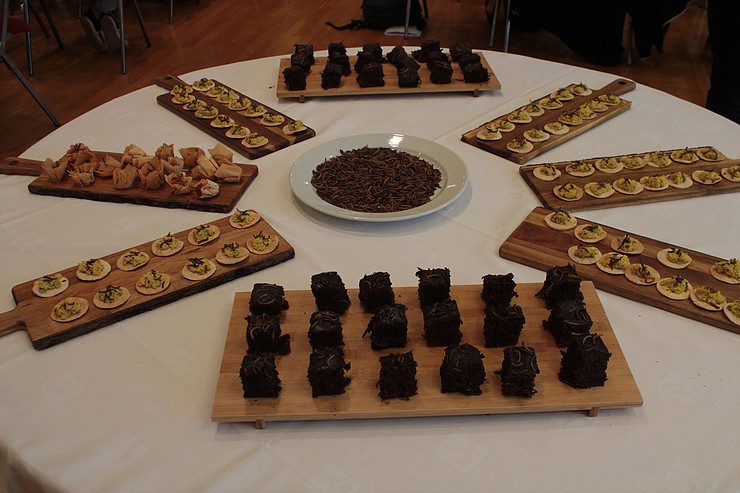
Edible insects got one step closer to Europeans’ kitchens this month. The European Food Safety Authority released a scientific opinion on mealworms, concluding that the edible insects have “a high protein content” and pose “no safety concerns” to consumers.

The assessment on dried yellow mealworm (larva of the Tenebrio molitor beetle) marks the food safety watchdog’s first edible insect approval. While some EU countries like the Netherlands, Denmark and Belgium already allow insect-based food products, they are banned in other EU countries. But assuming the EFSA’s mealworm assessment is endorsed by the European Commission, edible insects could soon find a much larger market — if Europeans can get past their aversion to eating bugs, of course.

“There are cognitive reasons derived from our social and cultural experiences, the so-called ‘yuck factor’, that make the thought of eating insects repellent to many Europeans,” Giovanni Sogari, a social and consumer researcher at the University of Parma, said in an EFSA press release. “With time and exposure such attitudes can change.”

“Tremendous alternative”

Dr. Per Pinstrup-Andersen, an agricultural economist and one of the world’s leading food policy voices, has no such hang-ups. He’s been eating insects for the past eight or nine years as his continuing research into global food policy opened his eyes to the possibilities of alternative food sources like insects, seaweed and orphan crops.

Pinstrup-Andersen, a winner of the World Food Prize and professor emeritus at Cornell University, said he buys a variety of insect-based foods both online and from select supermarkets in his home country of Denmark. Although he said his cricket-based breads, freeze-dried mealworms and insect-based energy bars “happen to taste very good,” they also fulfill an important nutritional role.

“Insects provide a tremendous alternative source of protein. There is a lot of protein in those little buggers. We older people are frequently short of protein and this is an opportunity to really make a difference,” Pinstrup-Andersen, 81, told the Alliance for Science.

Rich country attitudes affect the poor

Pinstrup-Andersen and many other food policy experts look to insects as an important part of addressing global food insecurity. And with a growing awareness of the environmental impact of meat protein sources like cattle, insects can provide vital nutritional benefits with a smaller carbon footprint.

“In a country like Denmark, we’ll get all the protein we need if we cut back on beef consumption,” Pinstrup-Andersen said. “I’m more concerned about developing countries, and I really think edible insects offer an incredible opportunity to reduce protein deficiencies, calorie deficiencies and vitamin and mineral deficiencies amongst poor people in developing countries.”

Western acceptance of edible insects would likely have a knock-off effect in lower-income countries, he added.

“It would be nice if we could expand production and consumption in the high-income countries because the low-income governments tend to look at what we do and then design their legislation more or less accordingly,” he said. “So one way to get it into the stomachs of poor people in developing countries is for us to serve as a model.”

In many parts of the world, insects are already consumed to a much larger degree than in the West.

“A very large number of people in a very large number of countries have been eating insects all along. So, it’s not as though we’re inventing something brand new, it’s just that it hasn’t been mass produced in the countries where we eat a lot of beef,” Pinstrup-Andersen said.

He added that the way insect-based products are packaged and promoted will go a long way toward overcoming the “yuck factor” referenced by EFSA’s Sogari.

“The key question in all of this, of course, is whether we can get people to eat the stuff. If you present it as some sort of live cricket you pop in your mouth, that’s tough,” he said.

‘Passion project’

One of Pinstrup-Andersen’s favorite providers of insect products is the Copenhagen-based Hey Planet. The company’s co-founder, Malena Sigurgeirsdottir, said she’s made a conscious decision to offer powder-based products rather than whole insects.

“I think it only makes sense to powderize it and then make it into different products because we eat very much with our eyes,” she told the Alliance for Science.

Sigurgeirsdottir said the EFSA ruling on mealworm won’t affect her plans at Hey Planet, in part because she prefers using the lesser mealworm (Alphitobius diaperinus larva) in her recipes, a similar but “tastier” species than the yellow mealworm that was the subject of EFSA’s scientific opinion.

Sigurgeirsdottir and Jessica Buhl-Nielsen launched Hey Planet in 2016, and only after a nine-month battle with the Danish food authorities were they allowed to legally sell their products domestically in physical stores. They have since expanded to Germany, but because different rules apply to online companies they can ship their products legally throughout the EU. Sigurgeirsdottir describes their work as “very much a passion project.”

“It’s really about trying to create a food culture that is more sustainable and green. There is such amazing potential for edible insects, both when it comes to nutrition and sustainability,” she said. “They deliver a lot of nutrients that plants can’t and it’s more sustainable to get them from insects than meat.”

She said business is “going very well in Denmark” and that being in such a small market allows Hey Planet to test out different ideas. The company’s newest focus is a mincemeat recipe that uses insect protein. The company has entered into an agreement to launch the insect-based meat at high-end restaurants this year and hopes to have it in retail stores by 2022.

If more companies like Hey Planet find success with insect-based food products, it could help change what Pinstrup-Andersen called a “very conservative mindset” among many of his fellow food policy experts. He compared edible insects to vertical farming in that “almost everybody I talk to in my community of food policy analysts always say that these things are never going to fly.”

“They say that insects are just a pipe dream and that no one will ever eat them. There is enormous conservatism among people who should know better. Few people actively oppose edible insects, but there’s just a general inability to think outside the box,” he said.

Will Europeans start eating insects? It’s probably not going to be widespread practice overnight but many foods that are now staples of the Western diet were at one time considered “novel,” as EFSA explains in this video:

BY JUSTIN CREMER

O artigo foi publicado originalmente em Cornell Alliance for Science.

Imprimir Artigo
Publicação Anterior

PE publica estudo sobre uso de pesticidas em países em desenvolvimento

Próxima Publicação

Previsão período alargado – 25 jan. a 22 fev. 2021

Artigos Relacionados

pig
Nacional

Trabalhadores do matadouro do Cachão em greve por salários e subsídios em atraso

17/07/2026
EDIA
Últimas

EDIA disponibiliza para arrendamento 9 parcelas rústicas na Aldeia da Luz

17/07/2026
Internacional

Moçambique e Bielorrússia aceleram cooperação na mecanização agrícola

17/07/2026
Próxima Publicação
ipma

Previsão período alargado - 25 jan. a 22 fev. 2021

Discussão sobre este post

Opinião

Últimas

Produzir bem já não chega: eficiência, estratégia e os desafios da engorda de bovinos

por Vítor Santos
12/07/2026

Ler maisDetails
Últimas

Segurança Alimentar Europeia Como Ativo Estratégico

por Pedro Santos
08/07/2026

Ler maisDetails

Subscrever as nossas newsletteres

Subscrever as nossas Newsletters Agroportal

Verifique na sua caixa de correio ou na pasta de spam para confirmar a sua subscrição.

Comunicados

EDIA

EDIA disponibiliza para arrendamento 9 parcelas rústicas na Aldeia da Luz

17/07/2026
EDIA

EDIA disponibiliza para arrendamento 83 parcelas de terreno

17/07/2026
Advertisement

Temas em destaque

Candidaturas PU Guerra Médio Oriente Mercosul ovibeja PAC pós 2027 Simplificação PAC Temporais vinho Água que Une

Eventos

Julho 2026
STQQSSD
   1 2 3 4 5
6 7 8 9 10 11 12
13 14 15 16 17 18 19
20 21 22 23 24 25 26
27 28 29 30 31   
« Jun   Ago »

Sobre Nós

O Agroportal.pt é uma plataforma de informação digital que reúne a informação relevante sobre agricultura. Tem um foco na Política Agrícola Comum e a sua aplicação em Portugal.

Menu

  • Quem somos
  • Relatórios anuais
  • Envie-nos informação
  • Publicidade
  • Newsletters
  • Estatuto Editorial
  • Ficha técnica
  • Proteção de Dados Pessoais
  • Disclaimer
Facebook twitter Circle Instagram Rss Feed

© Agroportal. All Rights reserved.

Bem-Vindo De Volta!

Sign In with Facebook
Sign In with Google
OR

Faça login na sua conta abaixo

Esqueceu-se da senha? Registar

Criar Uma Nova Conta!

Sign Up with Facebook
Sign Up with Google
OR

Preencha os campos abaixo para se registar

* Ao se registar-se no nosso site, você concorda com os Termos e Condições e a Política de Privacidade .
Todos os campos são necessários. Entrar

Obter a sua senha

Indique por favor o seu nome de utilizador ou endereço de E-mail para repor a sua senha.

Entrar
  • Login
  • Registar
Sem Resultado
Ver Todos Os Resultados
  • Sugeridas
  • Notícias
    • Nacional
    • Internacional
    • Comunicados
  • Opinião
  • Eventos
  • Dossiers
    • Agricultura Biológica
    • Apoios
    • Artigos Técnicos
    • Biossoluções
    • Cadeia Alimentar
    • Fertilizantes
    • Financiamento
    • Fitofarmacêuticos
    • Florestas
    • Futuro da PAC
    • Inovação
    • Mercados e Cotações agrícolas
    • Newsletters e Revistas
    • Recomendações Agroflorestais
    • Seguros agrícolas
  • Serviços
    • Diretório
    • Emprego
    • Máquinas Agrícolas
    • Meteorologia
    • Terrenos Agrícolas
    • Arquivo Agroportal

© Agroportal. All Rights reserved.

Este site usa cookies. Ao continuar a utilizar este site, está a dar consentimento à utilização de cookies. Visite a nossa Política de Protecção de dados e Cookies.