



















Sem Resultado
Ver Todos Os Resultados
Newsletters
Agroportal
  • Login
  • Registar
  • Sugeridas
  • Notícias
    • Notícias
    • Nacional
    • Internacional
    • Comunicados

    Vacas que já usam IA querem a abertura de mais mercados

    Ministério da Agricultura recusa perda de autonomia das comunidades baldias

    Mau tempo: Efeitos da Kristin aumentam risco de incêndios nas zonas afetadas – Relatório

    rio com videiras e vinha no douro

    Douro recebe Concurso Mundial de Bruxelas de 14 a 16 de maio de 2027

    vinha no rio douro

    Aumentos “absurdos” dos custos de produção preocupam viticultores do Douro

    ipma

    IPMA: Temperaturas elevadas e poeiras em suspensão em Portugal continental – Comunicado n.º 3

    fogo chamas armazém

    Perto de um terço de Portugal continental com risco alto e muito alto de incêndio rural – INE

    lince ibérico cedida icnf

    “O problema não é a mudança de gestão”. Reunião entre equipa do centro do lince-ibérico e ICNF tenta travar impasse sobre mudança de gestão

    vinho copo fundo branco

    Cerca de 40 produtores de vinho do Alentejo participam no ÉvoraWine

  • Opinião

    Barragens Não Resolvem Desertificação; Resolvem Estatística

    Água, agricultura e adaptação climática no Algarve: estamos a escolher as soluções certas?

    Manuel Chaveiro Soares

    Importa criar condições para melhorar a competitivade agrícola

    António Covas

    O mundo agro rural, entre o bio produtivismo e o pós-produtivismo

    Valorizar o azeite português: um desígnio coletivo para o futuro

    Apoios ao Investimento Agrícola: Permanentes, Estruturados e sem Ilusões

    A Falácia das Taxas: Quem paga aos agricultores pelo carbono que sequestram?

    PARCA: da coragem inicial à impotência institucional

    João Dinis

    Pastores e queijo da serra

  • Eventos
  • Dossiers

    Dossiers I

    • Agricultura Biológica
    • Apoios
    • Artigos Técnicos
    • Biossoluções
    • Cadeia Alimentar
    • Fertilizantes
    • Financiamento
    • Fitofarmacêuticos

    Dossiers II

    • Florestas
    • Futuro da PAC
    • Inovação
    • Mercados
    • Newsletters e Revistas
    • Recomendações Agroflorestais
    • Seguros

    Últimas

    Corderos: predomino de las bajadas en las cotizaciones

    24/05/2026

    Vacuno: nuevas caídas en los precios

    24/05/2026

    Porcino de capa blanca: cambio de tendencia en los precios

    24/05/2026

    Almendras: la ecológica alcanza su nivel más elevado de los últimos años

    23/05/2026

    Aceite de oliva Se mantiene la tónica bajista en los precios en origen

    23/05/2026

    Cotações – Bovinos – 11 a 17 de maio de 2026

    22/05/2026
  • Serviços
    • Diretório
    • Emprego
    • Máquinas Agrícolas
    • Meteorologia
    • Terrenos Agrícolas
    • Arquivo Agroportal
Agroportal
  • Sugeridas
  • Notícias
    • Notícias
    • Nacional
    • Internacional
    • Comunicados

    Vacas que já usam IA querem a abertura de mais mercados

    Ministério da Agricultura recusa perda de autonomia das comunidades baldias

    Mau tempo: Efeitos da Kristin aumentam risco de incêndios nas zonas afetadas – Relatório

    rio com videiras e vinha no douro

    Douro recebe Concurso Mundial de Bruxelas de 14 a 16 de maio de 2027

    vinha no rio douro

    Aumentos “absurdos” dos custos de produção preocupam viticultores do Douro

    ipma

    IPMA: Temperaturas elevadas e poeiras em suspensão em Portugal continental – Comunicado n.º 3

    fogo chamas armazém

    Perto de um terço de Portugal continental com risco alto e muito alto de incêndio rural – INE

    lince ibérico cedida icnf

    “O problema não é a mudança de gestão”. Reunião entre equipa do centro do lince-ibérico e ICNF tenta travar impasse sobre mudança de gestão

    vinho copo fundo branco

    Cerca de 40 produtores de vinho do Alentejo participam no ÉvoraWine

  • Opinião

    Barragens Não Resolvem Desertificação; Resolvem Estatística

    Água, agricultura e adaptação climática no Algarve: estamos a escolher as soluções certas?

    Manuel Chaveiro Soares

    Importa criar condições para melhorar a competitivade agrícola

    António Covas

    O mundo agro rural, entre o bio produtivismo e o pós-produtivismo

    Valorizar o azeite português: um desígnio coletivo para o futuro

    Apoios ao Investimento Agrícola: Permanentes, Estruturados e sem Ilusões

    A Falácia das Taxas: Quem paga aos agricultores pelo carbono que sequestram?

    PARCA: da coragem inicial à impotência institucional

    João Dinis

    Pastores e queijo da serra

  • Eventos
  • Dossiers

    Dossiers I

    • Agricultura Biológica
    • Apoios
    • Artigos Técnicos
    • Biossoluções
    • Cadeia Alimentar
    • Fertilizantes
    • Financiamento
    • Fitofarmacêuticos

    Dossiers II

    • Florestas
    • Futuro da PAC
    • Inovação
    • Mercados
    • Newsletters e Revistas
    • Recomendações Agroflorestais
    • Seguros

    Últimas

    Corderos: predomino de las bajadas en las cotizaciones

    24/05/2026

    Vacuno: nuevas caídas en los precios

    24/05/2026

    Porcino de capa blanca: cambio de tendencia en los precios

    24/05/2026

    Almendras: la ecológica alcanza su nivel más elevado de los últimos años

    23/05/2026

    Aceite de oliva Se mantiene la tónica bajista en los precios en origen

    23/05/2026

    Cotações – Bovinos – 11 a 17 de maio de 2026

    22/05/2026
  • Serviços
    • Diretório
    • Emprego
    • Máquinas Agrícolas
    • Meteorologia
    • Terrenos Agrícolas
    • Arquivo Agroportal
Sem Resultado
Ver Todos Os Resultados
Agroportal

Ease regulatory burden to support ‘new revolution’ in crop breeding, researchers urge

por Cornell Alliance for Science
10-06-2021 | 15:54
em Últimas, Internacional, Notícias inovação, Inovação, Dossiers
Tempo De Leitura: 5 mins
A A
Partilhe no FacebookPartilhe no TwitterEnviar para o WhatsappEnviar para o TelegramEnviar para o LinkedIn

It’s imperative to ease the regulatory burden on new crop breeding technologies that could feed a warmer, hungrier world, a new study urged.

The safety risks from these new technologies are “very low compared to conventional breeding methods and/or spontaneous mutations,” according to a paper published in Critical Reviews in Plant Sciences. The authors further argue that regulations should be evidence-based and “consider wider ethical and socio-economic impacts of subjecting new crop varieties to burdensome and costly premarket safety assessments as a result of the breeding technology used for their development.”

The current onerous and expensive regulatory process for genetically modified (GM) crops has already stifled innovation by restricting their development to wealthy corporations that can afford the costs and caused two transgenic traits — herbicide-tolerance and insect-resistance (Bt) — to dominate the market, the authors wrote. However, these regulations “do not appear to provide any benefits in terms of safety” and should not be imposed on crops derived from genome editing and other new plant breeding technologies.

With the world population estimated to grow from approximately 7.7 billion people to 9.7 billion by the year 2050, crop productivity may need to increase by 50 percent over 2010 levels just to supply food needs, the paper noted.

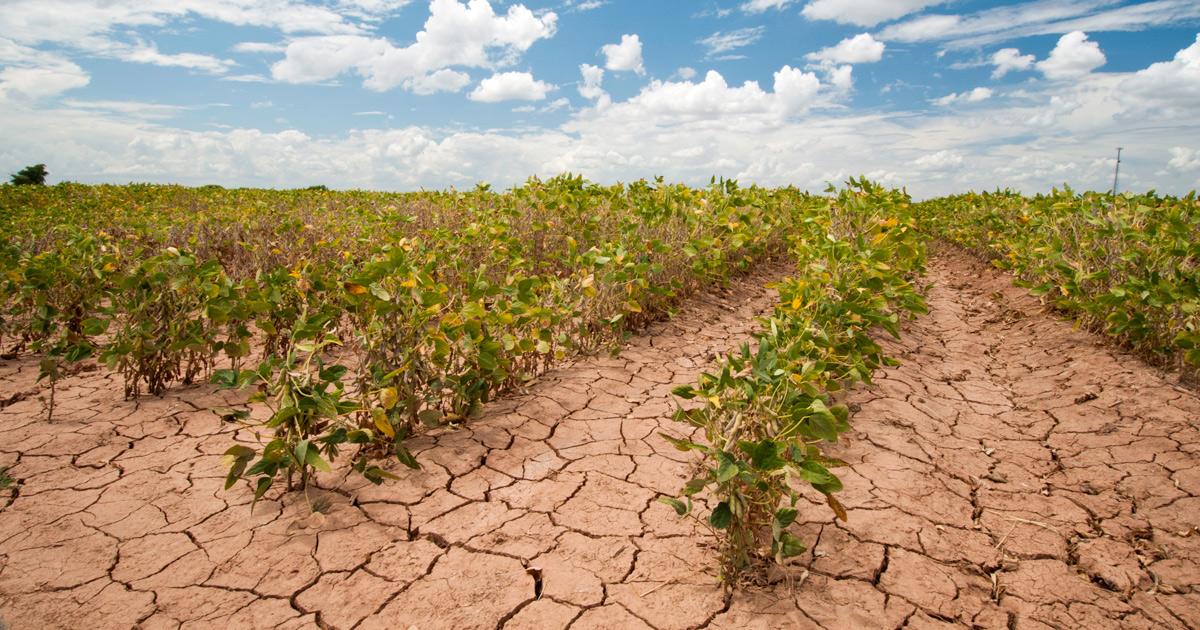
“Such a feat will be challenging in and of itself; however, factors such as water scarcity, climbing fertilizer costs and additional regulatory restrictions on their use will impede these efforts even further,” the authors wrote. “Moreover, climate change-related environmental factors, such as increased temperatures, augmentation in weather variability and the intensity of extreme weather events and shifting disease/pest outbreaks are known to instigate both yield and nutritional penalties in many crop species. These negative effects are already evident in parts of the world and will only worsen as climate change escalates.

“In addition to the clear food security crisis that we are facing, we are also seeing an erosion in traditional farming knowledge with an increasing number of farmers moving away from this occupation due to diminishing returns,” the paper continued. “Therefore, in order to ensure a sufficient supply of food during a period when considerable environmental changes are predicted to occur, there is an urgent need for the development of high-yielding, climate change-tolerant, nutrient-rich and environmentally-friendly crop cultivars that are profitable to farmers.”

New crop breeding technologies could help overcome those challenges and meet the demand for more food. But even though humans likely began modifying plants 10,000 to 13,000 years ago, and plants were evolving through the occurrence of spontaneous genetic alterations long before that, “there remains an undercurrent of anxiety regarding ‘GM’ [genetically modified] crops in a substantial proportion of the general public,” the authors wrote.

“In light of the short timeframe before food demand is projected to exceed supply in the midst of a climate change crisis, it is clear that we are in urgent need of a new revolution in crop biotechnology as a critical component of ensuring food security in the future,” the authors wrote.

“In order to achieve this, it is of the utmost importance that crop breeders have access to a wide range of complementary breeding technologies; a prerequisite for which will be regulatory policies that are based on scientific findings rather than political or emotional sentiments, as well as an understanding that all of these methods are simply different means of achieving the same thing — genetic variations.”

The paper, which compares the types and propensity for mutations derived spontaneously with those that occur through traditional, induced mutagenesis, transgenic and genome editing breeding approaches, suggests that potential off-target mutations resulting from CRISPR/Cas systems “are very unlikely.” Indeed, “the vast majority of CRISPR/Cas platforms assessed thus far in plants appear to be highly precise, eliciting very few, if any, off-target effects from the editing technology itself.”

Additionally, “possible off-target mutations are highly predictable and can very easily be minimized through the careful selection of target sites,” the authors wrote. “In the case of other CRISPR/Cas platforms, the prevalence of off-target effects is slightly more variable, and depends upon the particular technology used.”

While there has been extensive discussion about possible unintended risks associated with crop improvement — with much of it directed at plants derived through biotechnology — the authors argue that “what should instead be at the forefront of such debates is that unexpected/unknown genetic alterations are unavoidable and observable in every crop, regardless of the breeding technology. These even occur spontaneously from one generation to the next, and are an absolute requisite for evolution itself, which means that they have laid the foundation for plant survival and adaptation throughout history.”

“Plants have an extraordinary capacity to withstand major genetic changes without exhibiting detrimental effects,” the authors wrote. “Even in instances where genetic variation introduced during the breeding process does yield an unanticipated trait, the likelihood of this impacting the safety of the crop in the context of food, feed or the environment is very low.

“Given that the incidence of ‘off-target’/unknown genetic effects resulting from the use of transgenic, cisgenic and RNAi technologies has been found to be very low compared to conventional breeding methods and/or spontaneous mutations that have occurred over time, one would assume that the risk associated with such changes would be negligible.”

Though some nations have already moved to regulate the products of genome editing differently than traditional GMOs, the European Union and New Zealand have chosen to subject genome edited crops to strict GM regulatory laws.

“Unfortunately, decisions such as these tend to be based in part on unsubstantiated opinions, politics and misinformation, and there is thus a critical need to increase understanding related to biotechnological breeding platforms, as well as public awareness, in order to elicit rational, evidence-based, flexible and trade-facilitative amendments to our current crop regulatory laws as a means of keeping pace with evolving breeding technologies,” the authors wrote.

Concerns about genetically engineered crops “are largely driven by a growing educational gap in the context of basic biology, genetics and breeding practices, since this has in no way kept pace with the rapid growth in science that has occurred over the last few decades,” the authors wrote. “These discrepancies translate into a fear of the unknown and have contributed to the poor public perception surrounding ‘GM’ crops that are prevalent today, despite the fact that very little apprehension is exhibited when the same technologies are used in pharmacological and medical applications.

“We are at a point where it is imperative that we provide a means of filling in these knowledge gaps and at the same time restructure existing crop regulatory practices to take into consideration the recent accumulation of knowledge regarding the genetic changes that occur spontaneously, as well as those introduced through biotechnology and that have accumulated via conventional breeding,” the authors wrote. “Reducing the regulatory burden of genome edited crops, and potentially also those derived using other technologies such as cisgenesis, will mean an expedited and more cost-efficient path to commercialization. This would allow both academic and public sector research institutes to diversify the array of improved traits to include those with consumer and/or environmental benefits, rather than those solely aimed at generating profits.”


BY JOAN CONROW

Imprimir Artigo
Publicação Anterior

ONG de Moçambique alerta para alegada “manipulação” no programa agrário “Sustenta”

Próxima Publicação

Feira Nacional de Agricultura decorre até domingo: Concursos Pecuários no 2º dia de feira

Artigos Relacionados

Últimas

Faça Chuva Faça Sol – T10 Ep.20

24/05/2026
Cotações ES

Corderos: predomino de las bajadas en las cotizaciones

24/05/2026
Nacional

Vacas que já usam IA querem a abertura de mais mercados

24/05/2026
Próxima Publicação
Feira Nacional de Agricultura 2020

Feira Nacional de Agricultura decorre até domingo: Concursos Pecuários no 2º dia de feira

Discussão sobre este post

Opinião

Últimas

Barragens Não Resolvem Desertificação; Resolvem Estatística

por Nuno Mamede Santos
24/05/2026

Ler mais
Últimas

Água, agricultura e adaptação climática no Algarve: estamos a escolher as soluções certas?

por Maria João Sacadura
17/05/2026

Ler mais

Subscrever as nossas newsletteres

Subscrever as nossas Newsletters Agroportal

Verifique na sua caixa de correio ou na pasta de spam para confirmar a sua subscrição.

Comunicados

ipma

IPMA: Temperaturas elevadas e poeiras em suspensão em Portugal continental – Comunicado n.º 3

22/05/2026
DGAV

DGAV | Contratação de Técnico(a) Superior– Prestação de Serviços (Avença)

22/05/2026
Advertisement

Temas em destaque

Candidaturas PU Guerra Médio Oriente Mercosul ovibeja PAC pós 2027 Simplificação PAC Temporais vinho Água que Une

Eventos

Maio 2026
STQQSSD
     1 2 3
4 5 6 7 8 9 10
11 12 13 14 15 16 17
18 19 20 21 22 23 24
25 26 27 28 29 30 31
« Abr   Jun »

Sobre Nós

O Agroportal.pt é uma plataforma de informação digital que reúne a informação relevante sobre agricultura. Tem um foco na Política Agrícola Comum e a sua aplicação em Portugal.

Menu

  • Quem somos
  • Relatórios anuais
  • Envie-nos informação
  • Publicidade
  • Newsletters
  • Estatuto Editorial
  • Ficha técnica
  • Proteção de Dados Pessoais
  • Disclaimer
Facebook twitter Circle Instagram Rss Feed

© Agroportal. All Rights reserved.

  • Login
  • Registar
Sem Resultado
Ver Todos Os Resultados
  • Sugeridas
  • Notícias
    • Nacional
    • Internacional
    • Comunicados
  • Opinião
  • Eventos
  • Dossiers
    • Agricultura Biológica
    • Apoios
    • Artigos Técnicos
    • Biossoluções
    • Cadeia Alimentar
    • Fertilizantes
    • Financiamento
    • Fitofarmacêuticos
    • Florestas
    • Futuro da PAC
    • Inovação
    • Mercados e Cotações agrícolas
    • Newsletters e Revistas
    • Recomendações Agroflorestais
    • Seguros agrícolas
  • Serviços
    • Diretório
    • Emprego
    • Máquinas Agrícolas
    • Meteorologia
    • Terrenos Agrícolas
    • Arquivo Agroportal

© Agroportal. All Rights reserved.

Bem-Vindo De Volta!

Sign In with Facebook
Sign In with Google
OU

Faça login na sua conta abaixo

Esqueceu-se da senha? Registar

Criar Uma Nova Conta!

Sign Up with Facebook
Sign Up with Google
OU

Preencha os campos abaixo para se registar

* Ao se registar-se no nosso site, você concorda com os Termos e Condições e a Política de Privacidade .
Todos os campos são necessários. Entrar

Obter a sua senha

Indique por favor o seu nome de utilizador ou endereço de E-mail para repor a sua senha.

Entrar
Este site usa cookies. Ao continuar a utilizar este site, está a dar consentimento à utilização de cookies. Visite a nossa Política de Protecção de dados e Cookies.