


















Sem Resultado
Ver Todos Os Resultados
Newsletters
Agroportal
  • Login
  • Registar
  • Sugeridas
  • Notícias
    • Notícias
    • Nacional
    • Internacional
    • Comunicados
    azeitonas em oliveira

    Inteligência artificial vai ser “indispensável” e “colega estratégico” no setor do azeite

    cerejas

    Campanha da cereja no Fundão pode correr melhor do que nos últimos três anos

    incendios helicoptero

    Câmara de Tarouca reforça capacidade de armazenar água para fogos florestais

    young farmer agriculture

    Portugal e Espanha lançam projeto conjunto de 3,2 milhões para criar emprego em zonas rurais

    Mau tempo: Provedoria de Justiça avalia medidas de apoio e evacuação de localidades

    Peste Suína Africana na Europa: Ponto de Situação — Abril de 2026

    Cientista regressa à escola: Inês Roque dinamiza oficinas sobre corujas, plantas e cadeias alimentares em Coruche

    Bombeiros vão ter campo de treino de salvamento em montanha em Manteigas

    RNPAC promove inovação na Ovibeja 2026

  • Opinião

    Valorizar o azeite português: um desígnio coletivo para o futuro

    Apoios ao Investimento Agrícola: Permanentes, Estruturados e sem Ilusões

    A Falácia das Taxas: Quem paga aos agricultores pelo carbono que sequestram?

    PARCA: da coragem inicial à impotência institucional

    João Dinis

    Pastores e queijo da serra

    Sofia Almeida

    O lobo-ibérico é um teste à seriedade das políticas de conservação

    Jovem Empresário Rural Não Agrícola, Precisam-se!

    Resultados económicos do sector agrícola em 2025: apesar de menos favoráveis do que os dos últimos anos não põem em causa a evolução bastante positiva da última década

    A Grande Ilusão: Porque têm as nossas Confederações medo da rua?

  • Eventos
  • Dossiers

    Dossiers I

    • Agricultura Biológica
    • Apoios
    • Artigos Técnicos
    • Biossoluções
    • Cadeia Alimentar
    • Fertilizantes
    • Financiamento
    • Fitofarmacêuticos

    Dossiers II

    • Florestas
    • Futuro da PAC
    • Inovação
    • Mercados
    • Newsletters e Revistas
    • Recomendações Agroflorestais
    • Seguros

    Últimas

    azeitonas em oliveira

    Inteligência artificial vai ser “indispensável” e “colega estratégico” no setor do azeite

    08/05/2026
    GPP

    Relatório semanal de acompanhamento dos mercados do setor da agricultura – 27 de abril a 3 de maio de 2026

    08/05/2026

    Cotações – Coelhos – 27 de abril a 3 de maio de 2026

    08/05/2026

    Cotações – Leite – Maio 2026

    08/05/2026

    Produção de azeite em Portugal quintuplicou nos últimos 26 anos e ainda está a crescer

    08/05/2026

    Incêndios: MAI repete apelos para limpeza de terrenos porque verão pode ser “muito duro”

    08/05/2026
  • Serviços
    • Diretório
    • Emprego
    • Máquinas Agrícolas
    • Meteorologia
    • Terrenos Agrícolas
    • Arquivo Agroportal
Agroportal
  • Sugeridas
  • Notícias
    • Notícias
    • Nacional
    • Internacional
    • Comunicados
    azeitonas em oliveira

    Inteligência artificial vai ser “indispensável” e “colega estratégico” no setor do azeite

    cerejas

    Campanha da cereja no Fundão pode correr melhor do que nos últimos três anos

    incendios helicoptero

    Câmara de Tarouca reforça capacidade de armazenar água para fogos florestais

    young farmer agriculture

    Portugal e Espanha lançam projeto conjunto de 3,2 milhões para criar emprego em zonas rurais

    Mau tempo: Provedoria de Justiça avalia medidas de apoio e evacuação de localidades

    Peste Suína Africana na Europa: Ponto de Situação — Abril de 2026

    Cientista regressa à escola: Inês Roque dinamiza oficinas sobre corujas, plantas e cadeias alimentares em Coruche

    Bombeiros vão ter campo de treino de salvamento em montanha em Manteigas

    RNPAC promove inovação na Ovibeja 2026

  • Opinião

    Valorizar o azeite português: um desígnio coletivo para o futuro

    Apoios ao Investimento Agrícola: Permanentes, Estruturados e sem Ilusões

    A Falácia das Taxas: Quem paga aos agricultores pelo carbono que sequestram?

    PARCA: da coragem inicial à impotência institucional

    João Dinis

    Pastores e queijo da serra

    Sofia Almeida

    O lobo-ibérico é um teste à seriedade das políticas de conservação

    Jovem Empresário Rural Não Agrícola, Precisam-se!

    Resultados económicos do sector agrícola em 2025: apesar de menos favoráveis do que os dos últimos anos não põem em causa a evolução bastante positiva da última década

    A Grande Ilusão: Porque têm as nossas Confederações medo da rua?

  • Eventos
  • Dossiers

    Dossiers I

    • Agricultura Biológica
    • Apoios
    • Artigos Técnicos
    • Biossoluções
    • Cadeia Alimentar
    • Fertilizantes
    • Financiamento
    • Fitofarmacêuticos

    Dossiers II

    • Florestas
    • Futuro da PAC
    • Inovação
    • Mercados
    • Newsletters e Revistas
    • Recomendações Agroflorestais
    • Seguros

    Últimas

    azeitonas em oliveira

    Inteligência artificial vai ser “indispensável” e “colega estratégico” no setor do azeite

    08/05/2026
    GPP

    Relatório semanal de acompanhamento dos mercados do setor da agricultura – 27 de abril a 3 de maio de 2026

    08/05/2026

    Cotações – Coelhos – 27 de abril a 3 de maio de 2026

    08/05/2026

    Cotações – Leite – Maio 2026

    08/05/2026

    Produção de azeite em Portugal quintuplicou nos últimos 26 anos e ainda está a crescer

    08/05/2026

    Incêndios: MAI repete apelos para limpeza de terrenos porque verão pode ser “muito duro”

    08/05/2026
  • Serviços
    • Diretório
    • Emprego
    • Máquinas Agrícolas
    • Meteorologia
    • Terrenos Agrícolas
    • Arquivo Agroportal
Sem Resultado
Ver Todos Os Resultados
Agroportal
biotecnologia

CRISPR gene editing poised to streamline next ‘agricultural revolution,’ plant scientists say

por Genetic Literacy Project
23-09-2019 | 11:24
em Internacional
Tempo De Leitura: 5 mins
A A
Partilhe no FacebookPartilhe no TwitterEnviar para o WhatsappEnviar para o TelegramEnviar para o LinkedIn

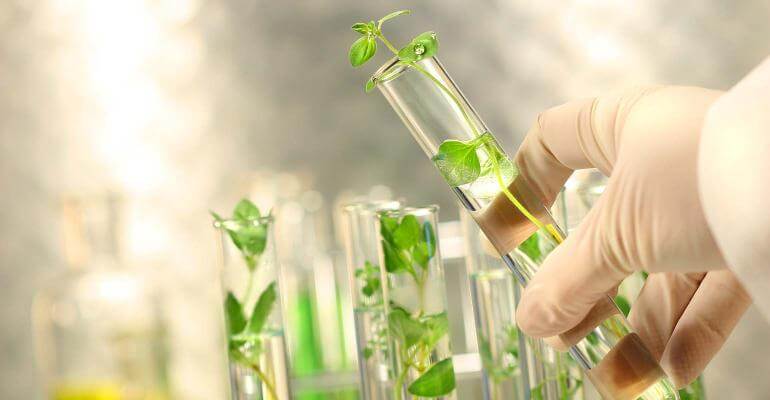
[Fonte: GLP] As a growing population and climate change threaten food security, researchers around the world are working to overcome the challenges that threaten the dietary needs of humans and livestock. A pair of scientists is now making the case that the knowledge and tools exist to facilitate the next agricultural revolution we so desperately need.

Cold Spring Harbor Laboratory (CSHL) Professor Zach Lippman, a Howard Hughes Medical Institute investigator, recently teamed up with Yuval Eshed, an expert in plant development at the Weizmann Institute of Science in Israel, to sum up the current and future states of plant science and agriculture.

Their review, published in Science, cities examples from the last 50 years of biological research and highlights the major genetic mutations and modifications that have fueled past agricultural revolutions. Those include tuning a plant’s flowering signals to adjust yield, creating plants that can tolerate more fertilizer or different climates, and introducing hybrid seeds to enhance growth and resist disease.

Beneficial changes like these were first discovered by chance, but modern genomics has revealed that most of them are rooted in two core hormonal systems: Florigen, which controls flowering; and Gibberrellin, which influences stem height.

Lippman and Eshed suggest that in an age of fast and accurate gene editing, the next revolutions do not need to wait for chance discoveries. Instead, by introducing a wide variety of crops to changes in these core systems, the stage can be set to overcome any number of modern-day challenges.

Dwarfing and flower power revolutions

To explain their point, the scientists reviewed research that focused on key moments in agricultural history, such as the Green Revolution.

Before the 1960s, fertilizing for a large wheat yield would result in the plants growing too tall. Weighed down with their grainy bounty, the wheat stems would fold and rot away, resulting in yield losses. It was only after Nobel laureate Norman Borlaug began working with mutations that affect the Gibberellin system that wheat became the shorter and reliable crop we know today. Borlaug’s dwarfing was also applied to rice, helping many fields weather storms that would have been catastrophic only years before. This reapplication of the same technique to a different plant hinted that a core system was in play.

More recent examples Lippman and Eshed mention include the changes undergone by cotton crops in China. There, growers turned the normally sprawling, southern plantation plant into a more compact, faster flowering bush better suited for China’s northern climate. To do so, they took advantage of a mutation that affects Florigen, which promotes flowering, and its opposite, Antiflorigen.

This kind of change is related to Lippman’s works. He often works with tomatoes and explained that an Antiflorigen mutation in tomato was also the catalyst that transformed the Mediterranean vine crop into the stout bushes grown in large-scale agricultural systems throughout the world today. What’s striking, Lippman said, is that cotton is quite unlike any tomato.

“They’re evolutionary very different in terms of the phylogeny of plants. And despite that, what makes a plant go from making leaves to making flowers is the same,” he said. “That core program is deeply conserved.”

Fine-tuning a revolution

As the review details, this has defined what makes an agricultural revolution. A core system — either Gibberellin, Florigen, or both — is affected by a mutation, resulting in some helpful trait. In a moment of pure serendipity, the plants boasting this trait are then discovered by the right person.

It then takes many more years of painstaking breeding to tweak the intensity of that mutation until it affects the system just right for sustainable agriculture. It’s like tuning an instrument to produce the perfect sound.

Lippman and Eshed note that CRISPR gene editing is speeding up that tuning process. However, they show that the best application of gene editing may not be to just tune preexisting revolutionary mutations, but instead, to identify or introduce new ones.

“If past tuning has been creating genetic variation around those two core systems, maybe we can make more variety within those systems,” he said. “It would certainly mitigate the amount of effort required for doing that tuning, and has the potential for some surprises that could further boost crop productivity, or adapt crops faster to new conditions.”

A future in… chickpeas?

More of that genetic variety could also set the stage for new agricultural revolutions. By introducing genetic variation to those two core systems that define most revolutions, farmers might get to skip the serendipitous waiting game. Chickpea is one example.

“There’s a lot more room for us to be able to create more genetic diversity that might increase productivity and improve adaptation survival in marginal grounds, like in drought conditions,” Lippman said.

Drought resistance is just one benefit of under-utilized crops. Past revolutions have allowed crops to be more fruitful or to grow in entirely new hemispheres. Having a means to continue these revolutions with more crops and at a greater frequency would be a boon in a crowded, hungry, and urbanizing world.

“Given that rare mutations of Florigen/Antiflorigen and Gibberellin/DELLA mutations spawned multiple revolutions in the past, it is highly likely that creating novel diversity in these two hormone systems will further unleash agricultural benefits,” the scientists wrote.

Original article: The next agricultural revolution is here

Imprimir Artigo
Publicação Anterior

Entrega da Declaração de Colheita e Produção – 2019/2020

Próxima Publicação

Oferta de emprego – Engenheiro Zootécnico – Técnico Avícola – Ferreira do Zêzere

Artigos Relacionados

assinatura em papel mão caneta
Últimas

Governo moçambicano pede aposta no crédito a privados para agricultura e pescas

08/05/2026
Últimas

Beyond biology: how the social context affects strategies against Xylella fastidiosa

08/05/2026
Últimas

Brasil interpõe ação contra JBS por compra de carne ligada a escravatura

07/05/2026
Próxima Publicação
Lusiaves

Oferta de emprego - Engenheiro Zootécnico - Técnico Avícola - Ferreira do Zêzere

Discussão sobre este post

Opinião

Últimas

Valorizar o azeite português: um desígnio coletivo para o futuro

por Manuel Norte Santo
08/05/2026

Ler mais
Últimas

Apoios ao Investimento Agrícola: Permanentes, Estruturados e sem Ilusões

por José Martino
03/05/2026

Ler mais

Subscrever as nossas newsletteres

Subscrever as nossas Newsletters Agroportal

Verifique na sua caixa de correio ou na pasta de spam para confirmar a sua subscrição.

Comunicados

Peste Suína Africana na Europa: Ponto de Situação — Abril de 2026

08/05/2026

Cientista regressa à escola: Inês Roque dinamiza oficinas sobre corujas, plantas e cadeias alimentares em Coruche

08/05/2026
Advertisement

Temas em destaque

Candidaturas PU Guerra Médio Oriente Mercosul ovibeja PAC pós 2027 Simplificação PAC Temporais vinho Água que Une

Eventos

Maio 2026
STQQSSD
     1 2 3
4 5 6 7 8 9 10
11 12 13 14 15 16 17
18 19 20 21 22 23 24
25 26 27 28 29 30 31
« Abr   Jun »

Sobre Nós

O Agroportal.pt é uma plataforma de informação digital que reúne a informação relevante sobre agricultura. Tem um foco na Política Agrícola Comum e a sua aplicação em Portugal.

Menu

  • Quem somos
  • Relatórios anuais
  • Envie-nos informação
  • Publicidade
  • Newsletters
  • Estatuto Editorial
  • Ficha técnica
  • Proteção de Dados Pessoais
  • Disclaimer
Facebook twitter Circle Instagram Rss Feed

© Agroportal. All Rights reserved.

  • Login
  • Registar
Sem Resultado
Ver Todos Os Resultados
  • Sugeridas
  • Notícias
    • Nacional
    • Internacional
    • Comunicados
  • Opinião
  • Eventos
  • Dossiers
    • Agricultura Biológica
    • Apoios
    • Artigos Técnicos
    • Biossoluções
    • Cadeia Alimentar
    • Fertilizantes
    • Financiamento
    • Fitofarmacêuticos
    • Florestas
    • Futuro da PAC
    • Inovação
    • Mercados e Cotações agrícolas
    • Newsletters e Revistas
    • Recomendações Agroflorestais
    • Seguros agrícolas
  • Serviços
    • Diretório
    • Emprego
    • Máquinas Agrícolas
    • Meteorologia
    • Terrenos Agrícolas
    • Arquivo Agroportal

© Agroportal. All Rights reserved.

Bem-Vindo De Volta!

Sign In with Facebook
Sign In with Google
OU

Faça login na sua conta abaixo

Esqueceu-se da senha? Registar

Criar Uma Nova Conta!

Sign Up with Facebook
Sign Up with Google
OU

Preencha os campos abaixo para se registar

* Ao se registar-se no nosso site, você concorda com os Termos e Condições e a Política de Privacidade .
Todos os campos são necessários. Entrar

Obter a sua senha

Indique por favor o seu nome de utilizador ou endereço de E-mail para repor a sua senha.

Entrar
Este site usa cookies. Ao continuar a utilizar este site, está a dar consentimento à utilização de cookies. Visite a nossa Política de Protecção de dados e Cookies.