
















Sem Resultado
Ver Todos Os Resultados
Newsletters
Agroportal
  • Login
  • Registar
  • Sugeridas
  • Notícias
    • Notícias
    • Nacional
    • Internacional
    • Comunicados
    pig

    Trabalhadores do matadouro do Cachão em greve por salários e subsídios em atraso

    EDIA

    EDIA disponibiliza para arrendamento 9 parcelas rústicas na Aldeia da Luz

    Moçambique e Bielorrússia aceleram cooperação na mecanização agrícola

    vaca castanha

    Politécnico de Castelo Branco dá bolsas a novos melhores alunos de agronomia e veterinária

    Douro aumenta produção de vinho do Porto para as 76 mil pipas

    EDIA

    EDIA disponibiliza para arrendamento 83 parcelas de terreno

    IFAP

    Destilação de subprodutos da vinificação – Reforço da dotação orçamental – Campanha 2025/2026

    Impacto da agricultura intensiva na biodiversidade: “A continuar assim, atingiremos um ponto de não retorno” – Biólogo Miguel Porto

    Góis com 464 mil euros para reabilitar áreas florestais fustigadas pela Kristin

  • Opinião

    Produzir bem já não chega: eficiência, estratégia e os desafios da engorda de bovinos

    Segurança Alimentar Europeia Como Ativo Estratégico

    Sabemos distinguir um frango do campo. Porque não conseguimos distinguir um Azeite de Olival Tradicional?

    Carlos Neves

    Promoções que despromovem a produção de leite de Portugal

    Georgete Felix

    O balanço invisível da agricultura

    Acordo UE-Mercosul

    Manuel Chaveiro Soares

    Melhoramento genético dos frangos de carne: importância para os consumidores e o ambiente

    A escolha certa!

    O azeite vale mais do que o preço que aparece na prateleira

  • Eventos
  • Dossiers

    Dossiers I

    • Agricultura Biológica
    • Apoios
    • Artigos Técnicos
    • Biossoluções
    • Cadeia Alimentar
    • Fertilizantes
    • Financiamento
    • Fitofarmacêuticos

    Dossiers II

    • Florestas
    • Futuro da PAC
    • Inovação
    • Mercados
    • Newsletters e Revistas
    • Recomendações Agroflorestais
    • Seguros

    Últimas

    IFAP

    Destilação de subprodutos da vinificação – Reforço da dotação orçamental – Campanha 2025/2026

    17/07/2026

    Góis com 464 mil euros para reabilitar áreas florestais fustigadas pela Kristin

    17/07/2026

    Mais tempo para submeter a sua candidatura | Apoio ao investimento na floresta

    17/07/2026

    “Kristin? Agricultores ficaram desiludidos e nalguns casos, apoios foram insuficientes”, alerta presidente da Lusomorango

    17/07/2026

    Alto Alentejo: CIM reforça vínculo com sapadores florestais

    17/07/2026

    BPI, Fundação la Caixa e Técnico lançam cátedra sobre “Florestas e Gestão do Fogo” liderada por Tiago Oliveira

    17/07/2026
  • Serviços
    • Diretório
    • Emprego
    • Máquinas Agrícolas
    • Meteorologia
    • Terrenos Agrícolas
    • Arquivo Agroportal
Agroportal
  • Sugeridas
  • Notícias
    • Notícias
    • Nacional
    • Internacional
    • Comunicados
    pig

    Trabalhadores do matadouro do Cachão em greve por salários e subsídios em atraso

    EDIA

    EDIA disponibiliza para arrendamento 9 parcelas rústicas na Aldeia da Luz

    Moçambique e Bielorrússia aceleram cooperação na mecanização agrícola

    vaca castanha

    Politécnico de Castelo Branco dá bolsas a novos melhores alunos de agronomia e veterinária

    Douro aumenta produção de vinho do Porto para as 76 mil pipas

    EDIA

    EDIA disponibiliza para arrendamento 83 parcelas de terreno

    IFAP

    Destilação de subprodutos da vinificação – Reforço da dotação orçamental – Campanha 2025/2026

    Impacto da agricultura intensiva na biodiversidade: “A continuar assim, atingiremos um ponto de não retorno” – Biólogo Miguel Porto

    Góis com 464 mil euros para reabilitar áreas florestais fustigadas pela Kristin

  • Opinião

    Produzir bem já não chega: eficiência, estratégia e os desafios da engorda de bovinos

    Segurança Alimentar Europeia Como Ativo Estratégico

    Sabemos distinguir um frango do campo. Porque não conseguimos distinguir um Azeite de Olival Tradicional?

    Carlos Neves

    Promoções que despromovem a produção de leite de Portugal

    Georgete Felix

    O balanço invisível da agricultura

    Acordo UE-Mercosul

    Manuel Chaveiro Soares

    Melhoramento genético dos frangos de carne: importância para os consumidores e o ambiente

    A escolha certa!

    O azeite vale mais do que o preço que aparece na prateleira

  • Eventos
  • Dossiers

    Dossiers I

    • Agricultura Biológica
    • Apoios
    • Artigos Técnicos
    • Biossoluções
    • Cadeia Alimentar
    • Fertilizantes
    • Financiamento
    • Fitofarmacêuticos

    Dossiers II

    • Florestas
    • Futuro da PAC
    • Inovação
    • Mercados
    • Newsletters e Revistas
    • Recomendações Agroflorestais
    • Seguros

    Últimas

    IFAP

    Destilação de subprodutos da vinificação – Reforço da dotação orçamental – Campanha 2025/2026

    17/07/2026

    Góis com 464 mil euros para reabilitar áreas florestais fustigadas pela Kristin

    17/07/2026

    Mais tempo para submeter a sua candidatura | Apoio ao investimento na floresta

    17/07/2026

    “Kristin? Agricultores ficaram desiludidos e nalguns casos, apoios foram insuficientes”, alerta presidente da Lusomorango

    17/07/2026

    Alto Alentejo: CIM reforça vínculo com sapadores florestais

    17/07/2026

    BPI, Fundação la Caixa e Técnico lançam cátedra sobre “Florestas e Gestão do Fogo” liderada por Tiago Oliveira

    17/07/2026
  • Serviços
    • Diretório
    • Emprego
    • Máquinas Agrícolas
    • Meteorologia
    • Terrenos Agrícolas
    • Arquivo Agroportal
Sem Resultado
Ver Todos Os Resultados
Agroportal
ensaios fruta

Long Term Organic Diet Intervention Reduces Pesticide Metabolites in Pregnant Women

por Agroportal
19-07-2019 | 14:29
em Internacional
Tempo De Leitura: 6 mins
A A
Partilhe no FacebookPartilhe no TwitterEnviar para o WhatsappEnviar para o TelegramEnviar para o LinkedIn

[Fonte: Boise State News] Organic versus conventional foods: are they really better for people’s health? Are all organic foods created equal, and if not, which do we pick and why do we pick them? These seemingly simple questions are fraught with a barrage of personal and political beliefs and values. Yet the voice of reason that is often missing from the conversation is science. One reason for this knowledge gap is that studies involving dietary intervention (i.e., replacing conventionally produced foods with organic foods) usually are only conducted for one- to two-week periods on small populations. This period of time isn’t long enough to provide conclusive evidence that a test group became healthier on an organic diet.

That’s why Cynthia Curl, an assistant professor in Boise State’s Department of Community and Environmental Health, has conducted what is believed to be the first ever long-term diet intervention study on the effects of organic produce on pregnant women. Results of the Treasure Valley study revealed that adding organic produce to an individual’s diet, as compared to conventional produce, significantly reduced exposure to pyrethroid insecticides – that is, insecticides that are neurotoxic to insects as well as humans in large enough doses.
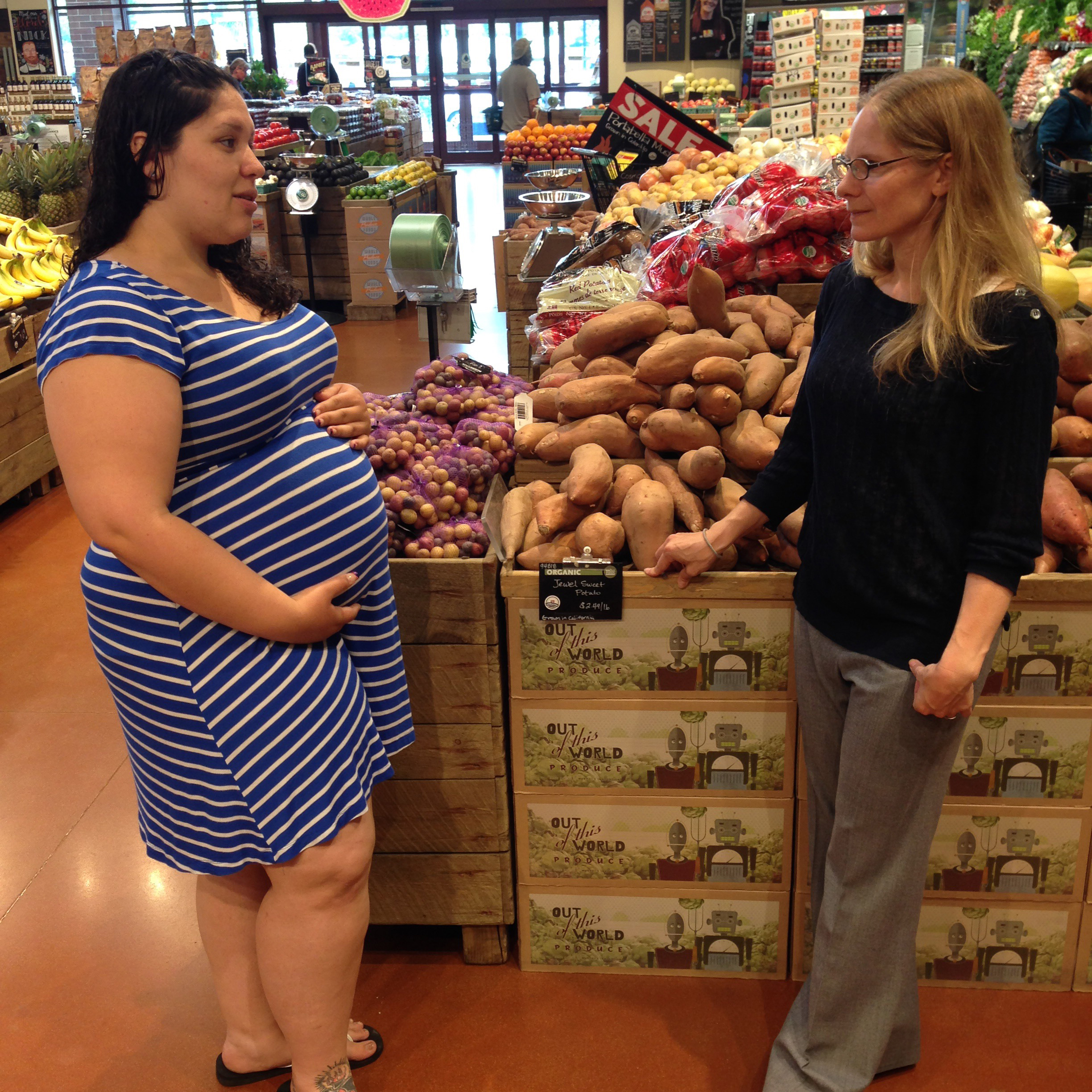
Photo of Curl and Lopez (pregnant) speaking in grocery store
Curl (right) discusses her study with Taylor Barrera-Lopez in the produce section of a local grocery store.

For six months, spanning 20 women’s second and third trimesters, Curl’s two study groups were provided with weekly deliveries of fresh fruits and vegetables. One group was given organic produce while the other received conventional produce. Weekly urine samples were collected from both groups and analyzed by the Center for Disease Control. The results showed that women consuming organic produce had significantly lower pesticide metabolites.

“This research is novel because it’s also the first study done in pregnant women, and there’s a lot of research showing that time in-utero is a sensitive time for development,” said Curl. “So if we were to look for a health effect from decreasing pesticide exposure, one of the places we might see it — if it exists — is in this population.”

This study also proves the feasibility of conducting long-term organic diet intervention study among pregnant women. Curl believes that by following this study’s parameters with a much larger test group, and then monitoring the health and development of the children after birth, it would be possible to conclusively answer the question of whether there is a measurable health benefit to children if their mothers consume organic, rather than conventional, food during pregnancy.

“In order to look at the kind of health effects that we might be interested in, which would be neurological effects in the kids — like incidents of [attention deficit disorder], changes in memory and IQ, things that we have seen in agricultural populations — we would need to have a sample size of maybe 500 pregnant women,” Curl said.
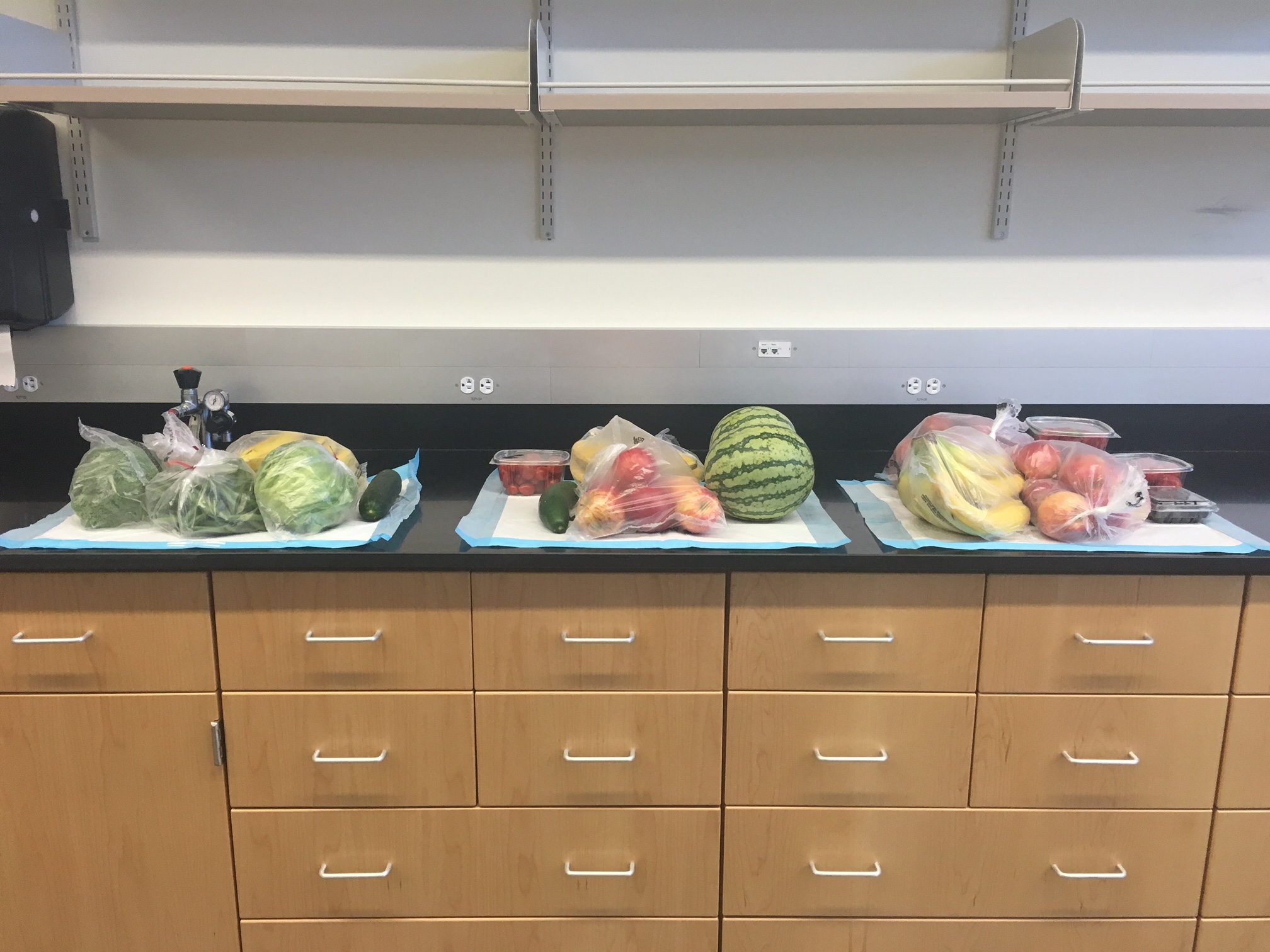
trays of produce on a counter top
Before delivery to participants, all labels and tags that might identify produce as conventional or organic were removed and items were repackaged. In this picture, each mat contains $20-worth of produce prior to delivery to participants.

This study also demonstrates that it is not necessary to consume a fully organic diet in order to experience a significant change in pesticide exposure. By supplementing participants’ diets with organic fruits and vegetables, the authors better imitated how many people actually consume organic food – as a part of their diet rather than the whole.

As the need to produce enough food for our growing global population escalates, so too has the urgency of the organic versus conventional foods debate. The higher costs of producing and buying organic produce, evolving agricultural practices, the effects of pesticides on the environment, the burgeoning $40 billion organic food industry: all of these elements, and many more, complicate and muddy an issue that still suffers from a lack of scientific understanding.

Yet Curl asserted that organic or not, the proven health benefits of eating fruits and vegetables far outweighs any concerns about potential negative effects of pesticide exposure.

“Even as we learn more about the pesticide exposure that we might be getting from our diets, it’s important to put that in the right context and understand that the first order is to eat as many fruits and vegetables as possible,” said Curl. “If there are pesticides that are in our food supply at levels that would lead to negative health effects, the answer then is to introduce legislation that would reduce those levels in everyone’s food supply, not necessarily to simply encourage those who can buy organic to buy organic.”
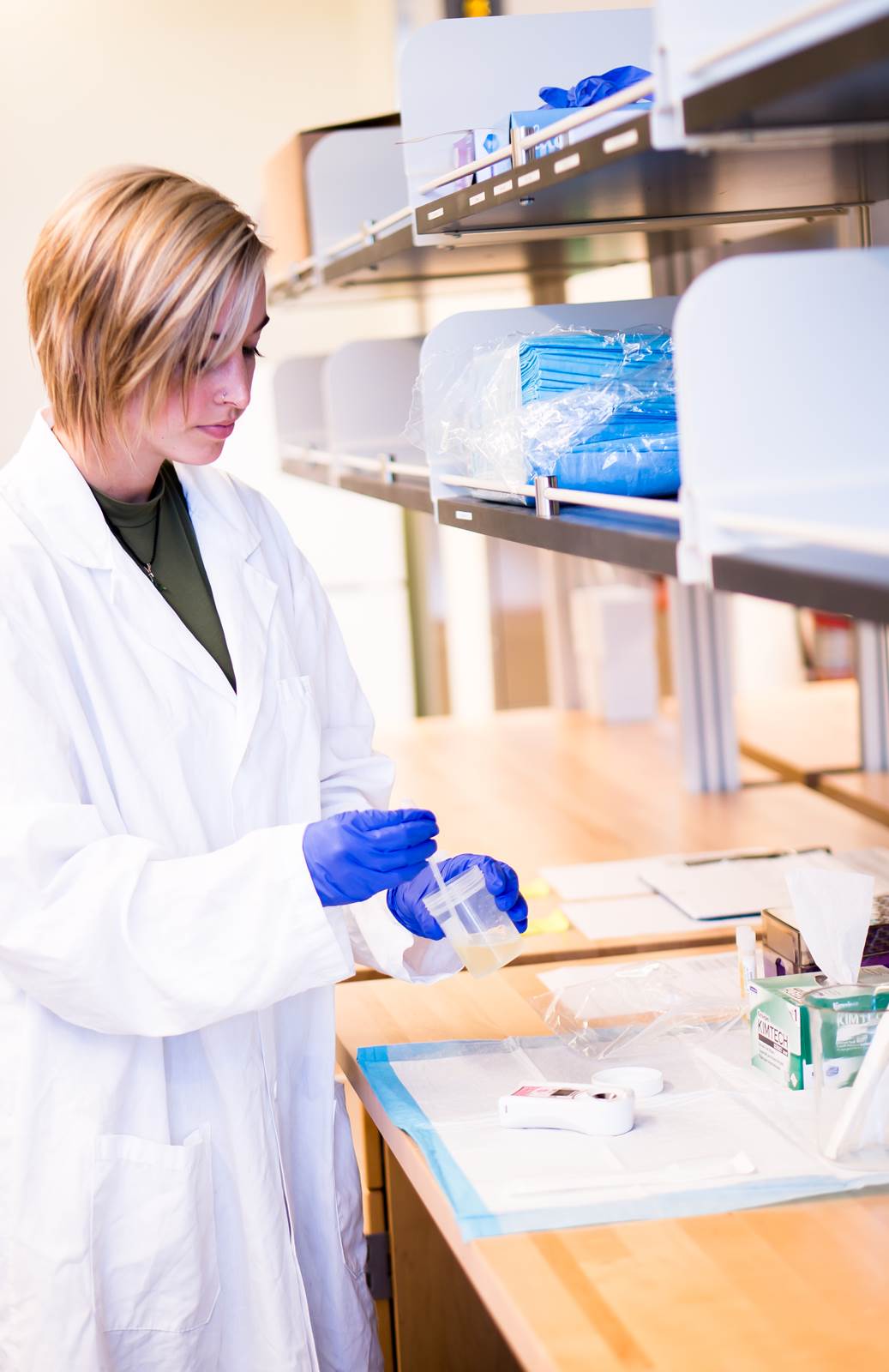
Student in lab coat and gloves works in lab setting
Curl’s student, Jessica Porter, analyzes urine samples for specific gravity.

Curl’s research was supported by a team of Boise State undergraduates, including: Jessica Porter, Ian Penwell, Rachel Phinney, Justin Nelson, Hope Murray, Jonathan Wheatley Makaela Bournazian, Dana Kerins and Abigail Thomas. The team also partnered with the Central District Health Department’s Women, Infants and Children program for participant recruitment; Grasmick Produce and Idaho’s Bounty for the produce; Wild Safari Deliveries to deliver the food; and Boise State’s Office of Information Technology for the novel development of tailored food diary apps.

Curl’s research findings were published on July 16 in the peer-reviewed journal Environment International in an article titled “Effect of a 24-week randomized trial of an organic produce intervention on pyrethroid and organophosphate pesticide exposure among pregnant women. To view Curl’s research in its entirety, please use the following link: https://www.sciencedirect.com/science/article/pii/S0160412019306853

Research reported in this publication was supported by Grant UL1 TR002319 from the NIH National Center for Advancing Translational Sciences through the Clinical and Translational Science Awards Program (CTSA) and by the National Institute of Environmental Health Sciences of the National Institutes of Health under Award Number K01ES028745. The food for this study was purchased through a Boise State Pony Up Crowdfunding campaign.

-By Brianne Phillips

Imprimir Artigo
Publicação Anterior

APEZ debate produção e utilização de insectos para alimentação animal e humana

Próxima Publicação

SAlimentar 2019: INIAV realiza 1.º Simpósio para a Segurança Alimentar

Artigos Relacionados

Internacional

Moçambique e Bielorrússia aceleram cooperação na mecanização agrícola

17/07/2026
Internacional

El procedimiento de registro de la IGP «Jamón Serrano» reanuda su tramitación

17/07/2026
Internacional

Espanha combate grande incêndio em Aragão em plena onda de calor

16/07/2026
Próxima Publicação

SAlimentar 2019: INIAV realiza 1.º Simpósio para a Segurança Alimentar

Discussão sobre este post

Opinião

Últimas

Produzir bem já não chega: eficiência, estratégia e os desafios da engorda de bovinos

por Vítor Santos
12/07/2026

Ler maisDetails
Últimas

Segurança Alimentar Europeia Como Ativo Estratégico

por Pedro Santos
08/07/2026

Ler maisDetails

Subscrever as nossas newsletteres

Subscrever as nossas Newsletters Agroportal

Verifique na sua caixa de correio ou na pasta de spam para confirmar a sua subscrição.

Comunicados

EDIA

EDIA disponibiliza para arrendamento 9 parcelas rústicas na Aldeia da Luz

17/07/2026
EDIA

EDIA disponibiliza para arrendamento 83 parcelas de terreno

17/07/2026
Advertisement

Temas em destaque

Candidaturas PU Guerra Médio Oriente Mercosul ovibeja PAC pós 2027 Simplificação PAC Temporais vinho Água que Une

Eventos

Julho 2026
STQQSSD
   1 2 3 4 5
6 7 8 9 10 11 12
13 14 15 16 17 18 19
20 21 22 23 24 25 26
27 28 29 30 31   
« Jun   Ago »

Sobre Nós

O Agroportal.pt é uma plataforma de informação digital que reúne a informação relevante sobre agricultura. Tem um foco na Política Agrícola Comum e a sua aplicação em Portugal.

Menu

  • Quem somos
  • Relatórios anuais
  • Envie-nos informação
  • Publicidade
  • Newsletters
  • Estatuto Editorial
  • Ficha técnica
  • Proteção de Dados Pessoais
  • Disclaimer
Facebook twitter Circle Instagram Rss Feed

© Agroportal. All Rights reserved.

Bem-Vindo De Volta!

Sign In with Facebook
Sign In with Google
OR

Faça login na sua conta abaixo

Esqueceu-se da senha? Registar

Criar Uma Nova Conta!

Sign Up with Facebook
Sign Up with Google
OR

Preencha os campos abaixo para se registar

* Ao se registar-se no nosso site, você concorda com os Termos e Condições e a Política de Privacidade .
Todos os campos são necessários. Entrar

Obter a sua senha

Indique por favor o seu nome de utilizador ou endereço de E-mail para repor a sua senha.

Entrar
  • Login
  • Registar
Sem Resultado
Ver Todos Os Resultados
  • Sugeridas
  • Notícias
    • Nacional
    • Internacional
    • Comunicados
  • Opinião
  • Eventos
  • Dossiers
    • Agricultura Biológica
    • Apoios
    • Artigos Técnicos
    • Biossoluções
    • Cadeia Alimentar
    • Fertilizantes
    • Financiamento
    • Fitofarmacêuticos
    • Florestas
    • Futuro da PAC
    • Inovação
    • Mercados e Cotações agrícolas
    • Newsletters e Revistas
    • Recomendações Agroflorestais
    • Seguros agrícolas
  • Serviços
    • Diretório
    • Emprego
    • Máquinas Agrícolas
    • Meteorologia
    • Terrenos Agrícolas
    • Arquivo Agroportal

© Agroportal. All Rights reserved.

Este site usa cookies. Ao continuar a utilizar este site, está a dar consentimento à utilização de cookies. Visite a nossa Política de Protecção de dados e Cookies.