















Sem Resultado
Ver Todos Os Resultados
Newsletters
Agroportal
  • Login
  • Registar
  • Sugeridas
  • Notícias
    • Notícias
    • Nacional
    • Internacional
    • Comunicados
    iniav

    Participação do INIAV na Ovibeja

    IFAP

    IFAP: Pagamentos abril 2026

    cerejas

    Produtores de Bragança esperam campanha de boa cereja e em grandes quantidades

    azeitonas em oliveira

    Azeite de oliveiras com 300 anos e turismo rural “plantam” 4 milhões de euros em quinta no Douro

    Reunião da Comissão de Agricultura e Pescas – 5 de maio

    Florestas: todo o esforço tem de ser na prevenção em evitar incêndios

    Recolha excecional de sementes após a tempestade Kristin acelera recuperação do Pinhal de Leiria

    Mora: GNR apreende 420 quilos de cortiça furtada e identifica homem

    vinho barril adega

    “A sustentabilidade dificilmente regressará a um estatuto de extra”

  • Opinião

    Apoios ao Investimento Agrícola: Permanentes, Estruturados e sem Ilusões

    A Falácia das Taxas: Quem paga aos agricultores pelo carbono que sequestram?

    PARCA: da coragem inicial à impotência institucional

    João Dinis

    Pastores e queijo da serra

    Sofia Almeida

    O lobo-ibérico é um teste à seriedade das políticas de conservação

    Jovem Empresário Rural Não Agrícola, Precisam-se!

    Resultados económicos do sector agrícola em 2025: apesar de menos favoráveis do que os dos últimos anos não põem em causa a evolução bastante positiva da última década

    A Grande Ilusão: Porque têm as nossas Confederações medo da rua?

    Pagar pelo “invisível” e o porquê da agricultura portuguesa não pode continuar a oferecer serviços ecológicos “de graça”?

  • Eventos
  • Dossiers

    Dossiers I

    • Agricultura Biológica
    • Apoios
    • Artigos Técnicos
    • Biossoluções
    • Cadeia Alimentar
    • Fertilizantes
    • Financiamento
    • Fitofarmacêuticos

    Dossiers II

    • Florestas
    • Futuro da PAC
    • Inovação
    • Mercados
    • Newsletters e Revistas
    • Recomendações Agroflorestais
    • Seguros

    Últimas

    IFAP

    IFAP: Pagamentos abril 2026

    04/05/2026

    Florestas: todo o esforço tem de ser na prevenção em evitar incêndios

    04/05/2026

    Recolha excecional de sementes após a tempestade Kristin acelera recuperação do Pinhal de Leiria

    04/05/2026

    PS/Açores alerta para falha nos pagamentos aos agricultores, Governo Regional nega

    04/05/2026

    Mau tempo: Tomar ainda com constrangimentos nas comunicações e gestão florestal

    04/05/2026

    Tecnologia moderniza agricultura e combate falta de mão de obra em Portugal

    04/05/2026
  • Serviços
    • Diretório
    • Emprego
    • Máquinas Agrícolas
    • Meteorologia
    • Terrenos Agrícolas
    • Arquivo Agroportal
Agroportal
  • Sugeridas
  • Notícias
    • Notícias
    • Nacional
    • Internacional
    • Comunicados
    iniav

    Participação do INIAV na Ovibeja

    IFAP

    IFAP: Pagamentos abril 2026

    cerejas

    Produtores de Bragança esperam campanha de boa cereja e em grandes quantidades

    azeitonas em oliveira

    Azeite de oliveiras com 300 anos e turismo rural “plantam” 4 milhões de euros em quinta no Douro

    Reunião da Comissão de Agricultura e Pescas – 5 de maio

    Florestas: todo o esforço tem de ser na prevenção em evitar incêndios

    Recolha excecional de sementes após a tempestade Kristin acelera recuperação do Pinhal de Leiria

    Mora: GNR apreende 420 quilos de cortiça furtada e identifica homem

    vinho barril adega

    “A sustentabilidade dificilmente regressará a um estatuto de extra”

  • Opinião

    Apoios ao Investimento Agrícola: Permanentes, Estruturados e sem Ilusões

    A Falácia das Taxas: Quem paga aos agricultores pelo carbono que sequestram?

    PARCA: da coragem inicial à impotência institucional

    João Dinis

    Pastores e queijo da serra

    Sofia Almeida

    O lobo-ibérico é um teste à seriedade das políticas de conservação

    Jovem Empresário Rural Não Agrícola, Precisam-se!

    Resultados económicos do sector agrícola em 2025: apesar de menos favoráveis do que os dos últimos anos não põem em causa a evolução bastante positiva da última década

    A Grande Ilusão: Porque têm as nossas Confederações medo da rua?

    Pagar pelo “invisível” e o porquê da agricultura portuguesa não pode continuar a oferecer serviços ecológicos “de graça”?

  • Eventos
  • Dossiers

    Dossiers I

    • Agricultura Biológica
    • Apoios
    • Artigos Técnicos
    • Biossoluções
    • Cadeia Alimentar
    • Fertilizantes
    • Financiamento
    • Fitofarmacêuticos

    Dossiers II

    • Florestas
    • Futuro da PAC
    • Inovação
    • Mercados
    • Newsletters e Revistas
    • Recomendações Agroflorestais
    • Seguros

    Últimas

    IFAP

    IFAP: Pagamentos abril 2026

    04/05/2026

    Florestas: todo o esforço tem de ser na prevenção em evitar incêndios

    04/05/2026

    Recolha excecional de sementes após a tempestade Kristin acelera recuperação do Pinhal de Leiria

    04/05/2026

    PS/Açores alerta para falha nos pagamentos aos agricultores, Governo Regional nega

    04/05/2026

    Mau tempo: Tomar ainda com constrangimentos nas comunicações e gestão florestal

    04/05/2026

    Tecnologia moderniza agricultura e combate falta de mão de obra em Portugal

    04/05/2026
  • Serviços
    • Diretório
    • Emprego
    • Máquinas Agrícolas
    • Meteorologia
    • Terrenos Agrícolas
    • Arquivo Agroportal
Sem Resultado
Ver Todos Os Resultados
Agroportal
Ghana’s GM cowpea

Ghana’s GM cowpea to improve agriculture, boost economy

por Cornell Alliance for Science
02-09-2022 | 13:00
em Últimas, Internacional, Notícias inovação
Tempo De Leitura: 5 mins
A A
Partilhe no FacebookPartilhe no TwitterEnviar para o WhatsappEnviar para o TelegramEnviar para o LinkedIn

The approval of genetically modified cowpea in Ghana is paving the way for agricultural advances and economic opportunities, researchers say.

Ghana adopted its first biotech crop, the pod borer-resistant (PBR) cowpea, in June this year, making it the second country in the world to approve genetically modified cowpea for commercialization. It took researchers about nine years to achieve this feat.

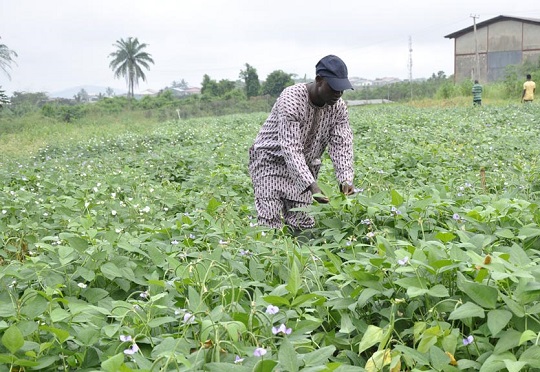
Farmers, who are at the receiving end of the technology, have expressed excitement at the development and hope to have the PBR cowpea seeds in their hands soon. Fifty-six year old Emmanuel Attakorah, who farms a 10-acre cowpea field, expressed his joy at this development and asked that more education be given to sensitize them on best cultural practices to adopt in cultivating the product.

“I spray my farm at least four times every season, to kill the pests, but when the pests are stubborn, I can spray about two more times,” Attakorah said. “I am happy that finally, we can get to grow the new cowpea that resist the pests. I would like to know the price of the seeds, how they’re grown and even plant spacing to use.”

Serwaa Doris, who cultivated three acres of conventional cowpea last season, lamented about how poor the yield was, even after spraying six times to control the maruca pests. Speaking to the Alliance for Science, she said the main cause of the poor yield was low rainfall, pests and weeds. She said she would like to be one of the first farmers to grow the PBR cowpea and reap its benefits. That way, she can serve as an advocate of the technology to other farmers.

Although research is ongoing to develop genetically modified Nitrogen-and-Water-Use-Efficient (NEWEST) rice, researchers say the approval of the PBR cowpea will set the pace to improve on more crops using biotechnology and achieve economic gains.

Dr. Daniel Osei Ofosu, research scientist with the Biotechnology and Nuclear Agriculture Research Institute of the Ghana Atomic Energy Commission (BNARI-GAEC), said in an interview with the Alliance for Science that the commercialization of the pod borer-resistant cowpea will help stop importation of chemicals, which in the long run affect farmers’ health. He noted that the unique thing with Ghana’s approval is the straightforward action to approve a major food crop such as cowpea, emphasizing it as a test of the technology.

He said the approval of the technology will help students studying agricultural biotechnology across various tertiary institutions in the country understand what they are studying and knowing firsthand and how it is being applied by the farmers, thus making their studies more realistic.

“When you talk about a technology and people don’t have tangible things to touch, it looks a bit abstract,” he explained. “So in my mind, I’m thinking that the approval is going to excite students because they will now see the potential. After school, if they go into research, they are going to be able to come up with better solutions for agriculture. And for students who are yet to go into the university, it will give them the hope that they can contribute at some point to producing safer and cheaper foods for our people.”

Saeedatu Sulaiman, an undergraduate biotechnology student at the University of Development Studies in Tamale, expressed her excitement. She said the move will help in reducing unemployment and importation, while also serving as a motivation for her to study hard to fit into the field. She added that “the acceptance of the Bt [PBR] cowpea will clear doubts and misconceptions about GMOs.”
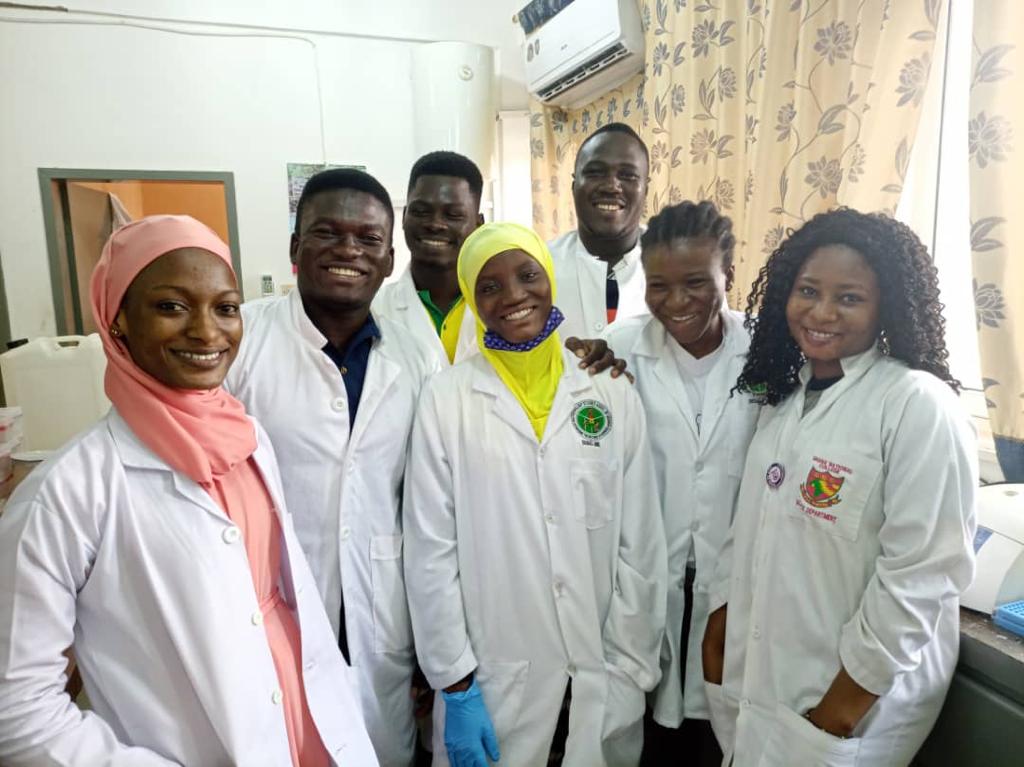
Biotechnology students at the University of Development Studies in Tamale. Photo: Dennis Baffour-Awuah

Dr. Richard Ampadu-Ameyaw, country coordinator for the Open Forum for Agricultural Biotechnology, added that the approval and eventual commercialization of the PBR cowpea will boost the economy. He explained that cowpea has become a major protein source for many, and its availability on the market will aid both local and international trade.

“When it comes to exports from West Africa, cowpea happens to be one of the crops that is consumed by almost all of us, so if we are talking about subregional level trades, then cowpea can be one of the selected products, and I can tell you that if we are trading in it even just within West Africa, it will boost the economy.” He added that more food products can be developed from cowpea, thereby attracting more farmers and processors and making the value chain lucrative for all.

Although Ghana may not be considered one the early adopters of the technology, Ofosu said Ghana has put in place all the necessary mechanisms for its scientists to build capacity. However, if there are no investments in acquiring resources to improve on developed crops, scientists will be at the mercy of foreign institutions. He called on the government to take a cue from the COVID-19 pandemic and prioritize agriculture, stating that the sector is still in its infancy stage.

“Most of the time, people say Ghanaian scientists are not working,” Ofosu said. “They may seem not to be working because the necessary tools for the work are not available to them. Look at what we were able to achieve with our health institutions during the pandemic. What happens when it comes to food? Everybody has to eat, whether they are sick or not. If we have issues with our foods and we don’t invest in research toward solving the issues, we will get to a point where it may not be a pandemic, but an epidemic where as a country, we are not able to feed ourselves.”

He added that even though there seems now to be more public understanding of the technology than before, scientists should not shy away from educating people about it. “We need to continue to provide a favorable environment through regulations and policies, to ensure that relevant technologies in the area are employed in the country to help solve our food problems.”

O artigo foi publicado originalmente em Cornell Alliance for Science.
Imprimir Artigo
Publicação Anterior

Índice alimentar da FAO cai pelo quinto mês consecutivo

Próxima Publicação

PSD propõe programa de emergência social e quer uma redução de 20 cêntimos por litro no gasóleo verde

Artigos Relacionados

iniav
Últimas

Participação do INIAV na Ovibeja

04/05/2026
IFAP
Candidaturas e pagamentos

IFAP: Pagamentos abril 2026

04/05/2026
cerejas
Nacional

Produtores de Bragança esperam campanha de boa cereja e em grandes quantidades

04/05/2026
Próxima Publicação
tractor

PSD propõe programa de emergência social e quer uma redução de 20 cêntimos por litro no gasóleo verde

Opinião

Últimas

Apoios ao Investimento Agrícola: Permanentes, Estruturados e sem Ilusões

por José Martino
03/05/2026

Ler mais
Últimas

A Falácia das Taxas: Quem paga aos agricultores pelo carbono que sequestram?

por João Revez
26/04/2026

Ler mais

Subscrever as nossas newsletteres

Subscrever as nossas Newsletters Agroportal

Verifique na sua caixa de correio ou na pasta de spam para confirmar a sua subscrição.

Comunicados

iniav

Participação do INIAV na Ovibeja

04/05/2026
IFAP

IFAP: Pagamentos abril 2026

04/05/2026
Advertisement

Temas em destaque

Candidaturas PU Guerra Médio Oriente Mercosul ovibeja PAC pós 2027 Simplificação PAC Temporais vinho Água que Une

Eventos

Maio 2026
STQQSSD
     1 2 3
4 5 6 7 8 9 10
11 12 13 14 15 16 17
18 19 20 21 22 23 24
25 26 27 28 29 30 31
« Abr   Jun »

Sobre Nós

O Agroportal.pt é uma plataforma de informação digital que reúne a informação relevante sobre agricultura. Tem um foco na Política Agrícola Comum e a sua aplicação em Portugal.

Menu

  • Quem somos
  • Relatórios anuais
  • Envie-nos informação
  • Publicidade
  • Newsletters
  • Estatuto Editorial
  • Ficha técnica
  • Proteção de Dados Pessoais
  • Disclaimer
Facebook twitter Circle Instagram Rss Feed

© Agroportal. All Rights reserved.

  • Login
  • Registar
Sem Resultado
Ver Todos Os Resultados
  • Sugeridas
  • Notícias
    • Nacional
    • Internacional
    • Comunicados
  • Opinião
  • Eventos
  • Dossiers
    • Agricultura Biológica
    • Apoios
    • Artigos Técnicos
    • Biossoluções
    • Cadeia Alimentar
    • Fertilizantes
    • Financiamento
    • Fitofarmacêuticos
    • Florestas
    • Futuro da PAC
    • Inovação
    • Mercados e Cotações agrícolas
    • Newsletters e Revistas
    • Recomendações Agroflorestais
    • Seguros agrícolas
  • Serviços
    • Diretório
    • Emprego
    • Máquinas Agrícolas
    • Meteorologia
    • Terrenos Agrícolas
    • Arquivo Agroportal

© Agroportal. All Rights reserved.

Bem-Vindo De Volta!

Sign In with Facebook
Sign In with Google
OU

Faça login na sua conta abaixo

Esqueceu-se da senha? Registar

Criar Uma Nova Conta!

Sign Up with Facebook
Sign Up with Google
OU

Preencha os campos abaixo para se registar

* Ao se registar-se no nosso site, você concorda com os Termos e Condições e a Política de Privacidade .
Todos os campos são necessários. Entrar

Obter a sua senha

Indique por favor o seu nome de utilizador ou endereço de E-mail para repor a sua senha.

Entrar
Este site usa cookies. Ao continuar a utilizar este site, está a dar consentimento à utilização de cookies. Visite a nossa Política de Protecção de dados e Cookies.