



















Sem Resultado
Ver Todos Os Resultados
Newsletters
Agroportal
  • Login
  • Registar
  • Sugeridas
  • Notícias
    • Notícias
    • Nacional
    • Internacional
    • Comunicados

    Irão: crise dos fertilizantes ameaça segurança alimentar mundial

    Luis mira

    “É pouco e vem tarde”. CAP critica apoios aos agricultores

    “o meu papel é fazer pontes entre o Ambiente e a Agricultura”, diz Macário Correia, escolhido por Montenegro para a Aqua SA

    Governo quer mais quatro barragens em oito anos

    Ministro de Agricultura e Primeiro Ministro

    “Empatia e compreensão” do Governo. Conselho de Ministros aprova apoios para setor agrícola

    rega batatas

    Governo escolhe Macário Correia para liderar empresa que vai gerir projetos da estratégia “Água que Une”

    Comissão Europeia pt

    Acordo comercial provisório UE-Mercosul entra em aplicação

    Governo apoia regadio com 60 ME e fertilizantes com 20 ME

    Governo anuncia apoios de 80 milhões para setor agrícola afetado por guerra e mau tempo

  • Opinião

    A Falácia das Taxas: Quem paga aos agricultores pelo carbono que sequestram?

    PARCA: da coragem inicial à impotência institucional

    João Dinis

    Pastores e queijo da serra

    Sofia Almeida

    O lobo-ibérico é um teste à seriedade das políticas de conservação

    Jovem Empresário Rural Não Agrícola, Precisam-se!

    Resultados económicos do sector agrícola em 2025: apesar de menos favoráveis do que os dos últimos anos não põem em causa a evolução bastante positiva da última década

    A Grande Ilusão: Porque têm as nossas Confederações medo da rua?

    Pagar pelo “invisível” e o porquê da agricultura portuguesa não pode continuar a oferecer serviços ecológicos “de graça”?

    Quando a água é escassa, a agricultura é um “utilizador como os outros” … ou um setor estratégico que deve ter prioridade?

  • Eventos
  • Dossiers

    Dossiers I

    • Agricultura Biológica
    • Apoios
    • Artigos Técnicos
    • Biossoluções
    • Cadeia Alimentar
    • Fertilizantes
    • Financiamento
    • Fitofarmacêuticos

    Dossiers II

    • Florestas
    • Futuro da PAC
    • Inovação
    • Mercados
    • Newsletters e Revistas
    • Recomendações Agroflorestais
    • Seguros

    Últimas

    Irão: crise dos fertilizantes ameaça segurança alimentar mundial

    01/05/2026
    Luis mira

    “É pouco e vem tarde”. CAP critica apoios aos agricultores

    30/04/2026

    Assessing the Commission’s CAP proposal: presentation

    30/04/2026

    “Empatia e compreensão” do Governo. Conselho de Ministros aprova apoios para setor agrícola

    30/04/2026

    Acordo comercial provisório UE-Mercosul entra em aplicação

    30/04/2026

    Governo apoia regadio com 60 ME e fertilizantes com 20 ME

    30/04/2026
  • Serviços
    • Diretório
    • Emprego
    • Máquinas Agrícolas
    • Meteorologia
    • Terrenos Agrícolas
    • Arquivo Agroportal
Agroportal
  • Sugeridas
  • Notícias
    • Notícias
    • Nacional
    • Internacional
    • Comunicados

    Irão: crise dos fertilizantes ameaça segurança alimentar mundial

    Luis mira

    “É pouco e vem tarde”. CAP critica apoios aos agricultores

    “o meu papel é fazer pontes entre o Ambiente e a Agricultura”, diz Macário Correia, escolhido por Montenegro para a Aqua SA

    Governo quer mais quatro barragens em oito anos

    Ministro de Agricultura e Primeiro Ministro

    “Empatia e compreensão” do Governo. Conselho de Ministros aprova apoios para setor agrícola

    rega batatas

    Governo escolhe Macário Correia para liderar empresa que vai gerir projetos da estratégia “Água que Une”

    Comissão Europeia pt

    Acordo comercial provisório UE-Mercosul entra em aplicação

    Governo apoia regadio com 60 ME e fertilizantes com 20 ME

    Governo anuncia apoios de 80 milhões para setor agrícola afetado por guerra e mau tempo

  • Opinião

    A Falácia das Taxas: Quem paga aos agricultores pelo carbono que sequestram?

    PARCA: da coragem inicial à impotência institucional

    João Dinis

    Pastores e queijo da serra

    Sofia Almeida

    O lobo-ibérico é um teste à seriedade das políticas de conservação

    Jovem Empresário Rural Não Agrícola, Precisam-se!

    Resultados económicos do sector agrícola em 2025: apesar de menos favoráveis do que os dos últimos anos não põem em causa a evolução bastante positiva da última década

    A Grande Ilusão: Porque têm as nossas Confederações medo da rua?

    Pagar pelo “invisível” e o porquê da agricultura portuguesa não pode continuar a oferecer serviços ecológicos “de graça”?

    Quando a água é escassa, a agricultura é um “utilizador como os outros” … ou um setor estratégico que deve ter prioridade?

  • Eventos
  • Dossiers

    Dossiers I

    • Agricultura Biológica
    • Apoios
    • Artigos Técnicos
    • Biossoluções
    • Cadeia Alimentar
    • Fertilizantes
    • Financiamento
    • Fitofarmacêuticos

    Dossiers II

    • Florestas
    • Futuro da PAC
    • Inovação
    • Mercados
    • Newsletters e Revistas
    • Recomendações Agroflorestais
    • Seguros

    Últimas

    Irão: crise dos fertilizantes ameaça segurança alimentar mundial

    01/05/2026
    Luis mira

    “É pouco e vem tarde”. CAP critica apoios aos agricultores

    30/04/2026

    Assessing the Commission’s CAP proposal: presentation

    30/04/2026

    “Empatia e compreensão” do Governo. Conselho de Ministros aprova apoios para setor agrícola

    30/04/2026

    Acordo comercial provisório UE-Mercosul entra em aplicação

    30/04/2026

    Governo apoia regadio com 60 ME e fertilizantes com 20 ME

    30/04/2026
  • Serviços
    • Diretório
    • Emprego
    • Máquinas Agrícolas
    • Meteorologia
    • Terrenos Agrícolas
    • Arquivo Agroportal
Sem Resultado
Ver Todos Os Resultados
Agroportal

From floods to wildfires, new ideas are helping Europe adapt to climate extremes

por Horizon - EU
16-04-2026 | 10:16
em Últimas, Internacional
Tempo De Leitura: 5 mins
A A
Partilhe no FacebookPartilhe no TwitterEnviar para o WhatsappEnviar para o TelegramEnviar para o LinkedIn

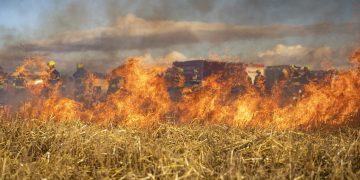
Many people expect a raging wildfire to leave a blackened, lifeless landscape in its wake. But after a blaze swept through Las Hurdes in Extremadura, Spain, in 2009, the scene was quite different. In the midst of the scorched earth were patches of green where healthy trees remained standing and unscathed.

From a distance, it looked as though the flames had simply stopped at their edges. In reality, this was no coincidence.

Fernando Pulido, an ecologist at the University of Extremadura, had been studying ways to slow the spread of wildfires. His research focused on so-called “productive fire breaks” – carefully designed areas where different types of vegetation are managed to make it harder for fires to pass through. The approach in Las Hurdes had worked well.

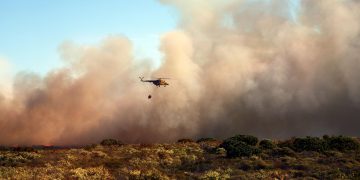
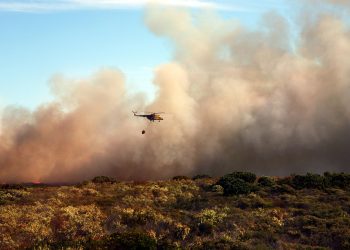
“You can’t fight fires with just helicopters and water. We need more strategies to make these megafires less destructive,” he said.

The urgency is real. In the summer of 2025, fires burned more than 45 000 hectares of land in Extremadura – one of Spain’s warmest regions and increasingly prone to wildfires. Projections suggest conditions will only become hotter and drier.

More than a decade later, Pulido is building on those early experiments as part of a broader five-year EU-funded research effort called RESIST to help vulnerable regions prepare for the impacts of climate change.

Different places, similar problems?

Extremadura is not alone. Across Europe, many regions are facing different but equally pressing climate risks. Some try to deal with flooding and landslides, others with drought, soil erosion or extreme heat. Researchers are finding that solutions developed for a specific risk in one place can often be adapted elsewhere.

The RESIST team brings together researchers, local authorities and businesses from across Europe to test and refine more than 100 climate adaptation solutions – from new technologies to changes in land management and planning.

“You can’t fight fires with just helicopters and water. We need more strategies.

Fernando Pulido, RESIST

The aim is to reduce the time and risk involved for new ideas to move from testing to real-world use.

Many regions share similar environmental conditions, despite being geographically distant. Flood-prone farmland in central Denmark has much in common with river basins in southern Latvia, while the heat and drought affecting Catalonia resemble conditions in parts of southern Italy.

By pairing such areas as “twinning regions” – matched territories that share key climate challenges – researchers and businesses can test whether solutions developed in one location can be transferred to another.

“These regions face many different challenges and have different needs,” said Vilija Balionyte-Merle, RESIST’s project coordinator at the Norwegian research organisation SINTEF.

“You need to speak to the people who live there to really understand their concerns and make a concrete difference. Only then can you consider the most effective solutions and apply them both locally and in the twinning regions.”

Digital tools for climate adaptation

In central Denmark, where flooding is a recurring problem, researchers and businesses are combining several approaches to improve preparedness.

One involves adapting buildings to better withstand floods. Using extended reality tools, residents and planners can visualise what these changes would look like before they are implemented, making it easier to plan and gain public support.

Another strand focuses on early warning. A network of underground sensors is being installed to monitor groundwater levels – often an early indicator of flooding. The data is fed into an early warning app that can alert authorities and residents before water becomes visible on the surface.

Researchers are also creating digital replicas, or “digital twins”, of local landscapes. These models allow different flood scenarios to be tested virtually, helping decision makers choose the most effective measures before investing in physical infrastructure.

Together, these tools – the result of consultation between researchers and the tools’ end users – aim to give communities more time to act and reduce the damage caused when floods occur.

The solutions developed in Denmark will then be applied in similarly affected regions, such as Zemgale in Latvia and Blekinge in Sweden.

Working with nature

Not all solutions rely on technology. In Extremadura, Pulido’s work focuses on reshaping the landscape itself.

Large areas of forest in the region are poorly managed or abandoned, which makes them more vulnerable to fire. With little economic value attached to the land, there is often little incentive to maintain it and protect it from wildfires.

“We want the tools, strategies and knowledge we develop to keep helping communities adapt to the challenges brought by climate change.

Vilija Balionyte-Merle, RESIST

Pulido and his colleagues are working with municipalities to create the kind of productive fire breaks he first tested in Las Hurdes. These are strips of land within forests where vegetation is managed using native, mixed-species plantings – not monocultures like eucalyptus or pine – to reduce fire risk, while also supporting activities such as grazing or the cultivation of fire-resistant crops like olive.

If the land generates income, it is more likely to be maintained.

“Any change to the landscape has to make economic sense, otherwise it won’t last,” Pulido said.

Local authorities, farmers and businesses are closely involved in shaping these measures. The aim is not just to test new approaches, but to ensure they are adopted and maintained over time.

“We’re working with mayors, associations and companies,” Pulido explained. “If they are part of the process, they are more likely to use the strategies we are now developing.”

Such nature-based solutions sit alongside the technological tools being developed in other regions, giving local authorities a wider set of options to deal with floods, wildfires, drought and the other climate risks their regions face.

From local trials to wider impact

It is part of a wider European push to help regions adapt to climate change by the end of the decade as part of the EU Mission on Adaptation to Climate Change.

By 2027, many of the tools being developed, including early warning systems and planning models, are expected to be ready for broader use, though the ambition extends well beyond the project’s end date.

The aim is not only to help the regions directly involved, but to create solutions that can be adopted elsewhere. Taken together, these approaches could benefit millions of people across Europe as they are rolled out more widely and the EU Mission on Adaptation to Climate Change continues to serve European regions.

“We want the tools, strategies and knowledge we develop to keep helping communities adapt to the challenges brought by climate change,” said Balionyte-Merle.

**The project in this article received funding as part of the EU Mission: Adaptation to Climate Change. EU Missions are EU‑funded initiatives that mobilise research, policy and citizens to tackle major real-world challenges by 2030.

O artigo foi publicado originalmente em Horizon, the EU Research and Innovation Magazine.
Imprimir Artigo
Publicação Anterior

Fazer o desenho de um prédio vai custar 15 euros. Registá-lo serão pelo menos 200

Próxima Publicação

Indisponibilidade na movimentação de animais – SNIRA -16 abril

Artigos Relacionados

Últimas

Irão: crise dos fertilizantes ameaça segurança alimentar mundial

01/05/2026
Luis mira
Nacional

“É pouco e vem tarde”. CAP critica apoios aos agricultores

30/04/2026
Alan Matthews
Últimas

Assessing the Commission’s CAP proposal: presentation

30/04/2026
Próxima Publicação
IFAP

Indisponibilidade na movimentação de animais – SNIRA -16 abril

Opinião

Últimas

A Falácia das Taxas: Quem paga aos agricultores pelo carbono que sequestram?

por João Revez
26/04/2026

Ler mais
Últimas

PARCA: da coragem inicial à impotência institucional

por António Bonito
19/04/2026

Ler mais

Subscrever as nossas newsletteres

Subscrever as nossas Newsletters Agroportal

Verifique na sua caixa de correio ou na pasta de spam para confirmar a sua subscrição.

Comunicados

Comissão Europeia pt

Acordo comercial provisório UE-Mercosul entra em aplicação

30/04/2026
ipma

6.ª reunião do projeto AQUAFISH0.0

30/04/2026
Advertisement

Temas em destaque

Candidaturas PU Guerra Médio Oriente Mercosul ovibeja PAC pós 2027 Simplificação PAC Temporais vinho Água que Une

Eventos

Maio 2026
STQQSSD
     1 2 3
4 5 6 7 8 9 10
11 12 13 14 15 16 17
18 19 20 21 22 23 24
25 26 27 28 29 30 31
« Abr   Jun »

Sobre Nós

O Agroportal.pt é uma plataforma de informação digital que reúne a informação relevante sobre agricultura. Tem um foco na Política Agrícola Comum e a sua aplicação em Portugal.

Menu

  • Quem somos
  • Relatórios anuais
  • Envie-nos informação
  • Publicidade
  • Newsletters
  • Estatuto Editorial
  • Ficha técnica
  • Proteção de Dados Pessoais
  • Disclaimer
Facebook twitter Circle Instagram Rss Feed

© Agroportal. All Rights reserved.

  • Login
  • Registar
Sem Resultado
Ver Todos Os Resultados
  • Sugeridas
  • Notícias
    • Nacional
    • Internacional
    • Comunicados
  • Opinião
  • Eventos
  • Dossiers
    • Agricultura Biológica
    • Apoios
    • Artigos Técnicos
    • Biossoluções
    • Cadeia Alimentar
    • Fertilizantes
    • Financiamento
    • Fitofarmacêuticos
    • Florestas
    • Futuro da PAC
    • Inovação
    • Mercados e Cotações agrícolas
    • Newsletters e Revistas
    • Recomendações Agroflorestais
    • Seguros agrícolas
  • Serviços
    • Diretório
    • Emprego
    • Máquinas Agrícolas
    • Meteorologia
    • Terrenos Agrícolas
    • Arquivo Agroportal

© Agroportal. All Rights reserved.

Bem-Vindo De Volta!

Sign In with Facebook
Sign In with Google
OU

Faça login na sua conta abaixo

Esqueceu-se da senha? Registar

Criar Uma Nova Conta!

Sign Up with Facebook
Sign Up with Google
OU

Preencha os campos abaixo para se registar

* Ao se registar-se no nosso site, você concorda com os Termos e Condições e a Política de Privacidade .
Todos os campos são necessários. Entrar

Obter a sua senha

Indique por favor o seu nome de utilizador ou endereço de E-mail para repor a sua senha.

Entrar
Este site usa cookies. Ao continuar a utilizar este site, está a dar consentimento à utilização de cookies. Visite a nossa Política de Protecção de dados e Cookies.