



















Sem Resultado
Ver Todos Os Resultados
Newsletters
Agroportal
  • Login
  • Registar
  • Sugeridas
  • Notícias
    • Notícias
    • Nacional
    • Internacional
    • Comunicados

    Incêndios: Montenegro diz que este ano haverá segundo meio aéreo a operar na Madeira

    Colóquios e Conferências na Ovibeja – Resumo do Agroportal

    CNA

    PTRR apresentado com poucas novidades para o sector agro-florestal

    Intervenção de Abertura da 42ª Ovibeja proferida pelo Presidente da ACOS, Rui Garrido

    Parque das Serras do Porto compra 25 hectares de terreno para proteger salamandra

    Engenhos da Madeira já receberam mais de cinco mil toneladas de cana-de-açúcar este ano

    água

    Barragens de Alportel e Foupana com estudos prontos para avançar

    navio contentores

    Mercosul vive impasse sobre divisão de quotas em acordo com Bruxelas

    ANSR marca presença na 42.ª Ovibeja com foco na segurança dos veículos agrícolas

  • Opinião

    A Falácia das Taxas: Quem paga aos agricultores pelo carbono que sequestram?

    PARCA: da coragem inicial à impotência institucional

    João Dinis

    Pastores e queijo da serra

    Sofia Almeida

    O lobo-ibérico é um teste à seriedade das políticas de conservação

    Jovem Empresário Rural Não Agrícola, Precisam-se!

    Resultados económicos do sector agrícola em 2025: apesar de menos favoráveis do que os dos últimos anos não põem em causa a evolução bastante positiva da última década

    A Grande Ilusão: Porque têm as nossas Confederações medo da rua?

    Pagar pelo “invisível” e o porquê da agricultura portuguesa não pode continuar a oferecer serviços ecológicos “de graça”?

    Quando a água é escassa, a agricultura é um “utilizador como os outros” … ou um setor estratégico que deve ter prioridade?

  • Eventos
  • Dossiers

    Dossiers I

    • Agricultura Biológica
    • Apoios
    • Artigos Técnicos
    • Biossoluções
    • Cadeia Alimentar
    • Fertilizantes
    • Financiamento
    • Fitofarmacêuticos

    Dossiers II

    • Florestas
    • Futuro da PAC
    • Inovação
    • Mercados
    • Newsletters e Revistas
    • Recomendações Agroflorestais
    • Seguros

    Últimas

    Cotações – Cereais – 20 a 26 de abril de 2026

    29/04/2026

    Cotações – Azeite e Azeitona – 20 a 26 de abril de 2026

    29/04/2026

    Cotações – Flores e Folhagens – 20 a 26 de abril de 2026

    29/04/2026

    Cotações – Frutos frescos e secos – 20 a 26 de abril de 2026

    29/04/2026

    Cotações – Produtos Hortícolas – 20 a 26 de abril de 2026

    29/04/2026

    OGM | Plantas que brilham no escuro podem iluminar cidades sem eletricidade

    29/04/2026
  • Serviços
    • Diretório
    • Emprego
    • Máquinas Agrícolas
    • Meteorologia
    • Terrenos Agrícolas
    • Arquivo Agroportal
Agroportal
  • Sugeridas
  • Notícias
    • Notícias
    • Nacional
    • Internacional
    • Comunicados

    Incêndios: Montenegro diz que este ano haverá segundo meio aéreo a operar na Madeira

    Colóquios e Conferências na Ovibeja – Resumo do Agroportal

    CNA

    PTRR apresentado com poucas novidades para o sector agro-florestal

    Intervenção de Abertura da 42ª Ovibeja proferida pelo Presidente da ACOS, Rui Garrido

    Parque das Serras do Porto compra 25 hectares de terreno para proteger salamandra

    Engenhos da Madeira já receberam mais de cinco mil toneladas de cana-de-açúcar este ano

    água

    Barragens de Alportel e Foupana com estudos prontos para avançar

    navio contentores

    Mercosul vive impasse sobre divisão de quotas em acordo com Bruxelas

    ANSR marca presença na 42.ª Ovibeja com foco na segurança dos veículos agrícolas

  • Opinião

    A Falácia das Taxas: Quem paga aos agricultores pelo carbono que sequestram?

    PARCA: da coragem inicial à impotência institucional

    João Dinis

    Pastores e queijo da serra

    Sofia Almeida

    O lobo-ibérico é um teste à seriedade das políticas de conservação

    Jovem Empresário Rural Não Agrícola, Precisam-se!

    Resultados económicos do sector agrícola em 2025: apesar de menos favoráveis do que os dos últimos anos não põem em causa a evolução bastante positiva da última década

    A Grande Ilusão: Porque têm as nossas Confederações medo da rua?

    Pagar pelo “invisível” e o porquê da agricultura portuguesa não pode continuar a oferecer serviços ecológicos “de graça”?

    Quando a água é escassa, a agricultura é um “utilizador como os outros” … ou um setor estratégico que deve ter prioridade?

  • Eventos
  • Dossiers

    Dossiers I

    • Agricultura Biológica
    • Apoios
    • Artigos Técnicos
    • Biossoluções
    • Cadeia Alimentar
    • Fertilizantes
    • Financiamento
    • Fitofarmacêuticos

    Dossiers II

    • Florestas
    • Futuro da PAC
    • Inovação
    • Mercados
    • Newsletters e Revistas
    • Recomendações Agroflorestais
    • Seguros

    Últimas

    Cotações – Cereais – 20 a 26 de abril de 2026

    29/04/2026

    Cotações – Azeite e Azeitona – 20 a 26 de abril de 2026

    29/04/2026

    Cotações – Flores e Folhagens – 20 a 26 de abril de 2026

    29/04/2026

    Cotações – Frutos frescos e secos – 20 a 26 de abril de 2026

    29/04/2026

    Cotações – Produtos Hortícolas – 20 a 26 de abril de 2026

    29/04/2026

    OGM | Plantas que brilham no escuro podem iluminar cidades sem eletricidade

    29/04/2026
  • Serviços
    • Diretório
    • Emprego
    • Máquinas Agrícolas
    • Meteorologia
    • Terrenos Agrícolas
    • Arquivo Agroportal
Sem Resultado
Ver Todos Os Resultados
Agroportal
exploração agricola africa

Irrigation helps women farmers in Mozambique weather climate extremes

por Cornell Alliance for Science
15-12-2021 | 15:34
em Últimas, Internacional
Tempo De Leitura: 5 mins
A A
Partilhe no FacebookPartilhe no TwitterEnviar para o WhatsappEnviar para o TelegramEnviar para o LinkedIn

In January 2021, a devastating cyclone hit Mozambique and flooded Berta Inácio Ngove’s field, burying a promising crop of maize and beans in a watery tomb.

“It was bad,” recalls Ngove, a 52-year-old widow and mother of four children. “We did not harvest anything.”

But cyclones aren’t the only extreme weather events that smallholder farmers like Ngove must endure. Droughts and erratic rainfall have also elevated crop losses and food scarcity in a country increasingly vulnerable to the vagaries of the climate crisis.

In response, the Mozambique government is rolling out the 25-year National Irrigation Program (NIP), which plans to irrigate 300,000 hectares annually to help smallholder farmers weather the climate crisis and boost food production. International development organizations and academic institutions are supporting the effort with training, farmer education and loans.

“Providing access to irrigation for smallholders is necessary to improve agricultural productivity, increase food security, reduce poverty and increase resilience to climate variability, says Leah Ndungu, regional manager at the Australian Center for International Agricultural Research (ACIAR).

The strategy has helped women, who comprise the bulk of irrigation farmers, to save labor and enjoy quality time for off-farm activities, according to Andre Machava, an agricultural engineer and environmental specialist with the National Irrigation Institute.

“The rainfall is becoming erratic and, at times, very intense within a short period, meaning that the rest of the season there is drought or dry spells,” Machava explains. “Irrigation is helping compensate for the uneven rainfall, and those using irrigation are achieving high yields because they manage their water use.”

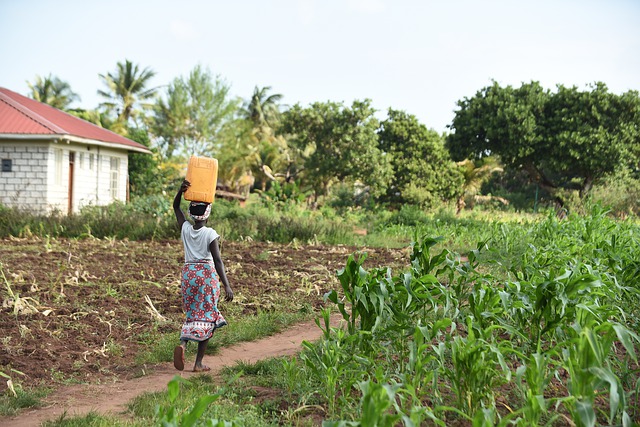
Ngove, who lives in Ndonga village in Gaza Province, more than 200 kilometers northwest of the capital city of Maputo, is a member of the Makateco Association, a government-led irrigation scheme with about 50 members, mostly women.

“I have been growing maize and beans under rain-fed agriculture, but I joined the irrigation scheme because I could grow crops whether there was rain or not,” explains Ngove.

Even before midday, the sun is uncomfortably hot, beating down on farmers harvesting a crop of ripe tomatoes. “We have to battle the sun burning our heads but, more worrying, the heat is drying our fields, so we think we need irrigation all the time,” bemoans Esmeraldo Julio Ngovene, head of production at Makateco Irrigation Scheme.

Low-tech, high yields 

To better help them monitor soil moisture and manage water use, some farmers have adopted tools like Chameleon Soil Water Sensors, Wetting Front Detectors (WFD) and drip irrigation kits. The Chameleon sensor is a digital tool that measures soil water moisture availability through a color code that is easy to use, even by illiterate farmers. The WFD, which is buried under the soil, indicates how deeply water has percolated into the ground. It also collects a solution that is used to test for salinity and the availability of nutrients.

“Before learning about this tool, when we saw the field was dry, we just irrigated,” Ngove says. “But now we take out the Chameleon, connect the wire sensors and the lights go on. If the light is blue, the soil is wet. If it is green, there is enough moisture in the soil, and, if it is red, it means the soil is dry and it is time to irrigate.”

Through use of the Chameleon tool and the WFD, farmers have reduced their irrigation by up to 50 percent, saving water, time and money spent on labor and fuel costs. Prior to adopting the water management tools, farmers in the Makateco scheme used 90 litres of diesel to pump water to grow beans on two hectares over a three-month cropping season. The women now use only 50 litres of fuel.

About 400 smallholder farmers and 137 extension officers have been trained on improved crop management practices and adopting water-efficient innovations on their farms through the Farmer-led Smallholder Irrigation in Mozambique (FASIMO), a Cultivate Africa’s Future Project that is co-funded by Canada’s International Development Research Centre (IDRC) and ACIAR. The project is being implemented by a partnership between the Faculty of Agronomy and Forestry Engineering from University Eduardo Mondlane and the National Irrigation Institute (NIR). The project has targeted eight schemes in Gaza and Manica provinces, benefiting over 400 smallholder farmers.

FASIMO has sought to identify ways to make government- and farmer-led smallholder irrigation schemes in Mozambique more productive, self-sustaining and equitable.

Produce more with less

Adoption of the Chameleon sensors and WFD has brightened the production prospects for irrigation farmers in Mozambique, states Mario Chilundo, a water engineering specialist and lecturer at Eduardo Mondlane University and principal investigator of FASIMO.

“Over time, more farmers have been engaged in irrigation, which the government has prioritized as a way to ensure food security,” Chilundo told Alliance for Science. “The impact of climate change has reduced water flow into irrigated areas, making it ideal to embrace water-efficient technologies to help farmers produce more with less.”

One of the implementing partners in the FASIMO program, Gaza Works, a religious-oriented NGO, has supported smallholder farmers in 12 irrigation schemes in the Gaza Province. It has helped 445 farmers — 94 percent of them women —secure a loan of US$1,100 each, which they invest in land preparation, irrigation and farming equipment, seed, fertilizers and chemicals. They are expected to repay 80 percent of the loan within seven years by selling their produce.

In addition to loans, Gaza Works provides technical assistance on production, commercialization and financial management.

“We feel this is a success because farmers are able to earn income from the crops they grow and invest in housing and send their children to school,” says Salomao Mavaisso Maposse, president of Gaza Works.

Higher incomes for women

Maria Alexandre Sitoe, president of the Rivoningo Irrigation Scheme in Gaza Province, explains that the Chameleon sensor has helped farmers reduce daily irrigation to just twice a week, boosting their production and income.

Sitoe, a mother of four, says she has benefitted from the irrigation scheme by growing tomatoes.

In 2017, a year after joining the scheme, Sitoe earned US$340, which she invested in building her house and educating her children. However, in the 2020 season, she earned just US$117 because her crop was flooded and suffered high pest infestation and the COVID-19 lockdown reduced her customer base.

“Last year, the flood was serious,” Sitoe tells the Alliance for Science. “It affected our production and the prices for the little crop we were able to harvest because there were few customers to buy. This year, I am expecting to get three tons of tomatoes and I will get more money and hopefully move into my completed house.”


By Busani Bafana

Imprimir Artigo
Publicação Anterior

Vinho açoriano servido aos czares da Rússia regressa ao mercado a 490 euros a garrafa

Próxima Publicação

Cotações – Azeite e Azeitona – 6 a 12 de dezembro de 2021

Artigos Relacionados

Cotações PT

Cotações – Cereais – 20 a 26 de abril de 2026

29/04/2026
Nacional

Incêndios: Montenegro diz que este ano haverá segundo meio aéreo a operar na Madeira

29/04/2026
Últimas

Colóquios e Conferências na Ovibeja – Resumo do Agroportal

29/04/2026
Próxima Publicação
azeite

Cotações - Azeite e Azeitona - 6 a 12 de dezembro de 2021

Discussão sobre este post

Opinião

Últimas

A Falácia das Taxas: Quem paga aos agricultores pelo carbono que sequestram?

por João Revez
26/04/2026

Ler mais
Últimas

PARCA: da coragem inicial à impotência institucional

por António Bonito
19/04/2026

Ler mais

Subscrever as nossas newsletteres

Subscrever as nossas Newsletters Agroportal

Verifique na sua caixa de correio ou na pasta de spam para confirmar a sua subscrição.

Comunicados

Colóquios e Conferências na Ovibeja – Resumo do Agroportal

29/04/2026
CNA

PTRR apresentado com poucas novidades para o sector agro-florestal

29/04/2026
Advertisement

Temas em destaque

Candidaturas PU Guerra Médio Oriente Mercosul PAC pós 2027 Simplificação PAC Temporais Água que Une

Eventos

Abril 2026
STQQSSD
   1 2 3 4 5
6 7 8 9 10 11 12
13 14 15 16 17 18 19
20 21 22 23 24 25 26
27 28 29 30    
« Mar   Mai »

Sobre Nós

O Agroportal.pt é uma plataforma de informação digital que reúne a informação relevante sobre agricultura. Tem um foco na Política Agrícola Comum e a sua aplicação em Portugal.

Menu

  • Quem somos
  • Relatórios anuais
  • Envie-nos informação
  • Publicidade
  • Newsletters
  • Estatuto Editorial
  • Ficha técnica
  • Proteção de Dados Pessoais
  • Disclaimer
Facebook twitter Circle Instagram Rss Feed

© Agroportal. All Rights reserved.

  • Login
  • Registar
Sem Resultado
Ver Todos Os Resultados
  • Sugeridas
  • Notícias
    • Nacional
    • Internacional
    • Comunicados
  • Opinião
  • Eventos
  • Dossiers
    • Agricultura Biológica
    • Apoios
    • Artigos Técnicos
    • Biossoluções
    • Cadeia Alimentar
    • Fertilizantes
    • Financiamento
    • Fitofarmacêuticos
    • Florestas
    • Futuro da PAC
    • Inovação
    • Mercados e Cotações agrícolas
    • Newsletters e Revistas
    • Recomendações Agroflorestais
    • Seguros agrícolas
  • Serviços
    • Diretório
    • Emprego
    • Máquinas Agrícolas
    • Meteorologia
    • Terrenos Agrícolas
    • Arquivo Agroportal

© Agroportal. All Rights reserved.

Bem-Vindo De Volta!

Sign In with Facebook
Sign In with Google
OU

Faça login na sua conta abaixo

Esqueceu-se da senha? Registar

Criar Uma Nova Conta!

Sign Up with Facebook
Sign Up with Google
OU

Preencha os campos abaixo para se registar

* Ao se registar-se no nosso site, você concorda com os Termos e Condições e a Política de Privacidade .
Todos os campos são necessários. Entrar

Obter a sua senha

Indique por favor o seu nome de utilizador ou endereço de E-mail para repor a sua senha.

Entrar
Este site usa cookies. Ao continuar a utilizar este site, está a dar consentimento à utilização de cookies. Visite a nossa Política de Protecção de dados e Cookies.