









In the village of Suonenjoki, the Natural Resources Institute Finland (Luke) stands surrounded by a forest of pine trees. The local soils are not fertile and pine is pretty much the only species that can grow there.
But in a nursery on campus, where young trees are grown from seed before being planted, there are genes from all over the continent: European larch, wild cherry, Scots pine. This small but deliberate act of diversity is part of a wider EU-funded research project called OptFORESTS.
The seedlings are planted in plots in 28 locations across Europe, involving 12 tree species. The plots are designed to study how different species and genetic mixtures perform under different environmental conditions and in future climates.
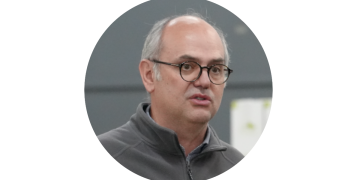
“The goal is to diversify forests in Europe and also bring forward species that are mostly ignored in forestry,” said Katri Himanen, a senior scientist at Luke, who is overseeing the growing of the seedlings in Finland.
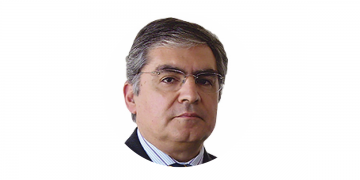
Santiago González-Martínez, a forest scientist at the French National Institute for Agriculture, Food and Environment (INRAE), and who coordinates the OptFORESTS research work, shares that ambition. “We want to actively guide the transition towards more resilient and productive forest ecosystems,” he said.
Trees under pressure
Covering about 43% of EU land, forests are vital for biodiversity, climate regulation and carbon storage. But they are under growing pressure.
Forests of Norway spruce in Germany, Czechia and Austria, for example, have suffered massive dieback – the widespread death of trees across forest areas – after repeated hot droughts and insect attacks since 2018.
“We want to actively guide the transition towards more resilient and productive forest ecosystems.
OptFORESTS was set up to tackle the growing urgency of these climate impacts on Europe’s forests. Researchers also realised that forests’ genetic resources – the natural genetic diversity found within tree species – are still underused as a tool for adaptation. They are now working to change that.
“Genetic diversity is like a biological backup system. It increases the chance that at least some trees can withstand new threats such as drought, pests or disease,” said González-Martínez.
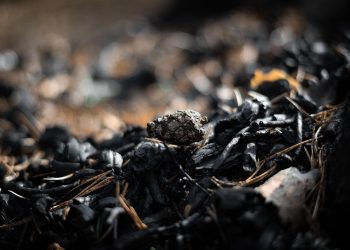
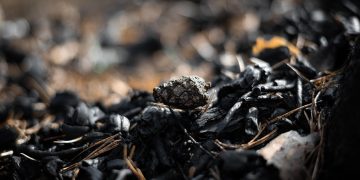
For example, pine forests often burn very intensely because they contain a lot of flammable material. When oaks grow together with pines, fires tend to be less severe and cause less damage.
“If we had more mixed forests, fire wouldn’t spread so fast and possibly more trees of fire-tolerant species would survive,” he said.
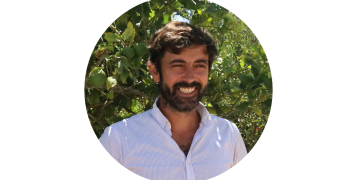
Diversifying forests is not just about the genetic diversity in a single area, said François Lefèvre, a geneticist at INRAE.
“It contributes to resilience of the forest at multiple scales: at the territory or landscape scale and also at the country level,” he said. “Genetic diversity should be considered at all these different scales.”
From seeds to forests
Many forests are monocultures or comprise a limited number of species, largely because they are simpler and more economically efficient to manage, harvest and process. In some areas, only few tree species can naturally thrive, leading to vulnerable ecosystems.
Much of the existing forestry knowledge and infrastructure is built around a small number of well-studied commercial species, such as the Norway spruce or beech. The vast majority of Europe’s tree species remain poorly studied for forestry purposes.
“Diversifying this system is challenging. It requires collecting and maintaining a wider range of seeds, adapting nursery practices to different species and filling important knowledge gaps,” said González-Martínez.
Central to that challenge are the reproductive materials – the fruits, seeds, cones and plant parts – that physically determine what gets planted.
The OptFORESTS researchers are directly assessing the European nursery sector, forecasting future reproductive material needs, and working with nurseries to develop production capacity for a broader range of species. This shift will take time and investment to take hold. But as countries expand forest restoration efforts in response to climate-related damage, demand for more diverse planting material is likely to grow.
Long-term trial plots across Europe are testing how genetically mixed forests grow and adapt, while new planning tools let forestry managers explore which species and genetic combinations are likely to work best in their local conditions.
The research has already made strides in helping certain tree species. In Norway, forest managers are now planting seedlings that are resistant to ash dieback. In Slovenia, experimental plantations are also being restocked using seed sources and seedlings developed through the project.
“In the next 10 years, our work can help foresters choose better adapted seed sources and more adapted management strategies, helped by better training in genetics,” said González-Martínez.
Beyond the lab
The initiative integrates genetic information into traditional forest growth models, so that researchers can use simulations to evaluate how different strategies influence long-term resilience.
“If the trees are not doing that well, then it’s a practical economic issue as well.
Cross-border collaboration has played a key role, making it possible for researchers to exchange experience and resources across different forest ecosystems.
“Forest genetic diversity cannot be considered without international collaboration,” said Lefèvre. “Some countries are experiencing today what others will be faced with in the next decade.”
The research also links science, industry and policy, highlighting the significance of forests for the economy, which relies on trees for timber, paper and construction.
“If the trees are not doing that well, then it’s a practical economic issue as well,” said Himanen.
Thinking in centuries
The OptFORESTS team is aiming to support a shift towards more diverse and climate-resilient forests, to ensure they continue to provide environmental and economic benefits.
“When a forest manager makes a decision, he doesn’t plant it just for one year, like in agriculture,” said Lefèvre.
In practice, this means monitoring forests over the long term, using a wider range of seeds and seedlings, and giving forest managers better guidance as conditions grow less predictable.
“Ultimately, the most important shift is in the mindset: accepting that future forests will not look exactly like those of the past, and managing them accordingly,” said González-Martínez.
For forest managers, that mindset shift has a very concrete dimension – time.
“Forests are long-living things and planters make the decisions for the genetics for a hundred years,” said Himanen. “Your best bet is to have as much genetic diversity in there, as insurance for the future. Fortunately, there is a long tradition of maintaining genetic diversity in European forestry.”
Research in this article was funded by the EU’s Horizon Programme. The views of the interviewees don’t necessarily reflect those of the European Commission. If you liked this article, please consider sharing it on social media.
O artigo foi publicado originalmente em Horizon, the EU Research and Innovation Magazine.