












Sem Resultado
Ver Todos Os Resultados
Newsletters
Agroportal
  • Login
  • Registar
  • Sugeridas
  • Notícias
    • Notícias
    • Nacional
    • Internacional
    • Comunicados

    Canadá anuncia verba para fundo destinado a proteger florestas tropicais

    Qualidade do ar: Portugal reforça combate à poluição atmosférica com novo programa

    pig

    Peste suína africana: Comissão atualiza as zonas submetidas a restrições

    Estudo identifica genes associados ao rendimento em carne magra nos suínos

    UE e Reino Unido avançam com projeto de acordo sanitário e fitossanitário

    farm land

    10º Congresso da CNA realiza-se este domingo em Vila Real

    Tribunal moçambicano mantém em vigor diploma que regula importação de arroz e trigo

    Moçambique adota financiamento para reduzir riscos e aumentar produção agrícola

    Desflorestação na Amazónia atinge valores mínimos desde 1988

  • Opinião

    Pecuária extensiva

    Manuel Chaveiro Soares

    Importa recuperar a economia da União Europeia

    A Grande Narrativa da Alimentação: Alimentar o Mundo ou Alimentar um Sistema?

    Jovens agricultores em Portugal: não partimos todos do mesmo sítio e o género conta

    Pedro-Pimentel

    Portugal tem uma palavra a dizer

    Jose Mesquita Milheiro

    Agricultura, filha de um deus menor. Até quando?

    Registo Internacional de Marcas no Setor Agroalimentar

    Estamos a exportar Portugal ou a desvalorizar o azeite português?

    AIGP: fracasso ou sucesso?

  • Eventos
  • Dossiers

    Dossiers I

    • Agricultura Biológica
    • Apoios
    • Artigos Técnicos
    • Biossoluções
    • Cadeia Alimentar
    • Fertilizantes
    • Financiamento
    • Fitofarmacêuticos

    Dossiers II

    • Florestas
    • Futuro da PAC
    • Inovação
    • Mercados
    • Newsletters e Revistas
    • Recomendações Agroflorestais
    • Seguros

    Últimas

    Desflorestação na Amazónia atinge valores mínimos desde 1988

    14/11/2026

    Já se encontra disponível a 19.ª edição do INFOBIO

    13/11/2026

    Brasil corta em um milhão de toneladas previsão de colheita de grãos devido à pressão climática

    13/11/2026

    Colaboradores da Corticeira Amorim juntam-se para plantar 5.000 sobreiros

    13/11/2026

    Cotações – Coelhos – 2 a 8 de novembro de 2026

    13/11/2026

    Cotações – Cereais – 2 a 8 de novembro de 2026

    13/11/2026
  • Serviços
    • Diretório
    • Emprego
    • Máquinas Agrícolas
    • Meteorologia
    • Terrenos Agrícolas
    • Arquivo Agroportal
Agroportal
  • Sugeridas
  • Notícias
    • Notícias
    • Nacional
    • Internacional
    • Comunicados

    Canadá anuncia verba para fundo destinado a proteger florestas tropicais

    Qualidade do ar: Portugal reforça combate à poluição atmosférica com novo programa

    pig

    Peste suína africana: Comissão atualiza as zonas submetidas a restrições

    Estudo identifica genes associados ao rendimento em carne magra nos suínos

    UE e Reino Unido avançam com projeto de acordo sanitário e fitossanitário

    farm land

    10º Congresso da CNA realiza-se este domingo em Vila Real

    Tribunal moçambicano mantém em vigor diploma que regula importação de arroz e trigo

    Moçambique adota financiamento para reduzir riscos e aumentar produção agrícola

    Desflorestação na Amazónia atinge valores mínimos desde 1988

  • Opinião

    Pecuária extensiva

    Manuel Chaveiro Soares

    Importa recuperar a economia da União Europeia

    A Grande Narrativa da Alimentação: Alimentar o Mundo ou Alimentar um Sistema?

    Jovens agricultores em Portugal: não partimos todos do mesmo sítio e o género conta

    Pedro-Pimentel

    Portugal tem uma palavra a dizer

    Jose Mesquita Milheiro

    Agricultura, filha de um deus menor. Até quando?

    Registo Internacional de Marcas no Setor Agroalimentar

    Estamos a exportar Portugal ou a desvalorizar o azeite português?

    AIGP: fracasso ou sucesso?

  • Eventos
  • Dossiers

    Dossiers I

    • Agricultura Biológica
    • Apoios
    • Artigos Técnicos
    • Biossoluções
    • Cadeia Alimentar
    • Fertilizantes
    • Financiamento
    • Fitofarmacêuticos

    Dossiers II

    • Florestas
    • Futuro da PAC
    • Inovação
    • Mercados
    • Newsletters e Revistas
    • Recomendações Agroflorestais
    • Seguros

    Últimas

    Desflorestação na Amazónia atinge valores mínimos desde 1988

    14/11/2026

    Já se encontra disponível a 19.ª edição do INFOBIO

    13/11/2026

    Brasil corta em um milhão de toneladas previsão de colheita de grãos devido à pressão climática

    13/11/2026

    Colaboradores da Corticeira Amorim juntam-se para plantar 5.000 sobreiros

    13/11/2026

    Cotações – Coelhos – 2 a 8 de novembro de 2026

    13/11/2026

    Cotações – Cereais – 2 a 8 de novembro de 2026

    13/11/2026
  • Serviços
    • Diretório
    • Emprego
    • Máquinas Agrícolas
    • Meteorologia
    • Terrenos Agrícolas
    • Arquivo Agroportal
Sem Resultado
Ver Todos Os Resultados
Agroportal
Farm Europe

European agriculture: unprecedented crisis call for unprecedented EU reaction.

por Farm Europe
30-08-2022 | 18:13
em Últimas, Internacional
Tempo De Leitura: 5 mins
A A
Partilhe no FacebookPartilhe no TwitterEnviar para o WhatsappEnviar para o TelegramEnviar para o LinkedIn

For almost three years now (since the beginning of the Covid crisis), European agriculture has been dealing with one challenge after another and one crisis after yet another one. The cumulative consequences of these challenges continue and, even increase, when they are not anymore at the headlines. And this will be a serious threat on European agriculture – and on global food security – for the months to come.

During the Covid pandemic, farmers organised themselves to ensure a supply of quality, quantity in time to all Europeans as well as to third-party markets. In order to bounce back from the market closure linked to this period, the European Commission had proposed to include a €20 billion package for agriculture within its European recovery plan. But the Heads of State and Government finally decided on a narrow envelope, reduced by more than half of the initial amount (8 billion). This reduced package gave a fairly large flexibility of use for the Member States. In fact, a very small fraction have been used to finance recovery investments.

Nonetheless, the economic effects of the health crisis have persisted for economic actors with increased costs of inputs and intermediate consumption under the dual effect of a recovery in world consumption and bottlenecks among suppliers, primarily in Asia. This increase in production costs was only very partially passed on to the downstream sector. It weakened the margins of the agricultural sectors and farmers.

From autumn 2021, the worsening of the situation between Russia and Ukraine created tensions over energy prices. It turned into a deep crisis with Russia’s aggression against Ukraine. The blockade of Ukrainian ports and fears about food security led to price spikes for agricultural products. These increases in agricultural prices were only marginally passed on to farmers, as the majority of field crop production had already been sold or contracted out beforehand. Traders were the main beneficiaries. When it comes to livestock production, the rise in food prices annihilated any potential positive effect of price increases.

Today, agricultural prices are tending towards the pre-invasion levels of Ukraine. However, input prices, especially for fertilisers, remain extremely high, linked to uncertainties on the gas market. Neither these, nor the announcement of the closure of fertiliser plants in Europe, point to an easing of the situation. While the drop in global agricultural prices may divert the spotlight from the fundamentals of agricultural markets, the fear of an EU agriculture struggling against the consequences of such a price squeeze is real.
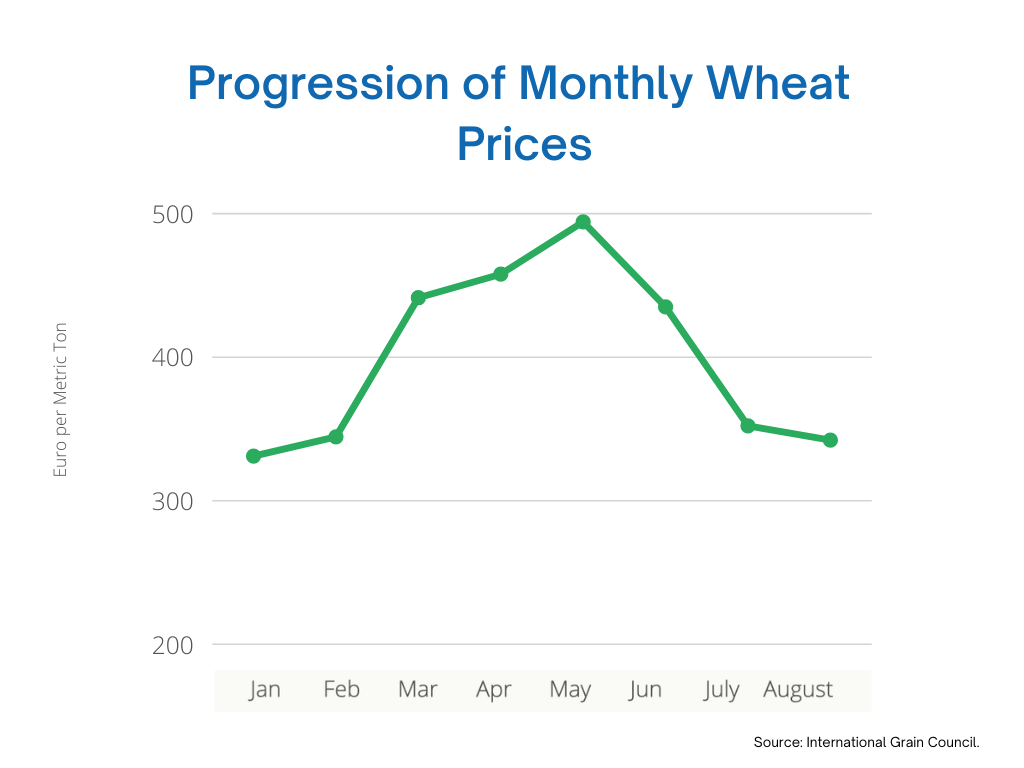
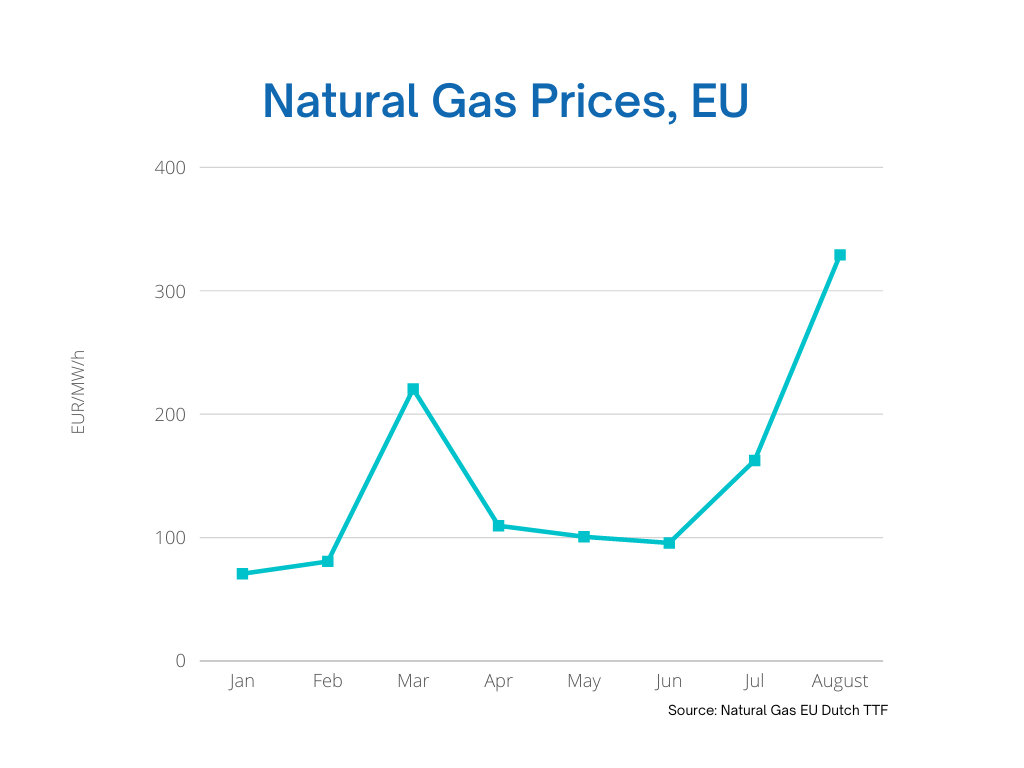
In order to limit the impact of the Ukrainian crisis on European agricultural production, the European Union has allowed Member States to act in a scattered manner, depending on their ability to mobilise national budgetary resources. 9 Member States have submitted state aid measures for their agriculture since April 2022 (Germany, Poland, Italy, France, Estonia, Czech Republic, Slovenia, Austria, Bulgaria) with important gaps in the level of support generating frictions on the internal market.

These measures, for those who have been able to benefit from them, are likely to alleviate some of the current difficulties, but they do not anticipate the scenario that is taking shape of falling market prices and production costs remaining at their peak.

At the same time, the European Union has experienced one of the worst droughts. 14 of the 27 Member States were severely affected (Portugal, Italy, Spain, France, Ireland, Belgium, Luxembourg, Czech Republic, Slovakia and Croatia). Apart from rapeseed production, other crops are down, making farm accounts even more fragile. As for fodder production, it is in a very worrying state and is threatening the survival of many farmers. Already struggling with the rise in feed prices and other production factors due to the war in Ukraine, they are now faced with a need for fodder that they may have great difficulty in meeting by the autumn. Under such conditions, decisions to decapitalise are to be anticipated, with the corollary of an imbalance between supply and demand that could lead to a reversal of prices and a downward spiral.
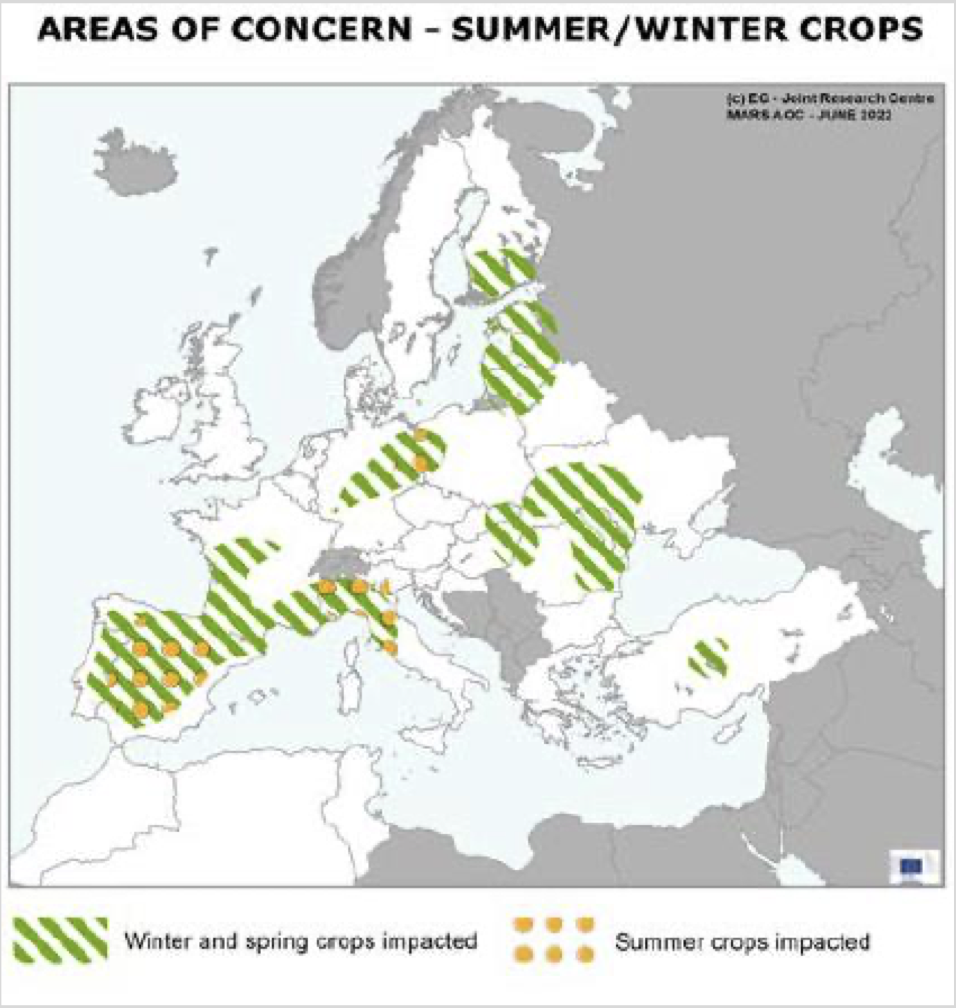
Source: JRC, European Commission

When it comes to production in 2022/23, no sector seems to be immune to declining turnover & rising production costs; neither the animal nor the plant sectors. In fact, it is in the coming weeks that the ability of European agriculture to ensure the smooth functioning of the markets (European and for its share of responsibility for the supply of world markets) for the next 18 months will be at stake. The decisions to pay CAP aid in advance are a one-off cash flow aid, but will not be enough to break the spiral. Faced with a situation such as the present one, the maintenance of the European productive potential and of farmers at the forefront of our food security necessarily requires reductions in charges and financial aid (from fresh funds) to be decided and implemented urgently.

The Parliament and Commission return after the summerbreak must be the time for action, action for a Europe standing by its farmers.

O artigo foi publicado originalmente em Farm Europe.

Imprimir Artigo
Publicação Anterior

Feira da Luz em Montemor-o-Novo com 210 expositores arranca na quarta-feira

Próxima Publicação

Impacto da seca num pequeno rio francês ajuda a perceber perda de biodiversidade

Artigos Relacionados

Internacional

Canadá anuncia verba para fundo destinado a proteger florestas tropicais

15/11/2026
Últimas

Qualidade do ar: Portugal reforça combate à poluição atmosférica com novo programa

15/11/2026
pig
Internacional

Peste suína africana: Comissão atualiza as zonas submetidas a restrições

15/11/2026
Próxima Publicação

Impacto da seca num pequeno rio francês ajuda a perceber perda de biodiversidade

Opinião

Últimas

Pecuária extensiva

por José Martino
15/11/2026

Ler maisDetails
Manuel Chaveiro Soares
Últimas

Importa recuperar a economia da União Europeia

por Manuel Chaveiro Soares
08/11/2026

Ler maisDetails

Subscrever as nossas newsletteres

Subscrever as nossas Newsletters Agroportal

Verifique na sua caixa de correio ou na pasta de spam para confirmar a sua subscrição.

Comunicados

Qualidade do ar: Portugal reforça combate à poluição atmosférica com novo programa

15/11/2026
zero

ZERO contesta hotel com 29 piscinas na Comporta por impactos na água e habitats

14/11/2026

Temas em destaque

agroalimentar Candidaturas PU continente Global Agri Forum 2026 Guerra Médio Oriente inovação Mercosul Omnibus Orçamento 2027 PAC pós 2027 Simplificação PAC Temporais vinho Água que Une

Eventos

Novembro 2026
STQQSSD
       1
2 3 4 5 6 7 8
9 10 11 12 13 14 15
16 17 18 19 20 21 22
23 24 25 26 27 28 29
30       
« Out   Dez »
Advertisement

Sobre Nós

O Agroportal.pt é uma plataforma de informação digital que reúne a informação relevante sobre agricultura. Tem um foco na Política Agrícola Comum e a sua aplicação em Portugal.

Menu

  • Quem somos
  • Relatórios anuais
  • Envie-nos informação
  • Publicidade
  • Newsletters
  • Estatuto Editorial
  • Ficha técnica
  • Proteção de Dados Pessoais
  • Disclaimer
Facebook twitter Circle Instagram Rss Feed

© Agroportal. All Rights reserved.

Bem-Vindo De Volta!

Sign In with Facebook
Sign In with Google
OR

Faça login na sua conta abaixo

Esqueceu-se da senha? Registar

Criar Uma Nova Conta!

Sign Up with Facebook
Sign Up with Google
OR

Preencha os campos abaixo para se registar

* Ao se registar-se no nosso site, você concorda com os Termos e Condições e a Política de Privacidade .
Todos os campos são necessários. Entrar

Obter a sua senha

Indique por favor o seu nome de utilizador ou endereço de E-mail para repor a sua senha.

Entrar
  • Login
  • Registar
Sem Resultado
Ver Todos Os Resultados
  • Sugeridas
  • Notícias
    • Nacional
    • Internacional
    • Comunicados
  • Opinião
  • Eventos
  • Dossiers
    • Agricultura Biológica
    • Apoios
    • Artigos Técnicos
    • Biossoluções
    • Cadeia Alimentar
    • Fertilizantes
    • Financiamento
    • Fitofarmacêuticos
    • Florestas
    • Futuro da PAC
    • Inovação
    • Mercados e Cotações agrícolas
    • Newsletters e Revistas
    • Recomendações Agroflorestais
    • Seguros agrícolas
  • Serviços
    • Diretório
    • Emprego
    • Máquinas Agrícolas
    • Meteorologia
    • Terrenos Agrícolas
    • Arquivo Agroportal

© Agroportal. All Rights reserved.

Este site usa cookies. Ao continuar a utilizar este site, está a dar consentimento à utilização de cookies. Visite a nossa Política de Protecção de dados e Cookies.