







For a farmer wondering whether to invest in a new digital solution, a successful demonstration hundreds of kilometres away may not be particularly convincing. But seeing the same technology work on a neighbouring farm, or hearing a recommendation from a fellow farmer, a friend, or even a conversation in the local café, carries a different kind of weight.
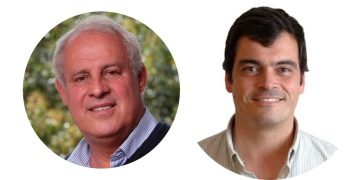
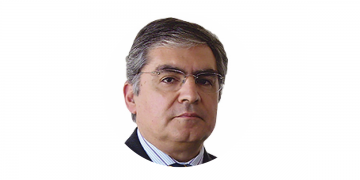
What matters, according to Nikos Marianos, managing director at Greek digital innovation hub GreenSupplyChain, is seeing evidence that a technology works in conditions farmers recognise.
“Farmers want to innovate, but they need to see the benefits,” said Marianos, who has spent more than 15 years working at the intersection of agriculture and digital technology. He knows how hard it can be to convince farmers to invest without clear evidence.
Marianos is working with researchers from Belgium, Cyprus, France, Greece, the Netherlands, Poland and Serbia on an EU-funded initiative called OpenAgri. They want to close this trust gap with a new tool that lets farmers, advisers and policymakers compare digital solutions using real evidence, rather than guesswork or sales pitches.
They have brought in the companies that build agricultural applications, involving farmers in defining what those technologies need to do. The work runs until the end of 2026.
Rather than designing yet another farming app, the OpenAgri team provides smaller companies and start-ups with open-source building blocks they can adapt to farmers’ needs, without building every component from scratch.
“Farmers want to innovate, but they need to see the benefits.
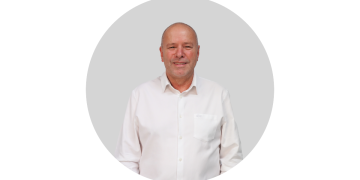
Christopher Brewster, a professor at Maastricht University in the Netherlands and OpenAgri’s coordinator, compares the approach to building with Lego. Components can be combined, adapted or replaced depending on local needs.
The building blocks include services that bring together weather information, calculate irrigation needs, assess pest and disease risk, record farm activities and generate reports. Crucially, they are designed to communicate with each other – something many existing agricultural applications struggle to do.
Finding the right digital tool
The researchers’ most comprehensive creation so far is a Decision Support Tool (DST). This free web app helps farmers, advisers and policymakers find the digital solution that fits their needs.
Users can compare practical factors, including how a tool copes with poor internet, how much energy it uses, what it costs to run, and how it holds up in different farming conditions.
A farm adviser choosing between two pest detection services, for instance, could use the DST to weigh up cost, energy use and reliability under real conditions – turning what might otherwise be guesswork into an evidence-based decision.
Policymakers could also use this evidence to spot where infrastructure needs improving before digital tools spread more widely. A beta version is already available for testing on the OpenAgri website.
Designed with farmers
Marianos believes one of the biggest problems is that technology developers may understand their products extremely well, but not the people expected to use them.
The researchers have therefore involved farmers and advisers in designing and testing OpenAgri solutions. Five pilots in Greece, France, Belgium, Poland and Cyprus cover settings ranging from vineyards and livestock farms to arable farming and composting, with a further nine already selected through an open call.
They are also tackling an obstacle easily overlooked in digital agriculture: internet access. Farms are often located far from urban centres, with limited broadband or mobile connectivity.
In a Greek vineyard pilot, for example, a camera moving through the vines captures images of leaves to identify possible diseases. Researchers compare the accuracy, energy use and cost of processing these images locally versus sending them to the cloud. It’s exactly this kind of evidence that later feeds into the DST’s recommendations.
Joining the dots
Farmers also face a growing number of digital products that cannot easily exchange information with each other. Getting different apps to use common interoperability standards “would make a huge difference,” said Brewster.
OpenAgri is designed to make its components interoperable, allowing them to exchange information. A weather service could, for example, feed information into a disease risk or irrigation service, instead of each application operating in isolation.
The team has brought together around 150 solutions in an online catalogue, making it easier for developers to find and reuse existing work rather than start from scratch.
It has also developed new open-source components for irrigation, crop protection and data exchange. One example addresses an everyday problem: farmers often report the same activities in different formats to authorities and businesses. The researchers built a service that generates these reports automatically from data already on the farm.
“Mundane, but incredibly important for the agriculture sector,” said Brewster.
“Open-source software needs to capture people’s imagination enough that they carry on looking after it.
The DST brings together evidence from the 14 pilots and a wider analysis of digital farming across Europe, turning research into information people can act on.
It could help policymakers identify which technologies best suit particular regions and where infrastructure needs improving first. In areas with poor broadband, for example, investing in better connectivity may be necessary before digital tools can spread.
The researchers have also developed solutions that process data locally and can run even where connectivity is poor or unavailable.
Keeping open source alive
But making software freely available does not guarantee its survival. One of the project’s biggest challenges, Brewster said, has been building a community that will keep developing and maintaining it after EU funding ends.
“Open-source software needs to capture people’s imagination enough that they carry on looking after it,” he said.
Its services have since joined AgStack, an open-source agriculture initiative under the Linux Foundation, the non-profit behind widely used open-source software.
GreenSupplyChain, the Greek hub, plans to continue investing in the technology. Given the wider community involved and follow-on projects already underway, Brewster is optimistic that future research will build on the project’s results.
The team also sees a broader benefit: open, interoperable tools built for real farming conditions could help narrow the gap between farmers who can afford advanced technology and those who cannot – a divide still visible across Europe.
The push for greater interoperability also reflects a wider EU effort to make it easier for agricultural data to be shared securely between farmers, businesses, researchers and public authorities.
Marianos is equally optimistic about the broader shift towards digital farming. “The gap is very big at the moment, but it is gradually being resolved. There is improvement.”
For both researchers, the lesson is straightforward: farmers need solutions built around real problems, tested in real conditions and supported by evidence they can trust. Sometimes, the most persuasive proof that a new technology works may still be the farmer five fields away.
Research in this article was funded by the EU’s Horizon Programme. The views of the interviewees don’t necessarily reflect those of the European Commission. If you liked this article, please consider sharing it on social media.
O artigo foi publicado originalmente em Horizon, the EU Research and Innovation Magazine.