















Sem Resultado
Ver Todos Os Resultados
Newsletters
Agroportal
  • Login
  • Registar
  • Sugeridas
  • Notícias
    • Notícias
    • Nacional
    • Internacional
    • Comunicados
    omv

    OMV saúda reforço das medidas de conservação do lobo-ibérico e sublinha que a rapidez no pagamento das compensações é determinante

    Autoridades moçambicanas e operadores privados criam Comité do Feijão-Bóer

    Startup criada por estudantes portugueses usa tecnologia para atencipar a deteção de incêndios florestais

    fogo bombeiros

    Seguro critica inação na prevenção de incêndios. “Hoje Portugal está pior do que em 2017”, diz especialista

    Planta

    China reforça proteção da inovação na melhoria genética agrícola

    Gestão do Território e a Prevenção de Incêndios através da pastorícia

    água

    Lesados reclamam 256 mil euros por danos após avaria que provocou poluição no rio Lis

    Mau tempo: Bombeiros de Pedrógão Grande mudam para instalações provisórias na zona industrial

    Europa Ocidental viveu período de junho-julho mais quente já registado

  • Opinião

    500 milhões de Euros por Ano Não Chega Sem Planeamento

    António Covas

    O mundo paradoxal do nosso rural tardio e remoto

    Azeites de Portugal: tratar diferente o que é diferente

    Manuel Chaveiro Soares

    Sobre a excelência da alimentação em Portugal

    Produzir bem já não chega: eficiência, estratégia e os desafios da engorda de bovinos

    Segurança Alimentar Europeia Como Ativo Estratégico

    Sabemos distinguir um frango do campo. Porque não conseguimos distinguir um Azeite de Olival Tradicional?

    Carlos Neves

    Promoções que despromovem a produção de leite de Portugal

    Georgete Felix

    O balanço invisível da agricultura

  • Eventos
  • Dossiers

    Dossiers I

    • Agricultura Biológica
    • Apoios
    • Artigos Técnicos
    • Biossoluções
    • Cadeia Alimentar
    • Fertilizantes
    • Financiamento
    • Fitofarmacêuticos

    Dossiers II

    • Florestas
    • Futuro da PAC
    • Inovação
    • Mercados
    • Newsletters e Revistas
    • Recomendações Agroflorestais
    • Seguros

    Últimas

    Cotações – Ovinos e Caprinos – 27 de julho a 02 de agosto de 2026

    10/08/2026

    Cotações – Ovinos e Caprinos – 20 a 26 de julho de 2026

    10/08/2026

    Startup criada por estudantes portugueses usa tecnologia para atencipar a deteção de incêndios florestais

    10/08/2026

    China reforça proteção da inovação na melhoria genética agrícola

    10/08/2026

    Greenpeace analisa 80 anos de incêndios em Portugal e apela à mudança

    10/08/2026

    Governo altera regime de compensações a ataques de lobo ibérico

    09/08/2026
  • Serviços
    • Diretório
    • Emprego
    • Máquinas Agrícolas
    • Meteorologia
    • Terrenos Agrícolas
    • Arquivo Agroportal
Agroportal
  • Sugeridas
  • Notícias
    • Notícias
    • Nacional
    • Internacional
    • Comunicados
    omv

    OMV saúda reforço das medidas de conservação do lobo-ibérico e sublinha que a rapidez no pagamento das compensações é determinante

    Autoridades moçambicanas e operadores privados criam Comité do Feijão-Bóer

    Startup criada por estudantes portugueses usa tecnologia para atencipar a deteção de incêndios florestais

    fogo bombeiros

    Seguro critica inação na prevenção de incêndios. “Hoje Portugal está pior do que em 2017”, diz especialista

    Planta

    China reforça proteção da inovação na melhoria genética agrícola

    Gestão do Território e a Prevenção de Incêndios através da pastorícia

    água

    Lesados reclamam 256 mil euros por danos após avaria que provocou poluição no rio Lis

    Mau tempo: Bombeiros de Pedrógão Grande mudam para instalações provisórias na zona industrial

    Europa Ocidental viveu período de junho-julho mais quente já registado

  • Opinião

    500 milhões de Euros por Ano Não Chega Sem Planeamento

    António Covas

    O mundo paradoxal do nosso rural tardio e remoto

    Azeites de Portugal: tratar diferente o que é diferente

    Manuel Chaveiro Soares

    Sobre a excelência da alimentação em Portugal

    Produzir bem já não chega: eficiência, estratégia e os desafios da engorda de bovinos

    Segurança Alimentar Europeia Como Ativo Estratégico

    Sabemos distinguir um frango do campo. Porque não conseguimos distinguir um Azeite de Olival Tradicional?

    Carlos Neves

    Promoções que despromovem a produção de leite de Portugal

    Georgete Felix

    O balanço invisível da agricultura

  • Eventos
  • Dossiers

    Dossiers I

    • Agricultura Biológica
    • Apoios
    • Artigos Técnicos
    • Biossoluções
    • Cadeia Alimentar
    • Fertilizantes
    • Financiamento
    • Fitofarmacêuticos

    Dossiers II

    • Florestas
    • Futuro da PAC
    • Inovação
    • Mercados
    • Newsletters e Revistas
    • Recomendações Agroflorestais
    • Seguros

    Últimas

    Cotações – Ovinos e Caprinos – 27 de julho a 02 de agosto de 2026

    10/08/2026

    Cotações – Ovinos e Caprinos – 20 a 26 de julho de 2026

    10/08/2026

    Startup criada por estudantes portugueses usa tecnologia para atencipar a deteção de incêndios florestais

    10/08/2026

    China reforça proteção da inovação na melhoria genética agrícola

    10/08/2026

    Greenpeace analisa 80 anos de incêndios em Portugal e apela à mudança

    10/08/2026

    Governo altera regime de compensações a ataques de lobo ibérico

    09/08/2026
  • Serviços
    • Diretório
    • Emprego
    • Máquinas Agrícolas
    • Meteorologia
    • Terrenos Agrícolas
    • Arquivo Agroportal
Sem Resultado
Ver Todos Os Resultados
Agroportal

The latest buzz – smart hives and dancing robot bees boost sustainable beekeeping

por Horizon - EU
19-08-2024 | 08:50
em Últimas, Notícias inovação, Blogs
Tempo De Leitura: 7 mins
A A
Partilhe no FacebookPartilhe no TwitterEnviar para o WhatsappEnviar para o TelegramEnviar para o LinkedIn

With an electronic ‘ping’, Professor Dirk de Graaf gets an alert on his smartphone. It’s a message from a beehive that’s in trouble.

De Graaf, a professor of biomedical physiology and insect physiology and head of the Laboratory of Molecular Entomology and Bee Pathology at the University of Ghent, Belgium, has spent the last five years developing a data collection system for beehives that he hopes can greatly improve survival rates.

Smart hives

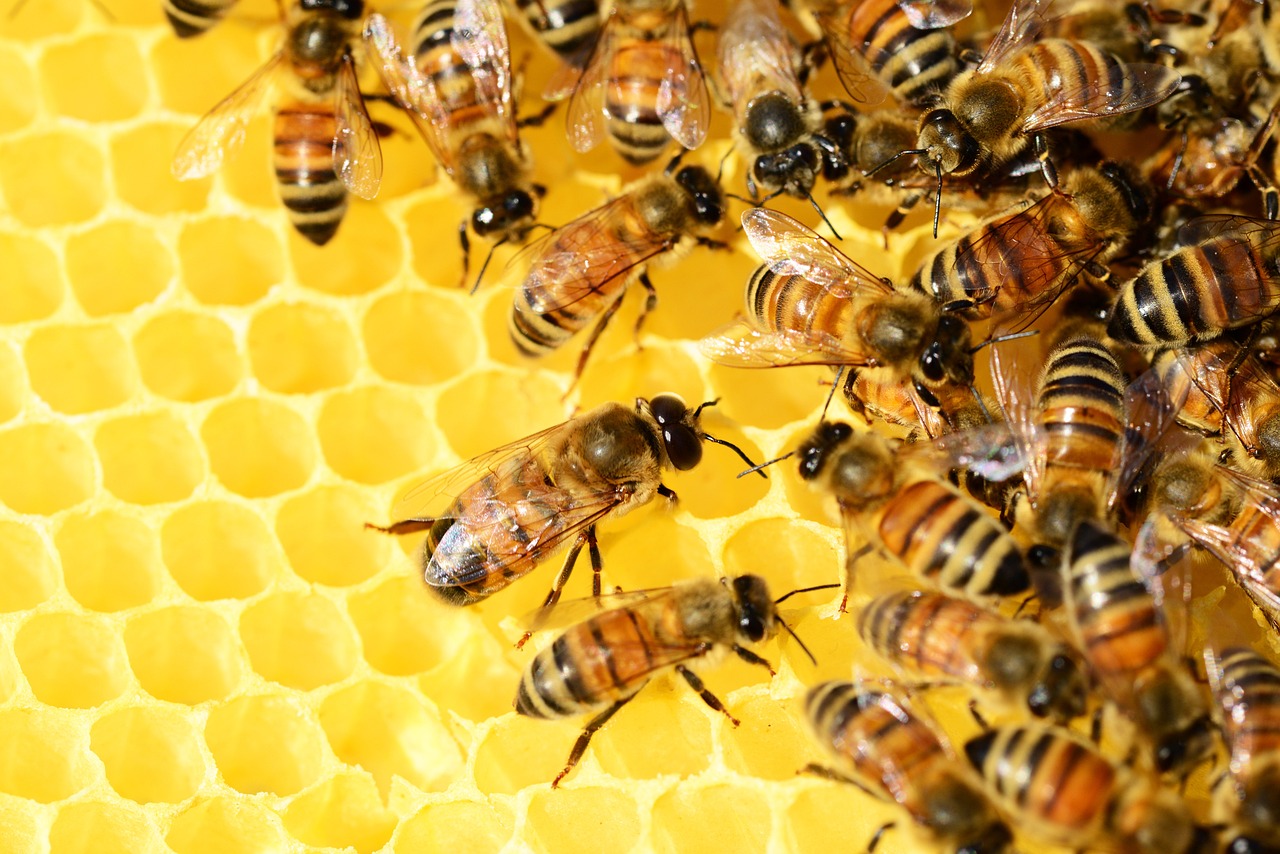
As part of a Europe-wide research initiative funded by the EU, the B-GOOD project, de Graaf and a team of researchers from 13 European countries joined forces between mid-2019 and November last year to explore how new technologies could help support both the health of bees and the sustainability of beekeeping.

The researchers have created a monitoring system that can identify problems in a hive and give tailored advice to the beekeeper on how to intervene. This system is a potentially crucial ally for beekeepers, of which there were an estimated 615 000 in the EU in 2021.

They developed a digital comb – a thin circuit board equipped with various sensors around which bees build their combs. Several of these in each hive can then transmit data to researchers, providing real-time monitoring.

The next step was to work out how best to interpret the data. ‘The challenge was to figure out which parameters contribute most to the health status of a colony,’ said de Graaf.

Over three seasons, the team monitored close to 400 colonies, spread across the 13 participating countries, allowing them to build algorithms to help interpret the data gathered by the digital combs.

‘It turns out that weight is a good indicator of whether a colony will survive in the winter,’ said de Graaf. ‘Using our technology, we can now identify colonies that need intervention. This is then communicated to the beekeepers via tailored alerts with specific instructions.’

Tech-savvy beekeeping

Bees are a keystone species, essential for pollinating wild plants and many cultivated food crops, including chocolate, coffee, tomatoes and blueberries. It is estimated that around four in five crop and wild-flowering plant species in Europe depend, at least to some extent, on insect pollination.

Yet, the numbers of wild pollinators in Europe, and the world, are declining rapidly due to the combined impact of climate change, habitat loss and widespread pesticide use. According to the European Red List, the populations of around one in three bee, butterfly and hoverfly species are threatened. For de Graaf, the effects of pesticides are particularly detrimental.

‘Very often the bees don’t die immediately when they are exposed to pesticides, but they develop memory issues and eventually fail to return to their hive,’ said de Graaf.

Automatic hive data collection is already being used by some beekeepers, mostly younger ones who are tech-savvy. Now the aim is to promote the use of these tools throughout the beekeeping community, which will allow larger scale data gathering. To this end, the researchers are working closely with the EU Bee Partnership, an EU-wide bee health and data management platform created in 2017.

‘More beekeepers relying on this would be a complete game changer; it would help us to look at bee health from a different angle,’ said de Graaf.

The technology developed may also be able to help beekeepers plan future hives. The B-GOOD team have used the data to create virtual landscapes that predict how a hive will respond to certain environmental conditions. ‘This works a bit like a flight simulator, but for beekeepers,’ he said.

Ongoing funding from the EU will allow the B-GOOD researchers to continue their valuable work through the BETTER-B research initiative which will continue until May 2027.

Inside view

Professor Thomas Schmickl, professor of zoology at the University of Graz, Austria, has also spent the past five years exploring the use of cutting-edge technology to support honeybee health as part of another EU-funded research initiative called HIVEOPOLIS which ran from 2019 to March this year.

Schmickl is the founder of the Artificial Life Lab (ALL) at the University of Graz, an international, interdisciplinary research laboratory that conducts research in the areas of swarm-intelligence, self-organisation, swarm-robotics and biologically inspired algorithms.

Much of the work done at ALL is based on taking inspiration from nature to inform advances in robotics. In HIVEOPOLIS, researchers are turning this around and looking instead at how advances in robotics could help support nature. Schmickl callsthis concept ecosystem hacking.

‘Honeybees are extremely powerful. If you support them, you support the environment around them,’ said Schmickl. ‘Pollination can only be maintained with the help of bees.’

He points out that less pollination by insects, farmers’ yields will go down, causing food prices to rise. This, in turn, puts pressure on farmers to adopt intensive environmentally damaging farming methods that lead to a further decline in insect populations. It’s a vicious cycle.

Like the B-GOOD team, the HIVEOPOLIS researchers have developed a digital honeycomb equipped with sensors. By measuring temperatures at different points in the beehive, the researchers can effectively map what is happening inside.

For example, this allows beekeepers to identify where the brood is located in a hive, the so-called brood nest. Beekeepers can then open the hive without disturbing the sensitive brood nest area.

Keeping warm

But HIVEOPOLIS’ digital combs are not just sensors, they can be activated to heat up certain parts of a beehive, which Schmickl says could make a major difference to survival rates.

‘A lot of honeybee colonies die in the winter,’ he said. ‘They need honey to survive, but sometimes these stores are out of reach, so bees die from cold trying to reach them.’ By helping to keep the bees warm during the winter, beekeepers can increase the survival rate of the colonies.

‘This is the first time we can change the temperature from inside the comb, directly sending the command over the internet. No one has ever done that before,’ he said.

Initially, it was unclear how the bees would react to the technology. Experiments have confirmed, however, that not only have colonies reacted positively, but swarm intelligence responds to the temperature changes by reducing the bees’ own heat production, helping them save energy.

Dancing bees 

Inspired by the work of the Austrian researcher, Karl von Frisch, the HIVEOPOLIS team also investigated the potential to communicate with bees in a particularly original way.

In 1973, von Frisch was awarded the Nobel Prize for his work in deciphering the honeybees’ waggle dance – a dance used by the bees to communicate the location of food sources.

He postulated that the angle to the beehive, the formation of the dance and the speed of the waggle movement all combined to indicate the direction and distance of the food source. This type of communication through movement seems to be unique in the insect world and is a source of fascination for researchers.

Dr Tim Landgraf, a professor of artificial and collective intelligence at the Freie Universität Berlin in Germany, one of the partners in HIVEOPOLIS, further expanded on earlier work of his. This involved the development of a robotic dancing bee, RoboBee, and provided the first indications that bees may be willing to follow a digital partner’s lead.

In HIVEOPOLIS, Landgraf’s research lab created a system to observe real honeybee dances and translate them onto a map in order to analyse them more closely.

Ultimately, the HIVEOPOLIS team believe that such a robot could potentially guide honeybees towards safe foraging sites and away from dangerous areas, such as sites contaminated either by pesticides or disease.But first they want to understand the dance better.

Schmickl said that he hopes to see beekeepers make good use of the work carried out. ‘We have the prototypes, now it is up to the free market to make use of these technologies on a larger scale.’

Research in this article was funded by the EU’s Horizon Programme including, in the case of HIVEOPOLIS, via the European Innovation Council (EIC) Pathfinder. The views of the interviewees don’t necessarily reflect those of the European Commission. If you liked this article, please consider sharing it on social media.

O artigo foi publicado originalmente em Horizon, the EU Research and Innovation Magazine.

Imprimir Artigo
Publicação Anterior

ENSE admite que é muito “complicado” fiscalizar biocombustíveis

Próxima Publicação

Junho o 2º Mais Quente Nível Global

Artigos Relacionados

Últimas

Ondas de calor extremo na Europa estão a afetar as perspetivas económicas dos países

10/08/2026
omv
Últimas

OMV saúda reforço das medidas de conservação do lobo-ibérico e sublinha que a rapidez no pagamento das compensações é determinante

10/08/2026
Cotações PT

Cotações – Ovinos e Caprinos – 27 de julho a 02 de agosto de 2026

10/08/2026
Próxima Publicação

Junho o 2º Mais Quente Nível Global

Opinião

Últimas

500 milhões de Euros por Ano Não Chega Sem Planeamento

por Nuno Mamede Santos
09/08/2026

Ler maisDetails
António Covas
Últimas

O mundo paradoxal do nosso rural tardio e remoto

por António Covas
02/08/2026

Ler maisDetails

Subscrever as nossas newsletteres

Subscrever as nossas Newsletters Agroportal

Verifique na sua caixa de correio ou na pasta de spam para confirmar a sua subscrição.

Comunicados

omv

OMV saúda reforço das medidas de conservação do lobo-ibérico e sublinha que a rapidez no pagamento das compensações é determinante

10/08/2026

Governo reforça indemnizações e conservação do lobo-ibérico

09/08/2026
Advertisement

Temas em destaque

Candidaturas PU Guerra Médio Oriente Mercosul ovibeja PAC pós 2027 Simplificação PAC Temporais vinho Água que Une

Eventos

Agosto 2026
STQQSSD
      1 2
3 4 5 6 7 8 9
10 11 12 13 14 15 16
17 18 19 20 21 22 23
24 25 26 27 28 29 30
31       
« Jul   Set »

Sobre Nós

O Agroportal.pt é uma plataforma de informação digital que reúne a informação relevante sobre agricultura. Tem um foco na Política Agrícola Comum e a sua aplicação em Portugal.

Menu

  • Quem somos
  • Relatórios anuais
  • Envie-nos informação
  • Publicidade
  • Newsletters
  • Estatuto Editorial
  • Ficha técnica
  • Proteção de Dados Pessoais
  • Disclaimer
Facebook twitter Circle Instagram Rss Feed

© Agroportal. All Rights reserved.

Bem-Vindo De Volta!

Sign In with Facebook
Sign In with Google
OR

Faça login na sua conta abaixo

Esqueceu-se da senha? Registar

Criar Uma Nova Conta!

Sign Up with Facebook
Sign Up with Google
OR

Preencha os campos abaixo para se registar

* Ao se registar-se no nosso site, você concorda com os Termos e Condições e a Política de Privacidade .
Todos os campos são necessários. Entrar

Obter a sua senha

Indique por favor o seu nome de utilizador ou endereço de E-mail para repor a sua senha.

Entrar
  • Login
  • Registar
Sem Resultado
Ver Todos Os Resultados
  • Sugeridas
  • Notícias
    • Nacional
    • Internacional
    • Comunicados
  • Opinião
  • Eventos
  • Dossiers
    • Agricultura Biológica
    • Apoios
    • Artigos Técnicos
    • Biossoluções
    • Cadeia Alimentar
    • Fertilizantes
    • Financiamento
    • Fitofarmacêuticos
    • Florestas
    • Futuro da PAC
    • Inovação
    • Mercados e Cotações agrícolas
    • Newsletters e Revistas
    • Recomendações Agroflorestais
    • Seguros agrícolas
  • Serviços
    • Diretório
    • Emprego
    • Máquinas Agrícolas
    • Meteorologia
    • Terrenos Agrícolas
    • Arquivo Agroportal

© Agroportal. All Rights reserved.

Este site usa cookies. Ao continuar a utilizar este site, está a dar consentimento à utilização de cookies. Visite a nossa Política de Protecção de dados e Cookies.