

















Sem Resultado
Ver Todos Os Resultados
Newsletters
Agroportal
  • Login
  • Registar
  • Sugeridas
  • Notícias
    • Notícias
    • Nacional
    • Internacional
    • Comunicados
    Farm Europe

    Plano de ação para a fertilização: boas intenções, mas é urgente clareza sobre o nível e a escala das ambições e o calendário de ação

    ipma

    IPMA sensibiliza para a problemática dos microplásticos

    paulo nascimento cabral

    Paulo do Nascimento Cabral saúda ativação da reserva agrícola em 200 milhões para apoiar agricultores

    vinho barril adega

    Monção e Melgaço: Adegas de vinho verde abertas a 06 e 07 de junho

    ICNF

    Gestão Florestal e Redução da Carga Combustível – Aviso n.º 02/C08-i05.03/2026

    Agricultura promove sessões de informação e esclarecimento sobre o PEPAC

    Reunião da Comissão de Agricultura e Pescas – 20 de maio

    IFAP

    Portal do IFAP – Novos tutoriais de apoio aos beneficiários

    Copa Cogeca

    Plano de Ação da UE para os Fertilizantes: A Comissão falha em dar alívio imediato aos agricultores e em responder à iminente crise alimentar

  • Opinião

    Água, agricultura e adaptação climática no Algarve: estamos a escolher as soluções certas?

    Manuel Chaveiro Soares

    Importa criar condições para melhorar a competitivade agrícola

    António Covas

    O mundo agro rural, entre o bio produtivismo e o pós-produtivismo

    Valorizar o azeite português: um desígnio coletivo para o futuro

    Apoios ao Investimento Agrícola: Permanentes, Estruturados e sem Ilusões

    A Falácia das Taxas: Quem paga aos agricultores pelo carbono que sequestram?

    PARCA: da coragem inicial à impotência institucional

    João Dinis

    Pastores e queijo da serra

    Sofia Almeida

    O lobo-ibérico é um teste à seriedade das políticas de conservação

  • Eventos
  • Dossiers

    Dossiers I

    • Agricultura Biológica
    • Apoios
    • Artigos Técnicos
    • Biossoluções
    • Cadeia Alimentar
    • Fertilizantes
    • Financiamento
    • Fitofarmacêuticos

    Dossiers II

    • Florestas
    • Futuro da PAC
    • Inovação
    • Mercados
    • Newsletters e Revistas
    • Recomendações Agroflorestais
    • Seguros

    Últimas

    ICNF

    Gestão Florestal e Redução da Carga Combustível – Aviso n.º 02/C08-i05.03/2026

    19/05/2026

    NTG | Investigadores do ITQB NOVA defendem maior aposta nas plantas

    19/05/2026

    Plano de Ação da UE para os Fertilizantes: A Comissão falha em dar alívio imediato aos agricultores e em responder à iminente crise alimentar

    19/05/2026

    União Europeia lança plano de fertilizantes para travar nova revolta de agricultores

    19/05/2026

    Cut fertiliser prices to feed Europe

    19/05/2026

    Comissão Europeia vai financiar produção de adubos com base biológica

    19/05/2026
  • Serviços
    • Diretório
    • Emprego
    • Máquinas Agrícolas
    • Meteorologia
    • Terrenos Agrícolas
    • Arquivo Agroportal
Agroportal
  • Sugeridas
  • Notícias
    • Notícias
    • Nacional
    • Internacional
    • Comunicados
    Farm Europe

    Plano de ação para a fertilização: boas intenções, mas é urgente clareza sobre o nível e a escala das ambições e o calendário de ação

    ipma

    IPMA sensibiliza para a problemática dos microplásticos

    paulo nascimento cabral

    Paulo do Nascimento Cabral saúda ativação da reserva agrícola em 200 milhões para apoiar agricultores

    vinho barril adega

    Monção e Melgaço: Adegas de vinho verde abertas a 06 e 07 de junho

    ICNF

    Gestão Florestal e Redução da Carga Combustível – Aviso n.º 02/C08-i05.03/2026

    Agricultura promove sessões de informação e esclarecimento sobre o PEPAC

    Reunião da Comissão de Agricultura e Pescas – 20 de maio

    IFAP

    Portal do IFAP – Novos tutoriais de apoio aos beneficiários

    Copa Cogeca

    Plano de Ação da UE para os Fertilizantes: A Comissão falha em dar alívio imediato aos agricultores e em responder à iminente crise alimentar

  • Opinião

    Água, agricultura e adaptação climática no Algarve: estamos a escolher as soluções certas?

    Manuel Chaveiro Soares

    Importa criar condições para melhorar a competitivade agrícola

    António Covas

    O mundo agro rural, entre o bio produtivismo e o pós-produtivismo

    Valorizar o azeite português: um desígnio coletivo para o futuro

    Apoios ao Investimento Agrícola: Permanentes, Estruturados e sem Ilusões

    A Falácia das Taxas: Quem paga aos agricultores pelo carbono que sequestram?

    PARCA: da coragem inicial à impotência institucional

    João Dinis

    Pastores e queijo da serra

    Sofia Almeida

    O lobo-ibérico é um teste à seriedade das políticas de conservação

  • Eventos
  • Dossiers

    Dossiers I

    • Agricultura Biológica
    • Apoios
    • Artigos Técnicos
    • Biossoluções
    • Cadeia Alimentar
    • Fertilizantes
    • Financiamento
    • Fitofarmacêuticos

    Dossiers II

    • Florestas
    • Futuro da PAC
    • Inovação
    • Mercados
    • Newsletters e Revistas
    • Recomendações Agroflorestais
    • Seguros

    Últimas

    ICNF

    Gestão Florestal e Redução da Carga Combustível – Aviso n.º 02/C08-i05.03/2026

    19/05/2026

    NTG | Investigadores do ITQB NOVA defendem maior aposta nas plantas

    19/05/2026

    Plano de Ação da UE para os Fertilizantes: A Comissão falha em dar alívio imediato aos agricultores e em responder à iminente crise alimentar

    19/05/2026

    União Europeia lança plano de fertilizantes para travar nova revolta de agricultores

    19/05/2026

    Cut fertiliser prices to feed Europe

    19/05/2026

    Comissão Europeia vai financiar produção de adubos com base biológica

    19/05/2026
  • Serviços
    • Diretório
    • Emprego
    • Máquinas Agrícolas
    • Meteorologia
    • Terrenos Agrícolas
    • Arquivo Agroportal
Sem Resultado
Ver Todos Os Resultados
Agroportal

Scientists ‘Scent Train’ Bees to Boost Sunflower Seed Production

por Agroportal
17-09-2020 | 14:36
em Últimas, Internacional
Tempo De Leitura: 4 mins
A A
Partilhe no FacebookPartilhe no TwitterEnviar para o WhatsappEnviar para o TelegramEnviar para o LinkedIn

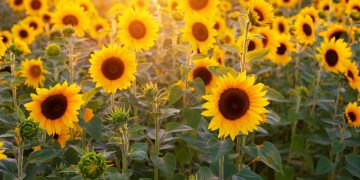
(CN) — Scientists in Argentina have trained honeybees to more effectively pollinate sunflowers — a method they believe can also be applied to increase pollination rates for other valuable crops in the future.

The team trained colonies of bees to focus on a desired crop in much the same way an experienced tracker trains a bloodhound to narrow in on its quarry. By introducing the bees to an artificially created compound designed to mimic the natural smell of sunflowers, they were able to drive the bees to increase pollination of the desired crop, which they detail in a study published Thursday in the journal Current Biology.

By focusing the bees on a single target, researchers saw seed production increase between 29% and 57%. For valuable pollinator-dependent crops such as sunflowers, that’s a welcome productivity boost.

“We developed a simple synthetic odorant mixture that bees generalized (confused) with the natural floral scent of the sunflower, an economically important and highly pollinator-dependent crop in those cases in which hybrid seed production are required,” said Walter Farina, a professor in the department of biodiversity and experimental biology at the University of Buenos Aires in Argentina, in an email interview. “This procedure increased honeybee foraging activity in the sunflower crop fields studied and also improved significantly the yields of the treated plots.”

The first step required researchers to synthetically craft a scented compound mimicking the smell of sunflowers in the eyes, or rather noses, of bees. A sunflower contains over 300 naturally scented chemicals, so to create a passable facsimile the team had to determine which of those chemicals elicited the strongest “yep, that’s a sunflower” response from the bees. They eventually narrowed the choices down to three chemicals which did the job and which they could reproduce in a lab.

“We had tried with different combinations, beginning with the most relevant of the odorant profile but also we considered some others that might be relevant for honeybees,” Farina said. “Nevertheless, the final decision of which formulation to choose was made by the bees, when they showed that could not discriminate between the natural fragrance and the synthetic mimic odor.”

The team then tested these results by comparing their artificially created sunflower scent using the smell of jasmine as a control. Their results show that not only could they reliably trick the bees into seeking out the desired flowers, doing so increased pollination rates substantially. Instead of a flippant bunch of random foragers, you get with a mission-oriented hive targeting the crop of your choosing.

You also get dancing bees. Honeybees do the waggle dance to signal the presence of a food source to their nestmates (and yes, it’s exactly like it sounds). The waggle dance is a language of its own, allowing bees to relay to others key details about a valuable food source.

“The waggle dance or more commonly the honeybee dance is a conspicuous display performed by successful foraging bees into the nest,” Farina explained. “Through these maneuvers, bees inform to nestmates about the feeding place they discovered, indicating the distance and the direction of the profitable place. These excited movements attract many unemployed individuals to the dance surrounding and followers have the abilities to decode the special information but also incidental ones such as floral odors.”

Honeybee colonies have been decimated in recent years by agrochemicals, habitat destruction, pollution and a host of other factors. Without enough bees, vast swaths of commercial crops could go unpollinated and yields of dependent crops could revert back decades. This method could allow both beekeepers and farmers to continue pollinating the same areas with fewer available honeybees.

While the current research focused solely on sunflowers, the team behind it hopes to expand their focus to other important crops in the future. By mimicking the scents of other flowers these same gains could be replicated elsewhere.

“We are studying other pollinator-dependent crops such almond, pear and apple, with the aim to develop new odor mimics to achieve the same goal, that is to improve pollination efficiency in the target crop,” Farina said.

Farina believes future beekeepers could successfully apply this technique to improve their hives’ productivity while lessening the load on themselves.

“I think it is plausible, at least for beekeepers using their beehives for pollination services. This procedure promotes a high activity level of the colonies along the blooming period, and consequently strong colonies,” he said. “Moreover, if honeybees pollinate efficiently and faster a crop, it would be not necessary to stay prolonged periods in the crop fields.”

O artigo foi publicado originalmente em Courthouse News Service.

Imprimir Artigo
Publicação Anterior

Ministra da Agricultura marca presença em cerimónia simbólica de celebração do setor agropecuário

Próxima Publicação

Covid-19: Governo aprova linha de crédito de 20 ME para produtores de flores e plantas

Artigos Relacionados

Farm Europe
Internacional

Plano de ação para a fertilização: boas intenções, mas é urgente clareza sobre o nível e a escala das ambições e o calendário de ação

19/05/2026
ipma
Últimas

IPMA sensibiliza para a problemática dos microplásticos

19/05/2026
paulo nascimento cabral
Últimas

Paulo do Nascimento Cabral saúda ativação da reserva agrícola em 200 milhões para apoiar agricultores

19/05/2026
Próxima Publicação
flores

Covid-19: Governo aprova linha de crédito de 20 ME para produtores de flores e plantas

Discussão sobre este post

Opinião

Últimas

Água, agricultura e adaptação climática no Algarve: estamos a escolher as soluções certas?

por Maria João Sacadura
17/05/2026

Ler mais
Manuel Chaveiro Soares
Últimas

Importa criar condições para melhorar a competitivade agrícola

por Manuel Chaveiro Soares
13/05/2026

Ler mais

Subscrever as nossas newsletteres

Subscrever as nossas Newsletters Agroportal

Verifique na sua caixa de correio ou na pasta de spam para confirmar a sua subscrição.

Comunicados

ipma

IPMA sensibiliza para a problemática dos microplásticos

19/05/2026
paulo nascimento cabral

Paulo do Nascimento Cabral saúda ativação da reserva agrícola em 200 milhões para apoiar agricultores

19/05/2026
Advertisement

Temas em destaque

Candidaturas PU Guerra Médio Oriente Mercosul ovibeja PAC pós 2027 Simplificação PAC Temporais vinho Água que Une

Eventos

Maio 2026
STQQSSD
     1 2 3
4 5 6 7 8 9 10
11 12 13 14 15 16 17
18 19 20 21 22 23 24
25 26 27 28 29 30 31
« Abr   Jun »

Sobre Nós

O Agroportal.pt é uma plataforma de informação digital que reúne a informação relevante sobre agricultura. Tem um foco na Política Agrícola Comum e a sua aplicação em Portugal.

Menu

  • Quem somos
  • Relatórios anuais
  • Envie-nos informação
  • Publicidade
  • Newsletters
  • Estatuto Editorial
  • Ficha técnica
  • Proteção de Dados Pessoais
  • Disclaimer
Facebook twitter Circle Instagram Rss Feed

© Agroportal. All Rights reserved.

  • Login
  • Registar
Sem Resultado
Ver Todos Os Resultados
  • Sugeridas
  • Notícias
    • Nacional
    • Internacional
    • Comunicados
  • Opinião
  • Eventos
  • Dossiers
    • Agricultura Biológica
    • Apoios
    • Artigos Técnicos
    • Biossoluções
    • Cadeia Alimentar
    • Fertilizantes
    • Financiamento
    • Fitofarmacêuticos
    • Florestas
    • Futuro da PAC
    • Inovação
    • Mercados e Cotações agrícolas
    • Newsletters e Revistas
    • Recomendações Agroflorestais
    • Seguros agrícolas
  • Serviços
    • Diretório
    • Emprego
    • Máquinas Agrícolas
    • Meteorologia
    • Terrenos Agrícolas
    • Arquivo Agroportal

© Agroportal. All Rights reserved.

Bem-Vindo De Volta!

Sign In with Facebook
Sign In with Google
OU

Faça login na sua conta abaixo

Esqueceu-se da senha? Registar

Criar Uma Nova Conta!

Sign Up with Facebook
Sign Up with Google
OU

Preencha os campos abaixo para se registar

* Ao se registar-se no nosso site, você concorda com os Termos e Condições e a Política de Privacidade .
Todos os campos são necessários. Entrar

Obter a sua senha

Indique por favor o seu nome de utilizador ou endereço de E-mail para repor a sua senha.

Entrar
Este site usa cookies. Ao continuar a utilizar este site, está a dar consentimento à utilização de cookies. Visite a nossa Política de Protecção de dados e Cookies.