














Sem Resultado
Ver Todos Os Resultados
Newsletters
Agroportal
  • Login
  • Registar
  • Sugeridas
  • Notícias
    • Notícias
    • Nacional
    • Internacional
    • Comunicados
    Microscópio

    Óleos vegetais encapsulados em argilas são alternativa ecológica aos antibióticos

    Mau tempo: Prodouro quer critério para apoiar viticultores definido pela CCDR e não pela área

    cacho de uvas verdes

    Galp e ISA transformam projeto agrovoltaico em vinho experimental

    A COOPAR é oficialmente um Centro Móvel de Inspeção de Pulverizadores

    CAP e ASAJA reforçam cooperação ibérica para defender agricultura em Bruxelas

    Seguro promulga extensão dos apoios para mitigar crise dos combustíveis

    CAP e ASAJA assinam Declaração de Ciudad Real para reforçar uma posição ibérica comum na Europa

    Presidente da República promulga extensão de apoios aos combustíveis para agricultura e pescas

    Universidade do Minho está entre as mais sustentáveis do mundo

  • Opinião

    O problema da floresta não é apenas florestal

    Solo: A Infraestrutura Invisível da Adaptação Climática

    Ibéria: a terra prometida a quem?

    O Impacto da agricultura regenerativa sobre os resultados económicos das explorações agrícolas

    Ibéria – a terra prometida

    O dia em que a Europa descobrir o elevado preço de não produzir

    As cooperativas não pagam IRC. E depois?

    500 milhões de Euros por Ano Não Chega Sem Planeamento

    António Covas

    O mundo paradoxal do nosso rural tardio e remoto

  • Eventos
  • Dossiers

    Dossiers I

    • Agricultura Biológica
    • Apoios
    • Artigos Técnicos
    • Biossoluções
    • Cadeia Alimentar
    • Fertilizantes
    • Financiamento
    • Fitofarmacêuticos

    Dossiers II

    • Florestas
    • Futuro da PAC
    • Inovação
    • Mercados
    • Newsletters e Revistas
    • Recomendações Agroflorestais
    • Seguros

    Últimas

    Mau tempo: Prodouro quer critério para apoiar viticultores definido pela CCDR e não pela área

    25/09/2026

    Seguro promulga extensão dos apoios para mitigar crise dos combustíveis

    25/09/2026

    Presidente da República promulga extensão de apoios aos combustíveis para agricultura e pescas

    25/09/2026

    Candidaturas ao apoio extraordinário para o Douro entre segunda e 12 de outubro

    25/09/2026

    Agroalimentar agrava défice com Espanha em 700 milhões desde 2020

    25/09/2026

    Caju lidera entre exportações agrícolas de Moçambique com 70,9 ME em seis meses

    25/09/2026
  • Serviços
    • Diretório
    • Emprego
    • Máquinas Agrícolas
    • Meteorologia
    • Terrenos Agrícolas
    • Arquivo Agroportal
Agroportal
  • Sugeridas
  • Notícias
    • Notícias
    • Nacional
    • Internacional
    • Comunicados
    Microscópio

    Óleos vegetais encapsulados em argilas são alternativa ecológica aos antibióticos

    Mau tempo: Prodouro quer critério para apoiar viticultores definido pela CCDR e não pela área

    cacho de uvas verdes

    Galp e ISA transformam projeto agrovoltaico em vinho experimental

    A COOPAR é oficialmente um Centro Móvel de Inspeção de Pulverizadores

    CAP e ASAJA reforçam cooperação ibérica para defender agricultura em Bruxelas

    Seguro promulga extensão dos apoios para mitigar crise dos combustíveis

    CAP e ASAJA assinam Declaração de Ciudad Real para reforçar uma posição ibérica comum na Europa

    Presidente da República promulga extensão de apoios aos combustíveis para agricultura e pescas

    Universidade do Minho está entre as mais sustentáveis do mundo

  • Opinião

    O problema da floresta não é apenas florestal

    Solo: A Infraestrutura Invisível da Adaptação Climática

    Ibéria: a terra prometida a quem?

    O Impacto da agricultura regenerativa sobre os resultados económicos das explorações agrícolas

    Ibéria – a terra prometida

    O dia em que a Europa descobrir o elevado preço de não produzir

    As cooperativas não pagam IRC. E depois?

    500 milhões de Euros por Ano Não Chega Sem Planeamento

    António Covas

    O mundo paradoxal do nosso rural tardio e remoto

  • Eventos
  • Dossiers

    Dossiers I

    • Agricultura Biológica
    • Apoios
    • Artigos Técnicos
    • Biossoluções
    • Cadeia Alimentar
    • Fertilizantes
    • Financiamento
    • Fitofarmacêuticos

    Dossiers II

    • Florestas
    • Futuro da PAC
    • Inovação
    • Mercados
    • Newsletters e Revistas
    • Recomendações Agroflorestais
    • Seguros

    Últimas

    Mau tempo: Prodouro quer critério para apoiar viticultores definido pela CCDR e não pela área

    25/09/2026

    Seguro promulga extensão dos apoios para mitigar crise dos combustíveis

    25/09/2026

    Presidente da República promulga extensão de apoios aos combustíveis para agricultura e pescas

    25/09/2026

    Candidaturas ao apoio extraordinário para o Douro entre segunda e 12 de outubro

    25/09/2026

    Agroalimentar agrava défice com Espanha em 700 milhões desde 2020

    25/09/2026

    Caju lidera entre exportações agrícolas de Moçambique com 70,9 ME em seis meses

    25/09/2026
  • Serviços
    • Diretório
    • Emprego
    • Máquinas Agrícolas
    • Meteorologia
    • Terrenos Agrícolas
    • Arquivo Agroportal
Sem Resultado
Ver Todos Os Resultados
Agroportal
dna

African scientists launch biodiversity genomics revolution

por Cornell Alliance for Science
31-05-2022 | 15:24
em Últimas, Internacional, Notícias inovação
Tempo De Leitura: 5 mins
A A
Partilhe no FacebookPartilhe no TwitterEnviar para o WhatsappEnviar para o TelegramEnviar para o LinkedIn

Though Africa is home to the second largest collection of biodiversity on earth, many of its unique plants, animals and microbes are facing extinction due to human activities and climate change.

Tragically, very little is known about many these species — a dearth of knowledge that is depriving the world of innovations and solutions to pressing challenges in food, nutrition and health.

But that’s about to change. A group of African scientists — experts in genetics, genomics and bioinformatics — have set an ambitious goal to unlock the secrets of plant and animal diversity across the continent through a unique genome sequencing project.

The African BioGenome Project (AfricaBP), launched in 2021, seeks to sequence the genomes of 105,000 endemic plants, animals, fungi and other organisms that have economic, scientific and cultural significance.

The project, which currently involves more than 109 African scientists and 22 African organizations, will decode each organism to explore the rich biodiversity of 2,500 indigenous African species, including the Boyle’s beaked blind snake (Rhinotyphlops boylei) from southern Africa and the red mangrove tree (Rhizophora mangle) from Nigeria.

Genome sequencing will inform biodiversity conservation across Africa and strengthen the continent’s ability to meet the goals of the post-2020 global diversity framework of the Convention on Biodiversity (CBD), said Appolinaire Djikeng, a genomics scientist and director of the Center for Tropical Livestock Genetics and Health at the University of Edinburgh’s Roslin Institute. He’s one of the AfricaBP promoters.

The need to understand Africa’s rich biodiversity is long overdue, says ThankGod Ebenezer, a bioinformatician at the European Bioinformatics Institute (EMBL-EBI) in the United Kingdom who is involved in the AfricaBP. To date, sequencing done in Africa by Africans has been miniscule, he said.

Africa can build capacity and expertise in genome sequencing analysis, as demonstrated by projects such as the Human Heredity and Health in Africa (H3Africa) consortium, Ebenezer said. However, Africa has lagged in sequencing its indigenous species for the benefit of its people.

The genome is the heart of any living organism, holding the codes that dictate its appearance and much of its behavior, for instance. Sequencing enables the decoding of each organism to explore biodiversity.

“The main driver here is the rich biodiversity that we have in Africa, either in the plant community or animal community and also in the microbes,” Djikeng said.

Africa is home to eight of the world’s biodiversity hotspots and the Congo Basin rainforest, which alone accounts for 10 percent of the world’s biodiversity. Biodiversity hotspots are areas identified to have the most biologically rich places on earth, according to the Intergovernmental Platform on Biodiversity and Ecosystem Services (IPBES).
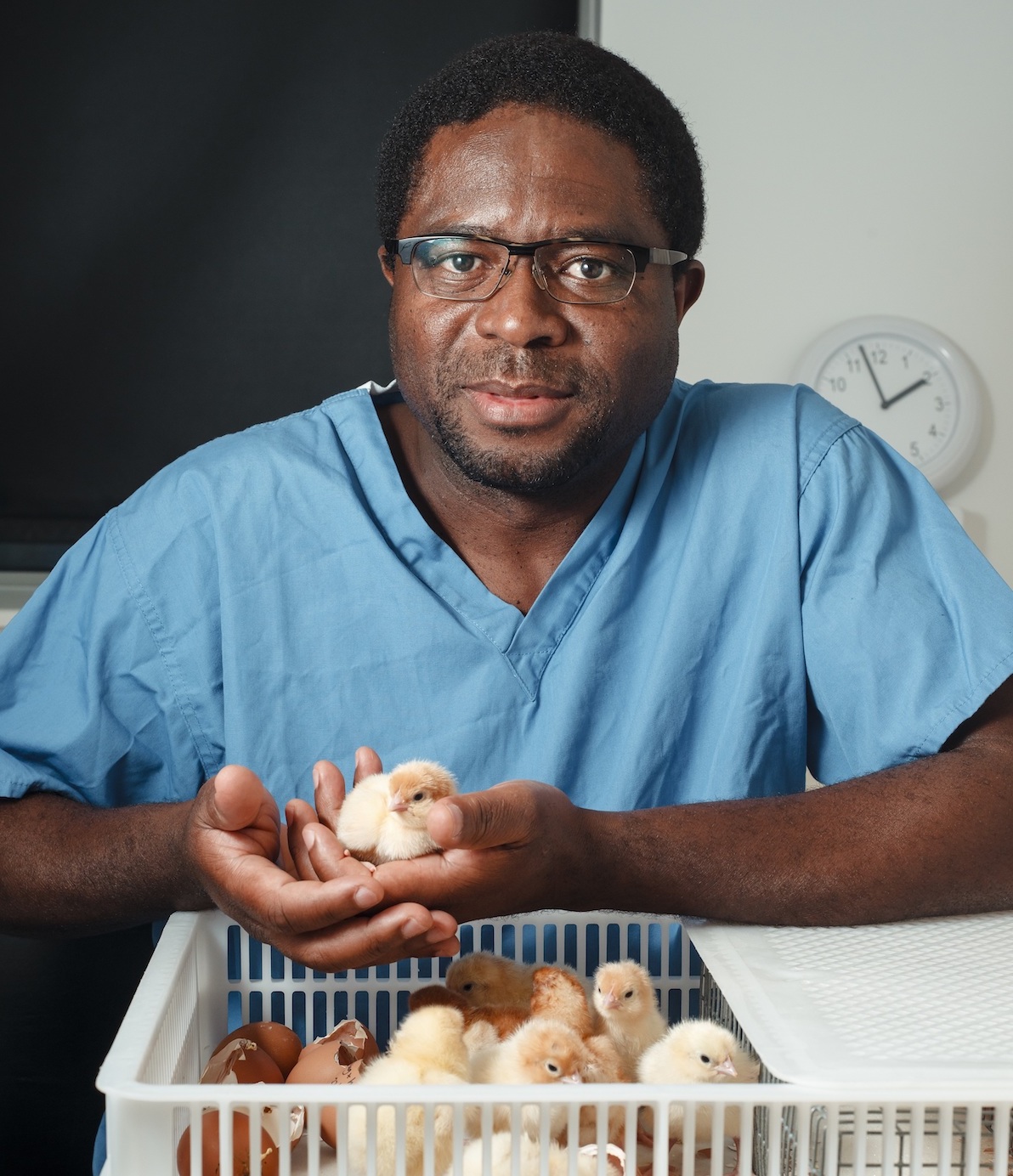
Prof. Appolinaire Djikeng, director of the Center for Tropical Livestock Genetics and Health at the University of Edinburgh. Photo: Maverick Photo Agency 

Climate change will exacerbate the effects of previous threats to biodiversity with Africa one of the regions likely to be among the most affected, according to the latest report of the Intergovernmental Panel on Climate Change (IPCC).

The project is driven by the urgency to widen access and benefit sharing of biological resources across Africa, Ebenezer said. Various international agencies and agreements share that objective.

The United Nations Nagoya Protocol on Access and Benefit-sharing advocates for the fair and equitable sharing of genetic resources, while the new Global Framework for Managing Nature through 2030 identifies safeguarding the genetic diversity of wild and domesticated species and saving at least 90 percent of their genetic diversity as one of 10 milestones.

Djikeng described the Africa Biogenome Project as a long-term ambitious vision for Africa to complete the genome sequencing of different species.

“It will not happen today or tomorrow. It’s a long-term vision but we hope that along the way we will build genomic education in Africa for us to appreciate the importance of this discipline,” Djikeng said.

The project will harness genomic information for diagnostics and accelerating plant and animal breeding, in addition to building the infrastructure and ecosystem for genomic science in Africa to benefit the local communities that are custodians of the unique species, he added.

Globally, some 3,000 animal and 800 plant genomes have been sequenced. Yet only 20 of the plants are African species, even though the continent has 45,000 species of plants, second to South America. Of the 20, none were sequenced in Africa, Ebenezer noted. Similarly, only 300 of the animals are from Africa and just 11 were sequenced on the continent.

“We are not where we should be,” observed Djikeng, who has sequenced numerous genomes, including that of a pathogen that causes sleeping sickness in people and animals.

“Past genome projects have looked at plant species which are indigenous to Africa, but that sequencing was done in the USA or Europe,” Djikeng said. “We have some sequencing platforms and labs across the African continent but we have not built what comes next for the data to be analyzed within Africa. For other scientific questions to be posed and answered within Africa we still rely heavily on Europe, North America and other places to run our genomics ambition.”

“We have missed out, but recent examples show that we can catch up. If you look at COVID and Ebola, very well established genomic scientists in Africa have saved the day,” Djikeng said, citing the work of Prof. Túlio de Oliveira in South Africa, Dr. Samuel Oyola in Kenya and Prof. Christian Hapi in Nigeria. About 70 percent of Africa’s genomic sequencing capacity is concentrated in South Africa, Kenya, Nigeria, Morocco and Egypt.

The AfricaBP will be implemented over a decade and researchers  calculate that it will require funding of about $100 million  per year. It will convene 55 African researchers and policy makers from genomics, bioinformatics, biodiversity and agriculture — 11 for each of the Africa Union’s geographical region, according to a  paper  published in  Nature in March 2022.

The $1 billion will come from governments, industry and bilateral funders, Djikeng explained. African universities already involved in genomic science are interested in the project.

The Africa Union is also excited about the project, Djikeng said. The AU sees the project delivering on its Agenda 2063, which recognizes science, technology and innovation as the major drivers and enablers for achieving AU and member state development goals.

To further support the project, the AfricaBP Open Institute for Genomics and Bioinformatics has been created as a knowledge exchange platform for the delivery of capacity, training and for industry people who want to connect with genomics experts across Africa. The transfer of material is a key policy issue, Ebenezer noted.

By Busani Bafana

O artigo foi publicado originalmente em Cornell Alliance for Science.
Imprimir Artigo
Publicação Anterior

Azeite algarvio Monterosa volta a conquistar ouro nos EUA e no Japão

Próxima Publicação

Prémio Intermarché Produção Nacional está de regresso

Artigos Relacionados

Microscópio
Nacional

Óleos vegetais encapsulados em argilas são alternativa ecológica aos antibióticos

26/09/2026
Nacional

Mau tempo: Prodouro quer critério para apoiar viticultores definido pela CCDR e não pela área

25/09/2026
cacho de uvas verdes
Nacional

Galp e ISA transformam projeto agrovoltaico em vinho experimental

25/09/2026
Próxima Publicação
Intermarche

Prémio Intermarché Produção Nacional está de regresso

Opinião

Últimas

O problema da floresta não é apenas florestal

por Miguel Jerónimo
20/09/2026

Ler maisDetails
Últimas

Solo: A Infraestrutura Invisível da Adaptação Climática

por Maria João Sacadura
13/09/2026

Ler maisDetails

Subscrever as nossas newsletteres

Subscrever as nossas Newsletters Agroportal

Verifique na sua caixa de correio ou na pasta de spam para confirmar a sua subscrição.

Comunicados

A COOPAR é oficialmente um Centro Móvel de Inspeção de Pulverizadores

25/09/2026

CAP e ASAJA assinam Declaração de Ciudad Real para reforçar uma posição ibérica comum na Europa

25/09/2026
Advertisement

Temas em destaque

Candidaturas PU Guerra Médio Oriente Mercosul ovibeja PAC pós 2027 Simplificação PAC Temporais vinho Água que Une

Eventos

Setembro 2026
STQQSSD
  1 2 3 4 5 6
7 8 9 10 11 12 13
14 15 16 17 18 19 20
21 22 23 24 25 26 27
28 29 30     
« Ago   Out »

Sobre Nós

O Agroportal.pt é uma plataforma de informação digital que reúne a informação relevante sobre agricultura. Tem um foco na Política Agrícola Comum e a sua aplicação em Portugal.

Menu

  • Quem somos
  • Relatórios anuais
  • Envie-nos informação
  • Publicidade
  • Newsletters
  • Estatuto Editorial
  • Ficha técnica
  • Proteção de Dados Pessoais
  • Disclaimer
Facebook twitter Circle Instagram Rss Feed

© Agroportal. All Rights reserved.

Bem-Vindo De Volta!

Sign In with Facebook
Sign In with Google
OR

Faça login na sua conta abaixo

Esqueceu-se da senha? Registar

Criar Uma Nova Conta!

Sign Up with Facebook
Sign Up with Google
OR

Preencha os campos abaixo para se registar

* Ao se registar-se no nosso site, você concorda com os Termos e Condições e a Política de Privacidade .
Todos os campos são necessários. Entrar

Obter a sua senha

Indique por favor o seu nome de utilizador ou endereço de E-mail para repor a sua senha.

Entrar
  • Login
  • Registar
Sem Resultado
Ver Todos Os Resultados
  • Sugeridas
  • Notícias
    • Nacional
    • Internacional
    • Comunicados
  • Opinião
  • Eventos
  • Dossiers
    • Agricultura Biológica
    • Apoios
    • Artigos Técnicos
    • Biossoluções
    • Cadeia Alimentar
    • Fertilizantes
    • Financiamento
    • Fitofarmacêuticos
    • Florestas
    • Futuro da PAC
    • Inovação
    • Mercados e Cotações agrícolas
    • Newsletters e Revistas
    • Recomendações Agroflorestais
    • Seguros agrícolas
  • Serviços
    • Diretório
    • Emprego
    • Máquinas Agrícolas
    • Meteorologia
    • Terrenos Agrícolas
    • Arquivo Agroportal

© Agroportal. All Rights reserved.

Este site usa cookies. Ao continuar a utilizar este site, está a dar consentimento à utilização de cookies. Visite a nossa Política de Protecção de dados e Cookies.