














Sem Resultado
Ver Todos Os Resultados
Newsletters
Agroportal
  • Login
  • Registar
  • Sugeridas
  • Notícias
    • Notícias
    • Nacional
    • Internacional
    • Comunicados

    Área agrícola na Madeira diminuiu e floresta laurissilva cresceu nos últimos 17 anos

    milk cow

    UE/Mercosul: Produtores de leite apreensivos e desconfiados por falta de informação

    Tribunal de Contas Europeu

    Tribunal de Contas Europeu expõe falhas nos controlos do azeite

    navio contentores

    UE/Mercosul: Stellantis, Basf e Siemens entre empresas que podem ser beneficiadas – XTB

    CAP: Acordo UE-Mercosul é “positivo” mas proposta da PAC é a pior alguma vez apresentada

    Inteligência Artificial e alterações climáticas: um dilema de Fausto? – Fausto Brito e Abreu

    PCP entrega Projecto de Resolução para dar prioriodade à beneficiação dos mostos com aguardentes vínicas do Douro

    river

    Programa Pro-Rios conta com 187 milhões de euros para renaturalizar os rios portugueses

    Peste suína africana leva ao abate de centenas de animais em província angolana

  • Opinião

    Sinais dos tempos. Notas sobre a PAC e o Acordo UE-Mercosul

    Douro: não há excesso de produção, há excesso de oferta

    António Covas

    A inteligência coletiva territorial da 2ª ruralidade – As áreas de baixa densidade (ABD)

    Jaime Piçarra

    O que marcou 2025 e o que esperar para 2026

    Ines Marques Lopes

    Agribusiness: entre a profissionalização, o investimento e a sustentabilidade

    Biodiversidade da videira

    A doença do Fogo Bacteriano na pereira Rocha já destruiu 31% da produção nacional

    Manuel Chaveiro Soares

    Sobre a modernização das regras relativas ao bem-estar dos frangos

    José Martino

    De indefinições a decisões: o que falta à política agrícola portuguesa

  • Eventos
  • Dossiers

    Dossiers I

    • Agricultura Biológica
    • Apoios
    • Artigos Técnicos
    • Biossoluções
    • Cadeia Alimentar
    • Fertilizantes
    • Financiamento
    • Fitofarmacêuticos

    Dossiers II

    • Florestas
    • Futuro da PAC
    • Inovação
    • Mercados
    • Newsletters e Revistas
    • Recomendações Agroflorestais
    • Seguros

    Últimas

    Área agrícola na Madeira diminuiu e floresta laurissilva cresceu nos últimos 17 anos

    14/01/2026
    Laboratório química

    OGM | Cientistas desenvolvem  os primeiros mosquitos geneticamente modificados para travar a malária

    14/01/2026

    Cotações – Flores e Folhagens –5 a 11 de janeiro de 2025

    14/01/2026

    Cotações – Produtos Hortícolas – 5 a 11 de janeiro de 2025

    14/01/2026

    Cotações – Frutos frescos e secos – 5 a 11 de janeiro de 2025

    14/01/2026

    Presidenciais: Manuel João Vieira vê tudo ao contrário na floresta e na paisagem

    13/01/2026
  • Serviços
    • Diretório
    • Emprego
    • Máquinas Agrícolas
    • Meteorologia
    • Terrenos Agrícolas
    • Arquivo Agroportal
Agroportal
  • Sugeridas
  • Notícias
    • Notícias
    • Nacional
    • Internacional
    • Comunicados

    Área agrícola na Madeira diminuiu e floresta laurissilva cresceu nos últimos 17 anos

    milk cow

    UE/Mercosul: Produtores de leite apreensivos e desconfiados por falta de informação

    Tribunal de Contas Europeu

    Tribunal de Contas Europeu expõe falhas nos controlos do azeite

    navio contentores

    UE/Mercosul: Stellantis, Basf e Siemens entre empresas que podem ser beneficiadas – XTB

    CAP: Acordo UE-Mercosul é “positivo” mas proposta da PAC é a pior alguma vez apresentada

    Inteligência Artificial e alterações climáticas: um dilema de Fausto? – Fausto Brito e Abreu

    PCP entrega Projecto de Resolução para dar prioriodade à beneficiação dos mostos com aguardentes vínicas do Douro

    river

    Programa Pro-Rios conta com 187 milhões de euros para renaturalizar os rios portugueses

    Peste suína africana leva ao abate de centenas de animais em província angolana

  • Opinião

    Sinais dos tempos. Notas sobre a PAC e o Acordo UE-Mercosul

    Douro: não há excesso de produção, há excesso de oferta

    António Covas

    A inteligência coletiva territorial da 2ª ruralidade – As áreas de baixa densidade (ABD)

    Jaime Piçarra

    O que marcou 2025 e o que esperar para 2026

    Ines Marques Lopes

    Agribusiness: entre a profissionalização, o investimento e a sustentabilidade

    Biodiversidade da videira

    A doença do Fogo Bacteriano na pereira Rocha já destruiu 31% da produção nacional

    Manuel Chaveiro Soares

    Sobre a modernização das regras relativas ao bem-estar dos frangos

    José Martino

    De indefinições a decisões: o que falta à política agrícola portuguesa

  • Eventos
  • Dossiers

    Dossiers I

    • Agricultura Biológica
    • Apoios
    • Artigos Técnicos
    • Biossoluções
    • Cadeia Alimentar
    • Fertilizantes
    • Financiamento
    • Fitofarmacêuticos

    Dossiers II

    • Florestas
    • Futuro da PAC
    • Inovação
    • Mercados
    • Newsletters e Revistas
    • Recomendações Agroflorestais
    • Seguros

    Últimas

    Área agrícola na Madeira diminuiu e floresta laurissilva cresceu nos últimos 17 anos

    14/01/2026
    Laboratório química

    OGM | Cientistas desenvolvem  os primeiros mosquitos geneticamente modificados para travar a malária

    14/01/2026

    Cotações – Flores e Folhagens –5 a 11 de janeiro de 2025

    14/01/2026

    Cotações – Produtos Hortícolas – 5 a 11 de janeiro de 2025

    14/01/2026

    Cotações – Frutos frescos e secos – 5 a 11 de janeiro de 2025

    14/01/2026

    Presidenciais: Manuel João Vieira vê tudo ao contrário na floresta e na paisagem

    13/01/2026
  • Serviços
    • Diretório
    • Emprego
    • Máquinas Agrícolas
    • Meteorologia
    • Terrenos Agrícolas
    • Arquivo Agroportal
Sem Resultado
Ver Todos Os Resultados
Agroportal
nigeria gmo

Nigeria: Learn from our experience with GMO crops

por Cornell Alliance for Science
25-07-2022 | 15:41
em Genética, Últimas, Internacional, Notícias inovação
Tempo De Leitura: 4 mins
A A
Partilhe no FacebookPartilhe no TwitterEnviar para o WhatsappEnviar para o TelegramEnviar para o LinkedIn

Nigerian leaders are urging other West African nations to adopt genetically modified cowpea given their own success with the crop.

They’re also sharing tips on how to avoid the mistakes they made in rolling out GM crops, including cowpea engineered to include a gene from bacillus thuringiensis (Bt), which provides inherent protection against the destructive pod borer pest.

Prof. Celestine Aguoru, president of Nigeria’s National Biotechnology and Biosafety Consortium (NBBC), also stressed the need for public enlightenment — starting with the policymakers, rural populace and farmers — to enhance the acceptability of the new product.

People are afraid of change and skeptical of new things, hence the need for public education to remove the prevailing misinformation based on ignorance, he said.

Aguoru pointed out that Nigeria didn’t start its public education in a timely manner, which created a vacuum that technology opponents used to sow the seeds of doubt in the hearts of many. He said Ghana does not have to go through the same process but should learn from Nigeria to educate and sensitize its citizens to wade off unnecessary attacks.

“Nigeria had some issues with its new technology because most people know cowpea as ‘beans,’” he explained. “So, when you call it cowpea, they find it difficult to relate with it and anti-technologists took advantage of that to come up with conspiracy theories. That is why public education is necessary, to build people’s confidence to trust, accept and adopt this new variety. And eventually, everyone will benefit from it.”

“The decision to adopt Bt cowpea is a sovereign one,” said Dr. Rufus Ebegba, director-general of the National Biosafety Management Agency (NBMA). “However, if they want to take advantage of safe biotechnology products since Nigeria has approved it, our advice is that they tow the path of Nigeria so that, together, as members of the West African sub-region we will effectively regulate the product.”

His comments were directed primarily toward officials in Ghana, who are considering whether to allow farmers to grow the pod borer-resistant (PBR) varieties developed by Ghanaian scientists.

“Whether Ghana approves it or not, it might likely enter Ghanaian territory,” he said of PBR cowpea. “We have a legal system [in] which if what we have approved is the same product in Ghana it will make it easier to regulate so that both countries can work together.”

The Nigerian biotechnology regulator urged politicians to allow science and technology to thrive as the engine of growth and said they should have no fears about standing behind proven scientific discoveries.

Similarly, the NBMA boss advised the Ghana National Biosafety Authority (GNBA) to ensure it has the requisite knowledge to regulate the product. He added that, if the agency is armed with the right skills, it will effectively regulate the product when commercialized.

“Also, they should not allow themselves to be intimidated when it comes to doing their job (in terms of approving the product when it has passed all the necessary checks) to make it accessible to farmers,” he said.

Harping on the urgency of the action to make sure farmers who are the direct beneficiaries of the product can access improved seed, Dr. Onyekachi Nwankwo, the West Africa representative for the Africa Agricultural Technology Foundation (AATF), asserted that commercialization is very important.

Ghana needs to deregulate and approve the product immediately to start the commercialization process, given that farmers in that country are already yearning for the product, he said.

Dr. Rose Gidado, country coordinator of the Open Forum on Agricultural Biotechnology (OFAB), Nigeria chapter, urged scientists to break down the jargon to help Ghanaians understand the technology used in developing the product. She cited adoption, uptake, usage and acceptance as being key.

Because the improved cowpea is resistant to Maruca Vitrata, an insect pest responsible for up to 80 percent crop losses, it will improve farmers’ yield, she said. Additionally, it will reduce the use of pesticide spray, which is expensive and harmful to human and environmental health, and will invariably enhance food security and economic development.

“They have spent so many years researching and ending up with a very good product,” Gidado explained. “If the product is not put to use, then they haven’t done anything because their research aims to impact society, especially the poor, in the enhancement of food security. You cannot enhance food security if people — not just the farmers, but everyone in the society — are not using it.

“So, it is important for scientists to make Ghanaians understand that the PBR cowpea developed by local scientists in Ghana is safe and has no negative health implications,” she continued. “They have to assure them that all the safety measures and valves were put in place and evaluations are carried out. This is the [only way] to instill confidence” in the product.

Tackling misinformation is important in modern biotechnology, where facts are frequently misrepresented and distorted, Gidado said.

“They also have to engage the critics, listen to them — we have to have empathy and put ourselves in their shoes — and make them understand,” she said. “Everyone in society has a right to the right information. This is so people take the right decision and have the liberty to choose what they do with the available, correct information they have.”

She pointed out that some people misconstrue what scientists do. Some people believe the GM seeds are imported, which is not true. Instead, African scientists “have indigenized the technology and that’s the best way to grow.”

Ebegba concurred. The notion that this technology is coming from outside Ghana must be forgotten because local citizens have the capacity and capability to develop technologies to tackle that country’s food security challenges, he said.

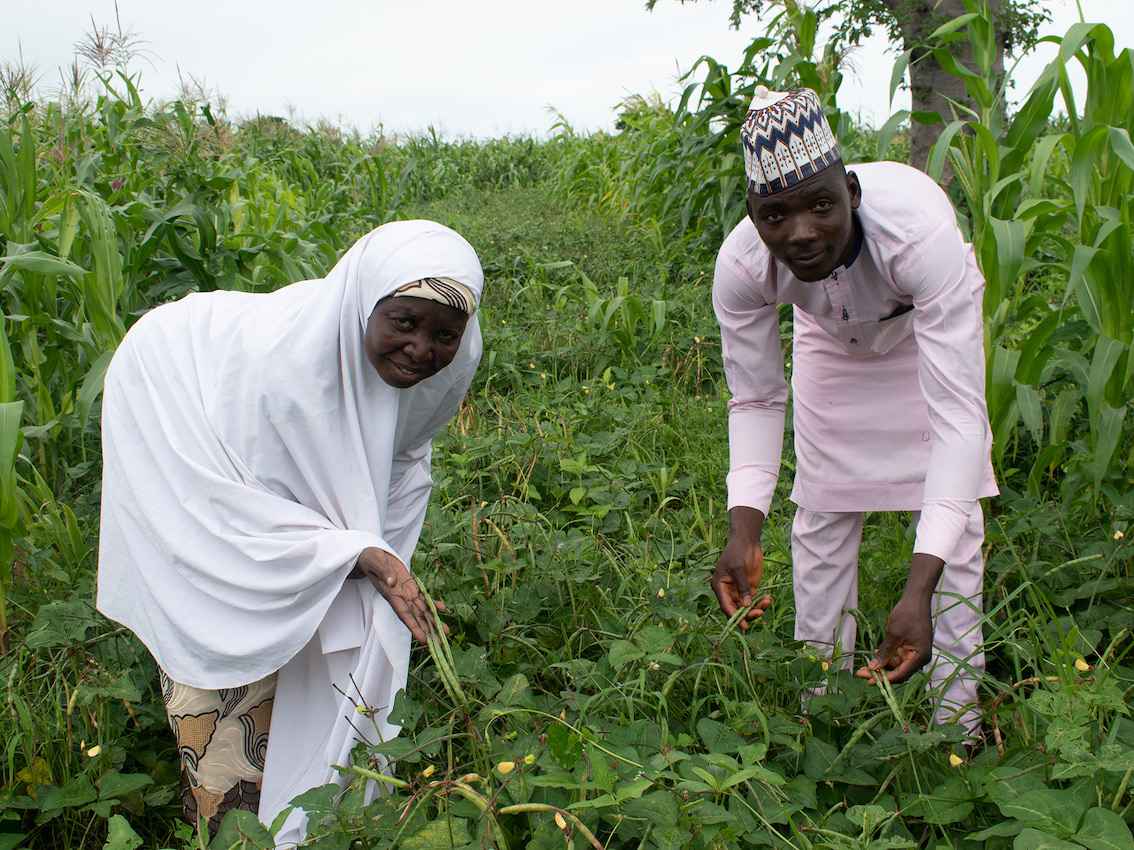
Image: Nigerian farmer Hajia Dijesaidu shows off her GM cowpea fields. Photo: Alliance for Science

O artigo foi publicado originalmente em Cornell Alliance for Science.

Imprimir Artigo
Publicação Anterior

A cavalo, nos postos de vigia ou com ajuda da população. GNR mantém patrulhamentos para prevenir incêndios

Próxima Publicação

Incêndios: Após fogo de Murça produtores de castanha pedem ajuda para recomeçar

Artigos Relacionados

Nacional

Área agrícola na Madeira diminuiu e floresta laurissilva cresceu nos últimos 17 anos

14/01/2026
milk cow
Nacional

UE/Mercosul: Produtores de leite apreensivos e desconfiados por falta de informação

14/01/2026
Tribunal de Contas Europeu
Últimas

Tribunal de Contas Europeu expõe falhas nos controlos do azeite

14/01/2026
Próxima Publicação
castanha

Incêndios: Após fogo de Murça produtores de castanha pedem ajuda para recomeçar

Opinião

Últimas

Sinais dos tempos. Notas sobre a PAC e o Acordo UE-Mercosul

por António Themudo Barata
11/01/2026

Ler mais
Últimas

Douro: não há excesso de produção, há excesso de oferta

por José Martino
07/01/2026

Ler mais

Subscrever as nossas newsletteres

Subscrever as nossas Newsletters Agroportal

Verifique na sua caixa de correio ou na pasta de spam para confirmar a sua subscrição.

Comunicados

Tribunal de Contas Europeu

Tribunal de Contas Europeu expõe falhas nos controlos do azeite

14/01/2026

PCP entrega Projecto de Resolução para dar prioriodade à beneficiação dos mostos com aguardentes vínicas do Douro

14/01/2026
Advertisement

Temas em destaque

Candidaturas PU Eleições PAC pós 2027 Presi Simplificação PAC Água que Une

Eventos

Janeiro 2026
STQQSSD
    1 2 3 4
5 6 7 8 9 10 11
12 13 14 15 16 17 18
19 20 21 22 23 24 25
26 27 28 29 30 31  
« Dez   Fev »

Sobre Nós

O Agroportal.pt é uma plataforma de informação digital que reúne a informação relevante sobre agricultura. Tem um foco na Política Agrícola Comum e a sua aplicação em Portugal.

Menu

  • Quem somos
  • Relatórios anuais
  • Envie-nos informação
  • Publicidade
  • Newsletters
  • Estatuto Editorial
  • Ficha técnica
  • Proteção de Dados Pessoais
  • Disclaimer
Facebook twitter Circle Instagram Rss Feed

© Agroportal. All Rights reserved.

  • Login
  • Registar
Sem Resultado
Ver Todos Os Resultados
  • Sugeridas
  • Notícias
    • Nacional
    • Internacional
    • Comunicados
  • Opinião
  • Eventos
  • Dossiers
    • Agricultura Biológica
    • Apoios
    • Artigos Técnicos
    • Biossoluções
    • Cadeia Alimentar
    • Fertilizantes
    • Financiamento
    • Fitofarmacêuticos
    • Florestas
    • Futuro da PAC
    • Inovação
    • Mercados e Cotações agrícolas
    • Newsletters e Revistas
    • Recomendações Agroflorestais
    • Seguros agrícolas
  • Serviços
    • Diretório
    • Emprego
    • Máquinas Agrícolas
    • Meteorologia
    • Terrenos Agrícolas
    • Arquivo Agroportal

© Agroportal. All Rights reserved.

Bem-Vindo De Volta!

Sign In with Facebook
Sign In with Google
OU

Faça login na sua conta abaixo

Esqueceu-se da senha? Registar

Criar Uma Nova Conta!

Sign Up with Facebook
Sign Up with Google
OU

Preencha os campos abaixo para se registar

* Ao se registar-se no nosso site, você concorda com os Termos e Condições e a Política de Privacidade .
Todos os campos são necessários. Entrar

Obter a sua senha

Indique por favor o seu nome de utilizador ou endereço de E-mail para repor a sua senha.

Entrar
Este site usa cookies. Ao continuar a utilizar este site, está a dar consentimento à utilização de cookies. Visite a nossa Política de Protecção de dados e Cookies.