
















Sem Resultado
Ver Todos Os Resultados
Newsletters
Agroportal
  • Login
  • Registar
  • Sugeridas
  • Notícias
    • Notícias
    • Nacional
    • Internacional
    • Comunicados
    Álvaro Mendonça cedida

    Calamidade exige medidas inéditas e orçamento retificativo, defende CAP

    Decisão de cancelar a barragem de Girabolhos “foi única e exclusivamente política”

    Mau Tempo: Governo prevê acelerar limpeza de árvores derrubadas para conter risco de incêndios

    Mau tempo: Esmagadora maioria da área intervencionada após incêndio de 2017 na Mata de Leiria sem danos

    Governo embrulha medidas de água e florestas já existentes no programa de recuperação

    Mau tempo: Cheias expõem fragilidade de pontes e acessos no Ribatejo – Associação de Agricultores

    Aveleda propõe uma viagem pelos terroirs de Portugal na Essência do Vinho 2026

    Boletim Mensal da Agricultura e Pescas – Fevereiro de 2026

    Idalino Leão Reeleito Presidente do Conselho de Administração CONFAGRI

  • Opinião

    A Política Agrícola (pouco!) Comum

    Agrovoltaico: quando a energia deixa de ser apenas custo e passa a ser também receita

    Abacate: uma cultura em forte afirmação nas agriculturas de Portugal

    Notas sobre a Sustentabilidade Operacional do PEPAC

    luis caixinhas

    Marca tridimensional ou desenho ou modelo: como proteger a forma dos produtos agroalimentares

    Francisco Avillez

    A Reforma da PAC pós-2027: breves reflexões sobre o orçamento proposto pela CE

    Filipe Corrêa Figueira

    Estão a encurralar os Agricultores… e não vai acabar bem!

    Sinais dos tempos. Notas sobre a PAC e o Acordo UE-Mercosul

    Douro: não há excesso de produção, há excesso de oferta

  • Eventos
  • Dossiers

    Dossiers I

    • Agricultura Biológica
    • Apoios
    • Artigos Técnicos
    • Biossoluções
    • Cadeia Alimentar
    • Fertilizantes
    • Financiamento
    • Fitofarmacêuticos

    Dossiers II

    • Florestas
    • Futuro da PAC
    • Inovação
    • Mercados
    • Newsletters e Revistas
    • Recomendações Agroflorestais
    • Seguros

    Últimas

    Boletim Mensal da Agricultura e Pescas – Fevereiro de 2026

    20/02/2026

    Mau tempo: Apoio às explorações agrícolas com 50 ME de dotação

    20/02/2026

    Federação Minha Terra | Newsletter nº 339

    20/02/2026

    UPorto desenvolve projeto científico para valorizar líquenes do Norte

    20/02/2026

    IFAP antecipa pagamentos da campanha 2025

    20/02/2026

    Reforma da PAC: as propostas da Comissão serão assim tão negativas?

    20/02/2026
  • Serviços
    • Diretório
    • Emprego
    • Máquinas Agrícolas
    • Meteorologia
    • Terrenos Agrícolas
    • Arquivo Agroportal
Agroportal
  • Sugeridas
  • Notícias
    • Notícias
    • Nacional
    • Internacional
    • Comunicados
    Álvaro Mendonça cedida

    Calamidade exige medidas inéditas e orçamento retificativo, defende CAP

    Decisão de cancelar a barragem de Girabolhos “foi única e exclusivamente política”

    Mau Tempo: Governo prevê acelerar limpeza de árvores derrubadas para conter risco de incêndios

    Mau tempo: Esmagadora maioria da área intervencionada após incêndio de 2017 na Mata de Leiria sem danos

    Governo embrulha medidas de água e florestas já existentes no programa de recuperação

    Mau tempo: Cheias expõem fragilidade de pontes e acessos no Ribatejo – Associação de Agricultores

    Aveleda propõe uma viagem pelos terroirs de Portugal na Essência do Vinho 2026

    Boletim Mensal da Agricultura e Pescas – Fevereiro de 2026

    Idalino Leão Reeleito Presidente do Conselho de Administração CONFAGRI

  • Opinião

    A Política Agrícola (pouco!) Comum

    Agrovoltaico: quando a energia deixa de ser apenas custo e passa a ser também receita

    Abacate: uma cultura em forte afirmação nas agriculturas de Portugal

    Notas sobre a Sustentabilidade Operacional do PEPAC

    luis caixinhas

    Marca tridimensional ou desenho ou modelo: como proteger a forma dos produtos agroalimentares

    Francisco Avillez

    A Reforma da PAC pós-2027: breves reflexões sobre o orçamento proposto pela CE

    Filipe Corrêa Figueira

    Estão a encurralar os Agricultores… e não vai acabar bem!

    Sinais dos tempos. Notas sobre a PAC e o Acordo UE-Mercosul

    Douro: não há excesso de produção, há excesso de oferta

  • Eventos
  • Dossiers

    Dossiers I

    • Agricultura Biológica
    • Apoios
    • Artigos Técnicos
    • Biossoluções
    • Cadeia Alimentar
    • Fertilizantes
    • Financiamento
    • Fitofarmacêuticos

    Dossiers II

    • Florestas
    • Futuro da PAC
    • Inovação
    • Mercados
    • Newsletters e Revistas
    • Recomendações Agroflorestais
    • Seguros

    Últimas

    Boletim Mensal da Agricultura e Pescas – Fevereiro de 2026

    20/02/2026

    Mau tempo: Apoio às explorações agrícolas com 50 ME de dotação

    20/02/2026

    Federação Minha Terra | Newsletter nº 339

    20/02/2026

    UPorto desenvolve projeto científico para valorizar líquenes do Norte

    20/02/2026

    IFAP antecipa pagamentos da campanha 2025

    20/02/2026

    Reforma da PAC: as propostas da Comissão serão assim tão negativas?

    20/02/2026
  • Serviços
    • Diretório
    • Emprego
    • Máquinas Agrícolas
    • Meteorologia
    • Terrenos Agrícolas
    • Arquivo Agroportal
Sem Resultado
Ver Todos Os Resultados
Agroportal
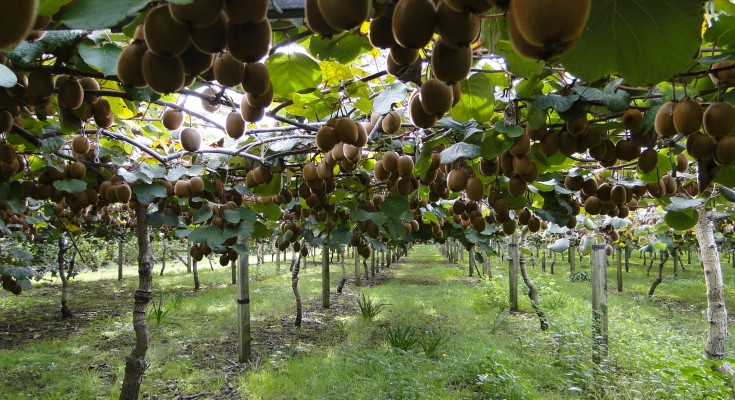
kiwis

Pressure mounts on EU and NZ to review their strict anti-GMO policies

por Cornell Alliance for Science
13-06-2022 | 16:27
em Genética, Últimas, Internacional, Notícias inovação
Tempo De Leitura: 5 mins
A A
Partilhe no FacebookPartilhe no TwitterEnviar para o WhatsappEnviar para o TelegramEnviar para o LinkedIn

Two anti-GMO stalwarts — the European Union (EU) and New Zealand — are showing signs of softening their stance toward the technology in the face of climate change impacts and pressure to innovate.

Regulators and others in the EU and NZ are advising that existing regulations are out of date and fail to reflect recent advances in the technology, particularly the potential of new tools like gene editing. They say regulatory revisions may be required to reduce carbon emissions and ensure food production remains competitive.

Any policy shifts in New Zealand and the EU are expected to have far-reaching effects on farmers, scientists and consumers in both jurisdictions, as well as trading partners and the rest of the world.

Gene editing would revolutionize breeding programs in New Zealand, a particularly useful dividend for a country where plant-based commodities account for around half of the export earnings. Genetic engineering has also been fronted as a solution for the increased threat from pests and diseases, such as those afflicting the valuable kiwifruit and forestry industries. The technology could also be used to confer desirable traits on some of the country’s important export plant species.

“Gene editing offers the potential to produce a step change in NZ primary industry productivity, biosecurity and speed of innovation. This is particularly the case for perennial crops with slow or complex breeding cycles that are a feature of NZ’s plant-based exports,” notes a study published in the online journal Frontiers in Plant Science.

Genetic engineering also ties into the country’s need to cut GHG emissions, at least 50 percent of which are generated by agriculture. A cross-section of experts have cited genetic modification as an effective way to minimize GHG emissions in the country.

Similarly, the adoption of GM crops could significantly boost Europe’s crop production, lead to positive land use changes and reduce climate-warming GHG emissions. Research5 has shown that wider adoption of the already-existing GM crops in the European Union could result in a reduction equivalent to 7.5 percent of the total agricultural GHG emissions of Europe.

A relaxed EU stance would also be a boon to exporting countries, particularly in Africa, that have long shied away from GM crops in order to uphold the EU’s restrictions on the technology.

Noting the potential of new genomic techniques such as gene editing to contribute to sustainable food, the European Commission launched a review of GMOs in April 2021, acknowledging that its earlier legislation of 2001 was not fit for the purpose. EU scientists are also exerting pressure to revisit the strict regulatory stance.

New Zealand is experiencing a similar push to align the country’s food production with emerging technologies and minimize carbon emissions. Fresh insights from the country’s Productivity Commission suggest that it is time for the island nation to revise its position on GMOs as one way of reducing constraints to innovation.

In an April report, the Commission stated that New Zealand’s biosafety regulations were last reviewed in 2001 and do not reflect technological advances. The Commission urged regular reviews of the country’s regulatory regimes to ensure they remain responsive to current needs, embrace upcoming technologies and do not stifle innovation.

“Technologies have moved on significantly over the last 20 years. In particular, advances in gene editing have produced technologies such as CRISPR, which enable much faster and more precise modification than earlier tools,” observes the Productivity Commission.

The panel further noted that agriculture producers in a case study had expressed concern about New Zealand’s “restrictive stance” on biotechnology.

“They said that the current regulatory approach is stifling the primary sector’s ability to innovate and seize significant opportunities, as well as its ability to protect existing markets. Restricted access to GM tools also inhibits the sector’s ability to prepare for potential risks, such as biosecurity threats. Similar concerns have been raised with the Commission in previous inquiries,” states the report.

New Zealand concedes that its laws and regulations governing genetic modification are among the most rigorous in the world.

Although GM plant research and development is permitted indoors, few applications for outdoor confined field trials have been submitted for evaluation over the past 25 years, notes a 2021 study published in the New Zealand Journal of Agricultural Research.

Then there is the issue of national branding. The anti-GMO sentiment is partly premised on New Zealand’s image of being clean, green and “100 percent pure,” a stance that GM opponents have exploited to align with a GMO-free status. Pundits, however, note that the potential of jeopardizing that branding through the use of  GM technologies is vague and not grounded in reality.

Past studies have shown that the introduction of GM crops into New Zealand is “highly unlikely” to dent perceptions in overseas markets of the country as a source of high-quality food products or as a highly desirable tourist destination.

This is not the first time that NZ has broached the subject. As far back as July 2001, New Zealand’s Royal Commission averred that the country should keep its options on GMOs open, citing the potential advantages of the technology.

“It would be unwise to turn our back on the potential advantages on offer, but we should proceed carefully, minimizing and managing risks,” the Royal Commission stated.

And in 2018, the Ministry for the Environment advised that the regulatory settings were quickly becoming outdated and hard to enforce.

More recently, New Zealand’s Climate Change Commission added its voice to the calls. It recommends evaluating the role of emerging technologies, such as genetic engineerin,g in reducing agricultural emissions,  and reviewing and updating processes and regulatory regimes to ensure that new emissions-reducing technologies and practices can be rapidly deployed.

Now the government appears to be warming up to the concerns. Reports indicate that the government accepts that it is “timely” to start informed conversations around the country’s use of genetic modification technologies, but insists that the move must be guided by its “proceed with caution” approach.

By Joseph Maina

O artigo foi publicado originalmente em Cornell Alliance for Science.
Imprimir Artigo
Publicação Anterior

CoimbraMaisFuturo com candidaturas para financiamento agrícola

Próxima Publicação

Europa ya negocia que se flexibilice la aplicación de la PAC y que se haga en verano, antes de la siembra de otoño-invierno

Artigos Relacionados

Álvaro Mendonça cedida
Nacional

Calamidade exige medidas inéditas e orçamento retificativo, defende CAP

21/02/2026
Nacional

Decisão de cancelar a barragem de Girabolhos “foi única e exclusivamente política”

21/02/2026
Nacional

Mau Tempo: Governo prevê acelerar limpeza de árvores derrubadas para conter risco de incêndios

20/02/2026
Próxima Publicação

Europa ya negocia que se flexibilice la aplicación de la PAC y que se haga en verano, antes de la siembra de otoño-invierno

Opinião

Últimas

A Política Agrícola (pouco!) Comum

por Idalino Leão
20/02/2026

Ler mais
Últimas

Agrovoltaico: quando a energia deixa de ser apenas custo e passa a ser também receita

por Tiago Corrêa do Amaral
15/02/2026

Ler mais

Subscrever as nossas newsletteres

Subscrever as nossas Newsletters Agroportal

Verifique na sua caixa de correio ou na pasta de spam para confirmar a sua subscrição.

Comunicados

Aveleda propõe uma viagem pelos terroirs de Portugal na Essência do Vinho 2026

20/02/2026

Boletim Mensal da Agricultura e Pescas – Fevereiro de 2026

20/02/2026

Temas em destaque

Anpromis Candidaturas PU Eleições Mercosul PAC pós 2027 Simplificação PAC Temporais Água que Une
Advertisement

Eventos

Fevereiro 2026
STQQSSD
       1
2 3 4 5 6 7 8
9 10 11 12 13 14 15
16 17 18 19 20 21 22
23 24 25 26 27 28  
« Jan   Mar »

Sobre Nós

O Agroportal.pt é uma plataforma de informação digital que reúne a informação relevante sobre agricultura. Tem um foco na Política Agrícola Comum e a sua aplicação em Portugal.

Menu

  • Quem somos
  • Relatórios anuais
  • Envie-nos informação
  • Publicidade
  • Newsletters
  • Estatuto Editorial
  • Ficha técnica
  • Proteção de Dados Pessoais
  • Disclaimer
Facebook twitter Circle Instagram Rss Feed

© Agroportal. All Rights reserved.

  • Login
  • Registar
Sem Resultado
Ver Todos Os Resultados
  • Sugeridas
  • Notícias
    • Nacional
    • Internacional
    • Comunicados
  • Opinião
  • Eventos
  • Dossiers
    • Agricultura Biológica
    • Apoios
    • Artigos Técnicos
    • Biossoluções
    • Cadeia Alimentar
    • Fertilizantes
    • Financiamento
    • Fitofarmacêuticos
    • Florestas
    • Futuro da PAC
    • Inovação
    • Mercados e Cotações agrícolas
    • Newsletters e Revistas
    • Recomendações Agroflorestais
    • Seguros agrícolas
  • Serviços
    • Diretório
    • Emprego
    • Máquinas Agrícolas
    • Meteorologia
    • Terrenos Agrícolas
    • Arquivo Agroportal

© Agroportal. All Rights reserved.

Bem-Vindo De Volta!

Sign In with Facebook
Sign In with Google
OU

Faça login na sua conta abaixo

Esqueceu-se da senha? Registar

Criar Uma Nova Conta!

Sign Up with Facebook
Sign Up with Google
OU

Preencha os campos abaixo para se registar

* Ao se registar-se no nosso site, você concorda com os Termos e Condições e a Política de Privacidade .
Todos os campos são necessários. Entrar

Obter a sua senha

Indique por favor o seu nome de utilizador ou endereço de E-mail para repor a sua senha.

Entrar
Este site usa cookies. Ao continuar a utilizar este site, está a dar consentimento à utilização de cookies. Visite a nossa Política de Protecção de dados e Cookies.