













Sem Resultado
Ver Todos Os Resultados
Newsletters
Agroportal
  • Login
  • Registar
  • Sugeridas
  • Notícias
    • Notícias
    • Nacional
    • Internacional
    • Comunicados
    rio com videiras e vinha no douro

    IVDP entrega ao Governo plano para a gestão sustentável do Douro

    dgav

    Publicação de novos regulamentos europeus sobre contaminantes

    fogo chamas

    Fogo florestal alastra em reserva natural no sul dos Países Baixos

    Incêndios: Troço do IP2 cortado no concelho de Castro Verde devido a fogo em área agrícola

    Incêndios: Comissão Técnica Independente alerta para falta de investimento político

    Incêndios: Governo alerta que continua a haver “muito fogo que nasce da responsabilidade humana”

    IFAP

    Intervenção F.8.11- Apoio à Apicultura 2025 – Submissão Pedido Pagamento até 14 agosto 2026

    Wine Destination Portugal volta a ligar produtores portugueses a compradores internacionais no Alentejo

    Litoral mais protegido: Governo aprova novas regras para praias de Ovar à Marinha Grande

  • Opinião
    António Covas

    O mundo paradoxal do nosso rural tardio e remoto

    Azeites de Portugal: tratar diferente o que é diferente

    Manuel Chaveiro Soares

    Sobre a excelência da alimentação em Portugal

    Produzir bem já não chega: eficiência, estratégia e os desafios da engorda de bovinos

    Segurança Alimentar Europeia Como Ativo Estratégico

    Sabemos distinguir um frango do campo. Porque não conseguimos distinguir um Azeite de Olival Tradicional?

    Carlos Neves

    Promoções que despromovem a produção de leite de Portugal

    Georgete Felix

    O balanço invisível da agricultura

    Acordo UE-Mercosul

  • Eventos
  • Dossiers

    Dossiers I

    • Agricultura Biológica
    • Apoios
    • Artigos Técnicos
    • Biossoluções
    • Cadeia Alimentar
    • Fertilizantes
    • Financiamento
    • Fitofarmacêuticos

    Dossiers II

    • Florestas
    • Futuro da PAC
    • Inovação
    • Mercados
    • Newsletters e Revistas
    • Recomendações Agroflorestais
    • Seguros

    Últimas

    Pagamento de apoios aos agricultores vai ser antecipado de outubro para setembro

    04/08/2026

    Governo paga 87,1 ME em julho a 170 mil agricultores e pescadores e antecipa adiantamentos

    04/08/2026

    Cotações – Coelhos – 27 de julho a 02 de agosto de 2026

    04/08/2026

    Calor e incêndios provocam danos e subidas de preços da alimentação e do azeite na Europa

    04/08/2026

    Federação Agrícola dos Açores critica descida do preço do leite em São Miguel

    04/08/2026

    Companhia das Lezírias alerta para queda do preço da cortiça que ameaça o setor

    03/08/2026
  • Serviços
    • Diretório
    • Emprego
    • Máquinas Agrícolas
    • Meteorologia
    • Terrenos Agrícolas
    • Arquivo Agroportal
Agroportal
  • Sugeridas
  • Notícias
    • Notícias
    • Nacional
    • Internacional
    • Comunicados
    rio com videiras e vinha no douro

    IVDP entrega ao Governo plano para a gestão sustentável do Douro

    dgav

    Publicação de novos regulamentos europeus sobre contaminantes

    fogo chamas

    Fogo florestal alastra em reserva natural no sul dos Países Baixos

    Incêndios: Troço do IP2 cortado no concelho de Castro Verde devido a fogo em área agrícola

    Incêndios: Comissão Técnica Independente alerta para falta de investimento político

    Incêndios: Governo alerta que continua a haver “muito fogo que nasce da responsabilidade humana”

    IFAP

    Intervenção F.8.11- Apoio à Apicultura 2025 – Submissão Pedido Pagamento até 14 agosto 2026

    Wine Destination Portugal volta a ligar produtores portugueses a compradores internacionais no Alentejo

    Litoral mais protegido: Governo aprova novas regras para praias de Ovar à Marinha Grande

  • Opinião
    António Covas

    O mundo paradoxal do nosso rural tardio e remoto

    Azeites de Portugal: tratar diferente o que é diferente

    Manuel Chaveiro Soares

    Sobre a excelência da alimentação em Portugal

    Produzir bem já não chega: eficiência, estratégia e os desafios da engorda de bovinos

    Segurança Alimentar Europeia Como Ativo Estratégico

    Sabemos distinguir um frango do campo. Porque não conseguimos distinguir um Azeite de Olival Tradicional?

    Carlos Neves

    Promoções que despromovem a produção de leite de Portugal

    Georgete Felix

    O balanço invisível da agricultura

    Acordo UE-Mercosul

  • Eventos
  • Dossiers

    Dossiers I

    • Agricultura Biológica
    • Apoios
    • Artigos Técnicos
    • Biossoluções
    • Cadeia Alimentar
    • Fertilizantes
    • Financiamento
    • Fitofarmacêuticos

    Dossiers II

    • Florestas
    • Futuro da PAC
    • Inovação
    • Mercados
    • Newsletters e Revistas
    • Recomendações Agroflorestais
    • Seguros

    Últimas

    Pagamento de apoios aos agricultores vai ser antecipado de outubro para setembro

    04/08/2026

    Governo paga 87,1 ME em julho a 170 mil agricultores e pescadores e antecipa adiantamentos

    04/08/2026

    Cotações – Coelhos – 27 de julho a 02 de agosto de 2026

    04/08/2026

    Calor e incêndios provocam danos e subidas de preços da alimentação e do azeite na Europa

    04/08/2026

    Federação Agrícola dos Açores critica descida do preço do leite em São Miguel

    04/08/2026

    Companhia das Lezírias alerta para queda do preço da cortiça que ameaça o setor

    03/08/2026
  • Serviços
    • Diretório
    • Emprego
    • Máquinas Agrícolas
    • Meteorologia
    • Terrenos Agrícolas
    • Arquivo Agroportal
Sem Resultado
Ver Todos Os Resultados
Agroportal
gafanhoto

Grasshoppers: Africa’s untapped food source

por Cornell Alliance for Science
18-05-2022 | 16:18
em Últimas, Internacional, Notícias inovação
Tempo De Leitura: 4 mins
A A
Partilhe no FacebookPartilhe no TwitterEnviar para o WhatsappEnviar para o TelegramEnviar para o LinkedIn

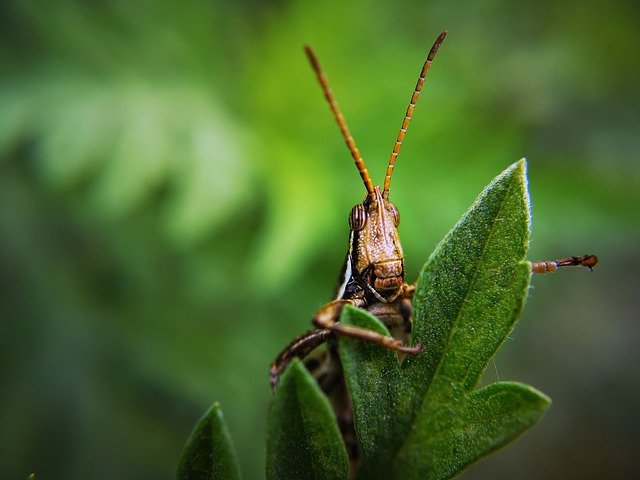
Edible grasshoppers could help alleviate hunger and malnutrition in Africa while providing farmers with a new source of income, say scientists in Uganda and Finland who have studied the ecology of the insects for close to a decade.

“Our research shows that we can actually tame these insects and start rearing them in big numbers as an alternative source of protein for our people,” said Philip Nyeko, lead researcher and professor at the College of Agricultural and Environmental Sciences at Makerere University. “It shows that the insects can help us alleviate hunger and malnutrition and the dependence on fish and beef (for proteins) that’s worsening overfishing and greenhouse gas emissions.”

Approximately one in five people in Africa sleep on an empty stomach every night and 12.8 million children in the region are acutely malnourished.

The challenge of feeding the continent is further exacerbated by a bulging population that is projected to triple the current 1.2 billion people by 2050, while climate change impacts on agriculture are shrinking food options.

“We are cutting down more forests for agriculture. But this is not sustainable,” said Dr. Karlmax Rutaro, a biochemist at the College of Natural Sciences at Makerere University, who is participating in the research. “We have to think of smarter ways of providing alternative sources of food to feed this population without necessarily encroaching on the remaining forest cover.”

The researchers got parent stock from the wild during a swarming season and induced the insects — also known as Ruspolia differens — to lay eggs in an artificial medium in the lab. Initially, they isolated the nymphs in separate plastic jars to observe their survival on various diets. Then they placed about 1,500 insects in mass rearing cages to observe the effect of cage size and density on their growth.

The results were staggering. The insects could feed on inflorescence and grass, but they could as well feed on greens and cereals, such as millet flour, maize and sim sim (sesame) — basically, the same food humans eat. They could survive in temperatures between 25 and 32 degrees Celsius, which are typical in most of Africa.

The insects matured in two-and-a-half months, just like wild ones.

Research indicates the insects have high protein levels of 34 to 73 percent. “People can eat the grasshoppers to support their protein needs,” Rutaro said.

Insects also offer the good fats that can reduce risk of non-communicable diseases such as diabetes, he said, as well as other vital nutrients, including polyunsaturated fatty acids and various minerals, including phosphorous and potassium.

Raising the crunchy insects can also be a source of livelihood for more African farmers.

A 2021 report by Indian scientists revealed that a pair of male and female grasshoppers produced about 60,000 eggs that translated into about 4 kilograms of adult grasshoppers.

This suggests that a farmer would harvest approximately 4,000 kilograms (equivalent to 4 tonnes) of adult grasshoppers by rearing just 1,000 pairs.

For comparison purposes, a kilogram of edible grasshoppers in East Africa currently costs about US$9 — almost double that of beef.

Grasshoppers have other uses besides food, Rutaro noted. “I wish you knew how many other products you can get from grasshoppers for the cosmetic and pharmaceutical industries if you extracted their fat. Lots of products.”

Nyeko said the scientists are on the verge of a “major breakthrough” and have developed production kits and started to train farmer groups in central Uganda to rear the insects.

“Between June and August (this year) we should introduce these insects to farmers,” Nyeko said. They are focusing on smallholder farmers for now.

But Rutaro said the grasshoppers need care.

“Just like any other livestock, the insects need a good environment and feeds. They need a balanced diet,” he said.

So, while maize flour is going to give them carbohydrates, the insects need other feed, such as mixes of soya that can give them proteins and fats.

Rutaro said they had “seen challenges related to cannibalism (where the insects started to feed on each other) when not fed on foods rich in protein and nitrogen.”

The insects also require good aeration and their cages should not be too hot or too cold.

A section of African communities, including people in South Africa, the Democratic Republic of Congo, Nigeria, Zimbabwe and Uganda, already eat insects such as termites, caterpillars and crickets. So, domestication and mass rearing of the grasshoppers can provide them with more options.

But African farmers could also rear the insects for export, Rutaro said.

“The insect economy is dominated by Asia, especially Thailand and Laos. Thailand is one of the biggest exporters of crickets. But that does not mean that our farmers cannot compete,” Rutaro said. “The grasshoppers we produce are unique to us. That offers us an advantage. We just need to organize ourselves and encourage more farmers to start rearing these insects.”

By John Agaba

O artigo foi publicado originalmente em Cornell Alliance for Science.

Imprimir Artigo
Publicação Anterior

Pedrógão Grande: Ministério Público quer condenação dos funcionários da Ascendi

Próxima Publicação

War in Ukraine: Agriculture MEPs ask for CAP derogations

Artigos Relacionados

rio com videiras e vinha no douro
Nacional

IVDP entrega ao Governo plano para a gestão sustentável do Douro

04/08/2026
dgav
Últimas

Publicação de novos regulamentos europeus sobre contaminantes

04/08/2026
fogo chamas
Internacional

Fogo florestal alastra em reserva natural no sul dos Países Baixos

04/08/2026
Próxima Publicação
parlamento europeu European Parliament

War in Ukraine: Agriculture MEPs ask for CAP derogations

Opinião

António Covas
Últimas

O mundo paradoxal do nosso rural tardio e remoto

por António Covas
02/08/2026

Ler maisDetails
Últimas

Azeites de Portugal: tratar diferente o que é diferente

por José Martino
26/07/2026

Ler maisDetails

Subscrever as nossas newsletteres

Subscrever as nossas Newsletters Agroportal

Verifique na sua caixa de correio ou na pasta de spam para confirmar a sua subscrição.

Comunicados

dgav

Publicação de novos regulamentos europeus sobre contaminantes

04/08/2026
IFAP

Intervenção F.8.11- Apoio à Apicultura 2025 – Submissão Pedido Pagamento até 14 agosto 2026

04/08/2026
Advertisement

Temas em destaque

Candidaturas PU Guerra Médio Oriente Mercosul ovibeja PAC pós 2027 Simplificação PAC Temporais vinho Água que Une

Eventos

Agosto 2026
STQQSSD
      1 2
3 4 5 6 7 8 9
10 11 12 13 14 15 16
17 18 19 20 21 22 23
24 25 26 27 28 29 30
31       
« Jul   Set »

Sobre Nós

O Agroportal.pt é uma plataforma de informação digital que reúne a informação relevante sobre agricultura. Tem um foco na Política Agrícola Comum e a sua aplicação em Portugal.

Menu

  • Quem somos
  • Relatórios anuais
  • Envie-nos informação
  • Publicidade
  • Newsletters
  • Estatuto Editorial
  • Ficha técnica
  • Proteção de Dados Pessoais
  • Disclaimer
Facebook twitter Circle Instagram Rss Feed

© Agroportal. All Rights reserved.

Bem-Vindo De Volta!

Sign In with Facebook
Sign In with Google
OR

Faça login na sua conta abaixo

Esqueceu-se da senha? Registar

Criar Uma Nova Conta!

Sign Up with Facebook
Sign Up with Google
OR

Preencha os campos abaixo para se registar

* Ao se registar-se no nosso site, você concorda com os Termos e Condições e a Política de Privacidade .
Todos os campos são necessários. Entrar

Obter a sua senha

Indique por favor o seu nome de utilizador ou endereço de E-mail para repor a sua senha.

Entrar
  • Login
  • Registar
Sem Resultado
Ver Todos Os Resultados
  • Sugeridas
  • Notícias
    • Nacional
    • Internacional
    • Comunicados
  • Opinião
  • Eventos
  • Dossiers
    • Agricultura Biológica
    • Apoios
    • Artigos Técnicos
    • Biossoluções
    • Cadeia Alimentar
    • Fertilizantes
    • Financiamento
    • Fitofarmacêuticos
    • Florestas
    • Futuro da PAC
    • Inovação
    • Mercados e Cotações agrícolas
    • Newsletters e Revistas
    • Recomendações Agroflorestais
    • Seguros agrícolas
  • Serviços
    • Diretório
    • Emprego
    • Máquinas Agrícolas
    • Meteorologia
    • Terrenos Agrícolas
    • Arquivo Agroportal

© Agroportal. All Rights reserved.

Este site usa cookies. Ao continuar a utilizar este site, está a dar consentimento à utilização de cookies. Visite a nossa Política de Protecção de dados e Cookies.