


















Sem Resultado
Ver Todos Os Resultados
Newsletters
Agroportal
  • Login
  • Registar
  • Sugeridas
  • Notícias
    • Notícias
    • Nacional
    • Internacional
    • Comunicados
    Créditos: Jorge Oliveira

    “Insistimos na necessidade de eliminar quaisquer cortes na PAC”

    Gronelândia: Trump tem muito a perder com imposição de sobretaxas – ministra francesa

    UE-Mercosul: Preocupação, otimismo e fiscalização

    A Quadratura do Círculo Agro – Rui Veríssimo Batista

    navio contentores mar

    UE/Mercosul: Assinado acordo que cria a maior zona de livre-comércio do mundo

    canabis

    Iberfar quer chegar aos 200 milhões com canábis medicinal

    vinha no rio douro

    Deputado do JPP apresenta proposta para valorizar vinhos do Douro

    azeitonas em oliveira

    UE/Mercosul: UE estima aumento de 39% nas exportações totais e de 50% nos agroalimentares

    Créditos: Jorge Oliveira

    UE/Mercosul: Acordo assinado hoje representa “oportunidade” para Portugal

  • Opinião
    Filipe Corrêa Figueira

    Estão a encurralar os Agricultores… e não vai acabar bem!

    Sinais dos tempos. Notas sobre a PAC e o Acordo UE-Mercosul

    Douro: não há excesso de produção, há excesso de oferta

    António Covas

    A inteligência coletiva territorial da 2ª ruralidade – As áreas de baixa densidade (ABD)

    Jaime Piçarra

    O que marcou 2025 e o que esperar para 2026

    Ines Marques Lopes

    Agribusiness: entre a profissionalização, o investimento e a sustentabilidade

    Biodiversidade da videira

    A doença do Fogo Bacteriano na pereira Rocha já destruiu 31% da produção nacional

    Manuel Chaveiro Soares

    Sobre a modernização das regras relativas ao bem-estar dos frangos

  • Eventos
  • Dossiers

    Dossiers I

    • Agricultura Biológica
    • Apoios
    • Artigos Técnicos
    • Biossoluções
    • Cadeia Alimentar
    • Fertilizantes
    • Financiamento
    • Fitofarmacêuticos

    Dossiers II

    • Florestas
    • Futuro da PAC
    • Inovação
    • Mercados
    • Newsletters e Revistas
    • Recomendações Agroflorestais
    • Seguros

    Últimas

    Predominio de las repeticiones en el mercado de las canales de vacuno

    18/01/2026

    Corderos: bajan los pequeños y el resto repiten

    18/01/2026

    “Insistimos na necessidade de eliminar quaisquer cortes na PAC”

    18/01/2026

    Almendras: sin apenas cambios en las cotizaciones

    18/01/2026

    Aceite de oliva: entre subidas y repeticiones en los precios

    18/01/2026

    Gronelândia: Trump tem muito a perder com imposição de sobretaxas – ministra francesa

    18/01/2026
  • Serviços
    • Diretório
    • Emprego
    • Máquinas Agrícolas
    • Meteorologia
    • Terrenos Agrícolas
    • Arquivo Agroportal
Agroportal
  • Sugeridas
  • Notícias
    • Notícias
    • Nacional
    • Internacional
    • Comunicados
    Créditos: Jorge Oliveira

    “Insistimos na necessidade de eliminar quaisquer cortes na PAC”

    Gronelândia: Trump tem muito a perder com imposição de sobretaxas – ministra francesa

    UE-Mercosul: Preocupação, otimismo e fiscalização

    A Quadratura do Círculo Agro – Rui Veríssimo Batista

    navio contentores mar

    UE/Mercosul: Assinado acordo que cria a maior zona de livre-comércio do mundo

    canabis

    Iberfar quer chegar aos 200 milhões com canábis medicinal

    vinha no rio douro

    Deputado do JPP apresenta proposta para valorizar vinhos do Douro

    azeitonas em oliveira

    UE/Mercosul: UE estima aumento de 39% nas exportações totais e de 50% nos agroalimentares

    Créditos: Jorge Oliveira

    UE/Mercosul: Acordo assinado hoje representa “oportunidade” para Portugal

  • Opinião
    Filipe Corrêa Figueira

    Estão a encurralar os Agricultores… e não vai acabar bem!

    Sinais dos tempos. Notas sobre a PAC e o Acordo UE-Mercosul

    Douro: não há excesso de produção, há excesso de oferta

    António Covas

    A inteligência coletiva territorial da 2ª ruralidade – As áreas de baixa densidade (ABD)

    Jaime Piçarra

    O que marcou 2025 e o que esperar para 2026

    Ines Marques Lopes

    Agribusiness: entre a profissionalização, o investimento e a sustentabilidade

    Biodiversidade da videira

    A doença do Fogo Bacteriano na pereira Rocha já destruiu 31% da produção nacional

    Manuel Chaveiro Soares

    Sobre a modernização das regras relativas ao bem-estar dos frangos

  • Eventos
  • Dossiers

    Dossiers I

    • Agricultura Biológica
    • Apoios
    • Artigos Técnicos
    • Biossoluções
    • Cadeia Alimentar
    • Fertilizantes
    • Financiamento
    • Fitofarmacêuticos

    Dossiers II

    • Florestas
    • Futuro da PAC
    • Inovação
    • Mercados
    • Newsletters e Revistas
    • Recomendações Agroflorestais
    • Seguros

    Últimas

    Predominio de las repeticiones en el mercado de las canales de vacuno

    18/01/2026

    Corderos: bajan los pequeños y el resto repiten

    18/01/2026

    “Insistimos na necessidade de eliminar quaisquer cortes na PAC”

    18/01/2026

    Almendras: sin apenas cambios en las cotizaciones

    18/01/2026

    Aceite de oliva: entre subidas y repeticiones en los precios

    18/01/2026

    Gronelândia: Trump tem muito a perder com imposição de sobretaxas – ministra francesa

    18/01/2026
  • Serviços
    • Diretório
    • Emprego
    • Máquinas Agrícolas
    • Meteorologia
    • Terrenos Agrícolas
    • Arquivo Agroportal
Sem Resultado
Ver Todos Os Resultados
Agroportal
exploração agricola africa

GM crops: Kenya and Nigeria progress as Uganda falters

por Cornell Alliance for Science
24-08-2021 | 12:53
em Últimas, Internacional, Notícias inovação, Inovação, Dossiers
Tempo De Leitura: 6 mins
A A
Partilhe no FacebookPartilhe no TwitterEnviar para o WhatsappEnviar para o TelegramEnviar para o LinkedIn

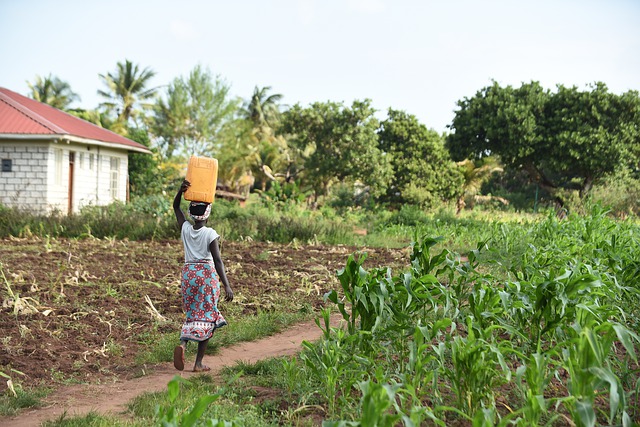
Though several African countries, including Kenya, Nigeria and Ethiopia, are making tremendous strides in their quest to develop and commercialize genetically modified crops, it’s not the same story in Uganda.

Despite very promising initial successes, Ugandan scientists in the East African country have struggled to progress their GM crop research beyond confined field trials (CFTs) due to various reasons that are out their control.

For instance, scientists developing an improved GM maize variety that is drought-tolerant and insect-resistant at Uganda’s National Crops Resources Research Institute (NaCRRI) had to halt their research and destroy their results because the country still lacks a biosafety law to guide commercialization of GM crops.

“We have completed confined field trials for Bt maize, but we cannot apply for environmental release because we don’t have a law to guide usage of GMOs (genetically modified organisms) in Uganda,” said Dr. Godfrey Asea, principal investigator for the research and director of NaCRRI.

The scientists also had to destroy the seed varieties they produced. They could not keep them for longer than a year after the CFTs were completed because NaCRRI does not have long-term storage facilities for GMOs, including fridges and cold rooms.

The National Council for Science and Technology also required them to destroy the seeds after research was completed.

“It’s a real shame [the scientists] have had to stop their research and destroy their materials,” said Erostus Nsubuga, chief executive officer and chairperson of Agro-genetic Technologies, a private firm in Kampala that specializes in tissue culture and moves research work from labs to farmers by multiplying seeds. “They were doing great work.”

Asea’s research indicated that the Bt maize varieties, which use a gene from a common soil organism called Bacillus thuringiensis to repel insect pests, were resistant to both fall armyworm and stem borer insects and drought-tolerant, too. As a result, farmers who grew them could expect to harvest higher yields and reduce their pesticide and water use.

But though Uganda will now fall behind, several African countries are pushing to commercialize GM crops. They see biotechnology as one part of the solution to improve food security and end hunger for their communities.

Kenya, for instance, has progressed its research in Bt maize past confined field and national performance trials. The East African country is now on course to commercialize the higher yielding food crop next year and farmers are already clamoring for the seeds.

Results from Kenya’s national performance trials indicated Bt maize varieties produced better yields than conventional varieties, said Theophilus Mutui, managing director for the Kenya Plant Health Inspectorate Service. He noted that researchers had submitted their findings to the country’s ministry of agriculture for a decision on whether to commercialize the biotech maize.

This is after the East African country allowed its farmers to grow Bt cotton last year.

It is the same situation in Nigeria, where confined field trials of the GM insect-resistant and drought-tolerant (TELA) maize showed “outstanding results” this month.

The field trials, which are being conducted at the Institute of Agricultural Research in Nigeria, showed that the TELA maize varieties produce nine tons per hectare, which is triple the three tons per hectare realized from the country’s best-producing conventional maize variety, according to a report by the International Service for Acquisition of Agri-biotech Applications (ISAAA).

“With this high yield potential, the TELA maize variety is best suited to help bridge the gap between the maize demand and supply, which is at a six million metric tons deficit,” said the ISAAA report.

Ethiopia, meanwhile, has approved commercial cultivation of Bt cotton and field research for GM maize. Farmers in South Africa are already growing TELA maize commercially.

Nsubuga said Uganda wasn’t really progressing after “investing lots of time in these technologies” because the country’s leadership couldn’t decide whether or not to go with GMOs.

The East African country also lost its funding for the TELA maize project after it became obvious that progress in biotech crop approvals here had come to a standstill. Donors instead gave the money to other priority countries.

The Ugandan Parliament passed a biotechnology and biosafety bill to guide usage of GMOs, first in 2017 and again in 2018. But President Yoweri Museveni returned the bill to the house on both occasions.

“We addressed the issues that the president wanted addressed (in the amended 2018 bill),” said Ronnie David Mutebi, formerly vice chairperson to a parliamentary committee of Science, Technology and Innovation. “We even changed the bill’s title from the biotechnology and biosafety bill to the Genetic Engineering Regulatory Bill to accommodate genetic engineering, but the president didn’t sign it.”

Scientists in Uganda have been developing drought-tolerant and insect-resistant GM varieties for close to two decades.

Asea and others started lab work for the water efficient maize for Africa (WEMA) project in 2008 to help farmers manage the risk of drought by developing maize varieties that yield up to 35 percent more grain under moderate drought conditions than currently available varieties.

Thereafter, the scientists proceeded to develop varieties that offer both drought tolerance and insect resistance, known by the brand name TELA.

Ugandan scientists in Uganda also developed other GM varieties, including cassava resistant to brown streak and mosaic disease, potato resistant to late blight disease and a bio-fortified banana rich in vitamin A and resistant to bacterial wilt.

All these varieties have showed tremendous results. But they are staring at a fate similar to that of Bt maize unless the country adopts a biosafety law.

“It is frustrating for scientists who have devoted almost their entire time to develop these varieties but now have to stop them,” said Nsubuga.

Dr. Geoffrey Arinaitwe, an agronomist and part of the team who started lab work to develop a GM banana in Uganda described how frustrating it is to “develop a product and know it works” but be unable to take it to the farmers because of legislative inaction.

“It is frustrating. Very frustrating,” he said. “I am now old, almost retiring. Soon, I won’t be able to continue this kind of work. But what do I have to show for all the time I have put in? All the nights I have spent in a lab? Nothing.”

“If people knew how painful it is to stay in a lab for the entire time until you are able to create banana from a cell, they would be more understanding of our disillusionment,” he said.

Asea said Ugandan researchers are hopeful the country will one day pass the law and researchers can deliver their products to the farmers.

But Nsubuga said it was not a question of if, but when, the country will pass the law.

“Uganda will pass the biotechnology law, especially after Kenya starts harvesting Bt maize,” he predicted. “Uganda will see the benefits of adopting these technologies and follow suit.

“Some people don’t think we need these technologies because Uganda is still producing a lot of food… we are still a food basket for the region,” he continued. “But things will be different once Kenya starts harvesting its Bt varieties.”

Imprimir Artigo
Publicação Anterior

OGM | Arroz dourado vai ser comercializado nas Filipinas

Próxima Publicação

Associação acusa empresa de “crime ambiental” em albufeira de Almodôvar

Artigos Relacionados

Cotações ES

Predominio de las repeticiones en el mercado de las canales de vacuno

18/01/2026
Cotações ES

Corderos: bajan los pequeños y el resto repiten

18/01/2026
Créditos: Jorge Oliveira
Instituições e EM

“Insistimos na necessidade de eliminar quaisquer cortes na PAC”

18/01/2026
Próxima Publicação

Associação acusa empresa de “crime ambiental” em albufeira de Almodôvar

Discussão sobre este post

Opinião

Filipe Corrêa Figueira
Últimas

Estão a encurralar os Agricultores… e não vai acabar bem!

por Filipe Corrêa Figueira
18/01/2026

Ler mais
Últimas

Sinais dos tempos. Notas sobre a PAC e o Acordo UE-Mercosul

por António Themudo Barata
11/01/2026

Ler mais

Subscrever as nossas newsletteres

Subscrever as nossas Newsletters Agroportal

Verifique na sua caixa de correio ou na pasta de spam para confirmar a sua subscrição.

Comunicados

Governo lança apoio de 12,1 milhões de euros para aquisição de máquinas para apoio à gestão florestal e prevenção contra incêndios

16/01/2026

Produtores de leite e de carne preocupados com baixa de preços à produção reclamam medidas do Governo

16/01/2026
Advertisement

Temas em destaque

Candidaturas PU Eleições PAC pós 2027 Presi Simplificação PAC Água que Une

Eventos

Janeiro 2026
STQQSSD
    1 2 3 4
5 6 7 8 9 10 11
12 13 14 15 16 17 18
19 20 21 22 23 24 25
26 27 28 29 30 31  
« Dez   Fev »

Sobre Nós

O Agroportal.pt é uma plataforma de informação digital que reúne a informação relevante sobre agricultura. Tem um foco na Política Agrícola Comum e a sua aplicação em Portugal.

Menu

  • Quem somos
  • Relatórios anuais
  • Envie-nos informação
  • Publicidade
  • Newsletters
  • Estatuto Editorial
  • Ficha técnica
  • Proteção de Dados Pessoais
  • Disclaimer
Facebook twitter Circle Instagram Rss Feed

© Agroportal. All Rights reserved.

  • Login
  • Registar
Sem Resultado
Ver Todos Os Resultados
  • Sugeridas
  • Notícias
    • Nacional
    • Internacional
    • Comunicados
  • Opinião
  • Eventos
  • Dossiers
    • Agricultura Biológica
    • Apoios
    • Artigos Técnicos
    • Biossoluções
    • Cadeia Alimentar
    • Fertilizantes
    • Financiamento
    • Fitofarmacêuticos
    • Florestas
    • Futuro da PAC
    • Inovação
    • Mercados e Cotações agrícolas
    • Newsletters e Revistas
    • Recomendações Agroflorestais
    • Seguros agrícolas
  • Serviços
    • Diretório
    • Emprego
    • Máquinas Agrícolas
    • Meteorologia
    • Terrenos Agrícolas
    • Arquivo Agroportal

© Agroportal. All Rights reserved.

Bem-Vindo De Volta!

Sign In with Facebook
Sign In with Google
OU

Faça login na sua conta abaixo

Esqueceu-se da senha? Registar

Criar Uma Nova Conta!

Sign Up with Facebook
Sign Up with Google
OU

Preencha os campos abaixo para se registar

* Ao se registar-se no nosso site, você concorda com os Termos e Condições e a Política de Privacidade .
Todos os campos são necessários. Entrar

Obter a sua senha

Indique por favor o seu nome de utilizador ou endereço de E-mail para repor a sua senha.

Entrar
Este site usa cookies. Ao continuar a utilizar este site, está a dar consentimento à utilização de cookies. Visite a nossa Política de Protecção de dados e Cookies.