














Sem Resultado
Ver Todos Os Resultados
Newsletters
Agroportal
  • Login
  • Registar
  • Sugeridas
  • Notícias
    • Notícias
    • Nacional
    • Internacional
    • Comunicados

    IFCN no 10.º Congresso Florestal Nacional em Coimbra

    Açores lançam concurso para revisão do Plano de Ordenamento do Território

    Ovelhas e cabras fazem manutenção natural de empreendimento turístico em Silves

    Adega do Douro Superior foi “tábua de salvação” para produtores vitícolas do território

    jovens agricultores

    Seminário em Ponte de Lima a 7 de Outubro aborda investimento de jovens agricultores

    Os queijeiros franceses enfrentam uma ameaça crescente

    PS/Flores denuncia falhas no transporte marítimo de gado vivo

    Já se encontra disponível a 16.ª edição do INFOBIO

    Riscos climáticos relacionados com incêndios não afetam perfis de crédito do setor bancário, diz DBRS

  • Opinião

    Estamos a exportar Portugal ou a desvalorizar o azeite português?

    AIGP: fracasso ou sucesso?

    Microrganismos ao serviço de uma agricultura mais sustentável

    O problema da floresta não é apenas florestal

    Solo: A Infraestrutura Invisível da Adaptação Climática

    Ibéria: a terra prometida a quem?

    O Impacto da agricultura regenerativa sobre os resultados económicos das explorações agrícolas

    Ibéria – a terra prometida

    O dia em que a Europa descobrir o elevado preço de não produzir

  • Eventos
  • Dossiers

    Dossiers I

    • Agricultura Biológica
    • Apoios
    • Artigos Técnicos
    • Biossoluções
    • Cadeia Alimentar
    • Fertilizantes
    • Financiamento
    • Fitofarmacêuticos

    Dossiers II

    • Florestas
    • Futuro da PAC
    • Inovação
    • Mercados
    • Newsletters e Revistas
    • Recomendações Agroflorestais
    • Seguros

    Últimas

    arvores floresta céu

    Incêndios: Governante confiante numa floresta mais protegida no próximo verão

    02/10/2026

    NTG | CRISPR permite modificar geneticamente uma planta forrageira e abre novas perspetivas para o melhoramento vegetal

    02/10/2026

    NTG | EPSO destaca o papel da ciência das plantas na estratégia europeia para a bioeconomia

    02/10/2026

    Governo prolonga apoios à apicultura com 3,3 milhões de euros

    02/10/2026

    Alterações climáticas | Girassóis mais resistentes à seca e ao calor estão a ser desenvolvidos na Europa

    02/10/2026

    Governo prolonga apoios à apicultura com novo concurso de 3,3 milhões de euros

    02/10/2026
  • Serviços
    • Diretório
    • Emprego
    • Máquinas Agrícolas
    • Meteorologia
    • Terrenos Agrícolas
    • Arquivo Agroportal
Agroportal
  • Sugeridas
  • Notícias
    • Notícias
    • Nacional
    • Internacional
    • Comunicados

    IFCN no 10.º Congresso Florestal Nacional em Coimbra

    Açores lançam concurso para revisão do Plano de Ordenamento do Território

    Ovelhas e cabras fazem manutenção natural de empreendimento turístico em Silves

    Adega do Douro Superior foi “tábua de salvação” para produtores vitícolas do território

    jovens agricultores

    Seminário em Ponte de Lima a 7 de Outubro aborda investimento de jovens agricultores

    Os queijeiros franceses enfrentam uma ameaça crescente

    PS/Flores denuncia falhas no transporte marítimo de gado vivo

    Já se encontra disponível a 16.ª edição do INFOBIO

    Riscos climáticos relacionados com incêndios não afetam perfis de crédito do setor bancário, diz DBRS

  • Opinião

    Estamos a exportar Portugal ou a desvalorizar o azeite português?

    AIGP: fracasso ou sucesso?

    Microrganismos ao serviço de uma agricultura mais sustentável

    O problema da floresta não é apenas florestal

    Solo: A Infraestrutura Invisível da Adaptação Climática

    Ibéria: a terra prometida a quem?

    O Impacto da agricultura regenerativa sobre os resultados económicos das explorações agrícolas

    Ibéria – a terra prometida

    O dia em que a Europa descobrir o elevado preço de não produzir

  • Eventos
  • Dossiers

    Dossiers I

    • Agricultura Biológica
    • Apoios
    • Artigos Técnicos
    • Biossoluções
    • Cadeia Alimentar
    • Fertilizantes
    • Financiamento
    • Fitofarmacêuticos

    Dossiers II

    • Florestas
    • Futuro da PAC
    • Inovação
    • Mercados
    • Newsletters e Revistas
    • Recomendações Agroflorestais
    • Seguros

    Últimas

    arvores floresta céu

    Incêndios: Governante confiante numa floresta mais protegida no próximo verão

    02/10/2026

    NTG | CRISPR permite modificar geneticamente uma planta forrageira e abre novas perspetivas para o melhoramento vegetal

    02/10/2026

    NTG | EPSO destaca o papel da ciência das plantas na estratégia europeia para a bioeconomia

    02/10/2026

    Governo prolonga apoios à apicultura com 3,3 milhões de euros

    02/10/2026

    Alterações climáticas | Girassóis mais resistentes à seca e ao calor estão a ser desenvolvidos na Europa

    02/10/2026

    Governo prolonga apoios à apicultura com novo concurso de 3,3 milhões de euros

    02/10/2026
  • Serviços
    • Diretório
    • Emprego
    • Máquinas Agrícolas
    • Meteorologia
    • Terrenos Agrícolas
    • Arquivo Agroportal
Sem Resultado
Ver Todos Os Resultados
Agroportal
planta cafe

Ugandan scientists developing drought tolerant coffee varieties to save valuable cash crop

por Cornell Alliance for Science
18-10-2021 | 14:29
em Últimas, Internacional, Notícias inovação, Inovação, Dossiers
Tempo De Leitura: 3 mins
A A
Partilhe no FacebookPartilhe no TwitterEnviar para o WhatsappEnviar para o TelegramEnviar para o LinkedIn

After releasing coffee varieties resistant to wilt disease, Ugandan agricultural scientists have begun developing Robusta varieties that are drought-tolerant as well.

But because Uganda lacks a biosafety law, researchers said they cannot use faster gene editing tools such as CRISPR-Cas to develop the new varieties. Instead, they anticipate the process will take about 10 years.

Uganda is one of the leading exporters of Robusta coffee in Africa. The cash crop earned the East African country US$559 million last year, according to the Uganda Coffee Development Authority.

But the plant is increasingly threatened by drought and other unpredictable weather patterns, prompting scientists to seek a solution.

“We have to continuously develop better varieties. That’s how it is,” said Betty Magambo, a researcher at the National Coffee Research Institute (NaCORI). “The environment is evolving, we have newer diseases and soils are now less fertile. So, we cannot really just sit back and relax. We have to give farmers options.”

Dr. Godfrey Sseremba, senior research officer at the NaCORI in Kituuza, said the scientists are using molecular or marker assisted selection to develop the drought-tolerant varieties.

“We have identified materials from wild coffee varieties that are drought-tolerant and have studied them to understand their composition,” he explained. “The materials naturally grow in Ugandan forests…and within their germplasm there is diversity which is drought-tolerant.”

So, the scientists are carefully crossing the wild varieties with the improved coffee wilt disease-resistant Robusta varieties.  The hybrids are then grown in greenhouses and in other water-stressed areas to observe their performance.

“We use molecular or marker-assisted selection to determine the new varieties contain materials that are drought-tolerant,” Sseremba said. “Because we already know which genes are drought-tolerant, we simply take samples from leaves of these hybrids and test them in a lab to ascertain that they contain DNA that is drought-tolerant,” he continued.

After this, the scientists will use tissue culture to multiply the desired varieties that have both disease resistance and drought tolerance traits.

In addition to drought, Uganda’s valuable coffee crop is facing other problems.

“With climate change comes myriad other challenges,” Magambo said. “For example, we have newer diseases such as the red blister disease which attacks the coffee cherries, causing them to fall off to the ground before they are ready and can be harvested.”

Usually, coffee will flower after the rains, which are typically preceded by a dry spell, she said. But should the sun shine after the flowering stage, most of the cherries will start to fall off and farmers can lose up to 90 percent of the harvest.

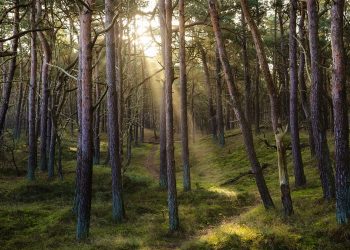
As well as causing coffee cherries to fall off prematurely, drought impacts the physical quality of the fruit. The cherries will appear light yellowish in color, instead of red, and will also weigh less – characteristics that can be undesirable.

Magambo said drought was the reason agronomists encouraged inter-cropping or mixed farming for coffee.

“We don’t want our farmers to lose their harvest. So, we encourage them to plant their coffee under shade or within other plantations like matooke [banana],” she said.

But the scientists are also aware of plans to grow coffee in the warmer parts of Uganda, such as Kalamoja and Kiruhura districts, where farmers can’t rely on inter-cropping. They will need improved varieties that can tolerate drought as well.

In separate research, scientists at NaCORI are also grafting the coffee wilt disease-resistant Robusta varieties onto Liberica coffee stems, which are more robust and have stronger root systems that can extend deeper into the soil.

Liberica, locally referred to as Kisansa, also grows naturally in Ugandan forests. But it is not commercially traded there.

Over the years, scientists at NaCORI have developed newer varieties to counter disease and improve the quality of coffee produced in Uganda.

“We started with varieties that are resistant to coffee wilt disease, because it has been the biggest challenge for farmers in Uganda since the ‘90s,” she said.

Their landmark innovation is 10 varieties of CWDr Robusta coffee released in the past decade.

“From Naro 1 to Naro 10, the varieties have been a revelation for farmers, especially the latest one, Naro 10),” said Magambo. “They are disease-resistant as well as higher yielding.”

Farmers who plant the newest CWDr Robusta variety Naro 10 could harvest up to 10 kilograms of coffee cherries per tree, or 10 tonnes per hectare, she said.
By John Agaba

Imprimir Artigo
Publicação Anterior

Incêndios. Área ardida em 2021 foi a segunda menor da década

Próxima Publicação

Incêndios: Registados 7.610 fogos que consumiram 27.118 hectares de área ardida este ano

Artigos Relacionados

Nacional

IFCN no 10.º Congresso Florestal Nacional em Coimbra

04/10/2026
Nacional

Açores lançam concurso para revisão do Plano de Ordenamento do Território

04/10/2026
Últimas

Estamos a exportar Portugal ou a desvalorizar o azeite português?

04/10/2026
Próxima Publicação
fogo bombeiros

Incêndios: Registados 7.610 fogos que consumiram 27.118 hectares de área ardida este ano

Discussão sobre este post

Opinião

Últimas

Estamos a exportar Portugal ou a desvalorizar o azeite português?

por Francisco António Vilela Ribeiro
04/10/2026

Ler maisDetails
Últimas

AIGP: fracasso ou sucesso?

por José Martino
30/09/2026

Ler maisDetails

Subscrever as nossas newsletteres

Subscrever as nossas Newsletters Agroportal

Verifique na sua caixa de correio ou na pasta de spam para confirmar a sua subscrição.

Comunicados

Já se encontra disponível a 16.ª edição do INFOBIO

03/10/2026
Corteva

Corteva inicia um novo capítulo como líder global de proteção das culturas, focada e orientada para a inovação

02/10/2026
Advertisement

Temas em destaque

Candidaturas PU Global Agri Forum 2026 Guerra Médio Oriente Mercosul ovibeja PAC pós 2027 Simplificação PAC Temporais vinho Água que Une

Eventos

Outubro 2026
STQQSSD
    1 2 3 4
5 6 7 8 9 10 11
12 13 14 15 16 17 18
19 20 21 22 23 24 25
26 27 28 29 30 31  
« Set   Nov »

Sobre Nós

O Agroportal.pt é uma plataforma de informação digital que reúne a informação relevante sobre agricultura. Tem um foco na Política Agrícola Comum e a sua aplicação em Portugal.

Menu

  • Quem somos
  • Relatórios anuais
  • Envie-nos informação
  • Publicidade
  • Newsletters
  • Estatuto Editorial
  • Ficha técnica
  • Proteção de Dados Pessoais
  • Disclaimer
Facebook twitter Circle Instagram Rss Feed

© Agroportal. All Rights reserved.

Bem-Vindo De Volta!

Sign In with Facebook
Sign In with Google
OR

Faça login na sua conta abaixo

Esqueceu-se da senha? Registar

Criar Uma Nova Conta!

Sign Up with Facebook
Sign Up with Google
OR

Preencha os campos abaixo para se registar

* Ao se registar-se no nosso site, você concorda com os Termos e Condições e a Política de Privacidade .
Todos os campos são necessários. Entrar

Obter a sua senha

Indique por favor o seu nome de utilizador ou endereço de E-mail para repor a sua senha.

Entrar
  • Login
  • Registar
Sem Resultado
Ver Todos Os Resultados
  • Sugeridas
  • Notícias
    • Nacional
    • Internacional
    • Comunicados
  • Opinião
  • Eventos
  • Dossiers
    • Agricultura Biológica
    • Apoios
    • Artigos Técnicos
    • Biossoluções
    • Cadeia Alimentar
    • Fertilizantes
    • Financiamento
    • Fitofarmacêuticos
    • Florestas
    • Futuro da PAC
    • Inovação
    • Mercados e Cotações agrícolas
    • Newsletters e Revistas
    • Recomendações Agroflorestais
    • Seguros agrícolas
  • Serviços
    • Diretório
    • Emprego
    • Máquinas Agrícolas
    • Meteorologia
    • Terrenos Agrícolas
    • Arquivo Agroportal

© Agroportal. All Rights reserved.

Este site usa cookies. Ao continuar a utilizar este site, está a dar consentimento à utilização de cookies. Visite a nossa Política de Protecção de dados e Cookies.