














Sem Resultado
Ver Todos Os Resultados
Newsletters
Agroportal
  • Login
  • Registar
  • Sugeridas
  • Notícias
    • Notícias
    • Nacional
    • Internacional
    • Comunicados
    Corteva

    Corteva inicia um novo capítulo como líder global de proteção das culturas, focada e orientada para a inovação

    Produtores portugueses perdem terreno para Espanha

    DGAV

    A DGAV participa na II Conferencia do Centro Colaborativo da OMS para a Nutrição e Obesidade Infantil

    Do produtor ao consumidor: cadeia agroalimentar representada no Portugal Food Safety 2026

    Governo prolonga apoios à apicultura com 3,3 milhões de euros

    Assinado acordo para nova barragem e estação de tratamento de águas em Fagilde na região de Viseu

    Cereais em Portugal pedem socorro: produtores juntam-se à CAP e reclamam 140 milhões de euros

    Produtores de cereais reivindicam apoios de 140 milhões de euros

    Confagri pede audiências urgentes ao Presidente da República e ao Primeiro-Ministro

  • Opinião

    AIGP: fracasso ou sucesso?

    Microrganismos ao serviço de uma agricultura mais sustentável

    O problema da floresta não é apenas florestal

    Solo: A Infraestrutura Invisível da Adaptação Climática

    Ibéria: a terra prometida a quem?

    O Impacto da agricultura regenerativa sobre os resultados económicos das explorações agrícolas

    Ibéria – a terra prometida

    O dia em que a Europa descobrir o elevado preço de não produzir

    As cooperativas não pagam IRC. E depois?

  • Eventos
  • Dossiers

    Dossiers I

    • Agricultura Biológica
    • Apoios
    • Artigos Técnicos
    • Biossoluções
    • Cadeia Alimentar
    • Fertilizantes
    • Financiamento
    • Fitofarmacêuticos

    Dossiers II

    • Florestas
    • Futuro da PAC
    • Inovação
    • Mercados
    • Newsletters e Revistas
    • Recomendações Agroflorestais
    • Seguros

    Últimas

    NTG | CRISPR permite modificar geneticamente uma planta forrageira e abre novas perspetivas para o melhoramento vegetal

    02/10/2026

    NTG | EPSO destaca o papel da ciência das plantas na estratégia europeia para a bioeconomia

    02/10/2026

    Governo prolonga apoios à apicultura com 3,3 milhões de euros

    02/10/2026

    Alterações climáticas | Girassóis mais resistentes à seca e ao calor estão a ser desenvolvidos na Europa

    02/10/2026

    Governo prolonga apoios à apicultura com novo concurso de 3,3 milhões de euros

    02/10/2026

    Governo prolonga apoios à apicultura

    02/10/2026
  • Serviços
    • Diretório
    • Emprego
    • Máquinas Agrícolas
    • Meteorologia
    • Terrenos Agrícolas
    • Arquivo Agroportal
Agroportal
  • Sugeridas
  • Notícias
    • Notícias
    • Nacional
    • Internacional
    • Comunicados
    Corteva

    Corteva inicia um novo capítulo como líder global de proteção das culturas, focada e orientada para a inovação

    Produtores portugueses perdem terreno para Espanha

    DGAV

    A DGAV participa na II Conferencia do Centro Colaborativo da OMS para a Nutrição e Obesidade Infantil

    Do produtor ao consumidor: cadeia agroalimentar representada no Portugal Food Safety 2026

    Governo prolonga apoios à apicultura com 3,3 milhões de euros

    Assinado acordo para nova barragem e estação de tratamento de águas em Fagilde na região de Viseu

    Cereais em Portugal pedem socorro: produtores juntam-se à CAP e reclamam 140 milhões de euros

    Produtores de cereais reivindicam apoios de 140 milhões de euros

    Confagri pede audiências urgentes ao Presidente da República e ao Primeiro-Ministro

  • Opinião

    AIGP: fracasso ou sucesso?

    Microrganismos ao serviço de uma agricultura mais sustentável

    O problema da floresta não é apenas florestal

    Solo: A Infraestrutura Invisível da Adaptação Climática

    Ibéria: a terra prometida a quem?

    O Impacto da agricultura regenerativa sobre os resultados económicos das explorações agrícolas

    Ibéria – a terra prometida

    O dia em que a Europa descobrir o elevado preço de não produzir

    As cooperativas não pagam IRC. E depois?

  • Eventos
  • Dossiers

    Dossiers I

    • Agricultura Biológica
    • Apoios
    • Artigos Técnicos
    • Biossoluções
    • Cadeia Alimentar
    • Fertilizantes
    • Financiamento
    • Fitofarmacêuticos

    Dossiers II

    • Florestas
    • Futuro da PAC
    • Inovação
    • Mercados
    • Newsletters e Revistas
    • Recomendações Agroflorestais
    • Seguros

    Últimas

    NTG | CRISPR permite modificar geneticamente uma planta forrageira e abre novas perspetivas para o melhoramento vegetal

    02/10/2026

    NTG | EPSO destaca o papel da ciência das plantas na estratégia europeia para a bioeconomia

    02/10/2026

    Governo prolonga apoios à apicultura com 3,3 milhões de euros

    02/10/2026

    Alterações climáticas | Girassóis mais resistentes à seca e ao calor estão a ser desenvolvidos na Europa

    02/10/2026

    Governo prolonga apoios à apicultura com novo concurso de 3,3 milhões de euros

    02/10/2026

    Governo prolonga apoios à apicultura

    02/10/2026
  • Serviços
    • Diretório
    • Emprego
    • Máquinas Agrícolas
    • Meteorologia
    • Terrenos Agrícolas
    • Arquivo Agroportal
Sem Resultado
Ver Todos Os Resultados
Agroportal
exploração agricola africa

Ghanaian scientist: ‘Africa needs GMOs more than the rest of the world’

por Cornell Alliance for Science
16-05-2022 | 16:24
em Genética, Últimas, Internacional, Notícias inovação
Tempo De Leitura: 4 mins
A A
Partilhe no FacebookPartilhe no TwitterEnviar para o WhatsappEnviar para o TelegramEnviar para o LinkedIn

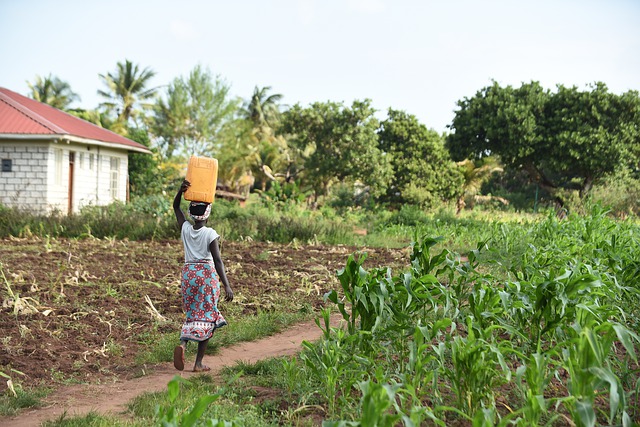
Africa has a more urgent need than the rest of the world to adopt genetically modified organisms for agricultural improvement, says Prof. Eric Yirenkyi Danquah, founding director of the West Africa Centre for Crop Improvement(WACCI) at the University of Ghana.

Challenges like climate change and population rise are increasing food insecurity on the continent, heightening the urgent need for technological innovations to stem that trend, he said. Disrupted rainfall patterns, drought, extreme weather events, pest infestations, plant diseases, crop losses and hunger are negatively impacting the continent.

“This is urgency. Better seeds developed through genetic engineering offer hope. Let us not allow regulatory delays to prevent millions of farmers from accessing this life-saving technology,” he urged.

Danquah expressed concern that “anti-GMO activism has stalled the adoption of genetically engineered crops in many countries, contributing to the perpetuation of unsafe pesticide use, hunger and poverty. Science-based agriculture can preserve critical indigenous foods, such as cowpea, millet, cassava and sorghum, while reducing the environmental impacts of farming. This is evidence.”

“The inescapable conclusion, if we consider justice, the evidence and the urgency, is that smallholder farmers in Africa need access to biotech [GM] crops more than farmers anywhere in the world,” Danquah said. “The time has come for African governments to use the data available to take decisions that would improve livelihoods and lift millions out of extreme hunger and poverty. We need political will for swift and innovative action.”

Danquah noted that biotechnology “is the most rapidly adopted innovation in the history of agriculture” and Africa should not be left out. Yet only about seven African countries have approved GM crops, while they’re under development in another 11. By comparison, over 190 million hectares of GM crops were grown globally in 29 countries in 2019, contributing significantly to food security, sustainability, climate change mitigation and improved lives for some 17 million farmers and their families.

Danquah made his comments at a science communication workshop in Accra organized by the Alliance for Science, WACCI, the International Institute for Tropical Agriculture (IITA) and the Open Forum on Agricultural Biotechnology (OFAB). The four-day workshop brought together scientists from academic institutions and research organizations across the country for training in science communication.

“The development of improved varieties of our staple crops with high yields and resistance to the physical and biological stresses is absolutely necessary for a green revolution and food self-sufficiency in Ghana,” Danquah said. “This can be achieved with precision and efficiency using plant biotechnologies and genomics as important tools.”

Danquah cited a need to end misinformation that paints GMOs in a bad light. “It is my hope that the participants at this workshop will be equipped with the knowledge and skills needed for better communication on the issues at stake to change minds and mindsets for the misconceptions to be erased, and to free our people, including opinion leaders, policy planners and leaders, of mental slavery in the GM technology propaganda,” he noted.

He also vouched for the safety of GMOs. “It’s been 27 years since the first commercial GMOs were released and I am not aware of a single credible food/feed problem on the safety of GMOs. There is a very strong scientific consensus globally on GMOs just as scientists are [aligned] on climate change,” he noted. “I have been exposed to the science behind GMOs since 1986 at Cambridge and I have followed developments to date.”

Developing countries were not motivated to adopt first-generation GMOs because the technology focused on commercial agriculture and ws burdened with a complex, expensive and unpredictable regulatory system, he explained. Now there are second generation biotechnologies, including genome editing, synthetic biology and engineering biology, that focus on pro-poor traits. These second-generation biotechnologies create opportunities to transform agri-food systems through nutritionally healthier crop varieties, disease resistance, reduced pesticide use, lower greenhouse gas emissions, improved climate resilience and contributions to sustainability and biodiversity conservation.

“Today, I submit that genetically modified (GM) crops have become an important part of the sustainable agriculture toolkit, alongside traditional breeding techniques,” he said. “Give farmers in Ghana a free choice to select and adopt crops developed through modern science in plant breeding including the GM technology… Farmers are very smart people worldwide. You can fool them once only. No farmer will plant GMOs if they did not have real benefits.”

Dr. Jerry Nboyine, senior research scientist at the Savannah Agricultural Research Institute (SARI) of the Council for Scientific and Industrial Research (CSIR), said that efforts are underway to ensure approval for Ghana’s first GM crop, the pod borer-resistant (PBR) cowpea.

The GM cowpea has been developed to resist the deadly pod borer, which can cause up to 100 percent crop loss. “With PBR Cowpea, farmers can attain the potential yields of most commercially released cowpea varieties, which is about 2 tonnes per hectare,” he explained. “This is about four-fold yield increment over existing yields.”

He said approval of the variety will help ensure “protection of our environment from hazardous insecticides, protection of cowpea farmers from pesticide poisoning, and protection of consumers from pesticide poisoning. With GM cowpea, Ghana can attain food sufficiency in the area of cowpea production. Nigeria has commercialized PBR cowpea and will soon export grains to Ghana informally. Our market women will buy cowpea from Nigeria and there is no guarantee that some PBR cowpea will not be included in what is brought into Ghana.”

Dr. Maxwell Darko Asante, deputy director of the Crop Research Institute of the CSIR, told workshop participants that Ghana is also developing GM (NEWEST) rice that uses nitrogen and water efficiently and is salt tolerant. Studies show it increases yields by 15 to 30 percent over conventional varieties in nitrogen-deficient soils. If this crop gets adopted, resource poor farmers who cannot afford the recommended levels of fertilizer can still have good yields, he said. This will improve livelihoods and mitigate the effects of climate change, as well support rice cultivation in areas previously considered too marginal for agriculture.

By Joseph Opoku Gakpo


O artigo foi publicado originalmente em Cornell Alliance for Science.
Imprimir Artigo
Publicação Anterior

Marcha lenta em defesa do setor agrícola – 18 de maio 2022

Próxima Publicação

Animais voltaram a ser vendidos nas ruas de Fafe

Artigos Relacionados

Corteva
Últimas

Corteva inicia um novo capítulo como líder global de proteção das culturas, focada e orientada para a inovação

02/10/2026
Últimas

Produtores portugueses perdem terreno para Espanha

02/10/2026
DGAV
Últimas

A DGAV participa na II Conferencia do Centro Colaborativo da OMS para a Nutrição e Obesidade Infantil

02/10/2026
Próxima Publicação
Animais voltaram a ser vendidos nas ruas de Fafe

Animais voltaram a ser vendidos nas ruas de Fafe

Opinião

Últimas

AIGP: fracasso ou sucesso?

por José Martino
30/09/2026

Ler maisDetails
Últimas

Microrganismos ao serviço de uma agricultura mais sustentável

por Afonso Pereira da Silva
27/09/2026

Ler maisDetails

Subscrever as nossas newsletteres

Subscrever as nossas Newsletters Agroportal

Verifique na sua caixa de correio ou na pasta de spam para confirmar a sua subscrição.

Comunicados

Corteva

Corteva inicia um novo capítulo como líder global de proteção das culturas, focada e orientada para a inovação

02/10/2026

Produtores portugueses perdem terreno para Espanha

02/10/2026
Advertisement

Temas em destaque

Candidaturas PU Global Agri Forum 2026 Guerra Médio Oriente Mercosul ovibeja PAC pós 2027 Simplificação PAC Temporais vinho Água que Une

Eventos

Outubro 2026
STQQSSD
    1 2 3 4
5 6 7 8 9 10 11
12 13 14 15 16 17 18
19 20 21 22 23 24 25
26 27 28 29 30 31  
« Set   Nov »

Sobre Nós

O Agroportal.pt é uma plataforma de informação digital que reúne a informação relevante sobre agricultura. Tem um foco na Política Agrícola Comum e a sua aplicação em Portugal.

Menu

  • Quem somos
  • Relatórios anuais
  • Envie-nos informação
  • Publicidade
  • Newsletters
  • Estatuto Editorial
  • Ficha técnica
  • Proteção de Dados Pessoais
  • Disclaimer
Facebook twitter Circle Instagram Rss Feed

© Agroportal. All Rights reserved.

Bem-Vindo De Volta!

Sign In with Facebook
Sign In with Google
OR

Faça login na sua conta abaixo

Esqueceu-se da senha? Registar

Criar Uma Nova Conta!

Sign Up with Facebook
Sign Up with Google
OR

Preencha os campos abaixo para se registar

* Ao se registar-se no nosso site, você concorda com os Termos e Condições e a Política de Privacidade .
Todos os campos são necessários. Entrar

Obter a sua senha

Indique por favor o seu nome de utilizador ou endereço de E-mail para repor a sua senha.

Entrar
  • Login
  • Registar
Sem Resultado
Ver Todos Os Resultados
  • Sugeridas
  • Notícias
    • Nacional
    • Internacional
    • Comunicados
  • Opinião
  • Eventos
  • Dossiers
    • Agricultura Biológica
    • Apoios
    • Artigos Técnicos
    • Biossoluções
    • Cadeia Alimentar
    • Fertilizantes
    • Financiamento
    • Fitofarmacêuticos
    • Florestas
    • Futuro da PAC
    • Inovação
    • Mercados e Cotações agrícolas
    • Newsletters e Revistas
    • Recomendações Agroflorestais
    • Seguros agrícolas
  • Serviços
    • Diretório
    • Emprego
    • Máquinas Agrícolas
    • Meteorologia
    • Terrenos Agrícolas
    • Arquivo Agroportal

© Agroportal. All Rights reserved.

Este site usa cookies. Ao continuar a utilizar este site, está a dar consentimento à utilização de cookies. Visite a nossa Política de Protecção de dados e Cookies.