
















Sem Resultado
Ver Todos Os Resultados
Newsletters
Agroportal
  • Login
  • Registar
  • Sugeridas
  • Notícias
    • Notícias
    • Nacional
    • Internacional
    • Comunicados
    assembleia da republica logo

    Audição às Organizações de Agricultores na AR

    Setor Florestal Unido Face aos Danos Depressão Kristin

    Álvaro Mendonça cedida

    CAP diz que AR está a pôr sobrevivência do setor em risco com decisão sobre aguardente

    Agricultores pedem aos governantes que se entendam após 16 reprogramações do PDR

    Floresta: da gestão ativa no território aos novos bioprodutos de valor acrescentado

    Comunicado de Organizações de Agricultores do Douro sobre uso exclusivo de aguardente vínica da Região na produção de Vinho do Porto

    ESAC

    Estudo indica que movimento das aves aquáticas tem implicações na propagação do vírus da gripe aviária

    José Maria Vilhena designado como vogal para a AG PEPAC no continente

    Associação Zero critica Governo por premiar “má gestão do regadio” em Alqueva

  • Opinião

    Notas sobre a Sustentabilidade Operacional do PEPAC

    luis caixinhas

    Marca tridimensional ou desenho ou modelo: como proteger a forma dos produtos agroalimentares

    Francisco Avillez

    A Reforma da PAC pós-2027: breves reflexões sobre o orçamento proposto pela CE

    Filipe Corrêa Figueira

    Estão a encurralar os Agricultores… e não vai acabar bem!

    Sinais dos tempos. Notas sobre a PAC e o Acordo UE-Mercosul

    Douro: não há excesso de produção, há excesso de oferta

    António Covas

    A inteligência coletiva territorial da 2ª ruralidade – As áreas de baixa densidade (ABD)

    Jaime Piçarra

    O que marcou 2025 e o que esperar para 2026

    Ines Marques Lopes

    Agribusiness: entre a profissionalização, o investimento e a sustentabilidade

  • Eventos
  • Dossiers

    Dossiers I

    • Agricultura Biológica
    • Apoios
    • Artigos Técnicos
    • Biossoluções
    • Cadeia Alimentar
    • Fertilizantes
    • Financiamento
    • Fitofarmacêuticos

    Dossiers II

    • Florestas
    • Futuro da PAC
    • Inovação
    • Mercados
    • Newsletters e Revistas
    • Recomendações Agroflorestais
    • Seguros

    Últimas

    Floresta: da gestão ativa no território aos novos bioprodutos de valor acrescentado

    03/02/2026

    Mau tempo: Setor das frutas e legumes pede apoios ao governo além de linhas de crédito

    02/02/2026

    Fumo, fogo e atmosfera

    02/02/2026

    Federação Minha Terra | Newsletter nº 338

    02/02/2026

    OGM | Canadá aprova para consumo porcos geneticamente modificados resistentes ao vírus PRRSV  

    02/02/2026

    Folha Informativa do INIAV – Dois Portos | Edição nº 345

    02/02/2026
  • Serviços
    • Diretório
    • Emprego
    • Máquinas Agrícolas
    • Meteorologia
    • Terrenos Agrícolas
    • Arquivo Agroportal
Agroportal
  • Sugeridas
  • Notícias
    • Notícias
    • Nacional
    • Internacional
    • Comunicados
    assembleia da republica logo

    Audição às Organizações de Agricultores na AR

    Setor Florestal Unido Face aos Danos Depressão Kristin

    Álvaro Mendonça cedida

    CAP diz que AR está a pôr sobrevivência do setor em risco com decisão sobre aguardente

    Agricultores pedem aos governantes que se entendam após 16 reprogramações do PDR

    Floresta: da gestão ativa no território aos novos bioprodutos de valor acrescentado

    Comunicado de Organizações de Agricultores do Douro sobre uso exclusivo de aguardente vínica da Região na produção de Vinho do Porto

    ESAC

    Estudo indica que movimento das aves aquáticas tem implicações na propagação do vírus da gripe aviária

    José Maria Vilhena designado como vogal para a AG PEPAC no continente

    Associação Zero critica Governo por premiar “má gestão do regadio” em Alqueva

  • Opinião

    Notas sobre a Sustentabilidade Operacional do PEPAC

    luis caixinhas

    Marca tridimensional ou desenho ou modelo: como proteger a forma dos produtos agroalimentares

    Francisco Avillez

    A Reforma da PAC pós-2027: breves reflexões sobre o orçamento proposto pela CE

    Filipe Corrêa Figueira

    Estão a encurralar os Agricultores… e não vai acabar bem!

    Sinais dos tempos. Notas sobre a PAC e o Acordo UE-Mercosul

    Douro: não há excesso de produção, há excesso de oferta

    António Covas

    A inteligência coletiva territorial da 2ª ruralidade – As áreas de baixa densidade (ABD)

    Jaime Piçarra

    O que marcou 2025 e o que esperar para 2026

    Ines Marques Lopes

    Agribusiness: entre a profissionalização, o investimento e a sustentabilidade

  • Eventos
  • Dossiers

    Dossiers I

    • Agricultura Biológica
    • Apoios
    • Artigos Técnicos
    • Biossoluções
    • Cadeia Alimentar
    • Fertilizantes
    • Financiamento
    • Fitofarmacêuticos

    Dossiers II

    • Florestas
    • Futuro da PAC
    • Inovação
    • Mercados
    • Newsletters e Revistas
    • Recomendações Agroflorestais
    • Seguros

    Últimas

    Floresta: da gestão ativa no território aos novos bioprodutos de valor acrescentado

    03/02/2026

    Mau tempo: Setor das frutas e legumes pede apoios ao governo além de linhas de crédito

    02/02/2026

    Fumo, fogo e atmosfera

    02/02/2026

    Federação Minha Terra | Newsletter nº 338

    02/02/2026

    OGM | Canadá aprova para consumo porcos geneticamente modificados resistentes ao vírus PRRSV  

    02/02/2026

    Folha Informativa do INIAV – Dois Portos | Edição nº 345

    02/02/2026
  • Serviços
    • Diretório
    • Emprego
    • Máquinas Agrícolas
    • Meteorologia
    • Terrenos Agrícolas
    • Arquivo Agroportal
Sem Resultado
Ver Todos Os Resultados
Agroportal
european commission

Livestock farmers from Sweden to Greece test paths to greener agriculture

por Horizon - EU
21-09-2023 | 08:06
em Últimas, Internacional
Tempo De Leitura: 6 mins
A A
Partilhe no FacebookPartilhe no TwitterEnviar para o WhatsappEnviar para o TelegramEnviar para o LinkedIn

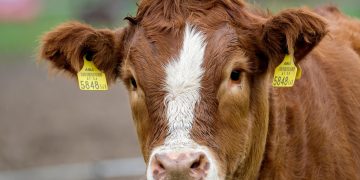
Livestock farmers in Germany, Italy, Sweden and the UK are trying a new method to produce milk and meat: feeding their cows mainly or only grass.

Cattle diets usually include a variety of grains, which make the animals grow faster and – by extension – their meat and milk cheaper. But the practice has hefty environmental and social costs.

Grass over grains

The grains are often imported from far-away countries like Brazil, meaning long transport routes and higher maritime emissions.

Many of these crops are also cultivated on land created by cutting down parts of tropical forests, contributing to climate change by releasing carbon dioxide stored in trees and causing biodiversity loss.

In addition, by serving as animal feed, such grains cut into much-needed supplies of food for people worldwide. A further concern for many people in Europe is that the grains, when they’re maize, are frequently genetically modified.

A research project funded by the EU is drawing inspiration from some beef producers in the UK who have switched to 100% grass-fed cows.

The farmers have also created a special meat and dairy label to inform consumers of the production method and its health benefits, which include lower fat and higher vitamin levels.

‘A 100% pasture-fed method is challenging,’ said Laurence Smith, a former farmer who is now a food-systems researcher at the University of Reading in the UK and at the Swedish University of Agricultural Sciences. ‘But it’s potentially quite a sustainable system.’

“Some farmers are really pushing the boundaries in terms of making innovations.

Laurence Smith, PATHWAYS

Smith coordinates the EU project, which is called PATHWAYS and promotes more sustainable agricultural practices including pasture-based farming. It runs for five years until the end of August 2026.

Like the UK producers, participating German, Italian and Swedish livestock farmers are feeding some of their cows grass-based diets, albeit with some concentrates.

The practice has other environmental benefits: grazing animals return nutrients to the soil through faeces and urine and such pastures can absorb CO2 from the atmosphere by having trees – a form of agroforestry known as silvopasture.

But a central question is whether feeding cows mainly or only grass offers farmers themselves advantages, without which any broad take-up of the method is unlikely.

In principle, the practice could help farmers sell their products at a premium price, which would result in more earnings per kilogramme of meat. The key is for consumers to be willing to pay higher prices in return for the health and environmental benefits and even for the local economic gains.

PATHWAYS marks an important test of whether such an approach can be as good for producers as it is for public health and the environment. With three years still to go in the project, the verdict is out as the researchers continue to collect information.

Passions and emissions

In total, 31 partners from 12 countries are helping 15 groups of livestock farms reduce their environmental footprint.

The partners include dairy company Arla Foods in Denmark, Danone Nutricia Research in France, Ghent University in Belgium and the Switzerland-based Research Institute for Organic Farming.

‘This project connects my two passions – working with farmers and sustainability,’ said Smith.

The notion of sustainability in livestock farming also covers emissions of methane, the No. 2 greenhouse gas after CO2. Around three-quarters of EU agricultural emissions come from livestock.

PATHWAYS is also working with Swedish dairy farmers who are measuring their operations’ carbon footprint and seeking to reduce it. The aim is to cut the emissions caused by livestock products over their whole life cycle.

Two more sustainability challenges for livestock farmers are animal welfare and waste.

Dutch pig producers in the project are tackling both by experimenting with animal flooring, which usually has openings so manure can pass through. The farmers are using closed floors with a thick layer of hay.

This allows the pigs to root – a natural behaviour whereby they use their snout to nudge into things – and improves the animals’ well-being.

The practice also makes the pigs’ manure solid rather than slurry. The mix of hay and manure is then used by surrounding farms to help their crops grow.

‘Some farmers are really pushing the boundaries in terms of making innovations,’ Smith said.

Goats and poultry

Another EU-funded group of researchers is also working to help livestock farmers improve their practices. The Code Re-farm project focuses on dairy goats and poultry and has close links to PATHWAYS.

“We are working with farmers in practical ways to test new tools that can help them add more value to their businesses.

Maria Anastasi, Code Re-farm

‘We affectionately call each other sister projects,’ said Maria Anastasi, a health expert who works for the Cyprus Research and Innovation Center in the Cypriot capital Nicosia and is part of the Code Re-farm coordination team.

In the case of Code Re-farm, ensuring food quality and safety is as much a goal as cutting emissions.

Code Re-farm runs for three and half years through October 2024. It’s part of wider EU research on how different livestock systems can ensure high-grade goat cheese, chicken meat and egg products in a sustainable manner.

With a team of animal-production specialists, veterinarians, technology experts, academics and business professionals, Anastasi is helping push goat and poultry farmers to the technological forefront.

Cheese-making at the Code Re-farm pilot site in Skopelos, Greece. © CyRIC, 2023

Enhanced safety

In total, nine tools are being developed to help farmers better monitor the health and welfare of their animals as well as improve product quality.

They include a portable device that can determine the safety of eggs for food consumption, an instrument to detect mastitis – a mammary inflammation – in goats early on and a technology to measure methane emissions.

Another example is a system for automatically checking the health and behaviour of animals so that farmers can take immediate action if needed.

These advances will be applied over the next year and a half on poultry farms in the Netherlands and goat farms in Greece, Italy and Switzerland.

‘We are working with farmers in practical ways to test new tools that can help them add more value to their businesses,’ Anastasi said.

The project will then collect the results in a data platform meant to help European livestock farmers as a whole adapt their practices.

Consumer connection

Another goal is to help consumers make better-informed choices when buying food.

The researchers are testing a mobile application for scanning a label on a meat or dairy item and showing where it was produced, how the animals were raised and even what recipes would suit the food.

‘People seem to be more aware of what they consume nowadays and are looking for more information about where their food comes from, but this is usually not easy to find,’ Anastasi said.

Back on the other side of Europe, Smith of PATHWAYS said the prospect of a sustainable future for farming in Europe could even tempt him to return to his old job.

‘Maybe I’ll go back to farming one day and try to combine it with research,’ he said.

Research in this article was funded by the EU. If you liked this article, please consider sharing it on social media.

O artigo foi publicado originalmente em Horizon, the EU Research and Innovation Magazine.

Imprimir Artigo
Publicação Anterior

Governo dos Açores vai candidatar queijo São Jorge DOP a património da UNESCO

Próxima Publicação

Queijo São Jorge DOP: Governo dos Açores apoia candidatura a património da UNESCO

Artigos Relacionados

assembleia da republica logo
Últimas

Audição às Organizações de Agricultores na AR

03/02/2026
Últimas

Setor Florestal Unido Face aos Danos Depressão Kristin

03/02/2026
Álvaro Mendonça cedida
Nacional

CAP diz que AR está a pôr sobrevivência do setor em risco com decisão sobre aguardente

03/02/2026
Próxima Publicação

Queijo São Jorge DOP: Governo dos Açores apoia candidatura a património da UNESCO

Opinião

Últimas

Notas sobre a Sustentabilidade Operacional do PEPAC

por Marisol Cardoso
01/02/2026

Ler mais
luis caixinhas
Últimas

Marca tridimensional ou desenho ou modelo: como proteger a forma dos produtos agroalimentares

por Luís Caixinhas
25/01/2026

Ler mais

Subscrever as nossas newsletteres

Subscrever as nossas Newsletters Agroportal

Verifique na sua caixa de correio ou na pasta de spam para confirmar a sua subscrição.

Comunicados

assembleia da republica logo

Audição às Organizações de Agricultores na AR

03/02/2026

Setor Florestal Unido Face aos Danos Depressão Kristin

03/02/2026

Temas em destaque

Anpromis Candidaturas PU Eleições Mercosul PAC pós 2027 Simplificação PAC Temporais Água que Une
Advertisement

Eventos

Fevereiro 2026
STQQSSD
       1
2 3 4 5 6 7 8
9 10 11 12 13 14 15
16 17 18 19 20 21 22
23 24 25 26 27 28  
« Jan   Mar »

Sobre Nós

O Agroportal.pt é uma plataforma de informação digital que reúne a informação relevante sobre agricultura. Tem um foco na Política Agrícola Comum e a sua aplicação em Portugal.

Menu

  • Quem somos
  • Relatórios anuais
  • Envie-nos informação
  • Publicidade
  • Newsletters
  • Estatuto Editorial
  • Ficha técnica
  • Proteção de Dados Pessoais
  • Disclaimer
Facebook twitter Circle Instagram Rss Feed

© Agroportal. All Rights reserved.

  • Login
  • Registar
Sem Resultado
Ver Todos Os Resultados
  • Sugeridas
  • Notícias
    • Nacional
    • Internacional
    • Comunicados
  • Opinião
  • Eventos
  • Dossiers
    • Agricultura Biológica
    • Apoios
    • Artigos Técnicos
    • Biossoluções
    • Cadeia Alimentar
    • Fertilizantes
    • Financiamento
    • Fitofarmacêuticos
    • Florestas
    • Futuro da PAC
    • Inovação
    • Mercados e Cotações agrícolas
    • Newsletters e Revistas
    • Recomendações Agroflorestais
    • Seguros agrícolas
  • Serviços
    • Diretório
    • Emprego
    • Máquinas Agrícolas
    • Meteorologia
    • Terrenos Agrícolas
    • Arquivo Agroportal

© Agroportal. All Rights reserved.

Bem-Vindo De Volta!

Sign In with Facebook
Sign In with Google
OU

Faça login na sua conta abaixo

Esqueceu-se da senha? Registar

Criar Uma Nova Conta!

Sign Up with Facebook
Sign Up with Google
OU

Preencha os campos abaixo para se registar

* Ao se registar-se no nosso site, você concorda com os Termos e Condições e a Política de Privacidade .
Todos os campos são necessários. Entrar

Obter a sua senha

Indique por favor o seu nome de utilizador ou endereço de E-mail para repor a sua senha.

Entrar
Este site usa cookies. Ao continuar a utilizar este site, está a dar consentimento à utilização de cookies. Visite a nossa Política de Protecção de dados e Cookies.