














Following the mobilisation of 10,000 farmers from all 27 EU Member States on 18 December 2025, EU Agriculture Ministers met today in an extraordinary session with Commissioners Hansen, Šefčovič, and Várhelyi, alongside Council Presidency Minister Panayiotou. The meeting aimed to address the urgent challenges, raised by the farming community, which have pushed the sector to a tipping point.
Copa and Cogeca acknowledge the reactivity of President von Der Leyen and the immediate and concrete efforts made by Commissioners Hansen, Šefčovič, Várhelyi and Ministers to listen and respond to the sector’s concerns.
However, the proposals presented fall short of addressing the depth and urgency of the challenges faced on the ground. Farmers and agri-cooperatives expected clear signals of change commensurate with the seriousness of the crisis. Instead, the proposals risk leaving the core structural problems unresolved, threatening the immediate and long-term competitiveness, stability and future of EU agriculture, as well as Europe’s food security.
On Common Agricultural Policy (CAP) post-2027 the measures discussed today fail to deliver the commonality and structural integrity needed for a strong policy. Instead, they reinforce and promote discrepancies between Member States, undermining the Single Market and distorting competition. We are being presented with a second round of financial flexibility improvements for Member States that do not alter the core concerns of EU farmers and agri-cooperatives. The CAP remains dissolved into the Single Fund threatening farmers’ income and the core Treaty objectives of the policy.
On fair trade and reciprocity, while we are ready to contribute to the work on reciprocity and to the necessary enhancement of controls at borders, the proposed steps only partially curb the risks posed by trade agreements that threaten European production standards. Copa and Cogeca continue to call for the rejection of the Mercosur agreement, which remains a flawed deal that would damage the competitiveness of EU agriculture and threaten the very foundations of its production model. EU farmers cannot support agreements, as with Mercosur or Morocco, that show largely divergent production standards, that compromise fairness, competitiveness and the long-term resilience of European agriculture.
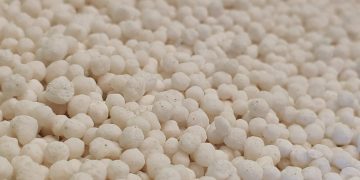
On fertilisers, increases already up to 20% in the purchasing, due to the entry into force of the Carbon Border Adjustment Mechanism (CBAM), place untenable pressure on the farming sector. As repeatedly stated by EU farmers and agri-cooperatives, the inclusion of fertilisers in the CBAM is unaffordable for EU agriculture, which remains structurally dependent on imports. Not postponing the CBAM for fertilisers, as also requested by many Agriculture Ministers, represents a significant blow to the sector. There is the commitment to act; this engagement needs to be translated into immediate actions to ensure both the availability and affordability of fertilisers. Additionally, while the abolition of MFN tariffs on certain fertiliser imports is a positive step, it remains largely insufficient, as it does not cover the main fertiliser products directly used by farmers.
On simplification and legal certainty, the opening to assess the cumulative impact of environmental legislation (Water Framework Directive, nature directives and Nitrates Directive), to consider proportionality and to consult the farmers on the ground, as well as the possibility to look into prevention and financial instruments for animal diseases is a positive signal. But the Omnibus simplification must translate into far broader, concrete and actionable results, aiming for better regulation and deblocking sustainable investments and permitting.
Copa and Cogeca reiterate: Europe’s farmers need clear, long-lasting, decisions, not half-measures. The future of European agriculture and the food security of 450 million citizens depend on a strong, competitive sector. The work of the Institutions needs to continue, and the role of the co-legislators is crucial in the next steps.
The EU farming community remains fully mobilised and will continue to engage with the EU institutions to deliver the results needed on the ground to enhance the competitiveness and resilience of a sector that is strategic for the EU.
Fonte: Copa Cogeca