











Sem Resultado
Ver Todos Os Resultados
Newsletters
Agroportal
  • Login
  • Registar
  • Sugeridas
  • Notícias
    • Notícias
    • Nacional
    • Internacional
    • Comunicados

    Citrinos do Algarve IGP querem conquistar consumidores europeus

    Moçambique vai criminalizar venda de sementes falsas a partir de 2027 – ministro

    Projeto Alqueva Sustentável disponibiliza app agrícola e barómetro para agroindústria e turismo

    La agricultura del futuro se prueba en Andalucía: luz ultravioleta para ayudar al olivo a defenderse

    figos

    Variedades de figueiras: Conhecer para valorizar

    assinatura em papel mão caneta

    Agência para o PTRR tem mandato até 31 de dezembro de 2034

    Nogueira-americana – Iniciativas para a divulgação de uma coleção em Oeiras

    Primeiros incêndios confirmam alertas da Resipinus após fim do Programa “Resineiros Vigilantes”

    Valorização de subprodutos pecuários na cultura do tomate para a indústria

  • Opinião
    Manuel Chaveiro Soares

    Melhoramento genético dos frangos de carne: importância para os consumidores e o ambiente

    A escolha certa!

    O azeite vale mais do que o preço que aparece na prateleira

    Acordo UE-Mercosul: uma oportunidade estratégica para proteger e valorizar as marcas dos produtos agrícolas portugueses

    Barragens Não Resolvem Desertificação; Resolvem Estatística

    Água, agricultura e adaptação climática no Algarve: estamos a escolher as soluções certas?

    Manuel Chaveiro Soares

    Importa criar condições para melhorar a competitivade agrícola

    António Covas

    O mundo agro rural, entre o bio produtivismo e o pós-produtivismo

    Valorizar o azeite português: um desígnio coletivo para o futuro

  • Eventos
  • Dossiers

    Dossiers I

    • Agricultura Biológica
    • Apoios
    • Artigos Técnicos
    • Biossoluções
    • Cadeia Alimentar
    • Fertilizantes
    • Financiamento
    • Fitofarmacêuticos

    Dossiers II

    • Florestas
    • Futuro da PAC
    • Inovação
    • Mercados
    • Newsletters e Revistas
    • Recomendações Agroflorestais
    • Seguros

    Últimas

    Moçambique vai criminalizar venda de sementes falsas a partir de 2027 – ministro

    24/06/2026

    Primeiros incêndios confirmam alertas da Resipinus após fim do Programa “Resineiros Vigilantes”

    24/06/2026

    “Portugal tem muito a ganhar com as Novas Técnicas Genómicas”

    24/06/2026

    Altri reconhecida pela Time como uma das empresas mais sustentáveis do mundo

    24/06/2026

    Zonas da Rede Natura 2000 ardem menos do que o restante território, conclui análise da WWF Portugal

    24/06/2026

    Boletim Mensal da Agricultura e Pescas – Junho de 2026

    23/06/2026
  • Serviços
    • Diretório
    • Emprego
    • Máquinas Agrícolas
    • Meteorologia
    • Terrenos Agrícolas
    • Arquivo Agroportal
Agroportal
  • Sugeridas
  • Notícias
    • Notícias
    • Nacional
    • Internacional
    • Comunicados

    Citrinos do Algarve IGP querem conquistar consumidores europeus

    Moçambique vai criminalizar venda de sementes falsas a partir de 2027 – ministro

    Projeto Alqueva Sustentável disponibiliza app agrícola e barómetro para agroindústria e turismo

    La agricultura del futuro se prueba en Andalucía: luz ultravioleta para ayudar al olivo a defenderse

    figos

    Variedades de figueiras: Conhecer para valorizar

    assinatura em papel mão caneta

    Agência para o PTRR tem mandato até 31 de dezembro de 2034

    Nogueira-americana – Iniciativas para a divulgação de uma coleção em Oeiras

    Primeiros incêndios confirmam alertas da Resipinus após fim do Programa “Resineiros Vigilantes”

    Valorização de subprodutos pecuários na cultura do tomate para a indústria

  • Opinião
    Manuel Chaveiro Soares

    Melhoramento genético dos frangos de carne: importância para os consumidores e o ambiente

    A escolha certa!

    O azeite vale mais do que o preço que aparece na prateleira

    Acordo UE-Mercosul: uma oportunidade estratégica para proteger e valorizar as marcas dos produtos agrícolas portugueses

    Barragens Não Resolvem Desertificação; Resolvem Estatística

    Água, agricultura e adaptação climática no Algarve: estamos a escolher as soluções certas?

    Manuel Chaveiro Soares

    Importa criar condições para melhorar a competitivade agrícola

    António Covas

    O mundo agro rural, entre o bio produtivismo e o pós-produtivismo

    Valorizar o azeite português: um desígnio coletivo para o futuro

  • Eventos
  • Dossiers

    Dossiers I

    • Agricultura Biológica
    • Apoios
    • Artigos Técnicos
    • Biossoluções
    • Cadeia Alimentar
    • Fertilizantes
    • Financiamento
    • Fitofarmacêuticos

    Dossiers II

    • Florestas
    • Futuro da PAC
    • Inovação
    • Mercados
    • Newsletters e Revistas
    • Recomendações Agroflorestais
    • Seguros

    Últimas

    Moçambique vai criminalizar venda de sementes falsas a partir de 2027 – ministro

    24/06/2026

    Primeiros incêndios confirmam alertas da Resipinus após fim do Programa “Resineiros Vigilantes”

    24/06/2026

    “Portugal tem muito a ganhar com as Novas Técnicas Genómicas”

    24/06/2026

    Altri reconhecida pela Time como uma das empresas mais sustentáveis do mundo

    24/06/2026

    Zonas da Rede Natura 2000 ardem menos do que o restante território, conclui análise da WWF Portugal

    24/06/2026

    Boletim Mensal da Agricultura e Pescas – Junho de 2026

    23/06/2026
  • Serviços
    • Diretório
    • Emprego
    • Máquinas Agrícolas
    • Meteorologia
    • Terrenos Agrícolas
    • Arquivo Agroportal
Sem Resultado
Ver Todos Os Resultados
Agroportal

Public action and ‘fundamental social change’ needed to reverse biodiversity decline

por Horizon - EU
04-09-2019 | 22:00
em Internacional
Tempo De Leitura: 7 mins
A A
Partilhe no FacebookPartilhe no TwitterEnviar para o WhatsappEnviar para o TelegramEnviar para o LinkedIn

A million species are under threat of extinction, according to a global landmark report from the Intergovernmental Science-Policy Platform on Biodiversity and Ecosystem Services (IPBES) – and the crisis is expected to worsen unless drastic action is taken.

‘I don’t think people actually realise the implications of this in their daily lives,’ said Dr Hilde Eggermont, coordinator of the Belgian Biodiversity Platform at the Royal Belgian Institute for Natural Science and vice-chair of pan-European research network BiodivERsA. ‘Changes will be so impactful that there would be issues in Europe around food security.’

One stark example is pollinators. The numbers of bees, butterflies and beetles are declining, but these types of insects are essential for pollinating the crops that feed us. Of the 100 plants that provide 90% of the world’s food supply, 71 are pollinated by bees.

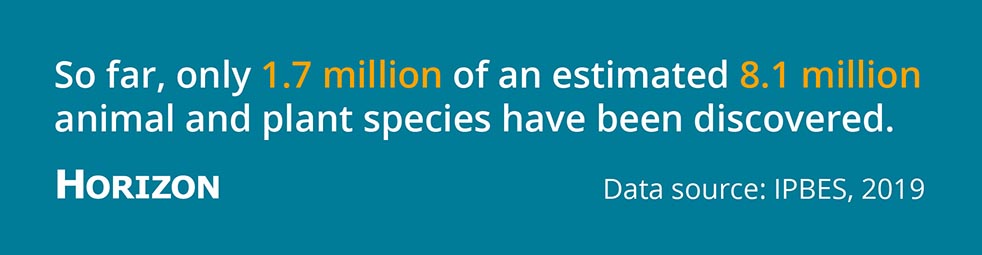
To help stop the loss of biodiversity, researchers need as much environmental data as possible so they can determine baselines and suggest specific actions to drive the political and social change needed to improve the situation. And there are currently still knowledge gaps that need to be filled. For instance, IBPES estimates that scientists have recorded around 1.7 million species of animals, plants and fungi on the planet – out of the 8.1 million of likely species on our planet.

‘We can involve citizens more strongly in monitoring and improving research data – this can allow us to collect data at a scale we need,’ said Dr Eggermont.

This could take the shape of people taking courses to learn how to survey different species on their hikes and holidays or sending photos of flower growth to researchers. Other initiatives could include conducting simple soil experiments designed by environmental scientists or uploading wildlife photos with geolocations onto research apps.

This type of data gives researchers a deeper understanding of species’ population levels and helps explain negative or positive drivers of wildlife health. Crucially, it gives more ammunition for stronger insights that can add greater pressure on governments to act on the biodiversity crisis.

Dr Eggermont says governments and other organisations involved in natural resource management, environmental protection and policy making must increase investments in citizens being able to contribute to science. This should go beyond investing specific projects and towards developing policies and technologies designed to facilitate the field of citizen science.

She also says that research coordinators should join forces with all relevant actors in the field – like the scientific community, public authorities, businesses, civil organisations, and NGOs – through a ‘biodiversity partnership’ to better tackle the crisis.

‘We need to address it (the biodiversity crisis) at a much large scale than just a local or national level,’ Dr Eggermont said, adding that such a biodiversity partnership could help citizens, policymakers and businesses take adequate action at European, national, regional and local level.

‘If we appear as a strong network of pan-European actors it can drive a change.’

World environment

Dr Eggermont says supporting this type of citizen science is also important to ‘reconnect people with nature’ and create a greater consumer demand in Europe for products that do not harm the world’s environment. 

‘The (consumption) behaviour of citizens in Europe is not only affecting biodiversity in Europe,’ she said.

Ingrid Visseren-Hamakers, professor of environmental governance and politics at Radboud University in the Netherlands, says that the biodiversity crisis is a global problem because ‘nature has no borders’ and neither does the impact of the products we consume.

European consumers, for instance, drive nature loss on other continents because of unsustainable imports, like meat and soy from deforested areas in the Amazon or palm oil from recently cleared forests in Malaysia.

A key challenge standing in the way of European consumers avoiding this is that they are often financially punished for purchasing more sustainable products. For instance, an organic carrot is rarely cheaper than an unsustainable one – when, for the sake of the environment, it should be the other way around.

Prof. Visseren-Hamakers was part of the IPBES report that revealed the extent of the biodiversity crisis and was specifically responsible for a chapter outlining the options for decision makers to transform our society to stop the decline in nature. She says policies have failed to halt the biodiversity crisis because they focused too much on trying to protect nature directly, such as by creating conservation areas, and didn’t look enough at changing how our society’s demand for unsustainable products drives the decline of biodiversity.

To turn the tide, sustainability needs to become the norm in our societies and not the exception, she says. That means getting rid of unfair competition and making sustainable products cheaper compared to unsustainable ones.

‘For the individual consumer, your life is being made difficult if you are trying to do the right thing,’ said Prof. Visseren-Hamakers, adding that a solution is to tax the more environmentally intensive products to reflect their cost to nature. This could take the form of a price increase on unsustainable animal products, like deforestation-fuelling beef, and incentivising more sustainable plant-based diets.

‘What we have been doing wrong (in conservation policy) is that we were not able to address the indirect drivers of biodiversity loss,’ she said. ‘Now we need to try and change consumer behaviour and stimulate values that support sustainability amongst all actors (in society).’

There are also hundreds of billions of dollars spent annually by governments to subsidise unsustainable practices harming nature, according to Prof. Visseren-Hamakers, who says current EU payments such as the Common Agricultural Policy and Common Fisheries Policy are supporting unsustainable practices in agriculture as well as the energy and fisheries sectors.

‘If we transfer those (unsustainable subsidies to sustainable production) we are going to make a difference,’ she said.

For the individual consumer, your life is being made difficult if you are trying to do the right thing.

Prof. Ingrid Visseren-Hamakers, Radboud University, the Netherlands

Transformative change

Taxes and changing subsidies would be just one step in supporting a society to fight the biodiversity crisis, but it wouldn’t solve the entire problem. To shift society’s appetite for environmentally intensive production and consumption, from governments to businesses and consumers, we need more research into the field of transformational change.

‘Fundamental social change, long-term change, institutional change, changing regimes… we don’t know how to do these yet and that is a huge question that needs answering,’ said Prof. Visseren-Hamakers. ‘And once we know how to do it, how do we accelerate it?’

New European Commission president Ursula Von der Leyen has promised to deliver a European Green Deal to help the transition to a more sustainable society and it will also include an updated strategy to halt biodiversity loss. Dr Eggermont says that if there is any hope of this deal making the needed impact then it needs to push a transformational change across all societal players.

‘We need more than buzzwords,’ Dr Eggermont said. ‘We need very substantial changes and commitments across different sectors and across policies.’

On 26 September, Prof. Visseren-Hamakers will be participating in a session called Beyond 2020: reversing biodiversity decline at the EU’s Research & Innovation days to help shape the scope of EU research and policy on biodiversity from 2021-2027 .

European Research & Innovation Days

The European Research & Innovation Days, which will take place in Brussels, Belgium, from 24 to 26 September, are designed to bring together policymakers, academics, industry, civil society and entrepreneurs to discuss how research and innovation can help tackle the major issues facing the EU over the next decade.

The idea is to seek a wide range of opinions from experts and interested parties about how to allocate the €100 billion planned for the EU’s next research funding programme, Horizon Europe. In addition to conference sessions, policymakers from the EU and national administrations will be available throughout the event in a space called Horizon Village to gather further input from participants.

The event, which is set to be an annual affair, consists of a policy conference to shape the Horizon Europe work programme, an innovation hub for innovators and investors to network, and a public exhibition called Science is Wonderful!.

Imprimir Artigo
Publicação Anterior

Quase 2200 operacionais combateram 94 fogos em dia de alerta máximo

Próxima Publicação

Trovoadas no sul.

Artigos Relacionados

Internacional

Banco Mundial prevê mobilizar 1,2 mil ME para agroindústria e logística em Angola

24/06/2026
Internacional

Moçambique vai criminalizar venda de sementes falsas a partir de 2027 – ministro

24/06/2026
Internacional

Gronelândia. Cientistas preocupados com aumento da frequência de incêndios

24/06/2026
Próxima Publicação

Trovoadas no sul.

Discussão sobre este post

Opinião

Manuel Chaveiro Soares
Últimas

Melhoramento genético dos frangos de carne: importância para os consumidores e o ambiente

por Manuel Chaveiro Soares
21/06/2026

Ler maisDetails
Últimas

A escolha certa!

por José Palha
17/06/2026

Ler maisDetails

Subscrever as nossas newsletteres

Subscrever as nossas Newsletters Agroportal

Verifique na sua caixa de correio ou na pasta de spam para confirmar a sua subscrição.

Comunicados

Citrinos do Algarve IGP querem conquistar consumidores europeus

24/06/2026

Primeiros incêndios confirmam alertas da Resipinus após fim do Programa “Resineiros Vigilantes”

24/06/2026
Advertisement

Temas em destaque

Candidaturas PU Guerra Médio Oriente Mercosul ovibeja PAC pós 2027 Simplificação PAC Temporais vinho Água que Une

Eventos

Junho 2026
STQQSSD
1 2 3 4 5 6 7
8 9 10 11 12 13 14
15 16 17 18 19 20 21
22 23 24 25 26 27 28
29 30      
« Mai   Jul »

Sobre Nós

O Agroportal.pt é uma plataforma de informação digital que reúne a informação relevante sobre agricultura. Tem um foco na Política Agrícola Comum e a sua aplicação em Portugal.

Menu

  • Quem somos
  • Relatórios anuais
  • Envie-nos informação
  • Publicidade
  • Newsletters
  • Estatuto Editorial
  • Ficha técnica
  • Proteção de Dados Pessoais
  • Disclaimer
Facebook twitter Circle Instagram Rss Feed

© Agroportal. All Rights reserved.

Bem-Vindo De Volta!

Sign In with Facebook
Sign In with Google
OR

Faça login na sua conta abaixo

Esqueceu-se da senha? Registar

Criar Uma Nova Conta!

Sign Up with Facebook
Sign Up with Google
OR

Preencha os campos abaixo para se registar

* Ao se registar-se no nosso site, você concorda com os Termos e Condições e a Política de Privacidade .
Todos os campos são necessários. Entrar

Obter a sua senha

Indique por favor o seu nome de utilizador ou endereço de E-mail para repor a sua senha.

Entrar
  • Login
  • Registar
Sem Resultado
Ver Todos Os Resultados
  • Sugeridas
  • Notícias
    • Nacional
    • Internacional
    • Comunicados
  • Opinião
  • Eventos
  • Dossiers
    • Agricultura Biológica
    • Apoios
    • Artigos Técnicos
    • Biossoluções
    • Cadeia Alimentar
    • Fertilizantes
    • Financiamento
    • Fitofarmacêuticos
    • Florestas
    • Futuro da PAC
    • Inovação
    • Mercados e Cotações agrícolas
    • Newsletters e Revistas
    • Recomendações Agroflorestais
    • Seguros agrícolas
  • Serviços
    • Diretório
    • Emprego
    • Máquinas Agrícolas
    • Meteorologia
    • Terrenos Agrícolas
    • Arquivo Agroportal

© Agroportal. All Rights reserved.

Este site usa cookies. Ao continuar a utilizar este site, está a dar consentimento à utilização de cookies. Visite a nossa Política de Protecção de dados e Cookies.