















Sem Resultado
Ver Todos Os Resultados
Newsletters
Agroportal
  • Login
  • Registar
  • Sugeridas
  • Notícias
    • Notícias
    • Nacional
    • Internacional
    • Comunicados

    As queixas dos agricultores e o alívio nos bolsos. O acordo UE-Mercosul em debate

    Créditos: Jorge Oliveira

    Se a lei impede que se aprovem projectos, muda-se a lei, diz ministro da Agricultura ao ICNF

    Novo presidente da CVR Dão quer “informatizar fortemente” processo de certificação

    IPMA: Chuva, neve, vento e agitação marítima – Depressão INGRID – Continente – Comunicado n.º 4

    Baladi: Às Comunidades Locais e Baldios de Portugal

    DGAV

    Atualização da base de dados SNIRA – Sistema Nacional de Informação e Registo Animal

    Más de doce mesas redondas y presentaciones en las ferias Agrovid y SIEB

    Câmara de Santo Tirso surpreendida com anúncio de ministro sobre escola agrícola

    Comercialização de banana da Madeira diminuiu 14,4% em 2025 – Estatística

  • Opinião
    Francisco Avillez

    A Reforma da PAC pós-2027: breves reflexões sobre o orçamento proposto pela CE

    Filipe Corrêa Figueira

    Estão a encurralar os Agricultores… e não vai acabar bem!

    Sinais dos tempos. Notas sobre a PAC e o Acordo UE-Mercosul

    Douro: não há excesso de produção, há excesso de oferta

    António Covas

    A inteligência coletiva territorial da 2ª ruralidade – As áreas de baixa densidade (ABD)

    Jaime Piçarra

    O que marcou 2025 e o que esperar para 2026

    Ines Marques Lopes

    Agribusiness: entre a profissionalização, o investimento e a sustentabilidade

    Biodiversidade da videira

    A doença do Fogo Bacteriano na pereira Rocha já destruiu 31% da produção nacional

  • Eventos
  • Dossiers

    Dossiers I

    • Agricultura Biológica
    • Apoios
    • Artigos Técnicos
    • Biossoluções
    • Cadeia Alimentar
    • Fertilizantes
    • Financiamento
    • Fitofarmacêuticos

    Dossiers II

    • Florestas
    • Futuro da PAC
    • Inovação
    • Mercados
    • Newsletters e Revistas
    • Recomendações Agroflorestais
    • Seguros

    Últimas

    Baladi: Às Comunidades Locais e Baldios de Portugal

    23/01/2026

    Relatório semanal de acompanhamento dos mercados do setor da agricultura – 12 a 18 de janeiro de 2025

    23/01/2026

    Cotações – Suínos – 12 a 18 de janeiro de 2025

    23/01/2026

    Cotações – Cereais – 12 a 18 de janeiro de 2025

    23/01/2026

    OGM | Engenharia genética torna a mandioca mais produtiva e resistente à seca sem mais fertilizantes

    23/01/2026

    A que se devem as propriedades medicinais das plantas?

    23/01/2026
  • Serviços
    • Diretório
    • Emprego
    • Máquinas Agrícolas
    • Meteorologia
    • Terrenos Agrícolas
    • Arquivo Agroportal
Agroportal
  • Sugeridas
  • Notícias
    • Notícias
    • Nacional
    • Internacional
    • Comunicados

    As queixas dos agricultores e o alívio nos bolsos. O acordo UE-Mercosul em debate

    Créditos: Jorge Oliveira

    Se a lei impede que se aprovem projectos, muda-se a lei, diz ministro da Agricultura ao ICNF

    Novo presidente da CVR Dão quer “informatizar fortemente” processo de certificação

    IPMA: Chuva, neve, vento e agitação marítima – Depressão INGRID – Continente – Comunicado n.º 4

    Baladi: Às Comunidades Locais e Baldios de Portugal

    DGAV

    Atualização da base de dados SNIRA – Sistema Nacional de Informação e Registo Animal

    Más de doce mesas redondas y presentaciones en las ferias Agrovid y SIEB

    Câmara de Santo Tirso surpreendida com anúncio de ministro sobre escola agrícola

    Comercialização de banana da Madeira diminuiu 14,4% em 2025 – Estatística

  • Opinião
    Francisco Avillez

    A Reforma da PAC pós-2027: breves reflexões sobre o orçamento proposto pela CE

    Filipe Corrêa Figueira

    Estão a encurralar os Agricultores… e não vai acabar bem!

    Sinais dos tempos. Notas sobre a PAC e o Acordo UE-Mercosul

    Douro: não há excesso de produção, há excesso de oferta

    António Covas

    A inteligência coletiva territorial da 2ª ruralidade – As áreas de baixa densidade (ABD)

    Jaime Piçarra

    O que marcou 2025 e o que esperar para 2026

    Ines Marques Lopes

    Agribusiness: entre a profissionalização, o investimento e a sustentabilidade

    Biodiversidade da videira

    A doença do Fogo Bacteriano na pereira Rocha já destruiu 31% da produção nacional

  • Eventos
  • Dossiers

    Dossiers I

    • Agricultura Biológica
    • Apoios
    • Artigos Técnicos
    • Biossoluções
    • Cadeia Alimentar
    • Fertilizantes
    • Financiamento
    • Fitofarmacêuticos

    Dossiers II

    • Florestas
    • Futuro da PAC
    • Inovação
    • Mercados
    • Newsletters e Revistas
    • Recomendações Agroflorestais
    • Seguros

    Últimas

    Baladi: Às Comunidades Locais e Baldios de Portugal

    23/01/2026

    Relatório semanal de acompanhamento dos mercados do setor da agricultura – 12 a 18 de janeiro de 2025

    23/01/2026

    Cotações – Suínos – 12 a 18 de janeiro de 2025

    23/01/2026

    Cotações – Cereais – 12 a 18 de janeiro de 2025

    23/01/2026

    OGM | Engenharia genética torna a mandioca mais produtiva e resistente à seca sem mais fertilizantes

    23/01/2026

    A que se devem as propriedades medicinais das plantas?

    23/01/2026
  • Serviços
    • Diretório
    • Emprego
    • Máquinas Agrícolas
    • Meteorologia
    • Terrenos Agrícolas
    • Arquivo Agroportal
Sem Resultado
Ver Todos Os Resultados
Agroportal
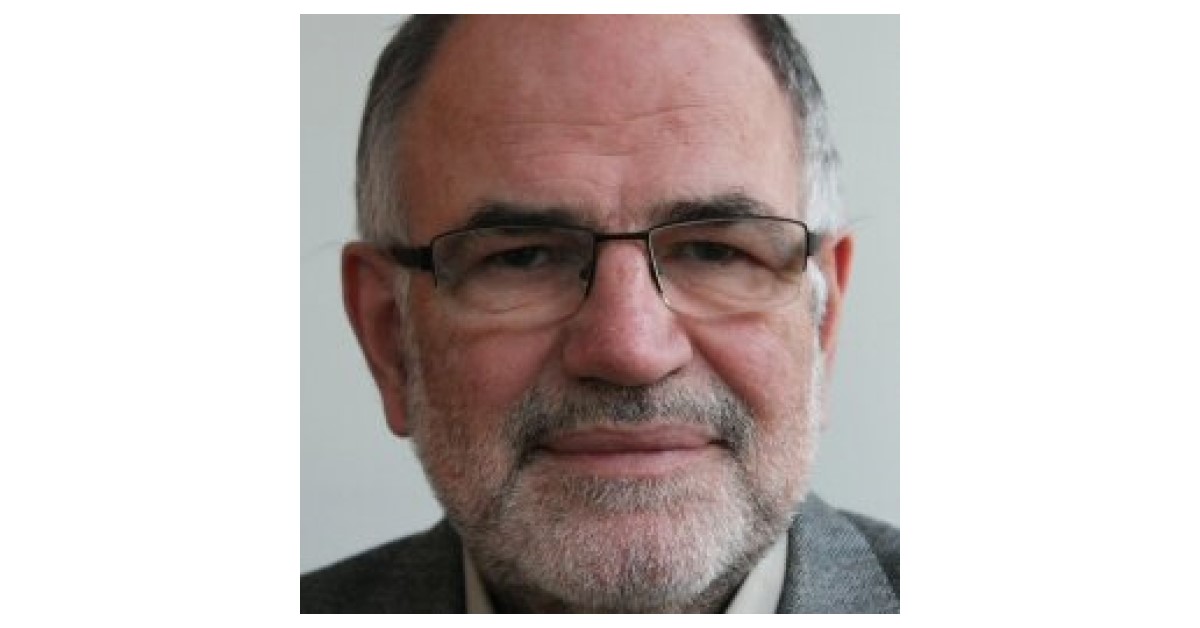
Alan Matthews

Dealing with stranded assets in the green transition

por CAP Reform
22-01-2026 | 22:27
em Últimas, Blogs
Tempo De Leitura: 6 mins
A A
Partilhe no FacebookPartilhe no TwitterEnviar para o WhatsappEnviar para o TelegramEnviar para o LinkedIn

The latest edition of the journal Nature Food includes an article by Anniek Kortleve and co-authors on the role that stranded assets in European agriculture might play during food systems transformation. The context they consider is a shift towards plant-based diets which it is assumed will lead to a corresponding reduction in the demand for livestock products (animal sourced foods, ASF). The paper estimates the value of the capital assets that would become redundant under diet shifts of different magnitudes. It highlights the role that depreciation of assets can play to limit the extent of stranded assets, while also arguing that targeted policy support will be needed to avoid prolonged lock-in and to accelerate more rapid food system transformation.

Stranded assets can result from a shift in demand, but also due to climate change. Think of investments in fruit trees or vineyards that are no longer productive in a particular area because of water scarcity or high temperatures. However, the focus of this paper is on the consequences of diet change.

The paper makes a valuable contribution to understanding the sources and extent of resistance among livestock producers to calls to reduce the consumption of ASFs, whether for climate, health or welfare reasons.  It is not just that this implies a loss of income for producers, as alternative land uses may not be feasible or equally profitable. But behind the loss of income are also the investments in productive capital and in social and cultural capital which may or may not have alternative uses. The merit of this paper is that it puts the spotlight on the potential scale of losses in productive capital for specific dietary transitions.

What the paper finds

The dietary transitions chosen are based on the EAT-Lancet scenarios which examine three scenarios with different levels of ASF substitution with plant-based foods. The paper models reductions of 9.5%, 60% and 100% in ASF consumption from current levels, representing moderate, low and zero ASF scenarios. Its methodology is based on an extended input-output model (the FABIO model) calibrated to the year 2020, and includes both the EU27 and the UK.

The paper acknowledges that farm production depends on different kinds of assets, including land, farm buildings, machinery and breeding stock (where the three latter groups make up fixed assets). Intangible assets such as knowledge, social capital and place-based expertise also play a significant role. An important scoping decision in the paper is that only assets in primary production are accounted (no doubt reflecting the reliance on the FADN database for asset values) including both assets used directly in animal production but also in the production of animal feed. The potential for stranded assets in upstream or downstream industries, such as dairy processors or slaughterhouses, as a result of these diet shifts is not considered.

The paper finds that 78% of the fixed assets in primary agriculture (excluding land) are linked to ASFs, with €158 billion allocated to livestock production and €100 billion to upstream animal feed production. This means approximately 40% of stranded assets from a plant-based shift would be in crop agriculture for feed, implying the need for distinguishing policies for both animal- and plant-agriculture. The paper also calculates the asset intensity of producing a kg of food in different sectors which it argues could be a useful tool when it comes to targeting transition support.

A 9.5% reduction in ASF consumption (moderate ASF scenario) would potentially strand €61 billion of fixed assets (or 20% of the total); a 60% reduction (low ASF scenario) €168 billion (49%) and a 100% reduction (zero ASF scenario) €255 billion (reported as 73%, but the actual figure seems closer to 78%). The reason why the value of stranded assets does not increase linearly with the size of the diet shocks is because the composition of the diet switches in the three EAT-Lancet scenarios is different.

The paper also assumes that land assets used for ASF production would become redundant. In fact, the scale of stranded land assets, estimated at €153 billion, €370 billion or €551 billion for the three scenarios, is considerably greater than for fixed assets alone. However, for reasons later discussed, I do not put much credence in these figures and they do not play a big role in the paper.

The paper notes that the increase in plant-based consumption in the diet scenarios would require additional fixed assets (a 3–24% rise in buildings and a 0.5–20% rise in machinery and equipment assets). The analysis cannot address whether these assets are newly developed or repurposed from ASF production systems although some of the machinery and buildings currently used for feed production could presumably be repurposed to produce plant-based foods for human consumption without much difficulty.

Fixed capital assets depreciate and lose value over time. An insight of the paper is that the longer the time period over which the transition takes place, the lower the value of stranded assets, on the important assumption of a complete investment stop. The paper illustrates this by examining the scale of stranded assets under the different diet scenarios for phase out periods of 10 and 30 years. Given the set-up of the paper, the transition period will be a function of the speed with which consumers switch from ASFs to plant-based diets.

To calculate the value of stranded assets, the paper applies a standard 9% annual depreciation rate to all fixed assets which is hardly realistic, but the value chosen does not undermine the message itself. The argument is more vulnerable to the criticism that, the longer the transition period, the less convincing will be the assumption that there is no further investment in the farm. That farmers in 30 years’ time would still be content to operate with the milking parlour they have today without making any changes does not seem to me to be very plausible.

Conclusions

The final section of the paper discusses the implications of the analysis for the management of the transition. Obviously, eliminating subsidies that might encourage farmers to invest in assets that could become potentially stranded should be a first priority. High stranded asset exposure, especially in bovine, pig meat and dairy systems, may delay EU dietary and climate action by increasing political resistance or financial vulnerability among producers. The paper argues for targeted policy support to farmers who want to adjust their farm businesses and possibly compensation for those who are unable to adjust. The Dutch government schemes which pay livestock farmers for voluntary definitive closure of their livestock farms to reduce nitrogen deposition on nature conservation sites are an example. These compensate farmers up to 100% (or even 120%) for the loss of production capacity and production rights.

There are some limitations to the estimates of the likely value of stranded assets due to the methodology used to derive them. The methodology assumes that changes in EU consumption translate directly into changes in EU production which ignores the role of international trade.  As the paper recognises, assets that are currently used in the production of ASFs can be repurposed but an input-output model is not able to capture the extent to which this may happen, possibly exaggerating the scale of the losses. This is especially a limitation in the estimate of the land asset losses where alternative uses will certainly be possible in most cases. On the other hand, the land assets included in the study only cover land owned by the holding belonging to the holder. As half of agricultural land in the EU is rented, this suggests there could be a downward bias in the land asset estimate.

No doubt the exact values can be further refined. This does not take away from the value of the paper in highlighting the role of potential stranded assets as a concern that needs to be factored into any discussion of a green transition.

This post was written by Alan Matthews.

O artigo foi publicado originalmente em CAP Reform.
Imprimir Artigo
Publicação Anterior

Cheias destroem 180 mil hectares de produção e 150 mil cabeças de gado em Moçambique

Próxima Publicação

Setor da batata português distinguido em gala internacional

Artigos Relacionados

Últimas

As queixas dos agricultores e o alívio nos bolsos. O acordo UE-Mercosul em debate

23/01/2026
Créditos: Jorge Oliveira
Nacional

Se a lei impede que se aprovem projectos, muda-se a lei, diz ministro da Agricultura ao ICNF

23/01/2026
Nacional

Novo presidente da CVR Dão quer “informatizar fortemente” processo de certificação

23/01/2026
Próxima Publicação

Setor da batata português distinguido em gala internacional

Opinião

Francisco Avillez
Últimas

A Reforma da PAC pós-2027: breves reflexões sobre o orçamento proposto pela CE

por Francisco Avillez
21/01/2026

Ler mais
Filipe Corrêa Figueira
Últimas

Estão a encurralar os Agricultores… e não vai acabar bem!

por Filipe Corrêa Figueira
18/01/2026

Ler mais

Subscrever as nossas newsletteres

Subscrever as nossas Newsletters Agroportal

Verifique na sua caixa de correio ou na pasta de spam para confirmar a sua subscrição.

Comunicados

IPMA: Chuva, neve, vento e agitação marítima – Depressão INGRID – Continente – Comunicado n.º 4

23/01/2026

Baladi: Às Comunidades Locais e Baldios de Portugal

23/01/2026
Advertisement

Temas em destaque

Anpromis Candidaturas PU Eleições Mercosul PAC pós 2027 Presi Simplificação PAC Água que Une

Eventos

Janeiro 2026
STQQSSD
    1 2 3 4
5 6 7 8 9 10 11
12 13 14 15 16 17 18
19 20 21 22 23 24 25
26 27 28 29 30 31  
« Dez   Fev »

Sobre Nós

O Agroportal.pt é uma plataforma de informação digital que reúne a informação relevante sobre agricultura. Tem um foco na Política Agrícola Comum e a sua aplicação em Portugal.

Menu

  • Quem somos
  • Relatórios anuais
  • Envie-nos informação
  • Publicidade
  • Newsletters
  • Estatuto Editorial
  • Ficha técnica
  • Proteção de Dados Pessoais
  • Disclaimer
Facebook twitter Circle Instagram Rss Feed

© Agroportal. All Rights reserved.

  • Login
  • Registar
Sem Resultado
Ver Todos Os Resultados
  • Sugeridas
  • Notícias
    • Nacional
    • Internacional
    • Comunicados
  • Opinião
  • Eventos
  • Dossiers
    • Agricultura Biológica
    • Apoios
    • Artigos Técnicos
    • Biossoluções
    • Cadeia Alimentar
    • Fertilizantes
    • Financiamento
    • Fitofarmacêuticos
    • Florestas
    • Futuro da PAC
    • Inovação
    • Mercados e Cotações agrícolas
    • Newsletters e Revistas
    • Recomendações Agroflorestais
    • Seguros agrícolas
  • Serviços
    • Diretório
    • Emprego
    • Máquinas Agrícolas
    • Meteorologia
    • Terrenos Agrícolas
    • Arquivo Agroportal

© Agroportal. All Rights reserved.

Bem-Vindo De Volta!

Sign In with Facebook
Sign In with Google
OU

Faça login na sua conta abaixo

Esqueceu-se da senha? Registar

Criar Uma Nova Conta!

Sign Up with Facebook
Sign Up with Google
OU

Preencha os campos abaixo para se registar

* Ao se registar-se no nosso site, você concorda com os Termos e Condições e a Política de Privacidade .
Todos os campos são necessários. Entrar

Obter a sua senha

Indique por favor o seu nome de utilizador ou endereço de E-mail para repor a sua senha.

Entrar
Este site usa cookies. Ao continuar a utilizar este site, está a dar consentimento à utilização de cookies. Visite a nossa Política de Protecção de dados e Cookies.