













Sem Resultado
Ver Todos Os Resultados
Newsletters
Agroportal
  • Login
  • Registar
  • Sugeridas
  • Notícias
    • Notícias
    • Nacional
    • Internacional
    • Comunicados

    Estudo de doutorando da U.Porto reforça a necessidade de uma agricultura mais responsável

    Plano nacional para proteger insetos polinizadores conta dois milhões de euros até 2027

    EU’s green jobs up by 2.2 million over the last decade

    Fruit Attraction, distinguished at the 3rd ‘Somos Fanes del Bienestar Integral’ Awards

    Já disponível | Estudo “Evolução do Trabalho na Agricultura em Portugal”

    Cabaz alimentar atinge recorde de 257,95 euros – Deco PROteste

    EFSA guidance documents: new catalogue to improve access and use

    Irão: Setor agrícola asfixiado com escalada dos custos de produção

    árvore tronco

    ExpoFlorestal em Albergaria-a-Velha com área alargada e dezenas de inscrições

  • Opinião
    Sofia Almeida

    O lobo-ibérico é um teste à seriedade das políticas de conservação

    Jovem Empresário Rural Não Agrícola, Precisam-se!

    Resultados económicos do sector agrícola em 2025: apesar de menos favoráveis do que os dos últimos anos não põem em causa a evolução bastante positiva da última década

    A Grande Ilusão: Porque têm as nossas Confederações medo da rua?

    Pagar pelo “invisível” e o porquê da agricultura portuguesa não pode continuar a oferecer serviços ecológicos “de graça”?

    Quando a água é escassa, a agricultura é um “utilizador como os outros” … ou um setor estratégico que deve ter prioridade?

    Georgete Felix

    Risco climático, Agricultura e ESG

    A Política Agrícola (pouco!) Comum

    Agrovoltaico: quando a energia deixa de ser apenas custo e passa a ser também receita

  • Eventos
  • Dossiers

    Dossiers I

    • Agricultura Biológica
    • Apoios
    • Artigos Técnicos
    • Biossoluções
    • Cadeia Alimentar
    • Fertilizantes
    • Financiamento
    • Fitofarmacêuticos

    Dossiers II

    • Florestas
    • Futuro da PAC
    • Inovação
    • Mercados
    • Newsletters e Revistas
    • Recomendações Agroflorestais
    • Seguros

    Últimas

    Cotações – Aves e Ovos – 30 de março a 6 de abril de 2026

    08/04/2026

    Cotações – Suínos – 30 de março a 6 de abril de 2025

    08/04/2026

    Cabaz alimentar atinge recorde de 257,95 euros – Deco PROteste

    08/04/2026

    ExpoFlorestal em Albergaria-a-Velha com área alargada e dezenas de inscrições

    08/04/2026

    Governo vai mobilizar sete entidades para limpar as árvores derrubadas pelas tempestades

    08/04/2026

    INIAV Newsletter #4 | Abril 2026

    08/04/2026
  • Serviços
    • Diretório
    • Emprego
    • Máquinas Agrícolas
    • Meteorologia
    • Terrenos Agrícolas
    • Arquivo Agroportal
Agroportal
  • Sugeridas
  • Notícias
    • Notícias
    • Nacional
    • Internacional
    • Comunicados

    Estudo de doutorando da U.Porto reforça a necessidade de uma agricultura mais responsável

    Plano nacional para proteger insetos polinizadores conta dois milhões de euros até 2027

    EU’s green jobs up by 2.2 million over the last decade

    Fruit Attraction, distinguished at the 3rd ‘Somos Fanes del Bienestar Integral’ Awards

    Já disponível | Estudo “Evolução do Trabalho na Agricultura em Portugal”

    Cabaz alimentar atinge recorde de 257,95 euros – Deco PROteste

    EFSA guidance documents: new catalogue to improve access and use

    Irão: Setor agrícola asfixiado com escalada dos custos de produção

    árvore tronco

    ExpoFlorestal em Albergaria-a-Velha com área alargada e dezenas de inscrições

  • Opinião
    Sofia Almeida

    O lobo-ibérico é um teste à seriedade das políticas de conservação

    Jovem Empresário Rural Não Agrícola, Precisam-se!

    Resultados económicos do sector agrícola em 2025: apesar de menos favoráveis do que os dos últimos anos não põem em causa a evolução bastante positiva da última década

    A Grande Ilusão: Porque têm as nossas Confederações medo da rua?

    Pagar pelo “invisível” e o porquê da agricultura portuguesa não pode continuar a oferecer serviços ecológicos “de graça”?

    Quando a água é escassa, a agricultura é um “utilizador como os outros” … ou um setor estratégico que deve ter prioridade?

    Georgete Felix

    Risco climático, Agricultura e ESG

    A Política Agrícola (pouco!) Comum

    Agrovoltaico: quando a energia deixa de ser apenas custo e passa a ser também receita

  • Eventos
  • Dossiers

    Dossiers I

    • Agricultura Biológica
    • Apoios
    • Artigos Técnicos
    • Biossoluções
    • Cadeia Alimentar
    • Fertilizantes
    • Financiamento
    • Fitofarmacêuticos

    Dossiers II

    • Florestas
    • Futuro da PAC
    • Inovação
    • Mercados
    • Newsletters e Revistas
    • Recomendações Agroflorestais
    • Seguros

    Últimas

    Cotações – Aves e Ovos – 30 de março a 6 de abril de 2026

    08/04/2026

    Cotações – Suínos – 30 de março a 6 de abril de 2025

    08/04/2026

    Cabaz alimentar atinge recorde de 257,95 euros – Deco PROteste

    08/04/2026

    ExpoFlorestal em Albergaria-a-Velha com área alargada e dezenas de inscrições

    08/04/2026

    Governo vai mobilizar sete entidades para limpar as árvores derrubadas pelas tempestades

    08/04/2026

    INIAV Newsletter #4 | Abril 2026

    08/04/2026
  • Serviços
    • Diretório
    • Emprego
    • Máquinas Agrícolas
    • Meteorologia
    • Terrenos Agrícolas
    • Arquivo Agroportal
Sem Resultado
Ver Todos Os Resultados
Agroportal
africa

Climate change threatens livestock, the foundation of rural Africa

por Cornell Alliance for Science
12-05-2022 | 15:04
em Últimas, Internacional, Notícias inovação
Tempo De Leitura: 5 mins
A A
Partilhe no FacebookPartilhe no TwitterEnviar para o WhatsappEnviar para o TelegramEnviar para o LinkedIn

Livestock are an integral part of Africa’s social, cultural and economic existence. It’s nearly  impossible to envisage the continent devoid of its iconic humped cattle grazing in the savannahs, the languid treks of camel caravans in the deserts up north, the frenzied squealing of pigs at mealtime in a rural homestead or the guttural crow of a rooster at dawn.

Livestock are so important to Africa that the Food and Agriculture Organization of the United Nations (FAO) states that the future of African livestock will influence the development of the entire continent.

But in a chilling twist, researchers now warn that vast swathes of the continent could be stripped of these delightful creatures in the next few decades due to climate-induced heat stress — a horrifying reality that could hit home as early as in 2045. Cattle have been singled-out as a particularly vulnerable group.

“Livestock are absolutely essential to the lives and livelihoods of hundreds of millions of farmers and pastoralists across the continent,” David Aronson, a specialist in awareness and advocacy at the International Livestock Research Institute (ILRI) in Nairobi told the Alliance.

“The possibility that climate change may make it impossible to keep cattle across large swathes of the continent (without prohibitively expensive adaptation measures) is hugely disturbing.”

In the first of a pair of studies, the researchers concluded that by 2050 as many as 370 million cattle globally could suffer from one or more days of extreme heat, as could some six billion chickens. The second study, which examined the potential economic costs of heat stress in the future, found that by the end of this century, livestock farmers may face financial losses between $15 and $40 billion annually. Most of that loss will affect poor, tropical countries of South America, Asia and Africa.

“Anyone familiar with the landscape in West Africa knows what a common and everyday presence cattle are,” Aronson said. “The prospect of their largely disappearing from the scene ought to ring alarm bells among policymakers worldwide.”

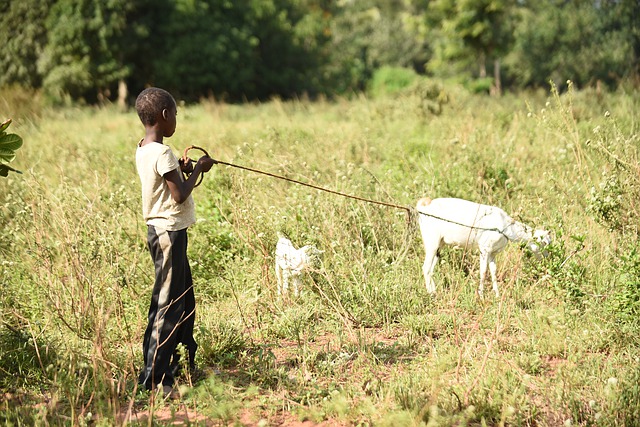
The researchers prescribe a raft of adaptive measures that could help mitigate looming food shortages, including crossbreeding cattle to enhance heat stress tolerance, encouraging farmers to switch from cattle to more heat-resilient species such as goats or camels, enriching cattle nutrition with feed additives, setting up low-cost shading, fanning and bathing devices where applicable and relocating the animals to more climatically suitable regions.

But many of the proposed measures are beset with challenges that render them unfeasible for the resource-poor countries staring at the problem. For Africa, this portends a monumental challenge of maintaining a sustainable supply of animal-source food for a growing population.

Heat stress is just one way that climate-variability threatens the continent’s livestock on a massive scale. Climate change is also impacting the production of feed and forage and the availability of grazing land and water, while worsening climate-sensitive diseases and disease vectors, notes ILRI.

Implications of the looming disruptions on livestock value-chains and livelihoods are dire for the continent.

Africa has an estimated 800 million livestock keepers. The livestock sector contributes between 30 to 50 percent of agricultural GDP and supports the food security and livelihoods of about one-third of Africa’s population, or about 350 million people.

“Livestock are critical to rural incomes, nutrition and food security, and resilience in smallholder mixed crop/livestock and pastoral systems in much of Africa,”  states a paper published by the African Development Bank. “In most African countries 60-80 percent of rural households keep livestock as mobile and liquid assets, income generators and for household food security and nutrition. As well, manure and animal traction make indirect and critical contributions to crop production.”

Livestock also serve important social and cultural roles, serving as an indicator of social status and wealth.

The paper added that consumption of animal-sourced food was projected to significantly increase by the middle of the century, necessitating intensified production to meet the growing demand. While the average African citizen consumed about 11 kilos of meat per year and 35 litres of milk in 2005-07, this would progressively increase in the next decades to about 26 kilos and 64 litres by 2050, respectively.

Disruptions of Africa’s livestock sector would have profound effects on the lives and livelihoods of small-scale farmers and livestock keepers, who are the backbone of the continent’s food production.

“Most food production comes largely from small, fragmented plots of land owned by smallholders, making their production a key player in the continent’s rural economy,” observes a paper that studied small-holder cattle production systems in eastern Democratic Republic of Congo.

At least 54 percent of Africa’s predominantly rural population is engaged in agriculture, observes the study, with farming being the principal livelihood activity and source of income of sub-Saharan African rural households.

As established by various studies in southern Africa, smallholder farmers are already experiencing the effects of climate change, as seen in decreased rainfall days in Tanzania and increased drought and heat in Zimbabwe. Many regions in southern Africa are affected by changes in rainfall amounts and distribution and increased heatwaves and droughts, leading to decreased rangeland productivity. Without adequate coping strategies, livestock farmers face a serious risk to production.

“It is likely that smallholder farmers that rely mainly on natural resources are particularly affected by climate extremes because of their limited technological knowledge and vulnerability to fodder shortages, resulting in feed gaps for the livestock during the year,” states a study exploring smallholder farmers’ perceptions on the seasonality of feed gaps and how it affects livestock in semi-arid and arid regions in Southern Africa.

Researchers agree that recurrent droughts in recent times have caused adversities for rural smallholder communities, resulting in losses that include livestock deaths.

Such impacts raise substantial ethical and justice-related considerations concerning the welfare of both the people who raise livestock and the animals themselves, note the authors of a study that explored the impacts of heat stress on global cattle production during the 21st century. They say that such considerations should be factored in policy decisions about how to address the challenges of climate change adaptation.

By Joseph Maina

O artigo foi publicado originalmente em Cornell Alliance for Science.
Imprimir Artigo
Publicação Anterior

Live: Sessão Pública – Dia Internacional da Sanidade Vegetal

Próxima Publicação

Prodouro exige publicação de pré-comunicado de vindima ao IVDP

Artigos Relacionados

Cotações PT

Cotações – Aves e Ovos – 30 de março a 6 de abril de 2026

08/04/2026
Cotações PT

Cotações – Suínos – 30 de março a 6 de abril de 2025

08/04/2026
Nacional

Estudo de doutorando da U.Porto reforça a necessidade de uma agricultura mais responsável

08/04/2026
Próxima Publicação

Prodouro exige publicação de pré-comunicado de vindima ao IVDP

Opinião

Sofia Almeida
Últimas

O lobo-ibérico é um teste à seriedade das políticas de conservação

por Sofia Almeida
05/04/2026

Ler mais
Últimas

Jovem Empresário Rural Não Agrícola, Precisam-se!

por José Martino
29/03/2026

Ler mais

Subscrever as nossas newsletteres

Subscrever as nossas Newsletters Agroportal

Verifique na sua caixa de correio ou na pasta de spam para confirmar a sua subscrição.

Comunicados

Já disponível | Estudo “Evolução do Trabalho na Agricultura em Portugal”

08/04/2026
cnjap

Alimentação Nacional sob Pressão

08/04/2026
Advertisement

Temas em destaque

Candidaturas PU Guerra Médio Oriente Mercosul PAC pós 2027 Simplificação PAC Temporais Água que Une

Eventos

Abril 2026
STQQSSD
   1 2 3 4 5
6 7 8 9 10 11 12
13 14 15 16 17 18 19
20 21 22 23 24 25 26
27 28 29 30    
« Mar   Mai »

Sobre Nós

O Agroportal.pt é uma plataforma de informação digital que reúne a informação relevante sobre agricultura. Tem um foco na Política Agrícola Comum e a sua aplicação em Portugal.

Menu

  • Quem somos
  • Relatórios anuais
  • Envie-nos informação
  • Publicidade
  • Newsletters
  • Estatuto Editorial
  • Ficha técnica
  • Proteção de Dados Pessoais
  • Disclaimer
Facebook twitter Circle Instagram Rss Feed

© Agroportal. All Rights reserved.

  • Login
  • Registar
Sem Resultado
Ver Todos Os Resultados
  • Sugeridas
  • Notícias
    • Nacional
    • Internacional
    • Comunicados
  • Opinião
  • Eventos
  • Dossiers
    • Agricultura Biológica
    • Apoios
    • Artigos Técnicos
    • Biossoluções
    • Cadeia Alimentar
    • Fertilizantes
    • Financiamento
    • Fitofarmacêuticos
    • Florestas
    • Futuro da PAC
    • Inovação
    • Mercados e Cotações agrícolas
    • Newsletters e Revistas
    • Recomendações Agroflorestais
    • Seguros agrícolas
  • Serviços
    • Diretório
    • Emprego
    • Máquinas Agrícolas
    • Meteorologia
    • Terrenos Agrícolas
    • Arquivo Agroportal

© Agroportal. All Rights reserved.

Bem-Vindo De Volta!

Sign In with Facebook
Sign In with Google
OU

Faça login na sua conta abaixo

Esqueceu-se da senha? Registar

Criar Uma Nova Conta!

Sign Up with Facebook
Sign Up with Google
OU

Preencha os campos abaixo para se registar

* Ao se registar-se no nosso site, você concorda com os Termos e Condições e a Política de Privacidade .
Todos os campos são necessários. Entrar

Obter a sua senha

Indique por favor o seu nome de utilizador ou endereço de E-mail para repor a sua senha.

Entrar
Este site usa cookies. Ao continuar a utilizar este site, está a dar consentimento à utilização de cookies. Visite a nossa Política de Protecção de dados e Cookies.