










Sem Resultado
Ver Todos Os Resultados
Newsletters
Agroportal
  • Login
  • Registar
  • Sugeridas
  • Notícias
    • Notícias
    • Nacional
    • Internacional
    • Comunicados

    Irão: Agroalimentar tem sido amortecedor de custos – FIPA

    Agroalimentar quer ultrapassar 5.000 ME de VAB até 2030 – FIPA

    Cultivar alface em oito dias na cozinha: a aposta de uma startup britânica

    fogo chamas armazém

    Vinte e seis concelhos de nove distritos do país em perigo máximo de incêndio

    Seguro enaltece resistência dos agricultores e apela a que “não fiquem sozinhos”

    Dinamarca troca ministério da Agricultura por tutela da Natureza e Bem-Estar Animal

    helicóptero de incêndios céu azul

    Incêndios preocupam no pós-Kristin. Estamos preparados para o verão ou vamos correr atrás do prejuízo?

    Luís Rochartre lidera o CoLAB ForestWISE – Laboratório Colaborativo para Gestão Integrada da Floresta e do Fogo

    Cerca 140 concelhos de doze distritos de Portugal em perigo máximo de incêndio

  • Opinião

    O azeite vale mais do que o preço que aparece na prateleira

    Acordo UE-Mercosul: uma oportunidade estratégica para proteger e valorizar as marcas dos produtos agrícolas portugueses

    Barragens Não Resolvem Desertificação; Resolvem Estatística

    Água, agricultura e adaptação climática no Algarve: estamos a escolher as soluções certas?

    Manuel Chaveiro Soares

    Importa criar condições para melhorar a competitivade agrícola

    António Covas

    O mundo agro rural, entre o bio produtivismo e o pós-produtivismo

    Valorizar o azeite português: um desígnio coletivo para o futuro

    Apoios ao Investimento Agrícola: Permanentes, Estruturados e sem Ilusões

    A Falácia das Taxas: Quem paga aos agricultores pelo carbono que sequestram?

  • Eventos
  • Dossiers

    Dossiers I

    • Agricultura Biológica
    • Apoios
    • Artigos Técnicos
    • Biossoluções
    • Cadeia Alimentar
    • Fertilizantes
    • Financiamento
    • Fitofarmacêuticos

    Dossiers II

    • Florestas
    • Futuro da PAC
    • Inovação
    • Mercados
    • Newsletters e Revistas
    • Recomendações Agroflorestais
    • Seguros

    Últimas

    Irão: Agroalimentar tem sido amortecedor de custos – FIPA

    14/06/2026

    Agroalimentar quer ultrapassar 5.000 ME de VAB até 2030 – FIPA

    14/06/2026

    Cordero: se mantiene la tónica bajista en los precios

    14/06/2026

    Vacuno: los precios acumulan tres meses a la baja

    14/06/2026

    Luís Rochartre lidera o CoLAB ForestWISE – Laboratório Colaborativo para Gestão Integrada da Floresta e do Fogo

    13/06/2026

    Aceite de oliva: sin tendencia clara en los precios en origen

    13/06/2026
  • Serviços
    • Diretório
    • Emprego
    • Máquinas Agrícolas
    • Meteorologia
    • Terrenos Agrícolas
    • Arquivo Agroportal
Agroportal
  • Sugeridas
  • Notícias
    • Notícias
    • Nacional
    • Internacional
    • Comunicados

    Irão: Agroalimentar tem sido amortecedor de custos – FIPA

    Agroalimentar quer ultrapassar 5.000 ME de VAB até 2030 – FIPA

    Cultivar alface em oito dias na cozinha: a aposta de uma startup britânica

    fogo chamas armazém

    Vinte e seis concelhos de nove distritos do país em perigo máximo de incêndio

    Seguro enaltece resistência dos agricultores e apela a que “não fiquem sozinhos”

    Dinamarca troca ministério da Agricultura por tutela da Natureza e Bem-Estar Animal

    helicóptero de incêndios céu azul

    Incêndios preocupam no pós-Kristin. Estamos preparados para o verão ou vamos correr atrás do prejuízo?

    Luís Rochartre lidera o CoLAB ForestWISE – Laboratório Colaborativo para Gestão Integrada da Floresta e do Fogo

    Cerca 140 concelhos de doze distritos de Portugal em perigo máximo de incêndio

  • Opinião

    O azeite vale mais do que o preço que aparece na prateleira

    Acordo UE-Mercosul: uma oportunidade estratégica para proteger e valorizar as marcas dos produtos agrícolas portugueses

    Barragens Não Resolvem Desertificação; Resolvem Estatística

    Água, agricultura e adaptação climática no Algarve: estamos a escolher as soluções certas?

    Manuel Chaveiro Soares

    Importa criar condições para melhorar a competitivade agrícola

    António Covas

    O mundo agro rural, entre o bio produtivismo e o pós-produtivismo

    Valorizar o azeite português: um desígnio coletivo para o futuro

    Apoios ao Investimento Agrícola: Permanentes, Estruturados e sem Ilusões

    A Falácia das Taxas: Quem paga aos agricultores pelo carbono que sequestram?

  • Eventos
  • Dossiers

    Dossiers I

    • Agricultura Biológica
    • Apoios
    • Artigos Técnicos
    • Biossoluções
    • Cadeia Alimentar
    • Fertilizantes
    • Financiamento
    • Fitofarmacêuticos

    Dossiers II

    • Florestas
    • Futuro da PAC
    • Inovação
    • Mercados
    • Newsletters e Revistas
    • Recomendações Agroflorestais
    • Seguros

    Últimas

    Irão: Agroalimentar tem sido amortecedor de custos – FIPA

    14/06/2026

    Agroalimentar quer ultrapassar 5.000 ME de VAB até 2030 – FIPA

    14/06/2026

    Cordero: se mantiene la tónica bajista en los precios

    14/06/2026

    Vacuno: los precios acumulan tres meses a la baja

    14/06/2026

    Luís Rochartre lidera o CoLAB ForestWISE – Laboratório Colaborativo para Gestão Integrada da Floresta e do Fogo

    13/06/2026

    Aceite de oliva: sin tendencia clara en los precios en origen

    13/06/2026
  • Serviços
    • Diretório
    • Emprego
    • Máquinas Agrícolas
    • Meteorologia
    • Terrenos Agrícolas
    • Arquivo Agroportal
Sem Resultado
Ver Todos Os Resultados
Agroportal

Why restoring soil health is a win-win for farmers and the environment

por Horizon - EU
21-05-2026 | 08:51
em Últimas, Internacional
Tempo De Leitura: 5 mins
A A
Partilhe no FacebookPartilhe no TwitterEnviar para o WhatsappEnviar para o TelegramEnviar para o LinkedIn

Soils feed us, filter our water and support most of the food chain on Earth. But they are also among Europe’s most neglected resources –quietly degrading beneath our feet while we look elsewhere.

Andrés Rodríguez Seijo from the University of Vigo in Spain is one of the researchers working to change that. He first noticed how little attention soil receives while working on microplastics, at a time when the issue was just beginning to gain traction.

“Everyone talked about microplastics at sea, but ignored the fact that, before they get there, they’re on land, polluting our soils,” he said.

Soils in trouble

European soils are in bad shape. They contain far too much nitrogen, largely due to the overuse of fertilisers, and are heavily eroded and polluted. More than 60 % are currently classified as unhealthy, and climate change is set to make matters worse.

“Everyone talked about microplastics at sea, but ignored the fact that, before they get there, they’re on land, polluting our soils.

Andrés Rodríguez Seijo, InBestSoil

The bill for this damage is already steep. Soil degradation across Europe is estimated to cost around €50 billion every year, according to EU estimates.

Seijo is now coordinating InBestSoil, an EU-funded project that takes an unusual approach to the problem. Rather than appeal to environmental conscience alone, the team is building the business case. It is demonstrating, in hard numbers, that investing in soil health makes financial sense for farmers, companies and investors alike.

“We can do this by testing which strategies best restore our soils while also making them a profitable choice for investors,” he said.

InBestSoil is one of several projects working under the EU Mission: A Soil Deal for Europe, a continent-wide drive to restore degraded soils by 2030. Along with separate Missions for cities, oceans, climate change and fighting cancer, EU Missions are large-scale initiatives that tackle some of the major challenges of today.

Lessons from the field

The InBestSoil team is running trials across Europe. In Sardinia, Italy, researchers are comparing land management strategies to find approaches that work for both farm profitability and soil health.

Valentina Mereu from the Euro-Mediterranean Centre on Climate Change, and Gianluca Carboni from Agris, the Regional Agricultural Research Agency of Sardinia, are leading the Living Lab on Mediterranean agricultural soils, which involves field trials with local farmers.

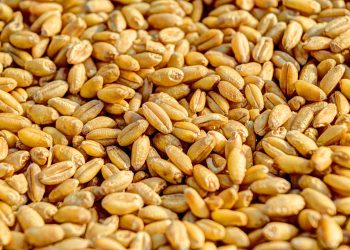
They are growing durum wheat using three different approaches. In some fields, they used conventional tillage – ploughing and turning the soil with machinery before sowing.

In others they used reduced tillage, which disturbs the soil less. And in a third group of fields, they tried sod seeding: applying a herbicide to control weeds, then sowing directly into undisturbed soil.

The results were revealing. Conventional ploughing caused the most damage, while reduced tilling and sowing without ploughing (sod seeding) helped increase soil carbon, microbial diversity and nutrient levels. Crucially, the less intensive methods produced yields comparable to conventional farming.

“The results we’ve gathered so far are quite promising,” Carboni said. Reducing tillage also saves farmers time and money on labour and fuel, he added, without sacrificing yield or soil quality.

“This is extremely important, not only in terms of production, but also for climate regulation, biodiversity and overall soil quality.”

“We think that, when proposing a business model, it’s important to consider not only market benefits, but also non-market ones.

Jorge Sánchez Navarro, InBestSoil

Early simulations suggest these techniques hold up well under future climate scenarios, too. “This shows strong potential as effective adaptation and mitigation strategies for the region,” Mereu said.

The team is now working with local stakeholders to explore how to encourage farmers, landowners and companies to take up these methods.

Sardinia is one of nine experimental sites where InBestSoil is active. In Spain, one group is working in a Dehesa system – a type of open grassland where grazing animals are helping to regenerate soils depleted by conventional agriculture.

In Lithuania and Croatia, researchers are focusing on urban and suburban areas, where healthy soils help absorb excess water and reduce flood risk. The full network of experimental sites spans agricultural (the Netherlands, Switzerland), forest (Latvia) and mining land uses (Spain).

Making the business case

Once each trial is complete, the team will use the findings to build practical frameworks to help farmers, land managers and private investors assess the returns on soil restoration. In other words, making healthy soils an asset to invest in, not a liability to manage.

The InBestSoil researchers are developing these frameworks alongside two sister projects – SoilValues and NOVASOIL – as part of a broader EU Mission effort to connect science, business and investment around soil health.

The team is also building a web-based calculator to capture the value that healthy soils deliver beyond the market.

“We think that, when proposing a business model, it’s important to consider not only market benefits, but also non-market ones, and this tool will provide an estimate,” explained Jorge Sánchez Navarro, a researcher in the field of agricultural and cooperative economics at the Polytechnic University of Cartagena, Spain, who is leading that work.

Together, the valuation framework and the calculator are designed for a wide range of users, from individual farmers to public administrations and corporate investors. This gives anyone with a stake in land a shared way of understanding the value that lies beneath it.

The researchers also have their eye on policy. The EU recently introduced its first Directive focused solely on soil health. The Soil Monitoring Law requires the 27 EU Member States to monitor and assess soil health across their territory, and InBestSoil’s evidence base could help inform how it is applied.

“Some ecosystems like Dehesas are more difficult to classify. They’re not forests or grassland, and policymakers need to understand the diversity of ecosystems we have in Europe to legislate them,” Seijo said.

InBestSoil runs until December 2026. By then, the team hopes to have given farmers, landowners and land managers across Europe the tools they need to restore soils – and the economic argument to do so.

The project in this article received funding as part of the EU Mission: A Soil Deal for Europe. EU Missions are EU-funded initiatives that mobilise research, policy and citizens to tackle major real-world challenges by 2030.

The views of the interviewees don’t necessarily reflect those of the European Commission. If you liked this article, please consider sharing it on social media.

O artigo foi publicado originalmente em Horizon, the EU Research and Innovation Magazine.

Imprimir Artigo
Publicação Anterior

BeXyl project provides new tools and strategies for prevention, monitoring and control of Xylella fastidiosa in Europe

Próxima Publicação

A cada catástrofe os animais ficam esquecidos – Laurentina Pedroso

Artigos Relacionados

Portugal

Irão: Agroalimentar tem sido amortecedor de custos – FIPA

14/06/2026
Portugal

Agroalimentar quer ultrapassar 5.000 ME de VAB até 2030 – FIPA

14/06/2026
Nacional

Cultivar alface em oito dias na cozinha: a aposta de uma startup britânica

14/06/2026
Próxima Publicação

A cada catástrofe os animais ficam esquecidos - Laurentina Pedroso

Opinião

Últimas

O azeite vale mais do que o preço que aparece na prateleira

por Susana Sassetti
14/06/2026

Ler maisDetails
Últimas

Acordo UE-Mercosul: uma oportunidade estratégica para proteger e valorizar as marcas dos produtos agrícolas portugueses

por Luís Caixinhas
07/06/2026

Ler maisDetails

Subscrever as nossas newsletteres

Subscrever as nossas Newsletters Agroportal

Verifique na sua caixa de correio ou na pasta de spam para confirmar a sua subscrição.

Comunicados

Copa Cogeca

Crise dos fertilizantes: a Comissão conclui a sua resposta a curto prazo, mas esta continua a ser insuficiente

12/06/2026

Porbatata acompanha debates estratégicos no Congresso Europatat 2026

12/06/2026
Advertisement

Temas em destaque

Candidaturas PU Guerra Médio Oriente Mercosul ovibeja PAC pós 2027 Simplificação PAC Temporais vinho Água que Une

Eventos

Junho 2026
STQQSSD
1 2 3 4 5 6 7
8 9 10 11 12 13 14
15 16 17 18 19 20 21
22 23 24 25 26 27 28
29 30      
« Mai   Jul »

Sobre Nós

O Agroportal.pt é uma plataforma de informação digital que reúne a informação relevante sobre agricultura. Tem um foco na Política Agrícola Comum e a sua aplicação em Portugal.

Menu

  • Quem somos
  • Relatórios anuais
  • Envie-nos informação
  • Publicidade
  • Newsletters
  • Estatuto Editorial
  • Ficha técnica
  • Proteção de Dados Pessoais
  • Disclaimer
Facebook twitter Circle Instagram Rss Feed

© Agroportal. All Rights reserved.

Bem-Vindo De Volta!

Sign In with Facebook
Sign In with Google
OR

Faça login na sua conta abaixo

Esqueceu-se da senha? Registar

Criar Uma Nova Conta!

Sign Up with Facebook
Sign Up with Google
OR

Preencha os campos abaixo para se registar

* Ao se registar-se no nosso site, você concorda com os Termos e Condições e a Política de Privacidade .
Todos os campos são necessários. Entrar

Obter a sua senha

Indique por favor o seu nome de utilizador ou endereço de E-mail para repor a sua senha.

Entrar
  • Login
  • Registar
Sem Resultado
Ver Todos Os Resultados
  • Sugeridas
  • Notícias
    • Nacional
    • Internacional
    • Comunicados
  • Opinião
  • Eventos
  • Dossiers
    • Agricultura Biológica
    • Apoios
    • Artigos Técnicos
    • Biossoluções
    • Cadeia Alimentar
    • Fertilizantes
    • Financiamento
    • Fitofarmacêuticos
    • Florestas
    • Futuro da PAC
    • Inovação
    • Mercados e Cotações agrícolas
    • Newsletters e Revistas
    • Recomendações Agroflorestais
    • Seguros agrícolas
  • Serviços
    • Diretório
    • Emprego
    • Máquinas Agrícolas
    • Meteorologia
    • Terrenos Agrícolas
    • Arquivo Agroportal

© Agroportal. All Rights reserved.

Este site usa cookies. Ao continuar a utilizar este site, está a dar consentimento à utilização de cookies. Visite a nossa Política de Protecção de dados e Cookies.