

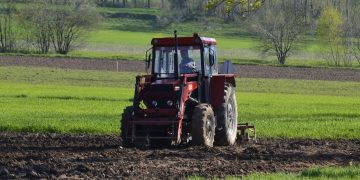

















Drought is one of the major challenges facing modern agriculture. Water availability is steadily declining, and plants are particularly vulnerable during their first weeks of life, a critical stage for their future development.
In this context, TRICHODEX (Grupo Fertiberia) and the University of Lisbon have published a scientific study demonstrating that the use of microbial biostimulants can help crops grow better and withstand water scarcity from their earliest stages of development.
The study has been published in the international scientific journal Resources (MDPI), a Q1 publication indexed in Web of Science, specializing in sustainability, resource-use efficiency, and climate change. This reinforces the robustness and relevance of the findings.
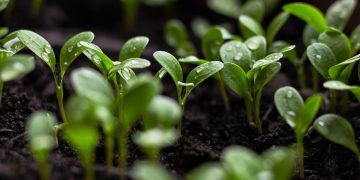
The researchers evaluated the effect of two microbial consortium-based biostimulants produced using TRICHODEX’s FPB (Fermentation Polyphasic Biotechnology). These were applied to maize and tomato seedlings grown under normal irrigation conditions as well as under moderate to severe water deficit.
The objective was not only to assess whether the plants grew more, but also to understand how they responded to drought stress and whether the microorganisms helped plants better adapt to these adverse conditions.
Key findings
- The study demonstrates that microbial biostimulants activate a natural plant response that translates into clear benefits:
- Stronger plants from the outset: In maize, treated seedlings grew approximately 50% more, even with reduced water availability. In tomato, growth increased by up to 35% under normal irrigation conditions.
- Improved water-use efficiency: Treated plants were able to manage water more effectively, maintaining physiological activity even when water availability was limited.
- Enhanced nutrition: The microorganisms promoted greater uptake of essential nutrients such as phosphorus, iron, calcium, and magnesium — all crucial for plant development and stress resilience.
- Greater stress protection: Treated seedlings activated natural defense mechanisms that help reduce drought-induced damage.
- Antioxidant response: Ascorbate peroxidase (APX) and catalase (CAT) activities increased by 20–40%, indicating a reduction in oxidative stress from the earliest growth stages.
- Integrated plant response (multivariate analysis): The effect is not an isolated response, but rather a coordinated early-performance package integrating growth, nutrition, and physiology.
These results reinforce the role of microbial biostimulants as a practical tool for more sustainable agriculture. They help reduce the impact of water scarcity, improve soil resource efficiency, decrease dependence on chemical inputs, and enhance crop stability in the context of climate change.
“The results show that microbial biotechnology can make a real difference from the earliest stages of cultivation, helping plants better adapt to water-scarce scenarios,” said Khalid Akhdi, General Manager of TRICHODEX.
Fonte: TRICHODEX