
















Sem Resultado
Ver Todos Os Resultados
Newsletters
Agroportal
  • Login
  • Registar
  • Sugeridas
  • Notícias
    • Notícias
    • Nacional
    • Internacional
    • Comunicados
    GPP

    GPP disponibiliza análise sobre o Comércio Internacional | setembro 2026

    thermometer

    Líderes pressionam por resultados na COP31: “Os discursos não arrefecem o planeta”

    Depois da depressão Charles, Portugal enfrenta novo período de mau tempo: “corredor de tempestades” traz chuva intensa até dia 18

    Aviso de chuva passa de vermelho para laranja em Leiria, Castelo Branco, Beja e Portalegre

    DGAV

    DGAV lança Concurso de Histórias sobre Raças Autóctones Portuguesas

    GPP

    GPP participa na 54.ª Sessão do Comité de Segurança Alimentar Mundial da FAO

    Portugal tem 65 raças autóctones sobretudo bovinos e ovinos

    ANICE y FECIC: Desconvocada la huelga en el sector cárnico

    Apicultura excluída de mais um pacote de apoios ao aumento do preço dos combustíveis

  • Opinião
    Manuel Chaveiro Soares

    Importa recuperar a economia da União Europeia

    A Grande Narrativa da Alimentação: Alimentar o Mundo ou Alimentar um Sistema?

    Jovens agricultores em Portugal: não partimos todos do mesmo sítio e o género conta

    Pedro-Pimentel

    Portugal tem uma palavra a dizer

    Jose Mesquita Milheiro

    Agricultura, filha de um deus menor. Até quando?

    Registo Internacional de Marcas no Setor Agroalimentar

    Estamos a exportar Portugal ou a desvalorizar o azeite português?

    AIGP: fracasso ou sucesso?

    Microrganismos ao serviço de uma agricultura mais sustentável

  • Eventos
  • Dossiers

    Dossiers I

    • Agricultura Biológica
    • Apoios
    • Artigos Técnicos
    • Biossoluções
    • Cadeia Alimentar
    • Fertilizantes
    • Financiamento
    • Fitofarmacêuticos

    Dossiers II

    • Florestas
    • Futuro da PAC
    • Inovação
    • Mercados
    • Newsletters e Revistas
    • Recomendações Agroflorestais
    • Seguros

    Últimas

    GPP

    GPP disponibiliza análise sobre o Comércio Internacional | setembro 2026

    11/11/2026

    Apicultura excluída de mais um pacote de apoios ao aumento do preço dos combustíveis

    11/11/2026

    Governo dos Açores investe 1 ME na melhoria das reservas florestais de recreio

    11/11/2026

    Estudo português permite antecipar potencial produtivo da vinha ainda durante o inverno

    11/11/2026

    Russos e chineses exploram sem controlo florestas da República Centro-Africana – ONG

    11/11/2026

    Inteligência artificial ajuda agricultores no Nepal, mas milhões continuam expostos à crise climática

    11/11/2026
  • Serviços
    • Diretório
    • Emprego
    • Máquinas Agrícolas
    • Meteorologia
    • Terrenos Agrícolas
    • Arquivo Agroportal
Agroportal
  • Sugeridas
  • Notícias
    • Notícias
    • Nacional
    • Internacional
    • Comunicados
    GPP

    GPP disponibiliza análise sobre o Comércio Internacional | setembro 2026

    thermometer

    Líderes pressionam por resultados na COP31: “Os discursos não arrefecem o planeta”

    Depois da depressão Charles, Portugal enfrenta novo período de mau tempo: “corredor de tempestades” traz chuva intensa até dia 18

    Aviso de chuva passa de vermelho para laranja em Leiria, Castelo Branco, Beja e Portalegre

    DGAV

    DGAV lança Concurso de Histórias sobre Raças Autóctones Portuguesas

    GPP

    GPP participa na 54.ª Sessão do Comité de Segurança Alimentar Mundial da FAO

    Portugal tem 65 raças autóctones sobretudo bovinos e ovinos

    ANICE y FECIC: Desconvocada la huelga en el sector cárnico

    Apicultura excluída de mais um pacote de apoios ao aumento do preço dos combustíveis

  • Opinião
    Manuel Chaveiro Soares

    Importa recuperar a economia da União Europeia

    A Grande Narrativa da Alimentação: Alimentar o Mundo ou Alimentar um Sistema?

    Jovens agricultores em Portugal: não partimos todos do mesmo sítio e o género conta

    Pedro-Pimentel

    Portugal tem uma palavra a dizer

    Jose Mesquita Milheiro

    Agricultura, filha de um deus menor. Até quando?

    Registo Internacional de Marcas no Setor Agroalimentar

    Estamos a exportar Portugal ou a desvalorizar o azeite português?

    AIGP: fracasso ou sucesso?

    Microrganismos ao serviço de uma agricultura mais sustentável

  • Eventos
  • Dossiers

    Dossiers I

    • Agricultura Biológica
    • Apoios
    • Artigos Técnicos
    • Biossoluções
    • Cadeia Alimentar
    • Fertilizantes
    • Financiamento
    • Fitofarmacêuticos

    Dossiers II

    • Florestas
    • Futuro da PAC
    • Inovação
    • Mercados
    • Newsletters e Revistas
    • Recomendações Agroflorestais
    • Seguros

    Últimas

    GPP

    GPP disponibiliza análise sobre o Comércio Internacional | setembro 2026

    11/11/2026

    Apicultura excluída de mais um pacote de apoios ao aumento do preço dos combustíveis

    11/11/2026

    Governo dos Açores investe 1 ME na melhoria das reservas florestais de recreio

    11/11/2026

    Estudo português permite antecipar potencial produtivo da vinha ainda durante o inverno

    11/11/2026

    Russos e chineses exploram sem controlo florestas da República Centro-Africana – ONG

    11/11/2026

    Inteligência artificial ajuda agricultores no Nepal, mas milhões continuam expostos à crise climática

    11/11/2026
  • Serviços
    • Diretório
    • Emprego
    • Máquinas Agrícolas
    • Meteorologia
    • Terrenos Agrícolas
    • Arquivo Agroportal
Sem Resultado
Ver Todos Os Resultados
Agroportal
breeding

Smartphone-powered device quickly detects diseased plants, could help protect crop yields

por Genetic Literacy Project
31-07-2019 | 12:27
em Internacional
Tempo De Leitura: 4 mins
A A
Partilhe no FacebookPartilhe no TwitterEnviar para o WhatsappEnviar para o TelegramEnviar para o LinkedIn

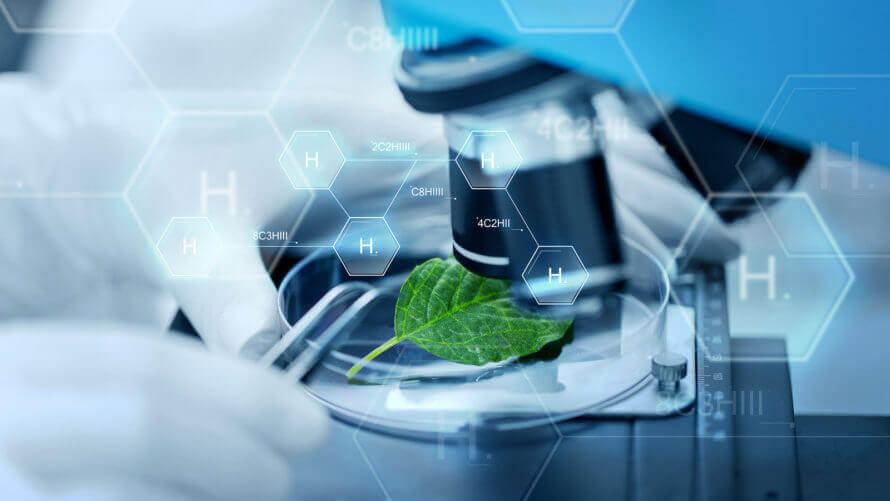
[Fonte: GLP] Researchers at North Carolina State University have developed portable technologythat allows farmers to identify plant diseases in the field. The handheld device, which is plugged into a smartphone, works by sampling the airborne volatile organic compounds (VOCs) that plants release through their leaves.

“All plants release VOCs as they ‘breathe,’ but the type and concentration of those VOCs changes when a plant is diseased,” says Qingshan Wei, an assistant professor of chemical and biomolecular engineering and corresponding author of a paper on the work. “Each disease has its own signature profile of VOCs. So, by measuring the type and concentration of VOCs being released by the plant, you can determine whether a plant is diseased and — if it is diseased — which disease it has.

“Our contribution here is the creation of a device that can be plugged into a smartphone and used to make those VOC measurements quickly in the field,” says Wei, who is also a faculty member in NC State’s Emerging Plant Disease and Global Food Security cluster.

Current disease identification techniques rely on molecular assays, which take hours to perform and — most importantly — have to be done in a lab. Getting a sample to the lab, where the sample may have to wait to be tested, can delay disease identification by days or weeks.

“Our technology will help farmers identify diseases more quickly, so they can limit the spread of the disease and related crop damage,” says Jean Ristaino, William Neal Reynolds Distinguished Professor of Plant Pathology at NC State, co-author of the paper and director of the cluster. “We are now ready to scale up the technology.”

Here’s how the technology works. If a farmer suspects that a plant may be diseased, he or she can take a leaf from the relevant plant and place it in a test tube. The test tube is then capped for at least 15 minutes to allow the relevant VOCs to accumulate. After this incubation period, the cap is removed and the farmer uses a narrow, plastic tube to pump the VOC-laden air into a “reader” device connected to a smartphone.

The air is pumped into a chamber in the reader that contains a paper strip. The paper is embedded with an array of chemical reagents that change color when they come into contact with a specific chemical group. By evaluating the resulting color pattern on the strip, users can determine the nature of any plant disease that may be affecting the plant.

“For this technology to work, we had to develop reagents that could be embedded in the paper strips,” says Zheng Li, a postdoctoral researcher at NC State and first author of the paper. “About half of the reagents were off-the-shelf organic dyes, but the other half were gold nanoparticles that we functionalized to respond to specific chemical groups. These functionalized nanoparticles allow us to be more precise in detecting various types of VOCs.”

“We also had to design and build the reader device, since there is nothing like it on the market,” says Wei.

In proof-of-concept testing, the researchers demonstrated the device’s ability to detect and classify 10 plant VOCs down to the parts-per-million level. They were able to detect the late blight pathogen that caused the Irish famine two days after tomato plants were inoculated with the pathogen. Researchers could also distinguish tomato late blight from two other important fungal pathogens that produce similar symptoms on tomato leaves. In addition, the researchers showed they could detect the pathogen Phytophthora infestans in tomato leaves with greater than 95% accuracy.

“We’ve shown that the technology works,” Wei says. “There are two areas where we could make it even better. First, we would like to automate the pattern analysis using software for the smartphone, which would make it easier for farmers to make disease determinations.

“Second, we envision the development of customized reader strips that are designed to measure the VOCs associated with other diseases specific to a given crop. Different crops in different regions face different threats, and we could develop paper strips that are tailored to address those specific concerns.

Read full, original article: New, portable tech sniffs out plant disease in the field
Imprimir Artigo
Publicação Anterior

Innovation rush aims to help farmers, rich and poor, beat climate change

Próxima Publicação

Incêndios. Ministro salienta que inflamabilidade das golas era falsa e pede que se retire uma lição

Artigos Relacionados

thermometer
Internacional

Líderes pressionam por resultados na COP31: “Os discursos não arrefecem o planeta”

11/11/2026
Internacional

ANICE y FECIC: Desconvocada la huelga en el sector cárnico

11/11/2026
Internacional

Russos e chineses exploram sem controlo florestas da República Centro-Africana – ONG

11/11/2026
Próxima Publicação

Incêndios. Ministro salienta que inflamabilidade das golas era falsa e pede que se retire uma lição

Discussão sobre este post

Opinião

Manuel Chaveiro Soares
Últimas

Importa recuperar a economia da União Europeia

por Manuel Chaveiro Soares
08/11/2026

Ler maisDetails
Últimas

A Grande Narrativa da Alimentação: Alimentar o Mundo ou Alimentar um Sistema?

por José Godinho
01/11/2026

Ler maisDetails

Subscrever as nossas newsletteres

Subscrever as nossas Newsletters Agroportal

Verifique na sua caixa de correio ou na pasta de spam para confirmar a sua subscrição.

Comunicados

GPP

GPP disponibiliza análise sobre o Comércio Internacional | setembro 2026

11/11/2026
DGAV

DGAV lança Concurso de Histórias sobre Raças Autóctones Portuguesas

11/11/2026

Temas em destaque

agroalimentar Candidaturas PU continente Global Agri Forum 2026 Guerra Médio Oriente inovação Mercosul Omnibus Orçamento 2027 PAC pós 2027 Simplificação PAC Temporais vinho Água que Une

Eventos

Novembro 2026
STQQSSD
       1
2 3 4 5 6 7 8
9 10 11 12 13 14 15
16 17 18 19 20 21 22
23 24 25 26 27 28 29
30       
« Out   Dez »
Advertisement

Sobre Nós

O Agroportal.pt é uma plataforma de informação digital que reúne a informação relevante sobre agricultura. Tem um foco na Política Agrícola Comum e a sua aplicação em Portugal.

Menu

  • Quem somos
  • Relatórios anuais
  • Envie-nos informação
  • Publicidade
  • Newsletters
  • Estatuto Editorial
  • Ficha técnica
  • Proteção de Dados Pessoais
  • Disclaimer
Facebook twitter Circle Instagram Rss Feed

© Agroportal. All Rights reserved.

Bem-Vindo De Volta!

Sign In with Facebook
Sign In with Google
OR

Faça login na sua conta abaixo

Esqueceu-se da senha? Registar

Criar Uma Nova Conta!

Sign Up with Facebook
Sign Up with Google
OR

Preencha os campos abaixo para se registar

* Ao se registar-se no nosso site, você concorda com os Termos e Condições e a Política de Privacidade .
Todos os campos são necessários. Entrar

Obter a sua senha

Indique por favor o seu nome de utilizador ou endereço de E-mail para repor a sua senha.

Entrar
  • Login
  • Registar
Sem Resultado
Ver Todos Os Resultados
  • Sugeridas
  • Notícias
    • Nacional
    • Internacional
    • Comunicados
  • Opinião
  • Eventos
  • Dossiers
    • Agricultura Biológica
    • Apoios
    • Artigos Técnicos
    • Biossoluções
    • Cadeia Alimentar
    • Fertilizantes
    • Financiamento
    • Fitofarmacêuticos
    • Florestas
    • Futuro da PAC
    • Inovação
    • Mercados e Cotações agrícolas
    • Newsletters e Revistas
    • Recomendações Agroflorestais
    • Seguros agrícolas
  • Serviços
    • Diretório
    • Emprego
    • Máquinas Agrícolas
    • Meteorologia
    • Terrenos Agrícolas
    • Arquivo Agroportal

© Agroportal. All Rights reserved.

Este site usa cookies. Ao continuar a utilizar este site, está a dar consentimento à utilização de cookies. Visite a nossa Política de Protecção de dados e Cookies.