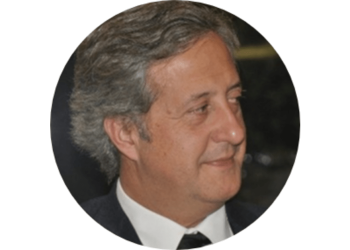

















Climate change is already reshaping where and how people live, from farming villages to coastal towns. Professor François Gemenne, one of Europe’s foremost specialists on climate migration, has spent the past 20 years studying how environmental changes are influencing people’s decisions to change where they live.
When he began this work, climate-induced migration was still a niche topic. “People would often ask me about bird or salmon migration. I had to explain that I was focusing on people,” he said.
Gemenne, a professor at the University of Liège in Belgium, was among the first to link human migration to rising temperatures and sea levels. Two decades on, the issue has moved into the mainstream.
He now co-directs the university’s Hugo Observatory, a research centre dedicated to understanding how environmental change affects population movements – and how societies can respond.
Going beyond the climate model
With support from the EU, Gemenne led a four-year international research initiative called HABITABLE that examined the realities of climate migration today.
The project, which concluded at the end of 2024, brought together leading climate migration researchers from across Europe, Africa and Thailand. They combined household surveys, interviews and focus groups with expert discussions to understand how people perceive and respond to climate risks.
Their findings show that awareness of climate‑related migration is growing – and that many Europeans now see it as a problem they could face themselves.
“The impacts of climate change on migration are shaped by deeper structural inequalities.
“Whereas climate migration was seen as an issue affecting small islands or Alaska, many Europeans now consider themselves at risk, too,” said Gemenne.
The Obs’COP survey – an annual international climate opinion survey conducted by EDF, France’s national energy company, and Ipsos – reflects this shift. Covering 30 countries across the globe, it tracks how public concern, perceptions and attitudes toward climate change are evolving worldwide.
The survey found that more than one in five people in France think they may have to leave home in the next decade because of climate change. Yet decisions to move or remain are often more complex than climate models alone suggest.
Social tipping points
Most climate-migration models focus on physical thresholds such as temperature or sea-level rises to predict displacement. The HABITABLE researchers introduced a new concept called social tipping points – moments when decisions by some households trigger wider community movements.
When repeated crop failures or floods hit, for example, several families may decide to leave. Their departure could prompt neighbours to follow, potentially tipping an entire village toward higher levels of migration.
“There are real discrepancies between public debate and empirical realities for climate refugees,” Gemenne said.
He emphasised that people respond very differently to climate pressures depending on their economic, social, or even psychological resilience.
“Understanding those factors can explain why similar events produce different migration outcomes in different places,” he said.
Local voices from Ghana and the Mekong
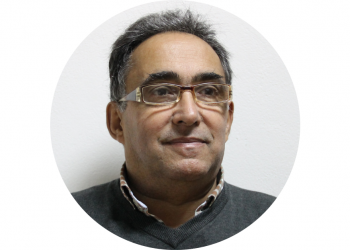
In Ghana, the project examined climate-migration decisions in the country’s northern savannah regions. Led by Professor Mumuni Abu of the University of Ghana, the team examined how environmental stressors push people to migrate – and how migration reshapes local communities.
“We examined how climate impacts and migration decisions vary by gender, age and social class,” Abu said. His team’s findings helped local authorities and NGOs design more inclusive policies, particularly for women and young people. They also raised public awareness of the challenges through theatre and storytelling projects in schools.
In southeast Asia, the HABITABLE team studied communities along the Mekong River in Thailand, on the border with Laos. Sara Vigil, senior research fellow at the Stockholm Environment Institute in Bangkok, led the work on gender and social equity.
Research with communities along the border showed how climate stressors and declining natural resources are reshaping livelihoods and mobility. It also highlighted local responses, including community-led water monitoring and grassroots mobilisation.
Vigil’s team found that broader pressures, such as debt, declining fish stocks and limited livelihoods, especially for women, often influenced migration decisions more strongly than climate factors alone.
Shifting the conversation on climate migration
Overall, Vigil said, the HABITABLE work helped broaden the conversation from simply identifying who is vulnerable to asking why certain people and places are becoming more vulnerable.
“I hope HABITABLE can become a living study, carried forward by many local partners, shaping decisions long into the future.
“The impacts of climate change on migration are shaped by deeper structural inequalities, including gender roles, uneven access to resources and entrenched social hierarchies,” she said.
Drawing on these findings, Gemenne urges caution when discussing the future of places increasingly described as “uninhabitable” due to climate change.
“While the impacts of climate change are increasingly real, I’ve seen places where people consider their home uninhabitable, not because of direct experience, but because they’ve been told so. We need a more nuanced conversation,” he said.
For Gemenne, the HABITABLE research highlights three key lessons for thinking about future climate-migration dynamics and ways to respond.
“First, people’s perceptions matter. Second, social tipping points provide a much richer framework than traditional models. And third, equitable research partnerships between Europe, Africa and Asia ensure local knowledge informs global decisions.”
From research to policy impact
The findings of the HABITABLE team are now featured in a global exhibition on Migrations and Climate, hosted until 5 April 2026 at the National Museum for the History of Immigration in Paris, France. The exhibition brings the research to a wider audience and highlights its relevance for real-world decisions.
Gemenne expressed hope that this more nuanced approach to climate migration will have a lasting impact and support local authorities as they design adaptation and migration policies.
“I hope HABITABLE can become a living study, carried forward by many local partners, shaping decisions long into the future,” he said.
Research in this article was funded by the EU’s Horizon Programme. The views of the interviewees don’t necessarily reflect those of the European Commission. If you liked this article, please consider sharing it on social media.
O artigo foi publicado originalmente em Horizon, the EU Research and Innovation Magazine.