













Sem Resultado
Ver Todos Os Resultados
Newsletters
Agroportal
  • Login
  • Registar
  • Sugeridas
  • Notícias
    • Notícias
    • Nacional
    • Internacional
    • Comunicados

    Transumância dos rebanhos em Vila Nova de Tazem

    Frutos volta ao parque das Caldas da Rainha com entradas livres

    Incêndio de Torre de Moncorvo provocou medo nas populações e prejuízos agrícolas

    fogo

    Incêndios: Área ardida quatro vezes menor este ano, mas número de fogos aumenta

    Produção de cereais na Alemanha deverá cair 7% devido a seca histórica

    Estas cerejas não iam chegar às lojas. A Moreno encontrou-lhes outro destino

    seca

    Comissão Europeia prepara nova estratégia após verão de calor extremo, secas e incêndios

    fogo bombeiro

    Incêndios: Arderam já 900 hectares em fogo de Santo Tirso com três frentes ativas

    Incêndios: Mais de 900 operacionais nos três fogos mais significativos ao início da tarde

  • Opinião

    As cooperativas não pagam IRC. E depois?

    500 milhões de Euros por Ano Não Chega Sem Planeamento

    António Covas

    O mundo paradoxal do nosso rural tardio e remoto

    Azeites de Portugal: tratar diferente o que é diferente

    Manuel Chaveiro Soares

    Sobre a excelência da alimentação em Portugal

    Produzir bem já não chega: eficiência, estratégia e os desafios da engorda de bovinos

    Segurança Alimentar Europeia Como Ativo Estratégico

    Sabemos distinguir um frango do campo. Porque não conseguimos distinguir um Azeite de Olival Tradicional?

    Carlos Neves

    Promoções que despromovem a produção de leite de Portugal

  • Eventos
  • Dossiers

    Dossiers I

    • Agricultura Biológica
    • Apoios
    • Artigos Técnicos
    • Biossoluções
    • Cadeia Alimentar
    • Fertilizantes
    • Financiamento
    • Fitofarmacêuticos

    Dossiers II

    • Florestas
    • Futuro da PAC
    • Inovação
    • Mercados
    • Newsletters e Revistas
    • Recomendações Agroflorestais
    • Seguros

    Últimas

    Cotações – Azeite e Azeitona – 10 a 16 de agosto de 2026

    18/08/2026

    Cotações – Cortiça – 10 a 16 de agosto de 2026

    18/08/2026

    Dietas saudáveis ​​e sustentáveis ​​podem remodelar a agricultura global. Mas são mais caras

    18/08/2026

    Produção de maçã na UE deverá cair para o nível mais baixo em nove anos

    14/08/2026

    Cotações – Suínos – 03 a 09 de agosto de 2026

    13/08/2026

    Cotações – Aves e Ovos – 03 a 09 de agosto de 2026

    13/08/2026
  • Serviços
    • Diretório
    • Emprego
    • Máquinas Agrícolas
    • Meteorologia
    • Terrenos Agrícolas
    • Arquivo Agroportal
Agroportal
  • Sugeridas
  • Notícias
    • Notícias
    • Nacional
    • Internacional
    • Comunicados

    Transumância dos rebanhos em Vila Nova de Tazem

    Frutos volta ao parque das Caldas da Rainha com entradas livres

    Incêndio de Torre de Moncorvo provocou medo nas populações e prejuízos agrícolas

    fogo

    Incêndios: Área ardida quatro vezes menor este ano, mas número de fogos aumenta

    Produção de cereais na Alemanha deverá cair 7% devido a seca histórica

    Estas cerejas não iam chegar às lojas. A Moreno encontrou-lhes outro destino

    seca

    Comissão Europeia prepara nova estratégia após verão de calor extremo, secas e incêndios

    fogo bombeiro

    Incêndios: Arderam já 900 hectares em fogo de Santo Tirso com três frentes ativas

    Incêndios: Mais de 900 operacionais nos três fogos mais significativos ao início da tarde

  • Opinião

    As cooperativas não pagam IRC. E depois?

    500 milhões de Euros por Ano Não Chega Sem Planeamento

    António Covas

    O mundo paradoxal do nosso rural tardio e remoto

    Azeites de Portugal: tratar diferente o que é diferente

    Manuel Chaveiro Soares

    Sobre a excelência da alimentação em Portugal

    Produzir bem já não chega: eficiência, estratégia e os desafios da engorda de bovinos

    Segurança Alimentar Europeia Como Ativo Estratégico

    Sabemos distinguir um frango do campo. Porque não conseguimos distinguir um Azeite de Olival Tradicional?

    Carlos Neves

    Promoções que despromovem a produção de leite de Portugal

  • Eventos
  • Dossiers

    Dossiers I

    • Agricultura Biológica
    • Apoios
    • Artigos Técnicos
    • Biossoluções
    • Cadeia Alimentar
    • Fertilizantes
    • Financiamento
    • Fitofarmacêuticos

    Dossiers II

    • Florestas
    • Futuro da PAC
    • Inovação
    • Mercados
    • Newsletters e Revistas
    • Recomendações Agroflorestais
    • Seguros

    Últimas

    Cotações – Azeite e Azeitona – 10 a 16 de agosto de 2026

    18/08/2026

    Cotações – Cortiça – 10 a 16 de agosto de 2026

    18/08/2026

    Dietas saudáveis ​​e sustentáveis ​​podem remodelar a agricultura global. Mas são mais caras

    18/08/2026

    Produção de maçã na UE deverá cair para o nível mais baixo em nove anos

    14/08/2026

    Cotações – Suínos – 03 a 09 de agosto de 2026

    13/08/2026

    Cotações – Aves e Ovos – 03 a 09 de agosto de 2026

    13/08/2026
  • Serviços
    • Diretório
    • Emprego
    • Máquinas Agrícolas
    • Meteorologia
    • Terrenos Agrícolas
    • Arquivo Agroportal
Sem Resultado
Ver Todos Os Resultados
Agroportal
Protecting forests

Protecting forests on the front line of the climate-change battle

por Horizon - EU
14-10-2022 | 14:23
em Últimas, Internacional, Revistas, Notícias florestas
Tempo De Leitura: 6 mins
A A
Partilhe no FacebookPartilhe no TwitterEnviar para o WhatsappEnviar para o TelegramEnviar para o LinkedIn

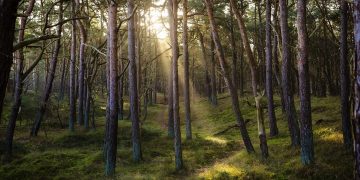
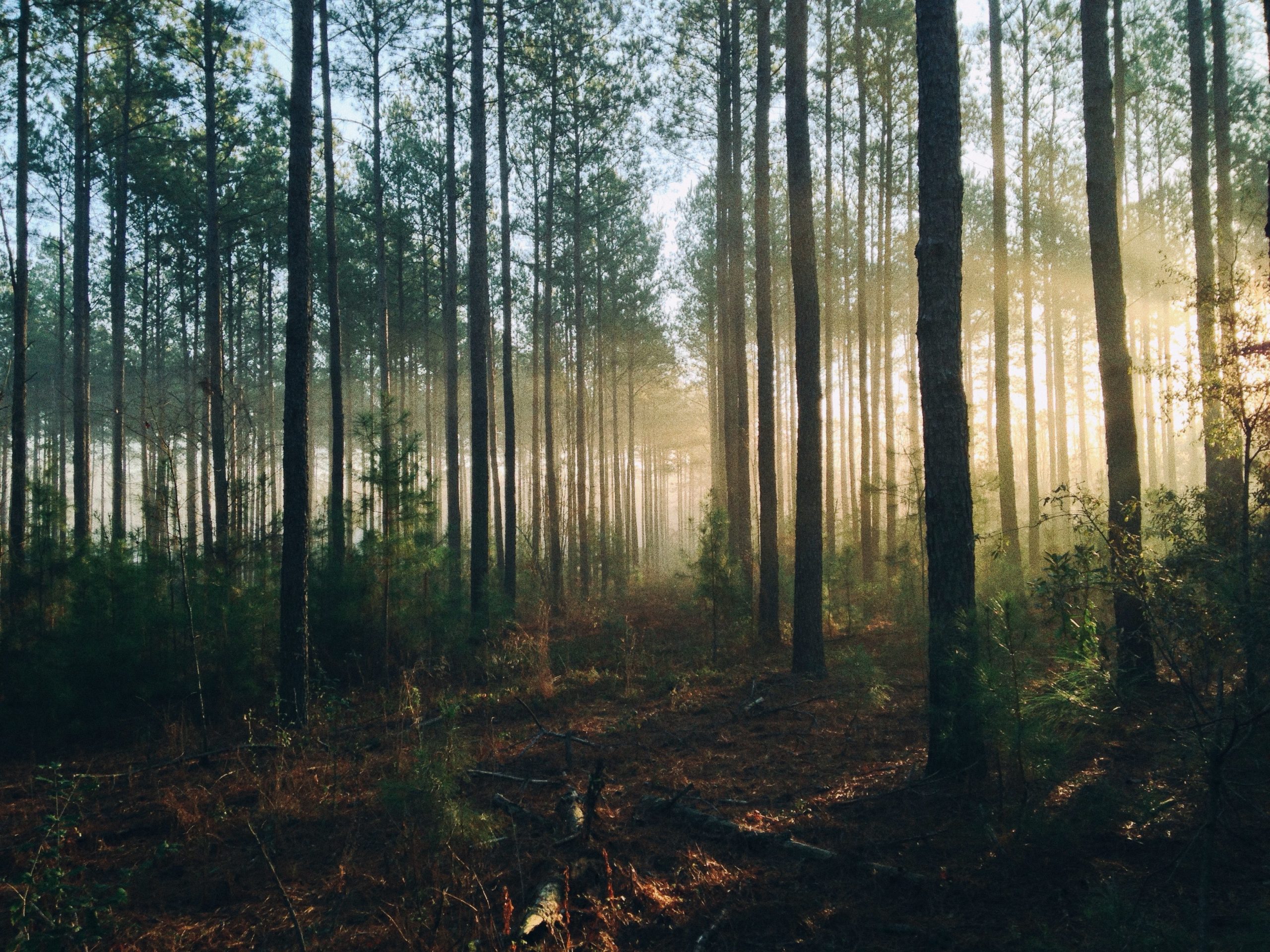
Trees help counter global warming by removing and storing greenhouse gases that cause it.

But as droughts become more frequent as a result of climate change, forests are also at risk of not having enough water to survive. European researchers are racing to understand more about how trees respond to drought as part of the fight against climate change.

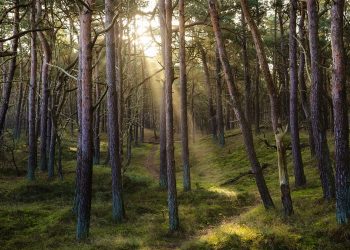
Forests combat global warming by absorbing carbon dioxide but they are depleted by drought. Trees that adapt to climate change conditions could hold some answers.

By  SANDRINE CEURSTEMONT

Forests help counter global warming, but they are also threatened by it. Many tree species struggled this past summer as much of Europe was hit by heat waves and a severe drought – thought to be the worst in 500 years.

Even olive trees, known for their ability to resist dry conditions, have suffered. Spain is the world’s leading producer of olive-oil but many Spanish farmers expect their olive-oil harvests this year to decline by as much as 50%.

In this context, Horizon researchers are racing to understand more about how trees respond to drought as part of the fight against climate change.

Carbon sinks

Existing forests already remove about a third of the greenhouse gas emissions caused by human activities. A worldwide afforestation programme could do the same for almost a third of the discharges that remain in the atmosphere.

‘If you look at the last 10 years or so, there have been a number of events where severe drought has caused large-scale death of trees in forests.’ said Dr Jaideep Joshi, of the Plant-FATE project, which is studying plant traits to protect forests from climate change.

Planting billions of trees is a relatively inexpensive way to tackle the climate crisis, according to a study about the potential for global forest cover to mitigate climate change. But as drought spreads, forests worldwide are at risk. In Europe, 500 000 hectares of forest were wiped out as a result of drought between 1987 and 2016. Joshi led the Horizon-funded Plant-FATE project, which broke new ground when it comes to predicting the impact of drought on trees of all kinds.

Tree resilience

A major limitation of current models is that they rarely consider trees’ ability to adapt to dry conditions and how resilience may differ between species. That leads to inconsistencies when projecting how forests will respond to future climate scenarios.

‘That is where the largest uncertainty currently lies,’ said Dr Joshi. ‘You have this whole ecosystem of mixed species – we have tried to bring this all together in a simple but comprehensive modelling framework.’

A model acts as a tool for simulating outcomes and he believes his team’s model will be particularly useful when it comes to planning tree-planting programmes. That’s because it can signal the carbon capture and storage potential of different species over the next 50-100 years, when climate conditions will be different to what they are today.

‘It could help make the right choices of which species to plant or where to plant them,’ said Dr Joshi. ‘It’s our model’s most promising conservation application.’

In their model, the Plant-FATE researchers incorporated trees’ ability to adjust to changing climate and looked at a range of timescales.

In shorter timeframes of weeks to months, for example, trees exposed to drought may shed their leaves to conserve water (because water evaporates through pores on the surface of leaves) in what’s known as a ‘false autumn’.

New wood

But over longer timescales, trees can grow new wood with different properties better suited to dry conditions.

Dr Joshi and his team also took scale into account. For example, some responses occur in specific parts of a tree as roots and leaves, while others take place at the level of an entire species.

To test their full model, Dr Joshi and his colleagues used data from an Amazon rainforest site containing about 400 species in a 5 000 square-metre area. They found that their model’s predictions closely matched what happened in real life at the site.

It marks the first time that a vegetation model has performed realistically over different timescales while using very few parameters, according to Dr Joshi, a researcher at the International Institute for Applied Systems Analysis in Laxenburg, Austria.

‘It gives you the capacity to predict forest performance for unknown conditions,’ he said. ‘That makes it much more useful to predict the response of global forests to future climate scenarios.’

Tall trees

While tall trees are often considered to be more vulnerable to dry conditions than shorter ones, much remains to be discovered about why and to what extent a tree’s height affects its resistance to drought.

Dr Laura Fernández de Uña leads the Horizon-funded DISTRESS project, which is examining how a tree’s ability to transport water changes with height and how that might influence drought responses.

She and her colleagues stand to shake up some conventional wisdom in the field.

‘We see certain differences between individual trees and also between species types,’ said Dr Fernández de Uña, a post-doctoral fellow at public research centre CREAF in Barcelona, Spain.

Unsurprisingly, research confirms that it’s harder for water to reach the heights of taller trees. Even in normal conditions, gravity is a basic impediment.

Air bubbles

During a drought, it is harder for trees to extract water from dry soil and draw it upwards. This increases the risk of water-transporting conduits sucking in air bubbles, which can block the flow (similar to embolisms in human blood vessels). If any bubbles occur, parts of a tree can be denied water and die.

Furthermore, tall trees in a forest are exposed to more heat and wind and less humidity. ‘The canopy conditions themselves are drier than for a smaller tree in the understory,’ said Dr Fernández de Uña. ‘All this is negative for tall trees during a drought.’

Nonetheless, past research indicates that tall trees can adapt to heat and water stress or even cope better than small trees. They are able to expand their water-conducting pipes, for example, to get more flow up their long trunks.

Well rooted

In addition, larger trees have more roots that reach greater depths, allowing access to water even when levels in the upper ground are low.

They also tend to have thicker trunks, which allow bigger trees to store more carbohydrates and water.

For Dr Fernández de Uña, all this shows that – contrary to common assumptions – tall trees have a fighting chance when temperatures soar and water becomes scarce for prolonged periods.

‘They are able to adapt and overcome their limitations,’ she said. ‘We need to be more open-minded about how they may respond to drought. If it wasn’t worth it to be tall, then trees wouldn’t grow tall.’

Research in this article was funded via the EU’s Marie Skłodowska-Curie Actions (MSCA). The article was originally published in Horizon, the EU Research and Innovation Magazine. 

More info

Follow the links below for more information about these Horizon projects.
  • Plant-FATE
  • DISTRESS
Imprimir Artigo
Publicação Anterior

Monte do Pasto vence Prémio Empreendedorismo e Inovação Crédito Agrícola na categoria Alimentação

Próxima Publicação

Ponte de Lima convida jovens a conhecerem melhor os cavalos de raça garrana

Artigos Relacionados

Nacional

Transumância dos rebanhos em Vila Nova de Tazem

18/08/2026
Nacional

Frutos volta ao parque das Caldas da Rainha com entradas livres

18/08/2026
Nacional

Incêndio de Torre de Moncorvo provocou medo nas populações e prejuízos agrícolas

18/08/2026
Próxima Publicação
cavalo

Ponte de Lima convida jovens a conhecerem melhor os cavalos de raça garrana

Discussão sobre este post

Opinião

Últimas

As cooperativas não pagam IRC. E depois?

por Francisco António Vilela Ribeiro
16/08/2026

Ler maisDetails
Últimas

500 milhões de Euros por Ano Não Chega Sem Planeamento

por Nuno Mamede Santos
09/08/2026

Ler maisDetails

Subscrever as nossas newsletteres

Subscrever as nossas Newsletters Agroportal

Verifique na sua caixa de correio ou na pasta de spam para confirmar a sua subscrição.

Comunicados

Comissão Vitivinícola Regional Alentejana (CVRA)

Alentejo valoriza Vinhas Velhas e Centenárias e alarga certificação do Vinho de Talha a toda a região

17/08/2026

Quercus exige pagamento do IMI das barragens

17/08/2026
Advertisement

Temas em destaque

Candidaturas PU Guerra Médio Oriente Mercosul ovibeja PAC pós 2027 Simplificação PAC Temporais vinho Água que Une

Eventos

Agosto 2026
STQQSSD
      1 2
3 4 5 6 7 8 9
10 11 12 13 14 15 16
17 18 19 20 21 22 23
24 25 26 27 28 29 30
31       
« Jul   Set »

Sobre Nós

O Agroportal.pt é uma plataforma de informação digital que reúne a informação relevante sobre agricultura. Tem um foco na Política Agrícola Comum e a sua aplicação em Portugal.

Menu

  • Quem somos
  • Relatórios anuais
  • Envie-nos informação
  • Publicidade
  • Newsletters
  • Estatuto Editorial
  • Ficha técnica
  • Proteção de Dados Pessoais
  • Disclaimer
Facebook twitter Circle Instagram Rss Feed

© Agroportal. All Rights reserved.

Bem-Vindo De Volta!

Sign In with Facebook
Sign In with Google
OR

Faça login na sua conta abaixo

Esqueceu-se da senha? Registar

Criar Uma Nova Conta!

Sign Up with Facebook
Sign Up with Google
OR

Preencha os campos abaixo para se registar

* Ao se registar-se no nosso site, você concorda com os Termos e Condições e a Política de Privacidade .
Todos os campos são necessários. Entrar

Obter a sua senha

Indique por favor o seu nome de utilizador ou endereço de E-mail para repor a sua senha.

Entrar
  • Login
  • Registar
Sem Resultado
Ver Todos Os Resultados
  • Sugeridas
  • Notícias
    • Nacional
    • Internacional
    • Comunicados
  • Opinião
  • Eventos
  • Dossiers
    • Agricultura Biológica
    • Apoios
    • Artigos Técnicos
    • Biossoluções
    • Cadeia Alimentar
    • Fertilizantes
    • Financiamento
    • Fitofarmacêuticos
    • Florestas
    • Futuro da PAC
    • Inovação
    • Mercados e Cotações agrícolas
    • Newsletters e Revistas
    • Recomendações Agroflorestais
    • Seguros agrícolas
  • Serviços
    • Diretório
    • Emprego
    • Máquinas Agrícolas
    • Meteorologia
    • Terrenos Agrícolas
    • Arquivo Agroportal

© Agroportal. All Rights reserved.

Este site usa cookies. Ao continuar a utilizar este site, está a dar consentimento à utilização de cookies. Visite a nossa Política de Protecção de dados e Cookies.