


















Sem Resultado
Ver Todos Os Resultados
Newsletters
Agroportal
  • Login
  • Registar
  • Sugeridas
  • Notícias
    • Notícias
    • Nacional
    • Internacional
    • Comunicados

    Mistério com 8 mil anos: arqueólogos procuram origem das primeiras comunidades de agricultores em Muge

    Portugal nunca importou tantos produtos agrícolas

    Época de incêndios florestais na Europa expõe lacunas dos seguros climáticos

    Viticultor do Porto Santo destaca sucesso da casta listrão e acredita que será “sempre a subir”

    helicóptero de incêndios céu azul

    Mais de 60 concelhos do país em perigo máximo de incêndio – IPMA

    “É assustador, mas temos de o fazer”: agricultores ucranianos colhem o trigo sob fogo inimigo

    PRR. Portugal recebe 2,3 mil milhões de euros do 9.º pedido de pagamento

    uvas

    Viticultores em protesto na Régua contra baixo preço da uva

    helicóptero de incêndios céu azul

    Incêndios: Treze meios aéreos e 301 operacionais combatem fogo em Fornos de Algodres às 16:50

  • Opinião
    António Covas

    O mundo paradoxal do nosso rural tardio e remoto

    Azeites de Portugal: tratar diferente o que é diferente

    Manuel Chaveiro Soares

    Sobre a excelência da alimentação em Portugal

    Produzir bem já não chega: eficiência, estratégia e os desafios da engorda de bovinos

    Segurança Alimentar Europeia Como Ativo Estratégico

    Sabemos distinguir um frango do campo. Porque não conseguimos distinguir um Azeite de Olival Tradicional?

    Carlos Neves

    Promoções que despromovem a produção de leite de Portugal

    Georgete Felix

    O balanço invisível da agricultura

    Acordo UE-Mercosul

  • Eventos
  • Dossiers

    Dossiers I

    • Agricultura Biológica
    • Apoios
    • Artigos Técnicos
    • Biossoluções
    • Cadeia Alimentar
    • Fertilizantes
    • Financiamento
    • Fitofarmacêuticos

    Dossiers II

    • Florestas
    • Futuro da PAC
    • Inovação
    • Mercados
    • Newsletters e Revistas
    • Recomendações Agroflorestais
    • Seguros

    Últimas

    Portugal nunca importou tantos produtos agrícolas

    08/08/2026

    Época de incêndios florestais na Europa expõe lacunas dos seguros climáticos

    08/08/2026

    Reino Unido prepara apoio de 20 milhões de libras para robótica agrícola

    07/08/2026

    Preços mundiais dos alimentos atingem máximo devido às ondas de calor e aos conflitos

    07/08/2026

    Produção de ovos biológicos pode gerar mais emissões do que sistemas em gaiola

    07/08/2026

    Agricultores afetados pela depressão Kristin vão ter novo apoio

    07/08/2026
  • Serviços
    • Diretório
    • Emprego
    • Máquinas Agrícolas
    • Meteorologia
    • Terrenos Agrícolas
    • Arquivo Agroportal
Agroportal
  • Sugeridas
  • Notícias
    • Notícias
    • Nacional
    • Internacional
    • Comunicados

    Mistério com 8 mil anos: arqueólogos procuram origem das primeiras comunidades de agricultores em Muge

    Portugal nunca importou tantos produtos agrícolas

    Época de incêndios florestais na Europa expõe lacunas dos seguros climáticos

    Viticultor do Porto Santo destaca sucesso da casta listrão e acredita que será “sempre a subir”

    helicóptero de incêndios céu azul

    Mais de 60 concelhos do país em perigo máximo de incêndio – IPMA

    “É assustador, mas temos de o fazer”: agricultores ucranianos colhem o trigo sob fogo inimigo

    PRR. Portugal recebe 2,3 mil milhões de euros do 9.º pedido de pagamento

    uvas

    Viticultores em protesto na Régua contra baixo preço da uva

    helicóptero de incêndios céu azul

    Incêndios: Treze meios aéreos e 301 operacionais combatem fogo em Fornos de Algodres às 16:50

  • Opinião
    António Covas

    O mundo paradoxal do nosso rural tardio e remoto

    Azeites de Portugal: tratar diferente o que é diferente

    Manuel Chaveiro Soares

    Sobre a excelência da alimentação em Portugal

    Produzir bem já não chega: eficiência, estratégia e os desafios da engorda de bovinos

    Segurança Alimentar Europeia Como Ativo Estratégico

    Sabemos distinguir um frango do campo. Porque não conseguimos distinguir um Azeite de Olival Tradicional?

    Carlos Neves

    Promoções que despromovem a produção de leite de Portugal

    Georgete Felix

    O balanço invisível da agricultura

    Acordo UE-Mercosul

  • Eventos
  • Dossiers

    Dossiers I

    • Agricultura Biológica
    • Apoios
    • Artigos Técnicos
    • Biossoluções
    • Cadeia Alimentar
    • Fertilizantes
    • Financiamento
    • Fitofarmacêuticos

    Dossiers II

    • Florestas
    • Futuro da PAC
    • Inovação
    • Mercados
    • Newsletters e Revistas
    • Recomendações Agroflorestais
    • Seguros

    Últimas

    Portugal nunca importou tantos produtos agrícolas

    08/08/2026

    Época de incêndios florestais na Europa expõe lacunas dos seguros climáticos

    08/08/2026

    Reino Unido prepara apoio de 20 milhões de libras para robótica agrícola

    07/08/2026

    Preços mundiais dos alimentos atingem máximo devido às ondas de calor e aos conflitos

    07/08/2026

    Produção de ovos biológicos pode gerar mais emissões do que sistemas em gaiola

    07/08/2026

    Agricultores afetados pela depressão Kristin vão ter novo apoio

    07/08/2026
  • Serviços
    • Diretório
    • Emprego
    • Máquinas Agrícolas
    • Meteorologia
    • Terrenos Agrícolas
    • Arquivo Agroportal
Sem Resultado
Ver Todos Os Resultados
Agroportal
dna

Crop biotechnology: is misinformation still winning?

ROBERT PAARLBERG

por Cornell Alliance for Science
17-10-2023 | 23:49
em Últimas, Internacional, Notícias inovação
Tempo De Leitura: 6 mins
A A
Partilhe no FacebookPartilhe no TwitterEnviar para o WhatsappEnviar para o TelegramEnviar para o LinkedIn

The journal GM Crops and Food has begun posting a collection of invited papers on “GM Narratives and Misinformation.”

I am not one of the paper authors, nor did I peer review any of those selected by the journal. Still, I did join Mark Lynas at the outset of this project as an Editor for the collection, suggesting topics and possible contributors.

In my work, I have struggled against repeated waves of misinformation that threaten to drown crop biotechnology. I’m pleased to see a collection of high-quality papers that helps us all better understand what is happening.

Established scientific consensus

The authors in this collection defined misinformation as “information which contradicts a widely established scientific consensus, namely that applications of rDNA science have not introduced any new risks, either to human health or to the environment, which are specific to the technology.”

By 2004, this had become the official view of all of the world’s leading scientific bodies and academies, including the British Medical Association, the Royal Society in London, the French Academy of Sciences and the French Academy of Medicine, the German Academies of Science and Humanities, the OECD in Paris, the World Health Organization, the International Council for Science (ICSU), the United Nations Food and Agriculture Organization (FAO), and the Research Directorate of the European Union, not to mention the National Academies of Science in the United States.

Block approvals without scientific evidence

Unfortunately, this scientific consensus formed too late to dissuade precautionary governments from adopting stifling regulations on crop biotech that continue to block new applications of GMO science to the present day.

By 2004, anti-GMO activists had forced politicians in the European Union to require not just stigmatizing labels on GMOs but also costly case-by-case biosafety reviews that could block approvals without scientific evidence of risk, plus onerous “tracing” requirements for approved GMOs that forced operators in the marketplace to maintain a five-year “audit trail” record of every GMO they handled, who they got it from, and where it went.

These legal requirements in Europe and similar requirements enacted in other countries (especially in Asia and Africa) brought the commercialization of GMO crops—especially staple food crops—nearly to a halt.

Not staple food crops

As of 2019, 84 percent of all GMO crop acres around the world were in just four Western Hemisphere countries: the United States, Brazil, Argentina, and Canada, and 97.2 percent of total acres were planted to just four crops: soybeans, maize, cotton, and canola. These are not staple food crops. Soybeans and yellow maize are used primarily for animal feed, biofuel, or cooking oil; cotton is an industrial crop; and canola is typically crushed for oil or meal.

Interesting mix of analytic methods

Today, staple food crops such as rice, wheat, and potato have scarcely been grown anywhere in genetically engineered form. Narratives about GMOs that depart from the scientific consensus can sometimes reflect a lack of good information. Still, they also can be spread intentionally as disinformation by activists with an anti-science, anti-modern, and often anti-corporate agenda.

The new collection of papers from GM Foods and Crops provides fresh evidence of the frustrating consequences. The authors have employed an interesting mix of analytic methods. One used a commercial web-crawling service to collect and analyze public sentiment toward GMOs across multiple social media and web-based services from 2019-2021.

Overall falsehood rate of nine percent

Negative sentiments were more than twice as prevalent as positive sentiments. Among these negative sentiments, surprisingly, only seven percent expressed fear, while 31 percent expressed “disgust.”

Another paper analyzing mainstream and online news media content over two years found a relatively modest overall “falsehood” rate of just 9 percent but a much higher 20 percent rate in Africa, and none of the false information was positive in sentiment, illustrating a persistent science communication challenge on that Continent.

Stifling regulations put in place in 2004

Another paper analyzed discussions of GMOs on X (formerly Twitter) in 2020-2022 and found four clusters of misinformed tweets suggesting conspiracies around GMOs and vaccines, GMOs and COVID-19, GMOs and Monsanto, and GMOs and Bill Gates.

One of the papers reported a positive development: in Europe, the concern about using GM ingredients in food or drinks decreased from 63 percent in 2005 to 27 percent in 2019. Unfortunately, the lower level of concern might partly reflect the near-total absence of GM ingredients in European foods today due to the stifling regulations put in place in 2004.

Countries with tight regulations

A more important positive finding emerges from another paper, based on data for five years from 2018 to 2022: genome editing enjoys a consistently higher favorability rating than GMOs in social and traditional English-language media. This last finding raises a possibility that genome-edited crops, including food staple crops developed using tools like CRISPR, will be allowed to advance in the years ahead, even if tight regulations continue to hold back transgenic GMO food crops.

Politics of misinformation and disinformation

Since 2022, a number of important countries with tight regulations on GMOs—including China, India, the UK, and Japan—have been giving genome-edited crops a green light. Even Brussels may be getting on board. In July 2023, the EU Commission proposed new legislation to exempt some genome-edited crops from Europe’s stifling GMO directive. European scientists were encouraged.
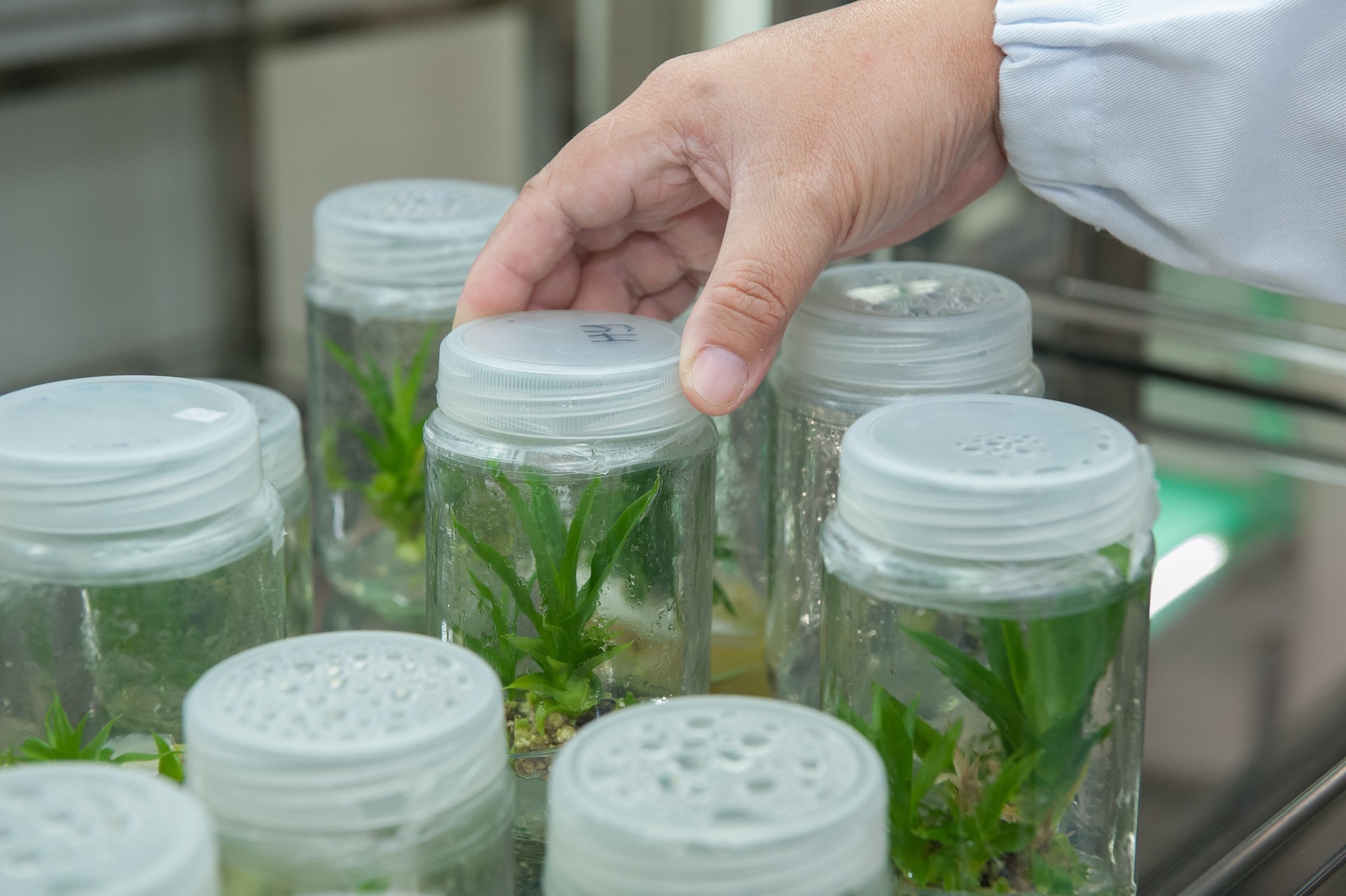
[Kenneth Rodrigues/ Pixabay]

The politics of misinformation and disinformation skews left on GMOs, just as it does for nuclear power. But it skews right for issues like human evolution, vaccines, COVID-19, and climate change, so this isn’t a partisan issue. Yet the issue is profoundly serious. The best tool we have for gaining shared knowledge about our world is the scientific method: the testing of falsifiable propositions through experiments that are transparent, replicable, controlled, and peer-reviewed.

By calling out the misinformed biotechnology narratives that weaken this tool, GMO Crops and Food is helping to protect scientific methods from social harm.

__________________________________________________________________________________________

Robert Paarlberg is an Emeritus Professor of Political Science at Wellesley College, an Associate in the Sustainability Science Program at the Harvard Kennedy School, and an Associate at Harvard’s Weatherhead Center.

O artigo foi publicado originalmente em Cornell Alliance for Science.
Imprimir Artigo
Publicação Anterior

Nasceu uma vitela

Próxima Publicação

Aconteceu em 1923 – A demissão do ministro da Agricultura

Artigos Relacionados

Nacional

Mistério com 8 mil anos: arqueólogos procuram origem das primeiras comunidades de agricultores em Muge

08/08/2026
Nacional

Portugal nunca importou tantos produtos agrícolas

08/08/2026
Nacional

Época de incêndios florestais na Europa expõe lacunas dos seguros climáticos

08/08/2026
Próxima Publicação

Aconteceu em 1923 - A demissão do ministro da Agricultura

Opinião

António Covas
Últimas

O mundo paradoxal do nosso rural tardio e remoto

por António Covas
02/08/2026

Ler maisDetails
Últimas

Azeites de Portugal: tratar diferente o que é diferente

por José Martino
26/07/2026

Ler maisDetails

Subscrever as nossas newsletteres

Subscrever as nossas Newsletters Agroportal

Verifique na sua caixa de correio ou na pasta de spam para confirmar a sua subscrição.

Comunicados

PRR. Portugal recebe 2,3 mil milhões de euros do 9.º pedido de pagamento

08/08/2026

Grande iniciativa de luta dos viticultores pelo futuro do Douro

07/08/2026
Advertisement

Temas em destaque

Candidaturas PU Guerra Médio Oriente Mercosul ovibeja PAC pós 2027 Simplificação PAC Temporais vinho Água que Une

Eventos

Agosto 2026
STQQSSD
      1 2
3 4 5 6 7 8 9
10 11 12 13 14 15 16
17 18 19 20 21 22 23
24 25 26 27 28 29 30
31       
« Jul   Set »

Sobre Nós

O Agroportal.pt é uma plataforma de informação digital que reúne a informação relevante sobre agricultura. Tem um foco na Política Agrícola Comum e a sua aplicação em Portugal.

Menu

  • Quem somos
  • Relatórios anuais
  • Envie-nos informação
  • Publicidade
  • Newsletters
  • Estatuto Editorial
  • Ficha técnica
  • Proteção de Dados Pessoais
  • Disclaimer
Facebook twitter Circle Instagram Rss Feed

© Agroportal. All Rights reserved.

Bem-Vindo De Volta!

Sign In with Facebook
Sign In with Google
OR

Faça login na sua conta abaixo

Esqueceu-se da senha? Registar

Criar Uma Nova Conta!

Sign Up with Facebook
Sign Up with Google
OR

Preencha os campos abaixo para se registar

* Ao se registar-se no nosso site, você concorda com os Termos e Condições e a Política de Privacidade .
Todos os campos são necessários. Entrar

Obter a sua senha

Indique por favor o seu nome de utilizador ou endereço de E-mail para repor a sua senha.

Entrar
  • Login
  • Registar
Sem Resultado
Ver Todos Os Resultados
  • Sugeridas
  • Notícias
    • Nacional
    • Internacional
    • Comunicados
  • Opinião
  • Eventos
  • Dossiers
    • Agricultura Biológica
    • Apoios
    • Artigos Técnicos
    • Biossoluções
    • Cadeia Alimentar
    • Fertilizantes
    • Financiamento
    • Fitofarmacêuticos
    • Florestas
    • Futuro da PAC
    • Inovação
    • Mercados e Cotações agrícolas
    • Newsletters e Revistas
    • Recomendações Agroflorestais
    • Seguros agrícolas
  • Serviços
    • Diretório
    • Emprego
    • Máquinas Agrícolas
    • Meteorologia
    • Terrenos Agrícolas
    • Arquivo Agroportal

© Agroportal. All Rights reserved.

Este site usa cookies. Ao continuar a utilizar este site, está a dar consentimento à utilização de cookies. Visite a nossa Política de Protecção de dados e Cookies.