















Sem Resultado
Ver Todos Os Resultados
Newsletters
Agroportal
  • Login
  • Registar
  • Sugeridas
  • Notícias
    • Notícias
    • Nacional
    • Internacional
    • Comunicados

    Reunião da Comissão de Agricultura e Pescas – 30 de março

    Preocupação das Entidades Cooperadoras da CASES

    BGI

    BGI e AmpliAqua® posicionam-se na linha da frente da regeneração dos solos e da resiliência ao stress abiótico

    Organic production: Targeted updates and simplification

    Carolino do Baixo Mondego reforça presença na AgroBraga e aposta na valorização do consumo nacional

    Preço alto dos fertilizantes vai agravar situação dos produtores angolanos – associações

    pacto climatico europeu

    Pacto Climático Europeu cria site gratuito para ajudar PME a cumprirem diretiva que previne “greenwashing”

    Comissão Europeia aprova apoio de 250 milhões de euros para a floresta portuguesa

    helicóptero de incêndios céu azul

    Coimbra terá monitorização por satélite para combater incêndios

  • Opinião

    Jovem Empresário Rural Não Agrícola, Precisam-se!

    Resultados económicos do sector agrícola em 2025: apesar de menos favoráveis do que os dos últimos anos não põem em causa a evolução bastante positiva da última década

    A Grande Ilusão: Porque têm as nossas Confederações medo da rua?

    Pagar pelo “invisível” e o porquê da agricultura portuguesa não pode continuar a oferecer serviços ecológicos “de graça”?

    Quando a água é escassa, a agricultura é um “utilizador como os outros” … ou um setor estratégico que deve ter prioridade?

    Georgete Felix

    Risco climático, Agricultura e ESG

    A Política Agrícola (pouco!) Comum

    Agrovoltaico: quando a energia deixa de ser apenas custo e passa a ser também receita

    Abacate: uma cultura em forte afirmação nas agriculturas de Portugal

  • Eventos
  • Dossiers

    Dossiers I

    • Agricultura Biológica
    • Apoios
    • Artigos Técnicos
    • Biossoluções
    • Cadeia Alimentar
    • Fertilizantes
    • Financiamento
    • Fitofarmacêuticos

    Dossiers II

    • Florestas
    • Futuro da PAC
    • Inovação
    • Mercados
    • Newsletters e Revistas
    • Recomendações Agroflorestais
    • Seguros

    Últimas

    Preço alto dos fertilizantes vai agravar situação dos produtores angolanos – associações

    30/03/2026

    Comissão Europeia aprova apoio de 250 milhões de euros para a floresta portuguesa

    30/03/2026

    Agricultura não vai ter cortes no próximo orçamento comunitário, garante ministro

    30/03/2026

    Confagri critica apoio do Governo: “10 cêntimos por litro são irrisórios face a Espanha”

    30/03/2026

    Tempestades. Ministro da Agricultura pede a interessados que apresentem candidaturas

    30/03/2026

    Irão: Medidas de apoio aos combustíveis não servem “para compensar os agricultores” – Confagri

    30/03/2026
  • Serviços
    • Diretório
    • Emprego
    • Máquinas Agrícolas
    • Meteorologia
    • Terrenos Agrícolas
    • Arquivo Agroportal
Agroportal
  • Sugeridas
  • Notícias
    • Notícias
    • Nacional
    • Internacional
    • Comunicados

    Reunião da Comissão de Agricultura e Pescas – 30 de março

    Preocupação das Entidades Cooperadoras da CASES

    BGI

    BGI e AmpliAqua® posicionam-se na linha da frente da regeneração dos solos e da resiliência ao stress abiótico

    Organic production: Targeted updates and simplification

    Carolino do Baixo Mondego reforça presença na AgroBraga e aposta na valorização do consumo nacional

    Preço alto dos fertilizantes vai agravar situação dos produtores angolanos – associações

    pacto climatico europeu

    Pacto Climático Europeu cria site gratuito para ajudar PME a cumprirem diretiva que previne “greenwashing”

    Comissão Europeia aprova apoio de 250 milhões de euros para a floresta portuguesa

    helicóptero de incêndios céu azul

    Coimbra terá monitorização por satélite para combater incêndios

  • Opinião

    Jovem Empresário Rural Não Agrícola, Precisam-se!

    Resultados económicos do sector agrícola em 2025: apesar de menos favoráveis do que os dos últimos anos não põem em causa a evolução bastante positiva da última década

    A Grande Ilusão: Porque têm as nossas Confederações medo da rua?

    Pagar pelo “invisível” e o porquê da agricultura portuguesa não pode continuar a oferecer serviços ecológicos “de graça”?

    Quando a água é escassa, a agricultura é um “utilizador como os outros” … ou um setor estratégico que deve ter prioridade?

    Georgete Felix

    Risco climático, Agricultura e ESG

    A Política Agrícola (pouco!) Comum

    Agrovoltaico: quando a energia deixa de ser apenas custo e passa a ser também receita

    Abacate: uma cultura em forte afirmação nas agriculturas de Portugal

  • Eventos
  • Dossiers

    Dossiers I

    • Agricultura Biológica
    • Apoios
    • Artigos Técnicos
    • Biossoluções
    • Cadeia Alimentar
    • Fertilizantes
    • Financiamento
    • Fitofarmacêuticos

    Dossiers II

    • Florestas
    • Futuro da PAC
    • Inovação
    • Mercados
    • Newsletters e Revistas
    • Recomendações Agroflorestais
    • Seguros

    Últimas

    Preço alto dos fertilizantes vai agravar situação dos produtores angolanos – associações

    30/03/2026

    Comissão Europeia aprova apoio de 250 milhões de euros para a floresta portuguesa

    30/03/2026

    Agricultura não vai ter cortes no próximo orçamento comunitário, garante ministro

    30/03/2026

    Confagri critica apoio do Governo: “10 cêntimos por litro são irrisórios face a Espanha”

    30/03/2026

    Tempestades. Ministro da Agricultura pede a interessados que apresentem candidaturas

    30/03/2026

    Irão: Medidas de apoio aos combustíveis não servem “para compensar os agricultores” – Confagri

    30/03/2026
  • Serviços
    • Diretório
    • Emprego
    • Máquinas Agrícolas
    • Meteorologia
    • Terrenos Agrícolas
    • Arquivo Agroportal
Sem Resultado
Ver Todos Os Resultados
Agroportal
Chalmers University of Technology

The food commodities driving deforestation globally

por Agroportal
24-03-2026 | 05:30
em Últimas, Internacional
Tempo De Leitura: 5 mins
A A
Partilhe no FacebookPartilhe no TwitterEnviar para o WhatsappEnviar para o TelegramEnviar para o LinkedIn

Maize, rice and cassava drive more deforestation than major export-oriented crops like cocoa, coffee, and rubber. This has been shown by researchers from Chalmers University of Technology, Sweden, in the most comprehensive global survey of how different commodities are causing deforestation. The study confirms the major impact of meat production, but reveals several overlooked drivers of deforestation.

Food production is the main cause of deforestation in the world, but until now there has not been any detailed mapping of which crops affect deforestation in which countries.

Chandrakant Singh, researcher at Chalmers University of Technology, is the lead author of a new study that addresses this knowledge gap. He has developed the Deforestation Driver and Carbon Emissions (DeDuCE) model, together with his colleague Martin Persson, who has extensive experience researching which agricultural commodities drive deforestation. The model links agricultural products with data on deforestation globally.

“Deforestation’s links to food production have long been studied, but have often focused on some products, such as beef, soybeans and palm oil, which are well known in the context of deforestation; and some countries in the world, such as Brazil or Indonesia. In our study, we’ve combined extensive satellite data on land use with agriculture statistics in a way that gives us the most comprehensive and accurate picture yet of what is driving deforestation worldwide,” says Singh.

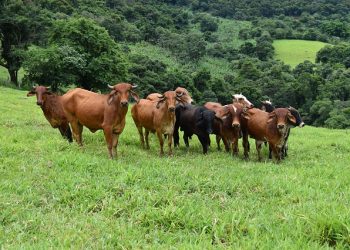
The model covers 179 countries and 184 commodities. It shows that a total of 122 million hectares of forest have disappeared due to agriculture-driven deforestation during the period 2001–2022, of which more than 80 per cent has been lost in the tropics. The study confirms what we previously knew about the main drivers of deforestation: clearing forests to create pasture for meat production, as well as producing major export commodities such as soybeans and palm oil. But the study also contributes some more unexpected results.

Staples a strong driver of deforestation

The mapping shows that locally produced and consumed staple crops have a greater impact on deforestation than many major export commodities. Staple crops such as maize, rice and cassava together are responsible for about 11 percent of all agriculture-driven deforestation, while the figure for cocoa, coffee and rubber combined is less than 5 per cent.

Unlike many other commodities, such as palm oil in South-East Asia and soybeans in South America, deforestation linked to staple crops is not concentrated to specific regions, but is distributed across large parts of the globe.

“The debate on deforestation has circulated a lot around how people in rich countries like ours cause deforestation with our commodities imports, and this is absolutely important to get to grips with. But we mustn’t forget that a large proportion of deforestation is driven by agricultural production for domestic markets. So to really reduce deforestation, we must also take action in the producer countries,” says Martin Persson.

The researchers hope that their results can provide important decision support for government agencies and companies wanting to take action to reduce deforestation.

“Our data shows where the risks are and where initiatives are needed most. The goal is for the model to connect researchers, decision-makers, companies and civil society,” says Singh.

Emissions from deforestation lower than anticipated

The study also provides a detailed picture of the carbon dioxide emissions that deforestation associated with agricultural and forestry products causes. Farmers and cattle ranchers often clear forested land by burning it, which means that the carbon stored in the vegetation is emitted as carbon dioxide.

These emissions are estimated at around 41 billion tonnes of carbon dioxide between 2001 and 2022, or on average close to 2 billion tonnes per year. This is a much lower figure than in previous global compilations, where annual carbon dioxide emissions have been estimated at more than twice these figures. According to Dr. Singh, the difference can be explained by the fact that their study has used a finer-scale attribution method than those used in the previous calculations.

“But even if the figure is lower than previous estimates, agriculture-driven deforestation still causes around 5 per cent of the world’s total carbon dioxide emissions,” he says.

Improving the model further the goal

The researchers estimate that the model will be expanded to include non-food commodities in the future.

“We see a need to broaden the analysis beyond food and agriculture. One example is the mining and energy sector, which is a major driver of both direct and indirect deforestation. By broadening the analysis, we can get a more complete picture of which economic activities are putting pressure on forests around the world,” says Singh.

More about the research:

The study Global patterns of commodity-driven deforestation and associated carbon emissions has been published in Nature Food. The authors are Chandrakant Singh and Martin Persson, who are researchers active at Chalmers University of Technology, Sweden.

The study’s data and source code are free to use. More information can be found on the online deforestation footprint dashboard.

Further reading:

In connection with COP 30 in November 2025, the WWF published a report on deforestation in the Amazon, based on the study and its DeDuCE model. Read Chalmers’ press release about the report: Amazon rainforest is being deforested – and Swedes’ coffee-drinking plays a bigger role than our meat-eating

More about global deforestation

The figures relate to agriculture-driven deforestation between 2001 and 2022

Commodities driving global deforestation

  • Beef (40 per cent)
  • Palm oil (9 per cent)
  • Soy beans (5 per cent)
  • Maize (4 per cent)
  • Rice (4 per cent)
  • Cassava (3 per cent)
  • Cocoa (2 per cent)
  • Coffee (1per cent)
  • Rubber (1 per cent)

Countries responsible for the biggest shares of global deforestation

  • Brazil (32 per cent)
  • Indonesia (9 per cent)
  • China (6 per cent)
  • Democratic Republic of Congo (6 per cent)
  • USA (5 per cent)
  • Ivory Coast (3 per cent)

Fonte: Chalmers
Imprimir Artigo
Publicação Anterior

“Regar” é aumentar o nível de riqueza e bem-estar de cada português – Afonso Bulhão Martins

Próxima Publicação

Oferta de Emprego: Kiwa Portugal – Auditor – Engenheiro Agrónomo

Artigos Relacionados

Últimas

Reunião da Comissão de Agricultura e Pescas – 30 de março

30/03/2026
Últimas

Preocupação das Entidades Cooperadoras da CASES

30/03/2026
BGI
Últimas

BGI e AmpliAqua® posicionam-se na linha da frente da regeneração dos solos e da resiliência ao stress abiótico

30/03/2026
Próxima Publicação

Oferta de Emprego: Kiwa Portugal - Auditor – Engenheiro Agrónomo

Opinião

Últimas

Jovem Empresário Rural Não Agrícola, Precisam-se!

por José Martino
29/03/2026

Ler mais
Últimas

Resultados económicos do sector agrícola em 2025: apesar de menos favoráveis do que os dos últimos anos não põem em causa a evolução bastante positiva da última década

por Francisco Avillez e Manuela Nina Jorge
22/03/2026

Ler mais

Subscrever as nossas newsletteres

Subscrever as nossas Newsletters Agroportal

Verifique na sua caixa de correio ou na pasta de spam para confirmar a sua subscrição.

Comunicados

Reunião da Comissão de Agricultura e Pescas – 30 de março

30/03/2026

Preocupação das Entidades Cooperadoras da CASES

30/03/2026
Advertisement

Temas em destaque

Candidaturas PU Guerra Médio Oriente Mercosul PAC pós 2027 Simplificação PAC Temporais Água que Une

Eventos

Março 2026
STQQSSD
       1
2 3 4 5 6 7 8
9 10 11 12 13 14 15
16 17 18 19 20 21 22
23 24 25 26 27 28 29
30 31      
« Fev   Abr »

Sobre Nós

O Agroportal.pt é uma plataforma de informação digital que reúne a informação relevante sobre agricultura. Tem um foco na Política Agrícola Comum e a sua aplicação em Portugal.

Menu

  • Quem somos
  • Relatórios anuais
  • Envie-nos informação
  • Publicidade
  • Newsletters
  • Estatuto Editorial
  • Ficha técnica
  • Proteção de Dados Pessoais
  • Disclaimer
Facebook twitter Circle Instagram Rss Feed

© Agroportal. All Rights reserved.

  • Login
  • Registar
Sem Resultado
Ver Todos Os Resultados
  • Sugeridas
  • Notícias
    • Nacional
    • Internacional
    • Comunicados
  • Opinião
  • Eventos
  • Dossiers
    • Agricultura Biológica
    • Apoios
    • Artigos Técnicos
    • Biossoluções
    • Cadeia Alimentar
    • Fertilizantes
    • Financiamento
    • Fitofarmacêuticos
    • Florestas
    • Futuro da PAC
    • Inovação
    • Mercados e Cotações agrícolas
    • Newsletters e Revistas
    • Recomendações Agroflorestais
    • Seguros agrícolas
  • Serviços
    • Diretório
    • Emprego
    • Máquinas Agrícolas
    • Meteorologia
    • Terrenos Agrícolas
    • Arquivo Agroportal

© Agroportal. All Rights reserved.

Bem-Vindo De Volta!

Sign In with Facebook
Sign In with Google
OU

Faça login na sua conta abaixo

Esqueceu-se da senha? Registar

Criar Uma Nova Conta!

Sign Up with Facebook
Sign Up with Google
OU

Preencha os campos abaixo para se registar

* Ao se registar-se no nosso site, você concorda com os Termos e Condições e a Política de Privacidade .
Todos os campos são necessários. Entrar

Obter a sua senha

Indique por favor o seu nome de utilizador ou endereço de E-mail para repor a sua senha.

Entrar
Este site usa cookies. Ao continuar a utilizar este site, está a dar consentimento à utilização de cookies. Visite a nossa Política de Protecção de dados e Cookies.