














Sem Resultado
Ver Todos Os Resultados
Newsletters
Agroportal
  • Login
  • Registar
  • Sugeridas
  • Notícias
    • Notícias
    • Nacional
    • Internacional
    • Comunicados

    Governo vai investir mais 4,5 ME no Aproveitamento Hidroagrícola do Xévora em Campo Maior

    Aumentar a produtividade em contexto de crescimento generalizado de preços

    Proteção Civil alerta para previsão meteorológica favorável a incêndios rurais

    Guarda: Projeto “Heróis da Fruta” faz subir os lanches saudáveis para 80% nas escolas do distrito

    javali

    Governo vai pagar 50 euros por javali macho e 70 euros por fêmea para aumentar abates

    Miranda do Douro: Cidade acolhe pela primeira vez encontro de apicultores da Terra de Miranda

    Albergaria-a-Velha: Festival Internacional de Cinema Documental sobre o pão regressa a 18

    food fork knife

    Alunos de Castro Verde levam aplicação contra o desperdício alimentar à final nacional do Apps for Good

    São Pedro do Sul: Município reivindica integração no projeto-piloto nacional para o controlo dos javalis

  • Opinião

    Solo: A Infraestrutura Invisível da Adaptação Climática

    Ibéria: a terra prometida a quem?

    O Impacto da agricultura regenerativa sobre os resultados económicos das explorações agrícolas

    Ibéria – a terra prometida

    O dia em que a Europa descobrir o elevado preço de não produzir

    As cooperativas não pagam IRC. E depois?

    500 milhões de Euros por Ano Não Chega Sem Planeamento

    António Covas

    O mundo paradoxal do nosso rural tardio e remoto

    Azeites de Portugal: tratar diferente o que é diferente

  • Eventos
  • Dossiers

    Dossiers I

    • Agricultura Biológica
    • Apoios
    • Artigos Técnicos
    • Biossoluções
    • Cadeia Alimentar
    • Fertilizantes
    • Financiamento
    • Fitofarmacêuticos

    Dossiers II

    • Florestas
    • Futuro da PAC
    • Inovação
    • Mercados
    • Newsletters e Revistas
    • Recomendações Agroflorestais
    • Seguros

    Últimas

    Gasóleo agrícola mantém apoio de 10 cêntimos até ao final do ano

    14/09/2026
    pepac logo 23 27

    PEPAC 2023-2027: Pedidos de alteração de datas disponíveis

    14/09/2026

    Europe’s fertiliser dilemma: Balancing affordability, competitiveness and strategic autonomy

    14/09/2026

    Reestruturação de vinhas tem apoio excecional de 5 milhões de euros

    14/09/2026

    Clube Produtores Florestais alia-se a John Deere, Hitachi, Komatsu e Vicort para acelerar a modernização florestal

    14/09/2026

    Sapadores florestais, do apego à função ao desejo de uma carreira

    13/09/2026
  • Serviços
    • Diretório
    • Emprego
    • Máquinas Agrícolas
    • Meteorologia
    • Terrenos Agrícolas
    • Arquivo Agroportal
Agroportal
  • Sugeridas
  • Notícias
    • Notícias
    • Nacional
    • Internacional
    • Comunicados

    Governo vai investir mais 4,5 ME no Aproveitamento Hidroagrícola do Xévora em Campo Maior

    Aumentar a produtividade em contexto de crescimento generalizado de preços

    Proteção Civil alerta para previsão meteorológica favorável a incêndios rurais

    Guarda: Projeto “Heróis da Fruta” faz subir os lanches saudáveis para 80% nas escolas do distrito

    javali

    Governo vai pagar 50 euros por javali macho e 70 euros por fêmea para aumentar abates

    Miranda do Douro: Cidade acolhe pela primeira vez encontro de apicultores da Terra de Miranda

    Albergaria-a-Velha: Festival Internacional de Cinema Documental sobre o pão regressa a 18

    food fork knife

    Alunos de Castro Verde levam aplicação contra o desperdício alimentar à final nacional do Apps for Good

    São Pedro do Sul: Município reivindica integração no projeto-piloto nacional para o controlo dos javalis

  • Opinião

    Solo: A Infraestrutura Invisível da Adaptação Climática

    Ibéria: a terra prometida a quem?

    O Impacto da agricultura regenerativa sobre os resultados económicos das explorações agrícolas

    Ibéria – a terra prometida

    O dia em que a Europa descobrir o elevado preço de não produzir

    As cooperativas não pagam IRC. E depois?

    500 milhões de Euros por Ano Não Chega Sem Planeamento

    António Covas

    O mundo paradoxal do nosso rural tardio e remoto

    Azeites de Portugal: tratar diferente o que é diferente

  • Eventos
  • Dossiers

    Dossiers I

    • Agricultura Biológica
    • Apoios
    • Artigos Técnicos
    • Biossoluções
    • Cadeia Alimentar
    • Fertilizantes
    • Financiamento
    • Fitofarmacêuticos

    Dossiers II

    • Florestas
    • Futuro da PAC
    • Inovação
    • Mercados
    • Newsletters e Revistas
    • Recomendações Agroflorestais
    • Seguros

    Últimas

    Gasóleo agrícola mantém apoio de 10 cêntimos até ao final do ano

    14/09/2026
    pepac logo 23 27

    PEPAC 2023-2027: Pedidos de alteração de datas disponíveis

    14/09/2026

    Europe’s fertiliser dilemma: Balancing affordability, competitiveness and strategic autonomy

    14/09/2026

    Reestruturação de vinhas tem apoio excecional de 5 milhões de euros

    14/09/2026

    Clube Produtores Florestais alia-se a John Deere, Hitachi, Komatsu e Vicort para acelerar a modernização florestal

    14/09/2026

    Sapadores florestais, do apego à função ao desejo de uma carreira

    13/09/2026
  • Serviços
    • Diretório
    • Emprego
    • Máquinas Agrícolas
    • Meteorologia
    • Terrenos Agrícolas
    • Arquivo Agroportal
Sem Resultado
Ver Todos Os Resultados
Agroportal

Investing in genomic research can boost poor countries’ access to rich science

por Cornell Alliance for Science
23-08-2022 | 13:15
em Últimas, Internacional, Notícias inovação
Tempo De Leitura: 4 mins
A A
Partilhe no FacebookPartilhe no TwitterEnviar para o WhatsappEnviar para o TelegramEnviar para o LinkedIn

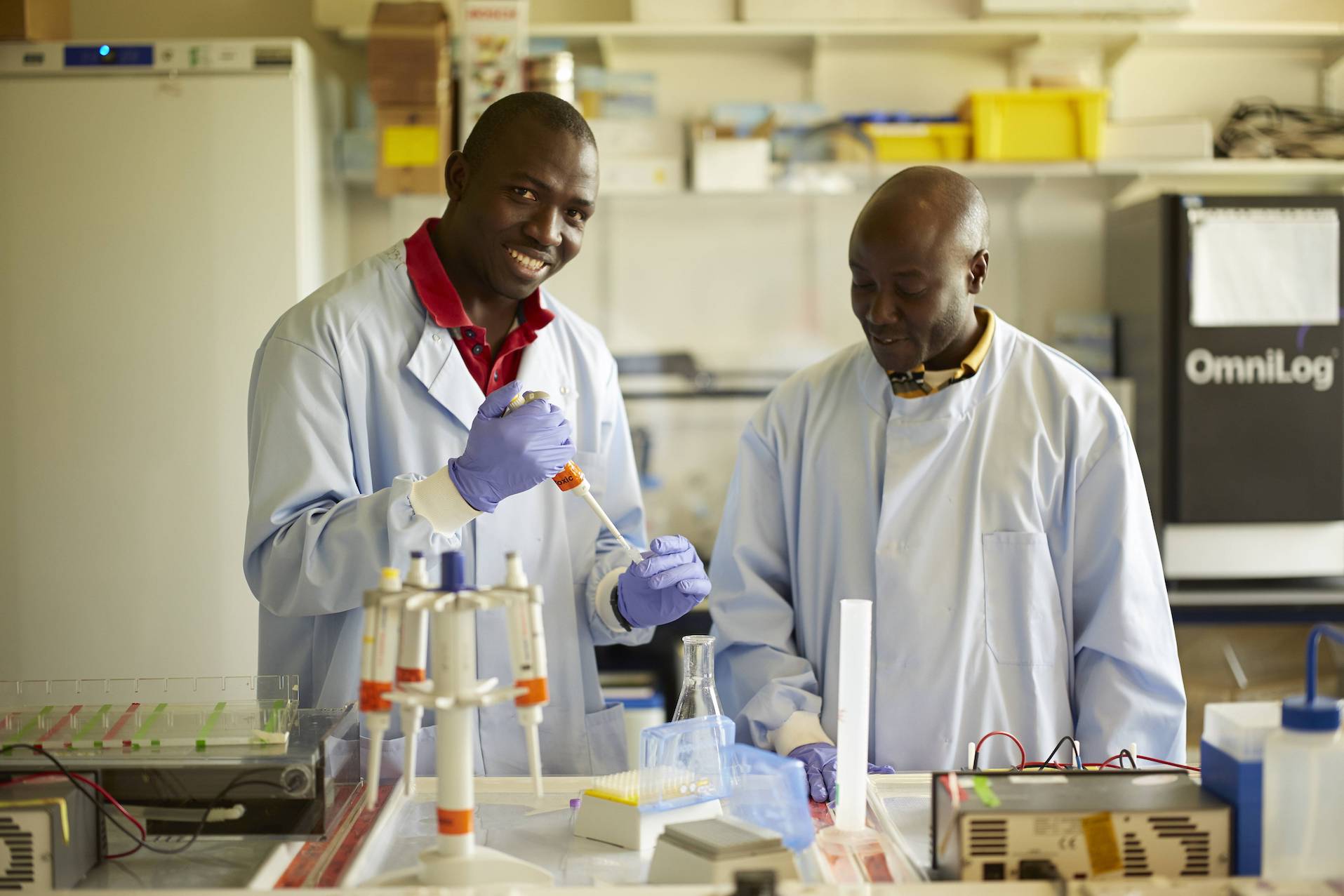
Africa holds genetic diversity unrivaled for any population in the world but it is on the back foot in benefitting from genomics technology that increases economic development.

Rich countries have the lion’s share of this breakthrough technology, with poor countries — many of them in Africa  — losing out on the benefits from genomics research that has helped boost public health,  notes  a new report by the Science Council of the World Health Organization (WHO).

Genomics is the study of genes and their complex effect on influencing the growth and development of organisms, according to the WHO. Through genomics, genes can be arranged in a particular order or assessed to discover patterns to their order. This insight allows scientists to manipulate genes to prevent or manage certain diseases, making genomics technology important in improving public health.

Genomic research has been applied in the development of new vaccines, such as for HIV and AIDS, and investigating infectious disease outbreaks such as the Ebola virus. In addition, genomics have been applied in plant and animal breeding, in legal proceedings and in DNA testing.

Citing a combination of poor investment in research and development, limited personnel and lack of infrastructure, poor economies are not tapping the benefits of genomic research, the Science Council found in its first report, published in July 2022.

Established in 2021 by the WHO Director-General, the Science Council advises on advances in science and technology that could directly improve global health. Its first focus since its establishment was on genomic research in public health.

“It is pretty self-evident that poor countries do not have the money for research and they can get access to data the way other people do — by going to the database on the internet,” opined Harold Varmus, chairman of the Science Council.

With the costs of accessing genomic technology decreasing, there is an opportunity for developing countries to use genomic tools for more accurate diagnosis, for instance for cancer patients,  Varmus said, citing testimony from investigators, clinicians and advocacy groups in poor countries on the value of new technologies for health care that have emerged from genomic research.

“We think that a national plan in each country, which makes clear what purposes genomic technology would serve each country, could make the effort affordable and achievable,” he said, adding that countries can use genomics more effectively through national, regional and international research collaborations.

Poor countries gain access to the genomics technology long after rich countries despite a decline in the costs of establishing and expanding these technologies, the  Science Council said, recommending advocacy, implementation and collaboration in the adoption of genomics.

Despite a commitment by African governments to spend at least 1 percent of their GDP on research and development to increase innovation, productivity and economic growth, Africa also needs to incentivize the private sector to increase its investment in the same, advised the Economic Commission for Africa.

According to the United Nations Educational, Scientific and Cultural Organization (UNESCO) in a 2021 science report, The Race Against Time for Smarter Development, no African country is spending 1 percent of its gross domestic product (GDP) on research and development. This is despite a huge growth in science spending in other parts of the world.

Calling for investment in science in the face of the growing crises, UNESCO noted that science should be made less unequal and more open to all communities.

Dr. Segun Fatumo, associate professor in the Department of Non-Communicable Disease Epidemiology at the London School of Hygiene and Tropical Medicine in the United Kingdom, underscored the importance of African governments to invest in genomic research. He said Africans are under-represented in genomic studies globally.

“A lot of African governments are not paying attention to genomic research because  they do not see value in research, whereas a lot of countries around the world understand the benefit of genomic studies. For example, in UK we have had a study representing 500,000 people while in the US they talk of  1 million people in one study,” said Fatumo, who is also the group leader of the  African Computational Genomics (TACG) Research Group at the Medical Research Council in Uganda.

Fatumo believes the lack of infrastructure and capacity to analyze data is another reason Africa is underrepresented in genomics research. 

Dr. Lamech Mwapagha,  a senior lecturer and research scientist in the Department of Natural and Applied Sciences at the Namibia University of Science and Technology, concurred that infrastructure is one of the biggest obstacles to Africa benefiting from genomics research.

“The reason why Africa would play second fiddle is not that we do not have the knowledge. We have the knowledge but the issue is funding, infrastructure and the shortage of scientists with knowledge of genomics,” said Mwapagha, whose research interests include cancer genomics, the human microbiome and cancer.

“Genomics technology can be shared equally because if the opposite is true then it will be very bad for genomics,” said Mwapagha, adding that given the experience of COVID and the Global North’s hoarding of vaccines, it is critical for African scientists to share their knowledge for such purposes as determining mutations like Omicron.

“If Botswana and South Africa did not have  the right infrastructure, we would not have been able to  say that there is a new variant that has come up,” Mwapagha said. “Genomics technology can and  should be equally shared if we are to be able to eliminate some diseases, epidemics and pandemics.”

O artigo foi publicado originalmente em Cornell Alliance for Science.

Imprimir Artigo
Publicação Anterior

McDonald’s ayuda al sector agrícola por los incendios con la emotiva “La hamburguesa que no pudo ser”

Próxima Publicação

Ourém pede declaração de estado de calamidade

Artigos Relacionados

Nacional

Governo vai investir mais 4,5 ME no Aproveitamento Hidroagrícola do Xévora em Campo Maior

14/09/2026
Últimas

Aumentar a produtividade em contexto de crescimento generalizado de preços

14/09/2026
Nacional

Proteção Civil alerta para previsão meteorológica favorável a incêndios rurais

14/09/2026
Próxima Publicação
ourem calamidade

Ourém pede declaração de estado de calamidade

Opinião

Últimas

Solo: A Infraestrutura Invisível da Adaptação Climática

por Maria João Sacadura
13/09/2026

Ler maisDetails
Últimas

Ibéria: a terra prometida a quem?

por António Reis Pereira
09/09/2026

Ler maisDetails

Subscrever as nossas newsletteres

Subscrever as nossas Newsletters Agroportal

Verifique na sua caixa de correio ou na pasta de spam para confirmar a sua subscrição.

Comunicados

Aumentar a produtividade em contexto de crescimento generalizado de preços

14/09/2026
ESAC

O paradoxo das áreas do futuro: há procura por profissionais, mas continuam a existir muitas vagas no ensino superior

14/09/2026
Advertisement

Temas em destaque

Candidaturas PU Guerra Médio Oriente Mercosul ovibeja PAC pós 2027 Simplificação PAC Temporais vinho Água que Une

Eventos

Setembro 2026
STQQSSD
  1 2 3 4 5 6
7 8 9 10 11 12 13
14 15 16 17 18 19 20
21 22 23 24 25 26 27
28 29 30     
« Ago   Out »

Sobre Nós

O Agroportal.pt é uma plataforma de informação digital que reúne a informação relevante sobre agricultura. Tem um foco na Política Agrícola Comum e a sua aplicação em Portugal.

Menu

  • Quem somos
  • Relatórios anuais
  • Envie-nos informação
  • Publicidade
  • Newsletters
  • Estatuto Editorial
  • Ficha técnica
  • Proteção de Dados Pessoais
  • Disclaimer
Facebook twitter Circle Instagram Rss Feed

© Agroportal. All Rights reserved.

Bem-Vindo De Volta!

Sign In with Facebook
Sign In with Google
OR

Faça login na sua conta abaixo

Esqueceu-se da senha? Registar

Criar Uma Nova Conta!

Sign Up with Facebook
Sign Up with Google
OR

Preencha os campos abaixo para se registar

* Ao se registar-se no nosso site, você concorda com os Termos e Condições e a Política de Privacidade .
Todos os campos são necessários. Entrar

Obter a sua senha

Indique por favor o seu nome de utilizador ou endereço de E-mail para repor a sua senha.

Entrar
  • Login
  • Registar
Sem Resultado
Ver Todos Os Resultados
  • Sugeridas
  • Notícias
    • Nacional
    • Internacional
    • Comunicados
  • Opinião
  • Eventos
  • Dossiers
    • Agricultura Biológica
    • Apoios
    • Artigos Técnicos
    • Biossoluções
    • Cadeia Alimentar
    • Fertilizantes
    • Financiamento
    • Fitofarmacêuticos
    • Florestas
    • Futuro da PAC
    • Inovação
    • Mercados e Cotações agrícolas
    • Newsletters e Revistas
    • Recomendações Agroflorestais
    • Seguros agrícolas
  • Serviços
    • Diretório
    • Emprego
    • Máquinas Agrícolas
    • Meteorologia
    • Terrenos Agrícolas
    • Arquivo Agroportal

© Agroportal. All Rights reserved.

Este site usa cookies. Ao continuar a utilizar este site, está a dar consentimento à utilização de cookies. Visite a nossa Política de Protecção de dados e Cookies.