















Sem Resultado
Ver Todos Os Resultados
Newsletters
Agroportal
  • Login
  • Registar
  • Sugeridas
  • Notícias
    • Notícias
    • Nacional
    • Internacional
    • Comunicados

    Soluções inovadoras contra o míldio respondem à nova realidade climática

    COM-PACTO participa no BioBlitz com atividades interativas sobre biodiversidade e PAC

    DGAV

    DGAV | Contratação de Técnico(a)s Superiores– Prestação de Serviços (Avença)

    Portugal tem quase 1.100 variedades agrícolas e hortícolas

    cavalos em pasto verde

    Centenário leilão na Coudelaria de Alter leva ‘à praça’ 23 animais este mês

    “Emoções em Perigo” chegou a Lisboa e expõe a extinção acelerada das espécies

    Faculdade de Ciências ULisboa

    Investigadores de CIÊNCIAS descobrem seis novas espécies de aranhas

    Incêndios: Publicados nomes da comissão técnica independente para avaliar fogos de 2025

    vaca com brincos amarelos

    Tribunal decreta insolvência do Matadouro do Cachão a pedido de “fundo abutre”

  • Opinião
    João Dinis

    Pastores e queijo da serra

    Sofia Almeida

    O lobo-ibérico é um teste à seriedade das políticas de conservação

    Jovem Empresário Rural Não Agrícola, Precisam-se!

    Resultados económicos do sector agrícola em 2025: apesar de menos favoráveis do que os dos últimos anos não põem em causa a evolução bastante positiva da última década

    A Grande Ilusão: Porque têm as nossas Confederações medo da rua?

    Pagar pelo “invisível” e o porquê da agricultura portuguesa não pode continuar a oferecer serviços ecológicos “de graça”?

    Quando a água é escassa, a agricultura é um “utilizador como os outros” … ou um setor estratégico que deve ter prioridade?

    Georgete Felix

    Risco climático, Agricultura e ESG

    A Política Agrícola (pouco!) Comum

  • Eventos
  • Dossiers

    Dossiers I

    • Agricultura Biológica
    • Apoios
    • Artigos Técnicos
    • Biossoluções
    • Cadeia Alimentar
    • Fertilizantes
    • Financiamento
    • Fitofarmacêuticos

    Dossiers II

    • Florestas
    • Futuro da PAC
    • Inovação
    • Mercados
    • Newsletters e Revistas
    • Recomendações Agroflorestais
    • Seguros

    Últimas

    Soluções inovadoras contra o míldio respondem à nova realidade climática

    16/04/2026

    Cotações – Aves e Ovos – 6 a 12 de abril de 2026

    16/04/2026

    Cotações – Suínos – 6 a 12 de abril de 2025

    16/04/2026

    Já em circulação, o PINUSPRESS n.º 68

    16/04/2026

    Ciberataque expõe contratos e dados da Navigator na dark web

    16/04/2026

    CRISPR | Tomates com menos histamina? Edição genética abre caminho a variedades mais seguras

    16/04/2026
  • Serviços
    • Diretório
    • Emprego
    • Máquinas Agrícolas
    • Meteorologia
    • Terrenos Agrícolas
    • Arquivo Agroportal
Agroportal
  • Sugeridas
  • Notícias
    • Notícias
    • Nacional
    • Internacional
    • Comunicados

    Soluções inovadoras contra o míldio respondem à nova realidade climática

    COM-PACTO participa no BioBlitz com atividades interativas sobre biodiversidade e PAC

    DGAV

    DGAV | Contratação de Técnico(a)s Superiores– Prestação de Serviços (Avença)

    Portugal tem quase 1.100 variedades agrícolas e hortícolas

    cavalos em pasto verde

    Centenário leilão na Coudelaria de Alter leva ‘à praça’ 23 animais este mês

    “Emoções em Perigo” chegou a Lisboa e expõe a extinção acelerada das espécies

    Faculdade de Ciências ULisboa

    Investigadores de CIÊNCIAS descobrem seis novas espécies de aranhas

    Incêndios: Publicados nomes da comissão técnica independente para avaliar fogos de 2025

    vaca com brincos amarelos

    Tribunal decreta insolvência do Matadouro do Cachão a pedido de “fundo abutre”

  • Opinião
    João Dinis

    Pastores e queijo da serra

    Sofia Almeida

    O lobo-ibérico é um teste à seriedade das políticas de conservação

    Jovem Empresário Rural Não Agrícola, Precisam-se!

    Resultados económicos do sector agrícola em 2025: apesar de menos favoráveis do que os dos últimos anos não põem em causa a evolução bastante positiva da última década

    A Grande Ilusão: Porque têm as nossas Confederações medo da rua?

    Pagar pelo “invisível” e o porquê da agricultura portuguesa não pode continuar a oferecer serviços ecológicos “de graça”?

    Quando a água é escassa, a agricultura é um “utilizador como os outros” … ou um setor estratégico que deve ter prioridade?

    Georgete Felix

    Risco climático, Agricultura e ESG

    A Política Agrícola (pouco!) Comum

  • Eventos
  • Dossiers

    Dossiers I

    • Agricultura Biológica
    • Apoios
    • Artigos Técnicos
    • Biossoluções
    • Cadeia Alimentar
    • Fertilizantes
    • Financiamento
    • Fitofarmacêuticos

    Dossiers II

    • Florestas
    • Futuro da PAC
    • Inovação
    • Mercados
    • Newsletters e Revistas
    • Recomendações Agroflorestais
    • Seguros

    Últimas

    Soluções inovadoras contra o míldio respondem à nova realidade climática

    16/04/2026

    Cotações – Aves e Ovos – 6 a 12 de abril de 2026

    16/04/2026

    Cotações – Suínos – 6 a 12 de abril de 2025

    16/04/2026

    Já em circulação, o PINUSPRESS n.º 68

    16/04/2026

    Ciberataque expõe contratos e dados da Navigator na dark web

    16/04/2026

    CRISPR | Tomates com menos histamina? Edição genética abre caminho a variedades mais seguras

    16/04/2026
  • Serviços
    • Diretório
    • Emprego
    • Máquinas Agrícolas
    • Meteorologia
    • Terrenos Agrícolas
    • Arquivo Agroportal
Sem Resultado
Ver Todos Os Resultados
Agroportal
vaca

5 ways CRISPR-engineered animals can help combat climate change

por Cornell Alliance for Science
29-01-2020 | 19:01
em Últimas, Internacional, Sugeridas, Notícias inovação, Inovação, Dossiers
Tempo De Leitura: 6 mins
A A
Partilhe no FacebookPartilhe no TwitterEnviar para o WhatsappEnviar para o TelegramEnviar para o LinkedIn

Climate change is a man-made problem, but humans aren’t the only animals that will be impacted by warming temperatures and shifting weather patterns. Climate change threatens many coral reefs and other native species, fish and livestock. Scientists are working to address these issues by adapting the gene editing technology known as CRISPR for use in animals.

1. CRISPR-engineered coral reefs

Coral reefs are threatened by many anthropogenic activities, but the effects of climate change are especially potent. Heat waves have already killed half of the coral in the Great Barrier Reef. Scientists have been trying to breed coral for improved heat tolerance, but corals are finicky breeders. Corals also only spawn once per year. That’s a small window. What’s worse, successfully transferring a desirable trait could take several breeding cycles. But the reefs do not have years to wait.

Coral scientists needed a way to speed up evolution to keep pace with the fast changing climate. Last spring, Stanford, the University of Texas, and the Australian Institute of Marine Science teamed up to demonstrate, for the first time, that it’s possible to tweak genes in coral using CRISPR.

2. Protecting livestock with CRISPR

The current climate creates natural barriers that prevent the spread of diseases and the animals that carry them. Climate change will cause weather patterns to shift and with that, the boundaries of some pathogens will shift as well. Since bacteria and viruses tend to fare better in warmer climates, this shift will likely not be a positive one.

As the playground for diseases expands, animals, including livestock, are likely to become threatened by diseases in areas where those diseases were not previously an issue. Fortunately, scientists are already using CRISPR to engineer disease resistance in several livestock including cows, pigs and chickens.

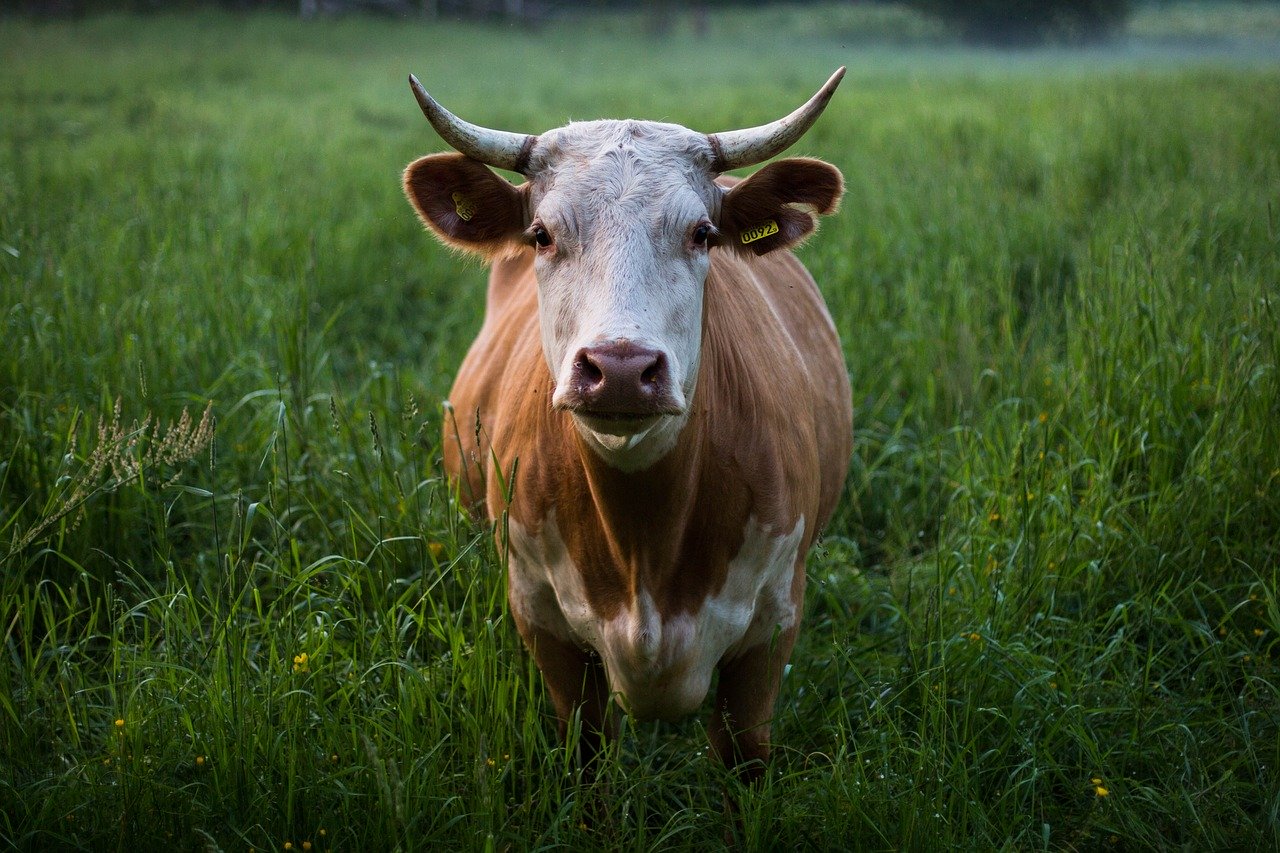
3. CRISPRing cows to produce less methane

We’ve all heard those stats about how cow belching is worse for the environment than cars. Those claims are overblown, but cows really do produce a lot of methane and that methane is not helping with climate change.

Veterinary researchers at the University of Adelaide recently showed that how much methane a cow produces very much depends on that cow’s genetic makeup. That means that genetic engineering could help shrink the big burpers’ carbon hoofprint. CRISPR has already been used to tweak other traits in cows, so methane emission could be a next step.

4. CRISPR helps animals take the heat

Not only will diseases increasingly threaten livestock as a result of climate change, but the rising temperature itself is also a direct threat. Extreme heat can be dangerous for livestock living out in the elements.

Cattle living in the tropics have adapted to high temperatures by evolving a gene called Slick. The Slick gene gives cows shorter hair. In the future, CRISPR could be used to help spread this trait to cattle in regions that will become unbearably warm.

5. CRISPR for aquaculture

Rising ocean temperatures mean that coastal fish will be among the animals most severely impacted by climate change. The threats of climate change on fish are exacerbated by offshore aquaculture that can spread diseases between farmed and wild populations. In addition to an ecological risk, climate change threatens communities that depend on fish for their food and economy.

One potential remedy to threatened fish populations is to move aquaculture farms on shore, where they cannot mix with wild fish and the water temperature can be more carefully controlled. Decoupling fish farms from coasts can also help bring the fish market closer to consumers, thus decreasing the environmental costs associated with transporting seafood.

In order for landlocked aquacultures to be economically viable, fish need to reach market weight faster than they do in ocean cages. Older genetic engineering techniques have been used to develop faster-growing salmon, and landlocked salmon farms are now a reality. Researchers are now looking to CRISPR to prepare other fish species for aquaculture.

The regulatory landscape for CRISPR-engineered animals

When it comes to using CRISPR in animals, the regulatory landscape is much more complicated than it is for plants or microbes. The only genetically engineered animal that has been approved by the FDA for consumption thus far had to overcome the same regulatory hurdles as a veterinary drug. These animals (AquAdvantage salmon) are transgenic, that is, they contain a trout gene not naturally present in that species.

CRIPSR can be used to make much more subtle changes to the genome, changes that could have occurred through natural mutations. For this reason, the USDA has elected not to place any additional regulations on CRISPR-edited plants. This will not be the case for animals.

The FDA has indicated it will regulate CRISPR-engineered animals in the same way it has historically regulated transgenic animals — as if they are veterinary drugs. Scientists argue that these regulations will likely stall the progress and impact of CRISPR research.

O artigo foi publicado originalmente em Cornell Alliance for Science.

Imprimir Artigo
Publicação Anterior

The EU and Mexico strengthen cooperation in geographical indications

Próxima Publicação

Third tender for private storage aid for olive oil

Artigos Relacionados

Fitotema

Soluções inovadoras contra o míldio respondem à nova realidade climática

16/04/2026
Cotações PT

Cotações – Aves e Ovos – 6 a 12 de abril de 2026

16/04/2026
Cotações PT

Cotações – Suínos – 6 a 12 de abril de 2025

16/04/2026
Próxima Publicação

Third tender for private storage aid for olive oil

Discussão sobre este post

Opinião

João Dinis
Últimas

Pastores e queijo da serra

por João Dinis
12/04/2026

Ler mais
Sofia Almeida
Últimas

O lobo-ibérico é um teste à seriedade das políticas de conservação

por Sofia Almeida
05/04/2026

Ler mais

Subscrever as nossas newsletteres

Subscrever as nossas Newsletters Agroportal

Verifique na sua caixa de correio ou na pasta de spam para confirmar a sua subscrição.

Comunicados

Soluções inovadoras contra o míldio respondem à nova realidade climática

16/04/2026

COM-PACTO participa no BioBlitz com atividades interativas sobre biodiversidade e PAC

16/04/2026
Advertisement

Temas em destaque

Candidaturas PU Guerra Médio Oriente Mercosul PAC pós 2027 Simplificação PAC Temporais Água que Une

Eventos

Abril 2026
STQQSSD
   1 2 3 4 5
6 7 8 9 10 11 12
13 14 15 16 17 18 19
20 21 22 23 24 25 26
27 28 29 30    
« Mar   Mai »

Sobre Nós

O Agroportal.pt é uma plataforma de informação digital que reúne a informação relevante sobre agricultura. Tem um foco na Política Agrícola Comum e a sua aplicação em Portugal.

Menu

  • Quem somos
  • Relatórios anuais
  • Envie-nos informação
  • Publicidade
  • Newsletters
  • Estatuto Editorial
  • Ficha técnica
  • Proteção de Dados Pessoais
  • Disclaimer
Facebook twitter Circle Instagram Rss Feed

© Agroportal. All Rights reserved.

  • Login
  • Registar
Sem Resultado
Ver Todos Os Resultados
  • Sugeridas
  • Notícias
    • Nacional
    • Internacional
    • Comunicados
  • Opinião
  • Eventos
  • Dossiers
    • Agricultura Biológica
    • Apoios
    • Artigos Técnicos
    • Biossoluções
    • Cadeia Alimentar
    • Fertilizantes
    • Financiamento
    • Fitofarmacêuticos
    • Florestas
    • Futuro da PAC
    • Inovação
    • Mercados e Cotações agrícolas
    • Newsletters e Revistas
    • Recomendações Agroflorestais
    • Seguros agrícolas
  • Serviços
    • Diretório
    • Emprego
    • Máquinas Agrícolas
    • Meteorologia
    • Terrenos Agrícolas
    • Arquivo Agroportal

© Agroportal. All Rights reserved.

Bem-Vindo De Volta!

Sign In with Facebook
Sign In with Google
OU

Faça login na sua conta abaixo

Esqueceu-se da senha? Registar

Criar Uma Nova Conta!

Sign Up with Facebook
Sign Up with Google
OU

Preencha os campos abaixo para se registar

* Ao se registar-se no nosso site, você concorda com os Termos e Condições e a Política de Privacidade .
Todos os campos são necessários. Entrar

Obter a sua senha

Indique por favor o seu nome de utilizador ou endereço de E-mail para repor a sua senha.

Entrar
Este site usa cookies. Ao continuar a utilizar este site, está a dar consentimento à utilização de cookies. Visite a nossa Política de Protecção de dados e Cookies.