















Sem Resultado
Ver Todos Os Resultados
Newsletters
Agroportal
  • Login
  • Registar
  • Sugeridas
  • Notícias
    • Notícias
    • Nacional
    • Internacional
    • Comunicados
    milk cow

    IL/Açores quer mais apoios para a exportação de produtos lácteos

    vinho copo fundo branco

    Consumo global de vinho atinge mínimos de 1957 mas em Portugal sobe

    Governo dos Açores assinala Dia Mundial da Sanidade Vegetal com modernização da rede de avisos agrícolas

    Reunião da Comissão de Agricultura e Pescas – 13 de maio

    vaca castanha

    Diplomacia brasileira aponta à UE falta de diálogo sobre importações de carne e animais

    Cebola DOP majorada em 44%

    fipa

    Exportações da indústria alimentar e das bebidas crescem 2% no arranque do ano

    Abertura de candidaturas para apoio de 7,5 M€ para pecuária e pastagens

    Copa Cogeca

    Copa e Cogeca anunciam «Flash action» em Estrasburgo durante a apresentação do Plano de Ação para os Fertilizantes pela Comissão

  • Opinião
    António Covas

    O mundo agro rural, entre o bio produtivismo e o pós-produtivismo

    Valorizar o azeite português: um desígnio coletivo para o futuro

    Apoios ao Investimento Agrícola: Permanentes, Estruturados e sem Ilusões

    A Falácia das Taxas: Quem paga aos agricultores pelo carbono que sequestram?

    PARCA: da coragem inicial à impotência institucional

    João Dinis

    Pastores e queijo da serra

    Sofia Almeida

    O lobo-ibérico é um teste à seriedade das políticas de conservação

    Jovem Empresário Rural Não Agrícola, Precisam-se!

    Resultados económicos do sector agrícola em 2025: apesar de menos favoráveis do que os dos últimos anos não põem em causa a evolução bastante positiva da última década

  • Eventos
  • Dossiers

    Dossiers I

    • Agricultura Biológica
    • Apoios
    • Artigos Técnicos
    • Biossoluções
    • Cadeia Alimentar
    • Fertilizantes
    • Financiamento
    • Fitofarmacêuticos

    Dossiers II

    • Florestas
    • Futuro da PAC
    • Inovação
    • Mercados
    • Newsletters e Revistas
    • Recomendações Agroflorestais
    • Seguros

    Últimas

    milk cow

    IL/Açores quer mais apoios para a exportação de produtos lácteos

    12/05/2026
    vinho copo fundo branco

    Consumo global de vinho atinge mínimos de 1957 mas em Portugal sobe

    12/05/2026

    Diplomacia brasileira aponta à UE falta de diálogo sobre importações de carne e animais

    12/05/2026

    Cotações – Cereais – 4 a 10 de maio de 2026

    12/05/2026

    Exportações da indústria alimentar e das bebidas crescem 2% no arranque do ano

    12/05/2026

    Abertura de candidaturas para apoio de 7,5 M€ para pecuária e pastagens

    12/05/2026
  • Serviços
    • Diretório
    • Emprego
    • Máquinas Agrícolas
    • Meteorologia
    • Terrenos Agrícolas
    • Arquivo Agroportal
Agroportal
  • Sugeridas
  • Notícias
    • Notícias
    • Nacional
    • Internacional
    • Comunicados
    milk cow

    IL/Açores quer mais apoios para a exportação de produtos lácteos

    vinho copo fundo branco

    Consumo global de vinho atinge mínimos de 1957 mas em Portugal sobe

    Governo dos Açores assinala Dia Mundial da Sanidade Vegetal com modernização da rede de avisos agrícolas

    Reunião da Comissão de Agricultura e Pescas – 13 de maio

    vaca castanha

    Diplomacia brasileira aponta à UE falta de diálogo sobre importações de carne e animais

    Cebola DOP majorada em 44%

    fipa

    Exportações da indústria alimentar e das bebidas crescem 2% no arranque do ano

    Abertura de candidaturas para apoio de 7,5 M€ para pecuária e pastagens

    Copa Cogeca

    Copa e Cogeca anunciam «Flash action» em Estrasburgo durante a apresentação do Plano de Ação para os Fertilizantes pela Comissão

  • Opinião
    António Covas

    O mundo agro rural, entre o bio produtivismo e o pós-produtivismo

    Valorizar o azeite português: um desígnio coletivo para o futuro

    Apoios ao Investimento Agrícola: Permanentes, Estruturados e sem Ilusões

    A Falácia das Taxas: Quem paga aos agricultores pelo carbono que sequestram?

    PARCA: da coragem inicial à impotência institucional

    João Dinis

    Pastores e queijo da serra

    Sofia Almeida

    O lobo-ibérico é um teste à seriedade das políticas de conservação

    Jovem Empresário Rural Não Agrícola, Precisam-se!

    Resultados económicos do sector agrícola em 2025: apesar de menos favoráveis do que os dos últimos anos não põem em causa a evolução bastante positiva da última década

  • Eventos
  • Dossiers

    Dossiers I

    • Agricultura Biológica
    • Apoios
    • Artigos Técnicos
    • Biossoluções
    • Cadeia Alimentar
    • Fertilizantes
    • Financiamento
    • Fitofarmacêuticos

    Dossiers II

    • Florestas
    • Futuro da PAC
    • Inovação
    • Mercados
    • Newsletters e Revistas
    • Recomendações Agroflorestais
    • Seguros

    Últimas

    milk cow

    IL/Açores quer mais apoios para a exportação de produtos lácteos

    12/05/2026
    vinho copo fundo branco

    Consumo global de vinho atinge mínimos de 1957 mas em Portugal sobe

    12/05/2026

    Diplomacia brasileira aponta à UE falta de diálogo sobre importações de carne e animais

    12/05/2026

    Cotações – Cereais – 4 a 10 de maio de 2026

    12/05/2026

    Exportações da indústria alimentar e das bebidas crescem 2% no arranque do ano

    12/05/2026

    Abertura de candidaturas para apoio de 7,5 M€ para pecuária e pastagens

    12/05/2026
  • Serviços
    • Diretório
    • Emprego
    • Máquinas Agrícolas
    • Meteorologia
    • Terrenos Agrícolas
    • Arquivo Agroportal
Sem Resultado
Ver Todos Os Resultados
Agroportal
bayer

No ‘magical’ alternative to glyphosate in the next 5 years, Bayer official says

por Agroportal
08-10-2019 | 12:55
em Últimas, Internacional, Sugeridas
Tempo De Leitura: 6 mins
A A
Partilhe no FacebookPartilhe no TwitterEnviar para o WhatsappEnviar para o TelegramEnviar para o LinkedIn

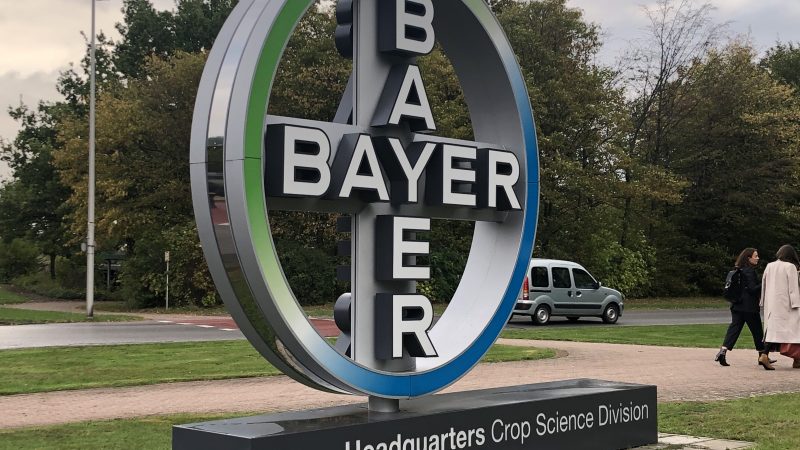
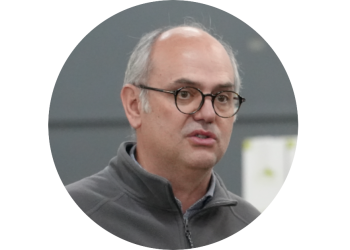
[Fonte: EURACTIV] In the next five years, no alternative to glyphosate is going to “magically” appear in the market,  Dr Bob Reiter, a high-ranking official from Bayer, told EURACTIV.com, referring to the controversial herbicide that has been the subject of heated debates across Europe.

Speaking to EURACTIV on the sidelines of the Future of Farming Dialogue event in Monheim, Dr Reiter, who is the head of research and development, crop science at Bayer, said glyphosate might be a “once in a lifetime product”.

Last year, Bayer bought US-based Monsanto, which produces glyphosate, to create a global agrichemical behemoth.

“We and our competitors have been investing since the 70s when glyphosate was introduced. And we still don’t see a molecule with the same capabilities that glyphosate has,” Reiter said.

Following a heated debate, EU member states in November 2017 renewed the approval of glyphosate, the world’s most commonly used weedkiller, for five years and can now be used as an active substance in Plant Protection Products (PPPs), until 15 December 2022.

For the next assessment, four member states are responsible: France, Hungary, the Netherlands and Sweden.

The glyphosate debate in Europe has sparked intense reactions.

The UN’s Food and Agriculture Organisation (FAO) and the World Health Organisation (WHO) have approved the chemical, claiming it is “unlikely to pose a carcinogenic risk to humans from exposure through the diet”. The same opinion was shared by the European Food Safety Authority (EFSA) as well as the European Chemicals Agency (ECHA).

However, this is in contrast to an assessment by IARC (International Agency for Research on Cancer), which concluded in 2015 that the herbicide solution was “probably carcinogenic to humans”.

In an interview with EURACTIV last May, EFSA boss Bernhard Url said the next re-authorisation process should also include an assessment of a potential ban of the substance in terms of food availability, biodiversity and farmers’ income.

Bayer has vowed to spend roughly €5 billion over the next 10 years in the area of weed control and according to Reiter, a big piece of this investment will be earmarked to give growers more choices.

“We also don’t want customers to only be reliant on greatest glyphosate […] and if that cannibalises glyphosate use to some extent, that’s fine with us, as long as it makes good sense for the grower and offers better productivity, but then also more sustainability,” Reiter added.

“What we’re trying to achieve is, I wouldn’t say replace glyphosate, maybe, as much as to complement glyphosate. Any new molecule takes somewhere between 12 to 15 years to develop in the pipeline. It’s a very long time,” he added.

Gene editing and EU framework

EURACTIV also discussed with Dr Reiter the issue of plant breeding innovation and the EU framework to regulate it, following an EU Court decision that complicated things.

In July 2018, the European Court of Justice (ECJ) ruled that organisms obtained by mutagenesis plant breeding technique are genetically modified organisms (GMOs) and should, in principle, fall under the GMO Directive.

The term New Plant Breeding Techniques (NPBT) describes a number of scientific methods for the genetic engineering of plants to enhance factors like drought tolerance and pest resistance.

The US government strongly criticised the court ruling as a setback, while the EU’s Agriculture Commissioner Phil Hogan was “surprised” by it. On the other hand, it was hailed by environmental NGOs who said it prevented GMOs from entering the EU market from the backdoor.

In an interview with EURACTIV, EU Health Commissioner Vytenis Andriukaitis said new plant breeding techniques need a new regulatory framework.

“Gene editing, in theory, can do very simple things that look just like nature. It can also be very complex engineering that look like a GMO.” [Photo by Sarantis Michalopoulos]

For Dr Reiter, the legislation that regulates genetically modified products could be reopened. “And in that, maybe one can see legislation that sort of makes, it has a different path for gene editing […] and there are pros and cons to that, honestly.”

Regarding a new regulatory framework, he said we have to be careful.

“Gene editing, in theory, can do very simple things that look just like nature. It can also be complex engineering that looks like a GMO. So given that breadth, I think it’s going to be a little bit tricky just to set aside and create new legislation that’s unique for gene editing,” he said.

For Dr Reiter, there is a middle solution, which classifies the techniques between simple and more complex.

“One path could be the following: that we have product candidates enter into the regulatory framework that exists as they sit today for gene editing. Because I do think there’s a possibility that we could envision if the edit is quite simple,” he said.

He said regulators could choose what the dossier of information is going to be required to deregulate it.

“It could be something where, if it’s a simple gene edit, it’s very light. And if it’s a much more complex, you know, much more complex change, then maybe it has much more significant dossier requirements somewhat similar to what a GMO is,” he added.

The European Commission is ‘less political’

Referring to the new EU executive, which is due to take office on 1 November, the Bayer official said the whole topic of sustainability, environmental responsibility and biodiversity are strong themes. “Politically, I think they are going to have an influence on how the Commission will act on certain things,” he said.

He added that, in general, the European Commission tends to be honestly less political in terms of how it decides things than the member states.

“The Commission is obviously somewhat influenced by the moods of the member states, but at the same time, the Commission tends to stick more to the rules. And then, if there’s some kind of controversy, it pushes it back to the member states for resolution,” Reiter concluded.

[Edited by Zoran Radosavljevic]
Imprimir Artigo
Publicação Anterior

Criação de suínos em família reduz uso de antibióticos

Próxima Publicação

Agência do Ambiente diz que Espanha cumpriu caudais acordados para o rio Tejo

Artigos Relacionados

milk cow
Nacional

IL/Açores quer mais apoios para a exportação de produtos lácteos

12/05/2026
vinho copo fundo branco
Nacional

Consumo global de vinho atinge mínimos de 1957 mas em Portugal sobe

12/05/2026
Nacional

Governo dos Açores assinala Dia Mundial da Sanidade Vegetal com modernização da rede de avisos agrícolas

12/05/2026
Próxima Publicação

Agência do Ambiente diz que Espanha cumpriu caudais acordados para o rio Tejo

Discussão sobre este post

Opinião

António Covas
Últimas

O mundo agro rural, entre o bio produtivismo e o pós-produtivismo

por António Covas
10/05/2026

Ler mais
Últimas

Valorizar o azeite português: um desígnio coletivo para o futuro

por Manuel Norte Santo
08/05/2026

Ler mais

Subscrever as nossas newsletteres

Subscrever as nossas Newsletters Agroportal

Verifique na sua caixa de correio ou na pasta de spam para confirmar a sua subscrição.

Comunicados

Reunião da Comissão de Agricultura e Pescas – 13 de maio

12/05/2026
fipa

Exportações da indústria alimentar e das bebidas crescem 2% no arranque do ano

12/05/2026
Advertisement

Temas em destaque

Candidaturas PU Guerra Médio Oriente Mercosul ovibeja PAC pós 2027 Simplificação PAC Temporais vinho Água que Une

Eventos

Maio 2026
STQQSSD
     1 2 3
4 5 6 7 8 9 10
11 12 13 14 15 16 17
18 19 20 21 22 23 24
25 26 27 28 29 30 31
« Abr   Jun »

Sobre Nós

O Agroportal.pt é uma plataforma de informação digital que reúne a informação relevante sobre agricultura. Tem um foco na Política Agrícola Comum e a sua aplicação em Portugal.

Menu

  • Quem somos
  • Relatórios anuais
  • Envie-nos informação
  • Publicidade
  • Newsletters
  • Estatuto Editorial
  • Ficha técnica
  • Proteção de Dados Pessoais
  • Disclaimer
Facebook twitter Circle Instagram Rss Feed

© Agroportal. All Rights reserved.

  • Login
  • Registar
Sem Resultado
Ver Todos Os Resultados
  • Sugeridas
  • Notícias
    • Nacional
    • Internacional
    • Comunicados
  • Opinião
  • Eventos
  • Dossiers
    • Agricultura Biológica
    • Apoios
    • Artigos Técnicos
    • Biossoluções
    • Cadeia Alimentar
    • Fertilizantes
    • Financiamento
    • Fitofarmacêuticos
    • Florestas
    • Futuro da PAC
    • Inovação
    • Mercados e Cotações agrícolas
    • Newsletters e Revistas
    • Recomendações Agroflorestais
    • Seguros agrícolas
  • Serviços
    • Diretório
    • Emprego
    • Máquinas Agrícolas
    • Meteorologia
    • Terrenos Agrícolas
    • Arquivo Agroportal

© Agroportal. All Rights reserved.

Bem-Vindo De Volta!

Sign In with Facebook
Sign In with Google
OU

Faça login na sua conta abaixo

Esqueceu-se da senha? Registar

Criar Uma Nova Conta!

Sign Up with Facebook
Sign Up with Google
OU

Preencha os campos abaixo para se registar

* Ao se registar-se no nosso site, você concorda com os Termos e Condições e a Política de Privacidade .
Todos os campos são necessários. Entrar

Obter a sua senha

Indique por favor o seu nome de utilizador ou endereço de E-mail para repor a sua senha.

Entrar
Este site usa cookies. Ao continuar a utilizar este site, está a dar consentimento à utilização de cookies. Visite a nossa Política de Protecção de dados e Cookies.